The man who reads warehouses for a living
Walk into most software companies and you will find the chief executive somewhere near the top of a glass building, a long way from whatever the product actually touches. Craig Collins is harder to pin down. As often as not, the CEO of GraniteWMS is standing on a concrete floor somewhere - New York, Cape Town, Dubai, Kingston - watching pallets move and asking a version of the same question he has been asking for three decades: what could work better here?
That habit is the whole story. GraniteWMS, the warehouse management system Collins leads, is not a flashy consumer app. It is the invisible layer that tells a business exactly what is on its shelves, where it is, and when it will expire. Boring, until the day a shipment goes missing or a batch of food reaches a customer past its date. Collins built a career on making sure those days happen less often.
He came up through the unglamorous end of technology. After a Bachelor of Science from the University of Cape Town, he moved into barcoding and scanning - roles at Scantech Solutions and Streamworks - back when sticking a machine-readable label on a box was still a novelty in South Africa. He is now described, without much exaggeration, as one of the veterans of barcoding in the country. Before GraniteWMS he ran Cradle Technology Services, the company that originally produced the software he now steers around the world.
“We always strive to provide long-term value to customers with our highly flexible solution.”
A Cape Town product goes global
For years GraniteWMS was a regional success - strong across South Africa and its neighbours, from Botswana and Namibia to Zambia and Tanzania. Then it started showing up on other maps. In a single recent year the company put its system into more than 35 new sites, with active installations in New York, Miami, Los Angeles, San Francisco and Reno, plus international footholds in the UK, the UAE, Spain and the Caribbean. Today the count sits above 240 warehouses across more than 40 industry sectors.
The strategy behind that expansion is less about aggressive sales and more about arithmetic that favours the customer. GraniteWMS deliberately avoids the large upfront implementation fees common in enterprise software, leaning instead on an affordable monthly model. It is a positioning choice aimed squarely at mid-market businesses - the companies too big for spreadsheets and too small for a six-figure rollout.
Collins has been open about what is pushing demand. As global container shipping prices climbed, he noted that mid-sized firms felt the squeeze first, and that pressure made precise inventory control less of a luxury and more of a survival tool. When every shipment costs more, losing track of a single pallet stops being a rounding error.
“The continued demand for our product in the medium-sized enterprise market is even more evident as we see container shipping prices skyrocket.”
Listening as a roadmap
Much of GraniteWMS’s recent work has been about plugging into the systems companies already run. The platform now connects to Sage200, Sage300, SAP Business One and Sage Intacct, and Collins frames that list not as a grand plan but as a running response to what customers ask for. Integrations get built because clients need them, and the roadmap is, in effect, a queue of real requests.
The payoff shows up in specifics rather than slogans. In one case, Collins’s team helped three New York food companies switch to a “first expire, first out” policy - a way of always shipping the oldest stock first so that nothing perishable slips past its date on the shelf. It is the kind of fix that never makes headlines but keeps expired product out of customers’ hands, which for a food business is close to everything.
The warehouse evangelist
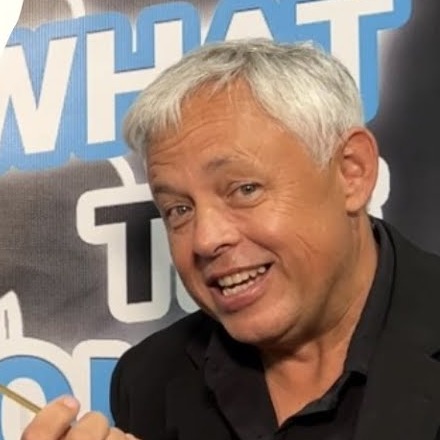
In 2022, Collins did something most software CEOs would never attempt: he started a show about warehouses. “What The Warehouse,” hosted by Collins in the self-appointed role of warehouse innovation evangelist, turns an overlooked corner of business into a place to trade best practices and argue about what actually works on the floor. The title is a little tongue-in-cheek. The intent is not. It is of a piece with how he operates - convinced that the unglamorous problems are usually the expensive ones, and worth talking about out loud.
His personal footprint mirrors the company’s. His account on X flies three flags - South Africa, Canada and the United States - a small signal of a business that no longer belongs to one place. The stated ambition is to build permanent, full-time operations across both US coasts and into Canada, extending a product born in the Western Cape deep into North America.
What is striking about Collins is how little the method has changed even as the map has. The company that once measured itself in dozens of local sites now counts installations across four continents, and the man at the top is still doing what he did at the start: stepping onto a warehouse floor, looking around, and asking what could be better. Scale changed the scenery. It did not change the question.
Sources: GraniteWMS (granitewms.com), ITWeb, Startup City Magazine, LinkedIn, X/@craigcoll, and GraniteWMS’s “What The Warehouse” YouTube series. Only publicly reported facts are included; where the record is silent, this profile stays silent too.