A warehouse is an awkward place to have a software idea. The goods have already arrived. Somebody wants to know how many are left. Somebody else wants their order shipped. The business offers very little patience for a theory that will become useful after the next funding round. In 2006, John Watkins and Nancy Rohman were running a third-party warehouse and could not find an adequate web-based system for its inventory and operations. They built one. The result was 3PL Central, the company later renamed Extensiv.
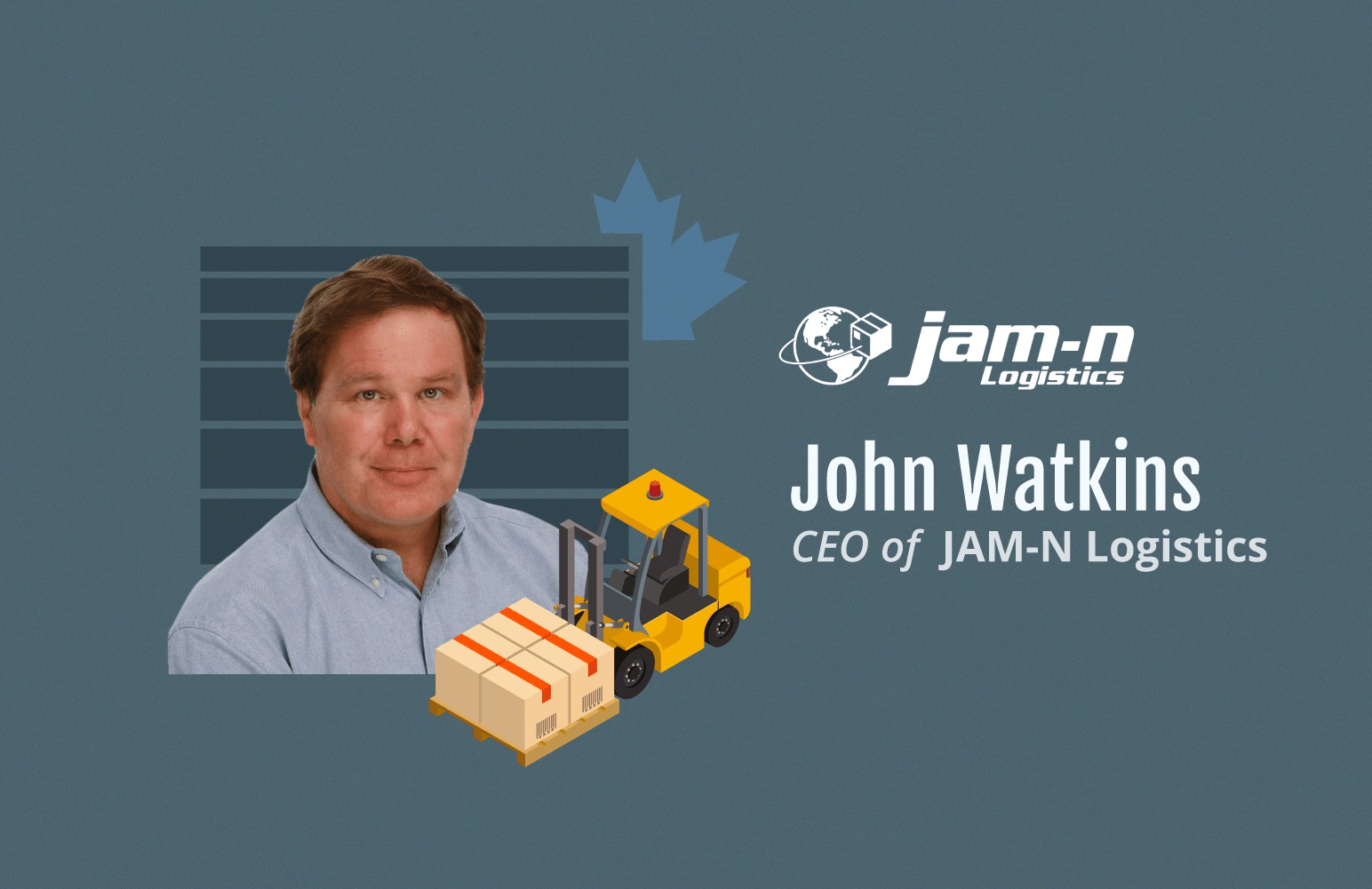
It is an origin story with the romance of a missing inventory record. That gives it a certain appeal. Watkins entered the software business carrying an operator’s problem, and his career has kept circling back to the people responsible for moving actual goods. He became a software CEO, then a strategy executive and board member. Today he is CEO of jam-n Logistics, back on the operating side of the relationship that started the company.
The accountant among the pallets
Before the warehouses came accounting. Watkins worked at KPMG Peat Marwick and served as a controller at Syncor International. His education included a Bachelor of Arts in Accounting at the University of Utah, with a minor in Spanish, and an MBA from UCLA. He also earned his CPA. He entered third-party logistics in the early 1990s, accumulating experience in operations, freight brokerage, international cargo, and supply chain logistics.
The sequence helps explain the founder. Warehousing brings together physical movement and financial accountability: goods must be received, tracked, handled, and billed for. An accounting background belongs quite naturally in that conversation. It is easy to picture a warehouse as shelves and forklifts; running one also requires a dependable account of what happened. Watkins’s route into software passed through that practical world before it acquired a product name.
Rohman brought her own financial and operating experience. She became 3PL Central’s president, responsible for daily operations, finance, and execution. The founding story has two people in it, each with a stake in making the system work. Their warehouse supplied a direct test of whether the product could serve the business it was being built for.
A career built across the records, the goods, and the system connecting them.
A product learns to travel
By September 2010, four years after the product’s launch, 3PL Central was adding international functionality. A customer needed support for operations in Europe and the Middle East. Watkins described moving that request quickly through development. The changes addressed different date conventions and time zones, along with metric dimensions and weights. A Norwegian customer, Atlas Spedisjon, was among the businesses using the system.
Those are small-looking details with the power to make a system useful or maddening. A date that means one thing in one country can mean something else in another. A warehouse record cannot simply shrug and invite everyone to interpret it creatively. Expansion required the product to accommodate the conventions of the people doing the work.
The following year brought full palletization functionality. Customers could receive, store, and pick against individual pallet numbers; inspect the inventory attached to them; ship full or partial pallets; and print labels. The release also allowed warehouse staff to reorganize pallets and define other movable units. Existing customers received the functionality without an additional charge.
It makes an unusually concrete chapter in a technology founder’s career. The product’s progress can be measured in its ability to follow a pallet through a building. Enterprise software often sounds abstract from a distance. Get close enough and the question becomes wonderfully literal: which things are on this particular thing, and where is it going?
An illustration of the warehouse tasks behind the software, rather than a product interface.
Connecting the warehouse to retailers was another part of the job. An earlier partnership with SPS Commerce combined warehouse management with electronic data interchange, or EDI. That integration addressed the messages and labels retailers required. The warehouse’s records had to communicate with systems beyond its own walls. For a business serving several clients, each with its own requirements, that could be a substantial part of the daily work.
Money arrives; the work gets larger
In December 2015, 3PL Central announced a $17.5 million investment from Mainsail Partners. The plan was to put the capital into product development, customer services, sales, and marketing. By then the software had tens of thousands of users, with warehouse customers internationally. The original internal need had become a business serving many other operators.
Rohman spearheaded the investment raise. Mainsail’s Stephen Wolfe pointed to the founders’ experience as users of their own product. The relationship between the warehouse and the software was part of the investment case. The founders had already lived with the kinds of problems their customers were paying to solve.
In July 2016, 3PL Central acquired Traker Systems, known as iTracker. The combined companies reported more than 1,300 customers globally. Watkins remained CEO, while iTracker president Rich Moline became executive vice president for enterprise and strategic accounts. Moline had also run a warehouse business. The acquisition added people with experience in transportation, specialized storage, and light manufacturing, as well as another customer base.
Watkins and Rohman establish 3PL Central.
A $17.5 million investment funds expansion.
Watkins moves from CEO to strategy and the board.
The customer opens the box
As the business expanded, Watkins wrote about what ecommerce was asking warehouses to become. In 2017, he drew attention to packaging, custom labels, and the presentation of an order. A retailer handing fulfillment to another company was also handing over part of its public identity. The neatness of the packing mattered. So did the contents. The box had become a small, traveling representative of somebody else’s brand.
That argument gave the software discussion a human destination. Inventory information and connections between sales channels helped the warehouse prepare an order. The buyer eventually encountered the result as an object on a doorstep. Somewhere between those two moments, the operator had to get the details right. A tidy dashboard was unlikely to rescue a badly packed delivery.
His 2018 industry commentary widened the view to customer support, purchasing across channels, and the use of warehouse data. He described rising service expectations as a concern for staff throughout the business, from customer representatives to warehouse workers and salespeople. Data could help operators understand performance and improve profitability, while retailers expected more information about the service being delivered.
There is continuity here with the founding problem. A system had to help people keep an accurate account of goods and orders. As shopping habits changed, the number of people relying on that account grew. The software and the service became harder to separate, because the customer’s experience depended on both.
A different chair, then a familiar business
On September 19, 2018, Andy Lloyd became CEO of 3PL Central. He arrived from NetSuite, where he had led commerce products. Watkins became chief strategy officer and continued on the board. His new responsibilities included partnerships, corporate development, and the company’s focus on its chosen customers. The handoff gave him a different place in the business he had co-founded.
The name changed later. In May 2022, 3PL Central rebranded as Extensiv, bringing a broader collection of warehouse, inventory, and order management capabilities under that identity. The distinction in dates matters: Watkins’s CEO years belonged to 3PL Central. Extensiv is the continuation of that company, and it still lists him on its board of directors.
In December 2023, Extensiv recognized its founders with its Founder’s Award. By then, the warehouse business was again central to Watkins’s work. A May 2025 interview described his full-time return to leading JAM-N and his interest in a network of partner logistics operators. The circle had acquired more companies, more software, and more relationships, but it still led back to fulfillment.
Back where the orders leave
In March 2026, jam-n appointed Jon Deusenberry as chief financial officer. Watkins’s explanation brought finance and the warehouse back into the same sentence: “Jon understands how to connect financial discipline with operational execution.” The appointment followed growth in 2025 and was intended to support the company’s next phase. It was an operating decision expressed in language familiar to an accountant.
“We built the software out of necessity.”
John Watkins, May 2025
His present position gives the story an unusual shape. Watkins has a seat on the board of a software company whose beginnings lay inside a warehouse, while running a logistics business himself. He can look at fulfillment from the side supplying the system and the side responsible for the shipment. The connection is concrete enough to resist a tidy founder legend.
A warehouse still asks for an account of what arrived, what remains, and what can leave. Watkins’s career has moved through accounting offices, software development, investment, and executive transitions, yet those questions remain legible throughout. The software company grew out of the work. His next chapter has brought him back to the work again, where the orders continue to require answers.