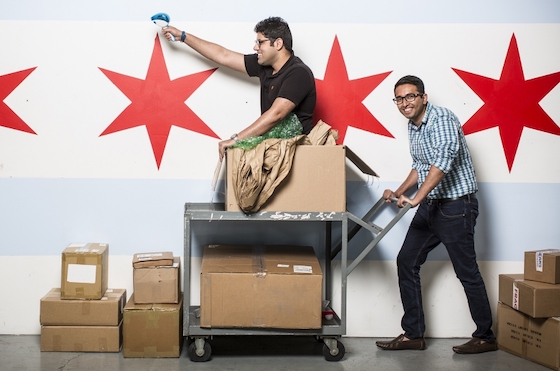
The queue was the clue. Before ShipBob, Dhruv Saxena and Divey Gulati had a business that printed photographs sent from phones and mailed them to customers. The digital part could be automated. The trip to the post office could not. Success produced more envelopes, more packing, more time away from the work that was supposed to make the business grow.
- ShipBob stores inventory, then picks, packs, and ships orders for brands.
- Its central trick: put stock closer to the people buying it.
- Merchants can outsource fulfillment or use ShipBob software in their own warehouses.
That small inconvenience contained a much larger business. Ecommerce had made opening a shop easier. Delivering its promises still required space, labor, and a working knowledge of cardboard. ShipBob would eventually combine those physical necessities with software. But first, its founders had to discover how much of the merchant’s job they needed to take over.
The app needed a warehouse
Founded in 2014, ShipBob joined Y Combinator’s summer batch. Its early sales territory was wonderfully literal: people carrying packages toward a post office. The founders approached merchants, demonstrated a mobile app, and listened. An early company history says their prospecting even attracted the postal police. Apparently, removing people from a queue can look suspicious.
“We stood outside the post office and pitched every person carrying a package.”
Divey Gulati · University of Illinois Alumni Association
Feedback exposed the limitation of the app: merchants needed a web interface, visibility across selling channels, and inventory management. ShipBob began storing their goods. The original bottleneck had been the founders’ time; the product’s next constraint was scope. Collecting parcels addressed one errand. Holding inventory let ShipBob handle the recurring operation behind it.
There is a useful lesson here for anyone building a service. Find customers while they are doing the troublesome thing. Then pay attention when their requests cross the boundary of the product you intended to sell. ShipBob’s early merchants were describing a job that continued long after pickup.
The fastest parcel starts nearer
Today, a merchant connects selling channels, sends inventory into the network, and manages orders through a dashboard. ShipBob handles receiving, storage, picking, packing, and shipping. Its Inventory Placement Program adds a geographic layer: merchants can send stock to a US hub while ShipBob distributes and replenishes inventory across its network.
That changes the question from “Which shipping service is fastest?” to “Where should this order begin?” A parcel already near its buyer needs less travel. ShipBob’s expertise sits in coordinating the stock, warehouse work, carrier selection, and information needed to make that short journey possible.
Kitchenware brand Our Place supplies the memorable example. In ShipBob’s published case study, it reports $1.5 million in freight savings after expanding from two US warehouses to four. Reported average delivery fell from five or six days to 2.5. These are merchant-supplied results, with no stated measurement period for the savings.
The distinction matters. Geography is a method a reader can copy; a customer’s savings are an outcome that depends on its own orders. Start by mapping demand and the stock available to serve it. Adding buildings without enough inventory in the right places can leave the attractive network diagram doing very little.
A supply chain you can buy in pieces
ShipBob occupies the space between running your own fulfillment operation and buying a conventional third-party logistics service. Its distinguishing combination is a shared technology platform and a distributed physical network. Alternatives include Amazon Multi-Channel Fulfillment, regional providers, and the merchant’s own warehouse. Coverage, customization, and the cost of an actual basket make better comparisons than a warehouse count alone.
For brands keeping their own US facilities, ShipBob WMS supplies warehouse software. For larger operations, ShipBob Plus adds supply chain planning, retail compliance expertise, custom integrations, and dedicated account support. Wholesale and direct-to-consumer orders can share the same fulfillment relationship. A store order and a retailer’s pallet have different requirements, even when the product is identical.

Partnerships extend the reach. ShipBob became a US fulfillment partner for Fulfilled by TikTok in 2023. FreightBob works with freight partners, including Maersk and ECU Worldwide. These services address different legs of the same problem: getting goods into position, then getting individual orders out.
Consider what a shared inventory view buys the merchant. Orders arrive from different stores and marketplaces, but someone still needs to know what is available, what has shipped, and what needs replenishing. ShipBob puts those records together with analytics and integrations. That matters when a business adds a channel: another storefront should not require its team to reconstruct the entire stock picture by hand. The practical test is whether employees spend less time reconciling systems and more time dealing with the orders that need attention.
The bill deserves its own dashboard
ShipBob quotes each customer individually. Standard charges cover implementation, receiving, storage, and order fulfillment. Special work can add cost. The outsourced service includes its dashboard and turnkey integrations; standalone WMS has separate pricing. A sensible evaluation uses a representative set of orders and includes returns, packaging needs, and slow-moving stock.
The economics get less comfortable when stock is too thin to distribute, products sit for long periods, or handling requirements exceed the agreed workflow. Compare the complete bill with the operation you already run, including the founder’s time. Saving on one parcel means little if storage and replenishment absorb the difference.
Bobby still needs the right stock
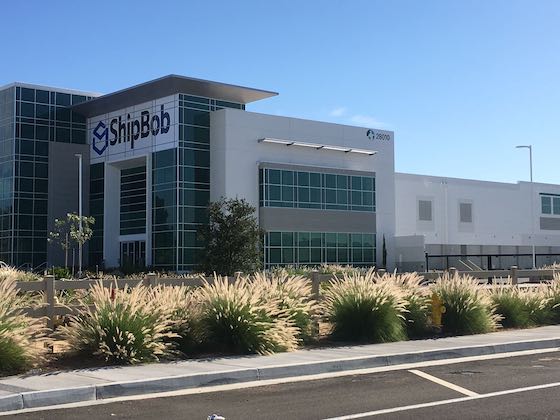
Investors funded the expansion: ShipBob’s June 2021 Series E raised $200 million at a valuation well above $1 billion. Its current network spans more than 50 fulfillment centers. Corporate careers material describes remote-first teams and an ownership culture; the product remains tied to work that happens on warehouse floors.
Its hiring language makes the operating expectations explicit: complex problems, a fast pace, accessible leaders, and shared accountability. Those are the company’s stated intentions. For a merchant, the observable version is simpler: support that can resolve an exception and reporting that makes the next decision easier. A culture claim earns its keep through those everyday interactions.
The latest interface is conversational. October 2026 release notes announce Bobby live inside the dashboard, able to retrieve information and take actions with approval. ShipBob also offers MCP access for compatible AI tools. These features can shorten the work of managing exceptions. Their usefulness still rests on the old operational question: is the right item on the right shelf, close enough to the person who wants it?