In the late 1990s, most companies still tracked their inventory the way they had for decades - with fax machines, clipboards, and phone calls to the warehouse. Carl Wasinger, a farm kid from near Hill City, Kansas, looked at that mess and asked a question that sounds obvious now and sounded strange then: why can't checking your inventory feel like checking your bank account online? He decided to build the software to find out. In September 2001 - the same month as 9/11 - he launched Smart Warehousing with one computer sitting under his desk.
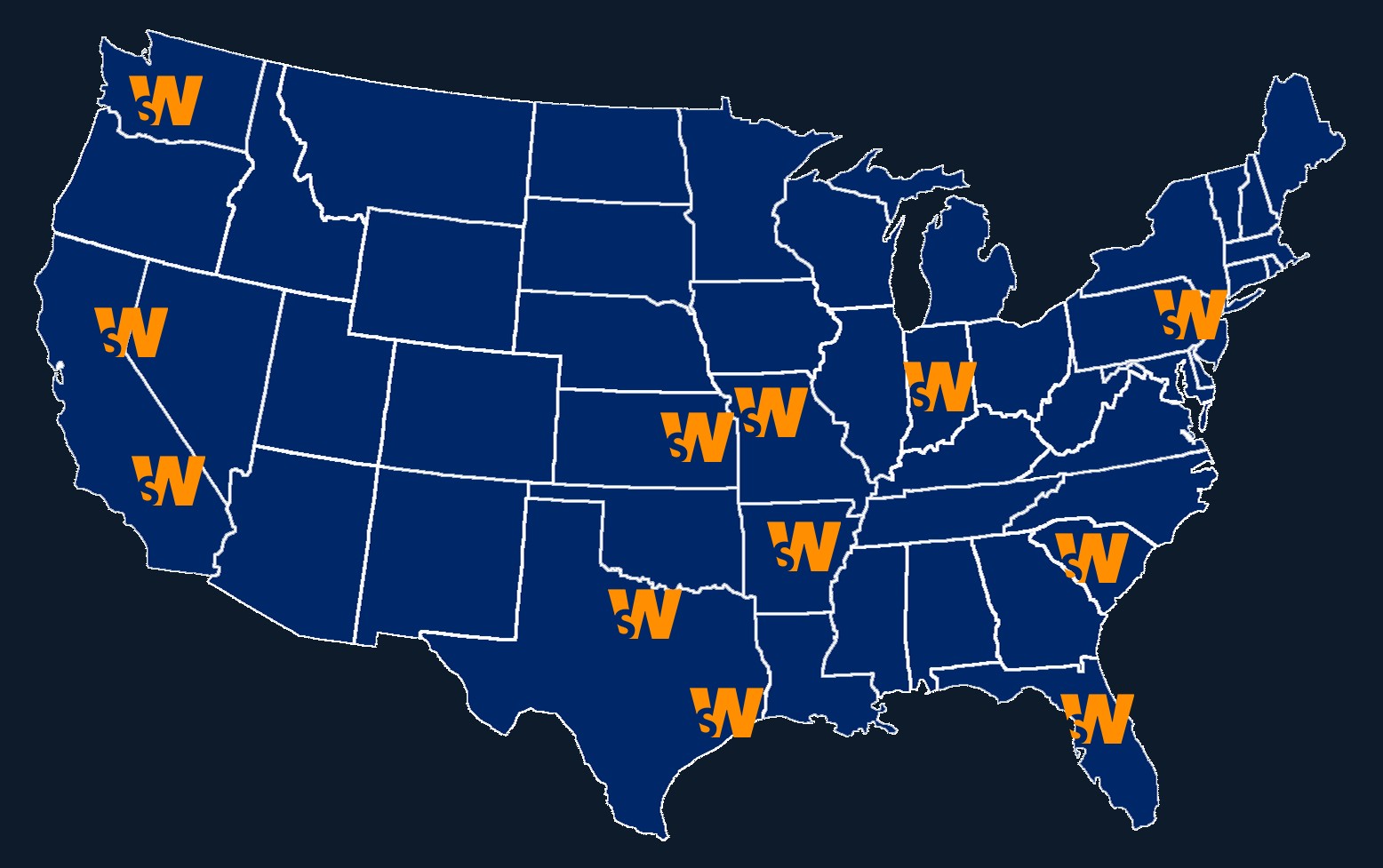
Twenty-plus years later, that question has an answer measured in square feet. Smart Warehousing operates more than 30 warehouses spanning roughly 12 million square feet across 12 U.S. regions. It has served nearly 5,000 customers. And the software Wasinger sketched out at the start - now called SWIMS, the Smart Warehousing Information Management System - still runs the whole thing.
What it actually doesThe invisible business behind "add to cart"
Smart Warehousing is a third-party logistics company, or 3PL. That's the industry's plain term for a business that stores, picks, packs, and ships other companies' products so those companies don't have to run their own warehouses. When you order a supplement, a pair of running shoes, or a frozen meal kit online, there's a decent chance it moved through a building run by a 3PL you've never heard of. That's the category Smart Warehousing lives in.
The model has an unusual feature that Wasinger likes to point out: the company profits from goods it never owns. As he puts it, "We don't own anything that's in our warehouses and we don't sell anything that's in our warehouses." Smart Warehousing makes money on the service - the storage, the handling, the shipping, and the software that ties it together - not on the products themselves. That keeps it out of the inventory-risk business and squarely in the operations business.
Its customers span retail, e-commerce, food and beverage, beauty, pet supplies, sporting goods, home improvement, and healthcare. Some are large brands running omnichannel operations across retail and direct-to-consumer; others are online sellers who plug their Shopify or Amazon stores into Smart Warehousing's system and let it handle the physical side. The company positions itself as an extension of a client's own team - the part that happens to have dock doors.
The timing of the launch tells you something about how the company thinks. Starting a warehousing business in September 2001, days around 9/11 and into a jittery economy, was not obvious. But the bet underneath it - that the internet was about to create a physical-world backlog, and someone would have to run the backrooms - turned out to be right. E-commerce needed places to keep things and software to find them, and Smart Warehousing had committed to both before the demand fully arrived.
The differentiatorA warehousing company that became a software company
Plenty of 3PLs rent their warehouse management software from outside vendors. Smart Warehousing built its own and never let go of it. SWIMS is the reason a client can log in and see, in real time, exactly what's on the shelf, what's moving, and where an order is in the pipeline - the online-banking experience Wasinger wanted from day one. On top of it sits Smart Visibility, a tracking layer that surfaces the same data across a client's whole supply chain.
The company's chief technology officer, Learie Hercules, framed the shift bluntly when Smart Warehousing opened a dedicated technology lab: the business had crossed over from being a warehouse operator that dabbled in software to being a software operator that happens to run excellent warehouses. Owning the code, rather than renting it, is what lets Smart Warehousing tune the system to its own operations and give customers a consistent view no matter which of its buildings their goods sit in.
The three DsA strategy that fits on an index card
Ask Wasinger how the company runs and you get an answer short enough to write on a napkin: the three Ds - Data, Doers, and Dock doors. Software to see the inventory. People to move it. Physical space close enough to customers to hit fast shipping windows. It is a deceptively complete description of the business, and it explains why the company invests as heavily in its network map as it does in its code.
Data
SWIMS and Smart Visibility give clients real-time inventory and order tracking - the online-banking layer.
Doers
A workforce the founder credits with a "western Kansas work ethic" baked into the company's DNA.
Dock doors
30+ warehouses across 12 regions, placed to reach most of the country inside a two-day shipping window.
Products & servicesAmbient, refrigerated, frozen - and everything in between
Smart Warehousing's service menu has widened well past plain storage. It runs e-commerce and retail fulfillment (pick, pack, ship, kitting, and custom packaging), multi-temperature cold chain across ambient, refrigerated, and frozen storage, and transportation services including transloading and cross-docking that lean on carrier relationships to cut shipping costs. It also handles the unglamorous but valuable back end: returns and reverse logistics, sorting and labeling, and vendor and EDI compliance.
The cold-chain build-out, added back in 2012, matters more than it sounds. Frozen and refrigerated storage is expensive to run and hard to do accurately, which is exactly why brands in food, beverage, and health are willing to pay a specialist to do it for them. It's a good example of Smart Warehousing picking up capabilities that are painful for a brand to own alone.
The build-outTwenty years of compounding
The growth curve reads like patient Midwestern compounding rather than a blitz. Smart Warehousing crossed 100,000 square feet of managed storage in 2003, pushed into California, Arkansas, Florida, Pennsylvania, and Washington by 2011, and added a 1.2 million square foot operation in Atchison, Kansas in 2015. Growth equity from Kansas City's Five Elms Capital arrived in 2018 to fund the next leg.
In April 2024 the company acquired Beyond Warehousing, picking up facilities in Edgerton, Kansas and Kansas City, Missouri and pushing its network past 9 million square feet. Wasinger described the deal as fitting "our strategic vision of providing comprehensive and innovative supply chain solutions" - which, translated out of press-release language, means buying dock doors and expertise faster than you can build them.
The labWhere the robots get tested first
In 2021 Smart Warehousing opened an Innovation Hub attached to a 500,000 square foot warehouse in Edgerton. The idea is simple and worth stealing: use one building as a live laboratory to test data-capture devices, machine-learning tools, and picking-and-packing robotics before rolling anything out to the rest of the network. Automation partners get a real-world site to trial equipment, and Smart Warehousing contains its failures to a single site instead of spreading them across thirty.
Business & marketWhere it fits
Smart Warehousing sits in a crowded 3PL market alongside names like ShipBob, Ryder's e-commerce operations, GEODIS, DHL Supply Chain, NFI, and Radial, plus platform options like Amazon's own multi-channel fulfillment. Its pitch against that field is the combination of owned software and a nationwide, multi-temperature network run by a company small enough to treat mid-market brands as more than an account number. It reported roughly $151.74 million in revenue in 2022, a 22% year-over-year jump, and independent trackers estimate annual revenue in the neighborhood of $160 million. The company employs several hundred people, with some counts running past a thousand across its facilities.
In early 2025, Fulfill.com named Smart Warehousing to its Top 50 US 3PL Companies list, citing the arc from a single warehouse to a nationwide network. For a company that started under a desk and still talks about western Kansas work ethic, it's a recognizable form of validation - the industry noticing the quiet operator that kept compounding.
The honest caveat: outsourcing your warehouse is not free of trade-offs. A brand hands over control of the customer's final physical experience, ties itself to one provider's software, and depends on that provider's accuracy and capacity during peak season. Smart Warehousing's answer is the same one it has offered since 2001 - own the data, hire doers, and put dock doors close to customers - and nearly 5,000 companies have decided that's a trade worth making.