The brand-first 3PL that treats the warehouse as part of the brand - not an afterthought.
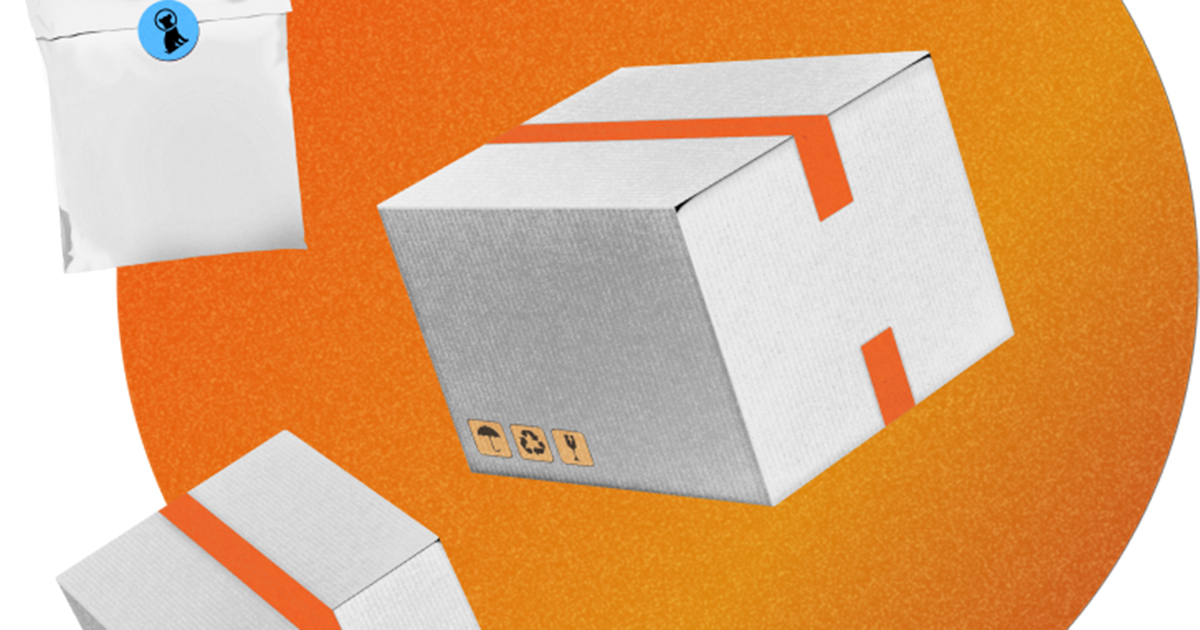
OUTERSPACE, CARLSTADT, NJ. The boxes are the brand. Founded by three operators who were tired of black-box fulfillment, Outerspace built a logistics company where every client gets a dedicated floor team - photographed here in its signature orange.
For most consumer brands, the warehouse is where the story ends - and, too often, where it goes wrong. A carefully designed product, a polished website and a slick checkout can be undone by a crushed box, a late shipment or the wrong size in the mailer. Outerspace was built on the idea that the last step is really the first impression.
Founded in late 2019 in Carlstadt, New Jersey by brand operators and investors Ricky Choi, Phil Moldavski and Alexander Pessala, Outerspace is a third-party logistics (3PL) and fulfillment company. It handles the unglamorous mechanics of ecommerce - warehousing, picking, packing, kitting, shipping and returns - for high-growth direct-to-consumer and omnichannel consumer brands.
What sets it apart is a deliberately old-fashioned idea wrapped in modern software: every brand gets a dedicated team on the warehouse floor and a live, on-site Operations Manager, rather than a ticket in an anonymous queue. Outerspace pairs that human layer with Mission Control, its proprietary order-management platform that routes orders across multiple facilities and surfaces real-time SLA dashboards.
The pitch to brands is blunt: fulfillment does not have to be a cost center you tolerate. Done well, it can be a competitive advantage - the reason a first-time buyer becomes a repeat customer. That thesis has attracted names like Little Sleepies, Hill House Home, Criquet, Fair Harbor, Ten Thousand, Brunt and Malbon, and more than $34 million in venture funding.
"Outerspace's operational and technology solutions allow brands to transform fulfillment and logistics from a cost center into a competitive advantage."
Warehousing, picking, packing and shipping run by dedicated on-site floor teams and a live Operations Manager assigned to each brand.
Proprietary order-management system with intelligent multi-node routing, real-time SLA dashboards and modern RESTful APIs for ecommerce integrations.
A proprietary shipping engine that selects cost-effective carriers and service levels to minimize spend on every parcel.
Pre-kitting, virtual kitting and on-demand, low-volume kit assembly built to absorb subscription boxes, bundles and high-volume drop events.
Branded unboxing experiences, custom packaging and on-site custom embroidery and laser-engraving programs.
Returns processing, quality control and on-site refurbishment to keep inventory accurate and re-sellable.
How it's different. Most tech-enabled 3PLs compete on price and dashboards. Outerspace adds a human layer that the category historically stripped out: named teams and on-site managers who know a brand's SKUs, drop calendar and quirks. When its 2022 rebrand agency, Red Antler, said it wanted to "breathe new life into a category in which historically, brand has been an afterthought," that was the whole point.
The business model. Outerspace is a B2B service: brands pay for storage, per-order pick-and-pack, shipping and value-added work like kitting and custom packaging, with Mission Control software layered on top. Revenue scales with a client's order volume and stored inventory - so Outerspace grows when its brands grow.
Where it fits in the market. Outerspace sits in the crowded, fast-consolidating tech-enabled fulfillment space alongside players such as ShipBob, ShipMonk, Flexport/Deliverr, Stord, Radial and Ryder E-commerce, with Amazon's FBA as the default alternative. Its wedge is the premium, brand-obsessed end of the market - brands that would rather pay for a fulfillment partner that protects the experience than route everything through a commodity network.
Expertise. The founders come from inside consumer brands and investing, not traditional logistics - which shapes the company's design-forward posture, from the orange packaging down to naming its OMS "Mission Control." That operator DNA is the thread connecting the warehouse floor to the software.
Figures are approximate, drawn from public reporting. Series B led by Prysm Capital; earlier participation from Middleland Capital, Natureza Growth Partners and Hammerstone Capital.
| Round | Amount | Date | Lead / Investors |
|---|---|---|---|
| Seed / early rounds | ~$4.9M | 2019–2021 | Middleland Capital, Natureza Growth Partners, Hammerstone Capital |
| Series B | $30M | May 2022 | Prysm Capital (lead), existing investors |
Ricky Choi, Phil Moldavski and Alexander Pessala start the company in Carlstadt, New Jersey.
Builds out high-touch fulfillment and the Mission Control platform, raising roughly $4.9M across early rounds.
Raises $30M led by Prysm Capital and rebrands with Red Antler to sharpen its brand-first positioning.
Expands its U.S. footprint, opening a Phoenix-area warehouse and operating across NJ, PA and AZ.
Despite the name and astronaut mascot, the company moves packages, not spacecraft - "space travel" is a play on shipping.
The space theme runs into the tech: its order-management system is literally named Mission Control.
The team were brand operators unhappy with traditional 3PLs before building their own.