A returned ecommerce parcel is a small crime scene. The tag is gone. The instruction sheet has vanished. One component is under the sofa in another state. The box looks as if it lost an argument with a delivery van. A refund may already be on its way, but the inventory still has to become sellable, salvageable, liquidatable, or disposable. Somebody has to open it and decide.
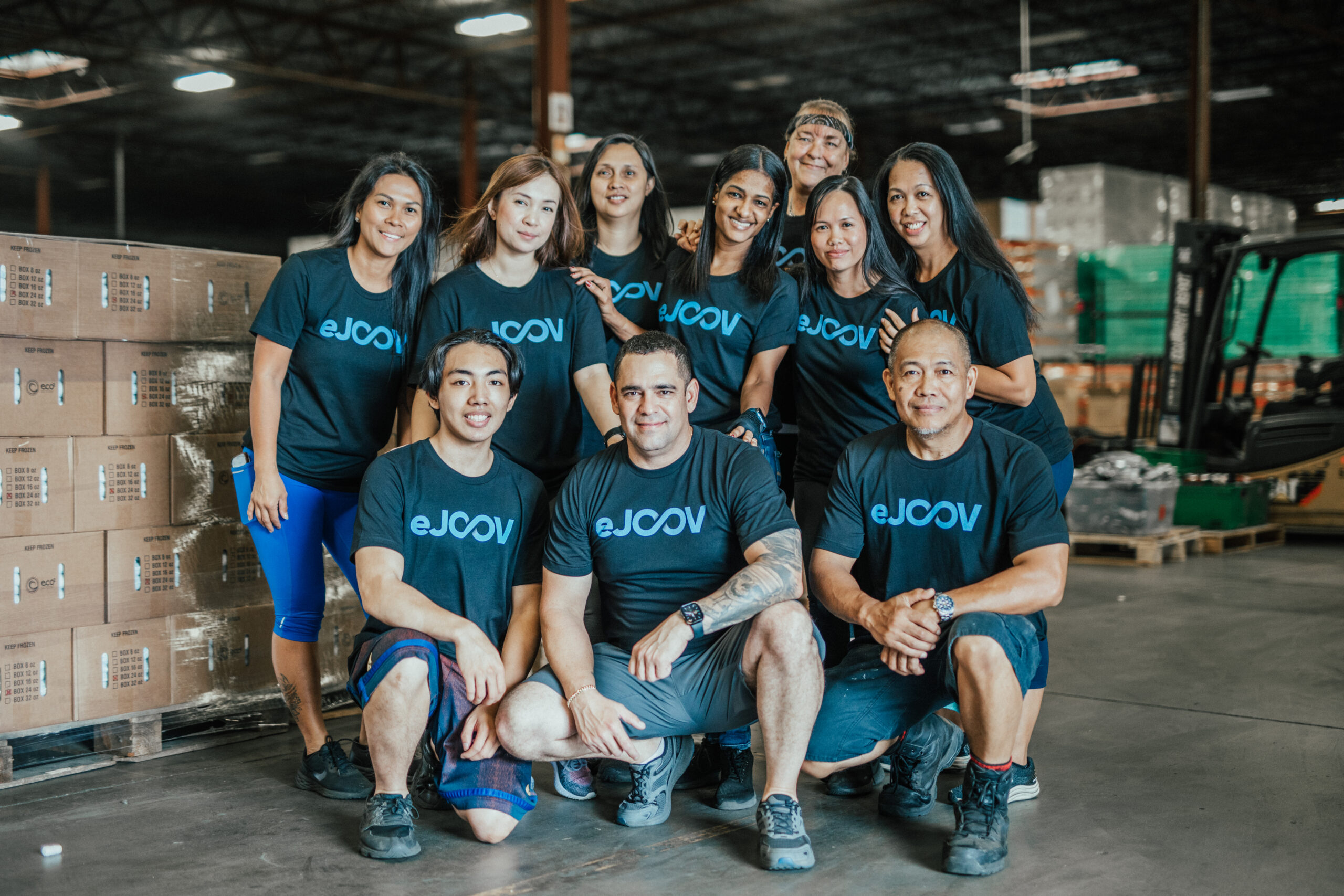
That somebody is the original eJOOV. The Louisville company launched in 2020 as a third-party logistics provider with a sharp interest in reverse logistics - the unglamorous trip products make back from customers. Its staff would receive returns, quality-check and categorize them, then rework, repackage, kit, store, liquidate, or dispose of the goods. Software could record the decision. Human beings still had to find the missing charging cable.
The idea came from operators, not pitch-deck tourists. eJOOV's official history names Eric Williams, Mike Lewis, and Brendan Manion as founders. Williams, the president and CEO, had worked across automotive, industrial distribution, education fulfillment, and manufacturing. The group says its accumulated experience includes managing more than $210 million of inventory and over 450,000 SKUs across multiple sites. Another company page describes prior shipping volume above 25,000 orders a day, covering items from an O-ring to a 35-foot corn head. The last one makes a padded mailer seem relaxing.
The first thing that failed was the return
eJOOV did not invent ecommerce's returns problem. It noticed where the normal process broke first: goods came back incomplete or badly packaged, while retailers lacked a clean way to inspect them and recover value. Returns could cause scrap, unnecessary reordering, backorders, and margin damage. In some product categories, eJOOV says return rates can approach 50 percent. Its opening offer joined a proprietary returns system to the physical work of sorting out what had actually arrived.
The timing helped. Ecommerce demand accelerated during the pandemic, and in June 2021 Louisville Business First reported that the one-year-old company had already generated revenue in the multimillion-dollar range. That December, eJOOV secured $936,200 through a convertible note and talked about adding automation. It was seeking a larger $3.5 million raise on the road toward a Series A. The verifiable financing stops at the note; the company remains privately held.
What changed the company's mind about being returns-first was less a reversal than an operator's recognition of adjacency. In a 2025 retrospective, eJOOV said it quickly saw that the same expertise could serve broader operations. Receive, inspect, store, alter, track, and ship: those verbs work for an online brand, a factory part, a special bourbon release, and a temperature-sensitive package. The compliance rules differ. The operating skeleton does not.
“We conform to you versus you conforming to us.”eJOOV's description of its customer model
Four lanes, one operating system
Today eJOOV presents four main lanes. Ecommerce remains the broad base: receiving, inventory, picking, packing, branded inserts, subscription boxes, shipping, and returns for B2C and B2B sellers. Automotive and industrial work adds line staging, part repacking, rework, crate repair, light assembly, and same-day transfers for original-equipment and supplier operations. Distilled spirits introduces ABC-licensed storage, secure handling, kitting, and compliant direct-to-consumer shipping in approved states. Cold chain adds frozen, refrigerated, and controlled-room-temperature storage for pharmaceuticals, food, and other sensitive goods.
Ecommerce
Fulfillment, returns, subscriptions, branded packaging, inventory, and the daily pick-pack-ship rhythm.
Automotive
Parts, line support, repacking, rework, light assembly, crate repair, and high-volume industrial handling.
Spirits
Licensed storage, special-release kits, merchandise, and regulated B2B or direct-to-consumer fulfillment.
Cold chain
Temperature-controlled storage, monitoring, fulfillment, packaging, and gel packs made under the same roof.
The differentiator is not merely the menu. Plenty of 3PLs can store a pallet and print a label. eJOOV's pitch is that technology, warehouse practice, and customer support should share one nervous system. Its cloud tools integrate with major ecommerce, inventory, and ERP platforms; an in-house engineering team can build custom connections. Customers can see receiving, inventory, order status, daily progress, and historical reporting. Scanning is used to reduce handling errors. Lean methodology is used to keep revisiting the process.
Then there is a distinctly low-tech design decision: customer service representatives sit in the warehouse, not a distant call center. If a client asks whether a damaged return still contains the blue widget, support is close enough to check. This is software-backed logistics rather than software cosplay. The dashboard matters because somebody near the shelf can make its data true.

The freezer is part of the product
Cold chain makes eJOOV's physical thesis easiest to see. Its warehouses support frozen goods from -20°C to -10°C, refrigerated goods from 2°C to 8°C, and controlled room temperature from 15°C to 25°C. The company says its Louisville operation is FDA registered, with monitoring and warehouse systems built around sensitive products. More unusually, it manufactures and conditions gel packs in-house, including custom sizes. Buying those packs from someone else would be simpler. Making them controls supply, replenishment, conditioning, and one more failure point.
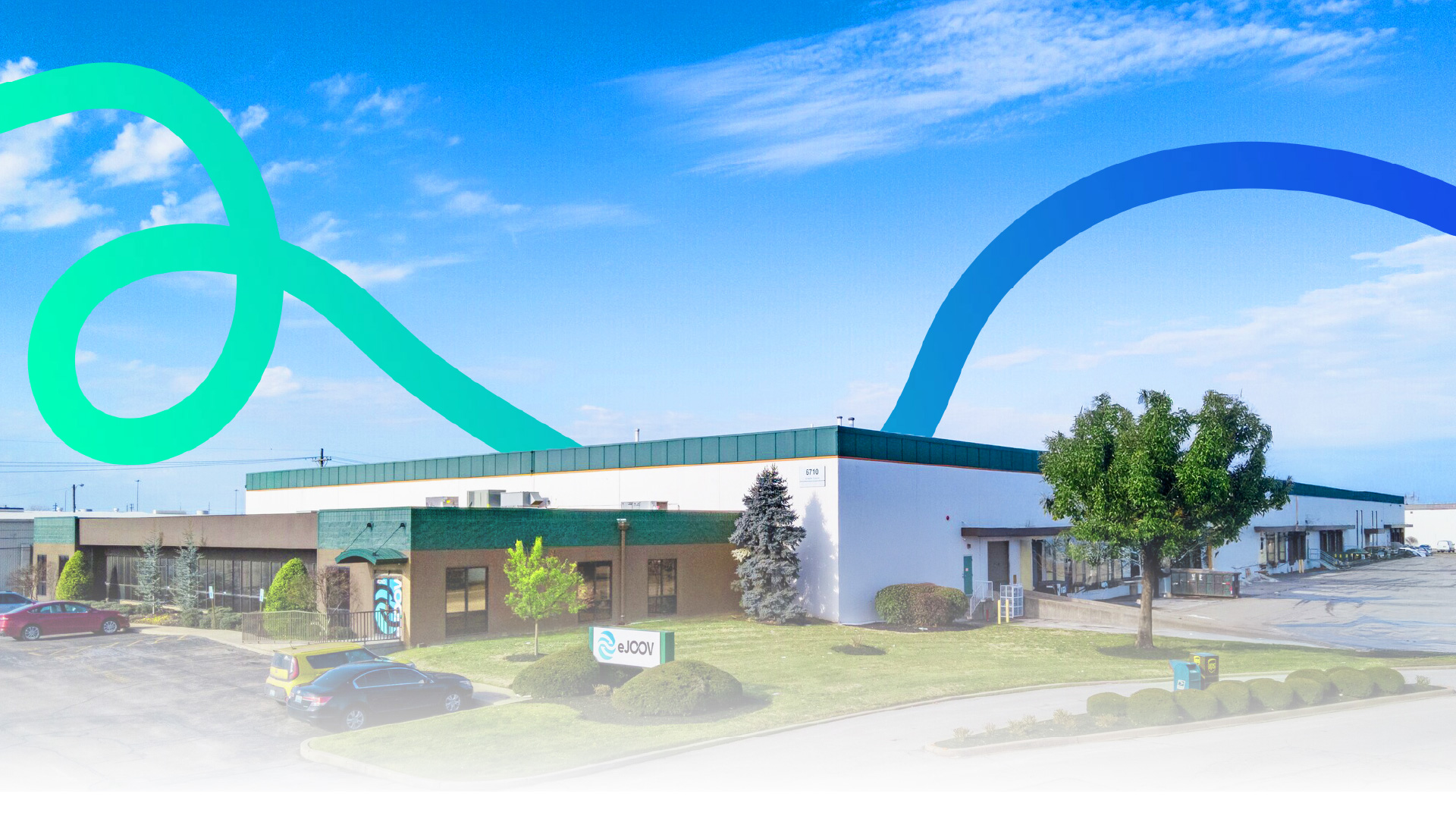
Geography reinforces the product. Louisville sits amid parcel, healthcare, manufacturing, and bourbon networks. eJOOV has also described operations in Detroit, close to automotive customers, and a growing Suffolk, Virginia presence near the Port of Virginia. In 2025 it announced a 50,000-square-foot Suffolk facility intended to shorten East Coast and Midwest transit, add port access, and support automotive work. In 2026, the company moved into a new Louisville warehouse on Intermodal Drive in Riverport and began building out cold-chain capacity there.
What it costs - and what customers are buying
There is no public dollar-per-pick menu. eJOOV quotes work upfront, says customers pay for what they ship, and argues against surprise “nickel and dime” fees. Its standard contract is month to month. The neat line is that eJOOV must earn the account 12 times a year. The harder truth is that bespoke logistics cannot be compared by sticker price alone: storage profile, order volume, return rate, integrations, packaging labor, shipping zones, compliance, and seasonality all change the bill.
So the customer is not simply buying warehouse square footage. A growing ecommerce brand is buying fewer operational distractions and a more deliberate unboxing. A distillery is buying licensed handling and help navigating the journey from bottle to doorstep. A manufacturer is buying the assurance that the right part reaches a line on time. A pharmaceutical shipper is buying temperature integrity. In every case, eJOOV makes money through B2B fees for storage, receiving, handling, fulfillment, kitting, assembly, rework, packaging, and technical integration.
The playbook worth stealing
eJOOV's transferable idea is not “start a warehouse.” Warehouses are expensive, labor-intensive, geographically constrained, and unforgiving of sloppy volume forecasts. The reusable move is to enter a market through its neglected exception queue. Returns were full of exceptions. Once eJOOV built the people, data, and process to resolve them, ordinary outbound fulfillment became an adjacency. Specialized verticals followed where the same competence carried extra value.
Copy this, not the forklift
- Find the workflow where the happy path ends and expensive exceptions begin.
- Put the person answering the customer close to the thing causing the problem.
- Use software to expose the operation, not to pretend the physical work disappeared.
- Expand by repeated verbs and capabilities, not by fashionable market labels.
- Choose a contract structure that keeps service quality visible.
The model would not work everywhere. A tiny merchant may be better served by a self-service national platform with a public price card. A global enterprise may need an owned network in dozens of countries. A company with stable volume, simple products, and excellent internal operations may fulfill more cheaply itself. And custom handling becomes a liability when every exception destroys standardization without producing enough margin. eJOOV itself says it chooses partners that fit its model; that selectivity is part of the economics.
Complex, growing, physical
Brands with returns, kits, compliance, unusual integrations, variable volume, or products that demand special handling.
Simple, tiny, or truly global
Very small catalogs chasing the cheapest self-service rate, or giant networks requiring dense worldwide owned infrastructure.
That leaves eJOOV in an interesting middle of the 3PL market. It is smaller than DHL Supply Chain or GXO, more physically customized than a standardized ecommerce app, and broader than a warehouse dedicated to one regulated niche. Its competitors range from ShipBob, Radial, Red Stag, and Saddle Creek to regional specialists and a customer's own operations team. The company's bet is that a subset of businesses will trade the scale of a commodity network for adaptability, nearby support, and expertise that crosses the loading dock.
Six years in, the most revealing eJOOV artifact is still the damaged return. It contains the whole strategy in miniature: a physical object, imperfect information, a margin at risk, a customer waiting, and no single piece of software capable of closing the case. eJOOV built a business around being the group willing to open the box.