The trouble began with a sensible improvement. At a customer distribution center in Lancaster, Texas, Romark Logistics adopted very narrow aisle racking. The aisles were six feet wide. More goods could occupy the building. On a floor plan, this was pleasing arithmetic. On the warehouse floor, somebody still had to count what had been put there.
- Romark stores, packs and moves goods for business customers.
- A drone pilot expanded to about 64,000 pallet positions, according to a 2024 case study.
- Its newest inventory project puts scanning robots into Hazleton’s operating schedule.
The six-foot problem
The Lancaster pallets sat one deep, with barcodes facing forward. Counting them by hand consumed people and equipment that could otherwise pick orders or receive shipments. Saving floor space had made another job awkward. Efficiency, as it happens, has a habit of sending its bill to a different department.
Romark’s team examined aerial counting. Drones could use the air above ground traffic, and existing barcodes offered an alternative to adding RFID tags. FlytBase deployed an indoor autonomous-navigation proof of concept in late 2019. The trial let operations and IT teams inspect detection accuracy and discuss comparison with warehouse records. The fascinating object here is the barcode: a modest label that made an experiment possible without relabeling the entire inventory.
A pilot earns its wings
By April 2024, a separate published case study described Romark working with Gather AI amid labor shortages and pressure to maintain inventory accuracy. Its drones photographed storage locations, read barcodes using AI and compared observations with the warehouse management system. A successful pilot preceded expansion to roughly 64,000 pallet positions.
“We started small but were thinking big.”Joe Warakomski, Romark CIO · 2024 interview
Romark initially doubted the proposed deployment timetable. Gather AI’s Sean Mitchell said installation and worker training took three weeks. Warakomski reported a fivefold improvement in the inventory process and 99.9% accuracy. Those are reported case-study outcomes, attached to a particular application. They make a good reason to investigate; they would make a poor blanket guarantee.
Reported in the April 2024 Gather AI case study. Figures describe that deployment.
The warehouse still has to work
The next question is less photogenic: when does the counting happen? In May 2026, Romark selected DexoryView for its Hazleton operation, a fully racked warehouse handling high volumes of confectionery. The deployment announcement describes autonomous robots checking inventory between shifts, covering multiple aisles without pausing automated guided vehicles or pulling equipment away from active work.
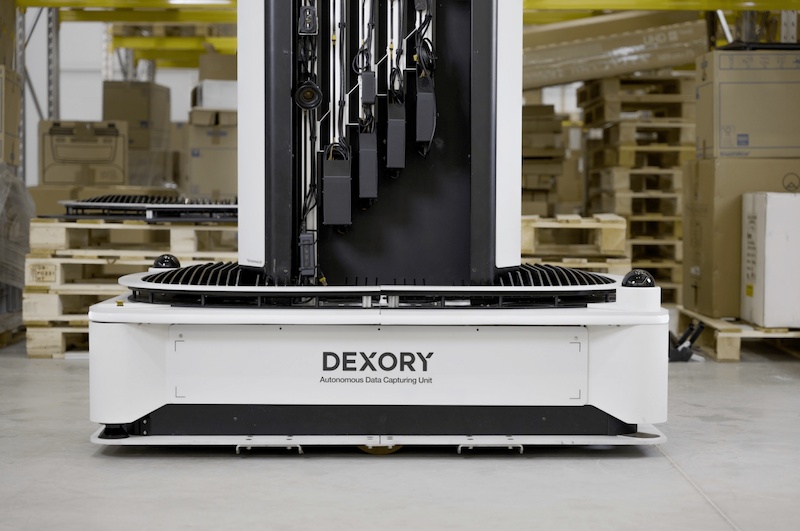
The announcement presents faster counting within the existing shift window and more time for staff to resolve discrepancies. It supplies a useful distinction: collecting observations and correcting inventory are different jobs. A robot can make the first cheaper in effort. People still need time for the second. Hazleton’s lesson is to judge a machine partly by the work it leaves possible around it.
the rack→02 Compare
the records→03 Resolve
the mismatch
The business between the boxes
Romark earns its place in the third-party logistics market by taking responsibility for several connected chores. Its storage business offers public and contract warehousing, temperature-controlled facilities, cross-docking, returns and fulfillment. A manufacturer can use it for business orders and direct-to-consumer shipments, with inventory and order analytics across channels. EDI and API integrations connect the physical operation to customers’ systems.
Transportation extends that arrangement through dedicated fleets, brokerage, shuttles, drayage and dry or refrigerated truckloads. Asset and non-asset services let the company assemble a transport solution around the shipment. The commercial proposition is fewer handoffs to coordinate: storage, preparation and movement can sit within one relationship. For a buyer, that convenience deserves scrutiny of its own, including service levels and visibility when something goes wrong.
Packaging provides the entertaining complications. A product may need a club-store case, a holiday display, a region-specific label or a small test batch. Romark offers these alongside primary and secondary packaging, kitting and reworking. It says it has redesigned lines around smaller footprints and batch flexibility. A warehouse becomes a place where a product acquires its final retail costume, sometimes shortly before leaving.
These are business-to-business services, sold around operational requirements. Romark also develops industrial property and offers consulting on automation, facility design and warehouse optimization. The combination is its positioning: an operator that can discuss the building, the process and the shipment together. Competing logistics providers offer overlapping capabilities; the useful comparison is the proposed operation for a specific customer.
A family with more seats at the table
Family ownership supplies another piece of the explanation. Marc Lebovitz leads Romark as president and owner; Amy Lebovitz is executive vice president, counsel and owner. In a 2022 interview, Amy described having to build an outside legal career before joining a business her father considered unsuitable for women. She joined in 2002.
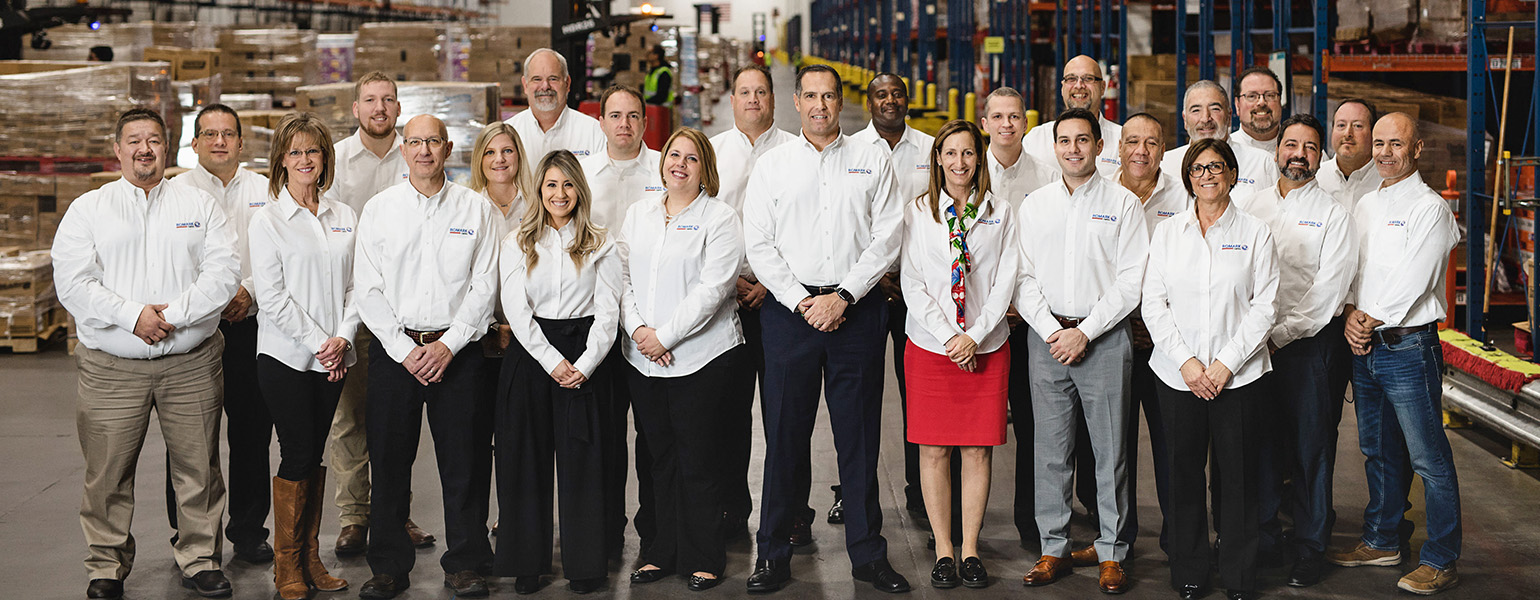
That interview reported women as 32% of a 745-person workforce, compared with 14% of 318 employees ten years earlier. The dates matter. The figures describe a change already achieved by 2022, rather than today’s headcount. Outside expertise matters too: Romark’s partnership with NJII brings university researchers into a technology roadmap covering robotics, AI, video analytics and optimization.
Copy the experiment, then check the arithmetic
The transferable move is wonderfully unromantic. Name a chore, test an alternative, compare it with records and give staff a workable routine. Lancaster’s visible, single-deep barcoded pallets made a particular experiment plausible. Hidden labels, different storage geometry or unresolved exceptions require a fresh test. Ask for accuracy, counting labor and disruption to be measured together.
The budget should include integration, training and the time to investigate mismatches, as well as the equipment or service fee. For buyers, the question is whether those costs are justified by their own volumes and requirements. Romark’s story rewards that discipline: the narrower aisle was an improvement, and it was also the beginning of another problem.