A bar of soap presents a surprisingly sophisticated transportation problem. It is small. It is heavy. Stack enough soap inside a trailer and you can reach the legal weight limit while leaving perfectly good space unused. The truck departs carrying two things: merchandise and an opportunity somebody has paid to miss.
- ODW stores, packs and moves products for brands selling online and through retailers.
- Its consolidation service matches freight across customers to build more efficient loads.
- The useful lesson: measure the entire delivery bill, including damage and retailer fines.
For a growing consumer brand, this is an awkward discovery. Sales can climb while distribution becomes less economical. More orders produce more appointments, more handling and more opportunities to get something wrong. ODW Logistics has built its proposition around joining those decisions together. The warehouse needs to know what the truck is doing.
01 / The soap problem
Consider High Ridge Brands, whose portfolio includes familiar soap and shampoo names. ODW had handled its storage and fulfillment since 2012. Other providers handled transportation. In 2020, High Ridge expanded ODW’s remit to transport management, seeking lower costs and fewer compliance penalties.
ODW examined shipment planning and introduced weekly reviews. Consolidation meant combining the brand’s dense freight with lighter shipments from other clients. As ODW’s John Weber explained to DC Velocity, otherwise “you’ll weigh out the trailer before it cubes out.” Shipment data flowed from the warehouse system into transportation planning. High Ridge reported a 20% reduction in total supply-chain costs and 40% lower Walmart fines.
The revealing part is the handoff. A shipment can be picked correctly yet arrive in the wrong window. A buyer’s requirements must travel with the order, all the way to the dock.
High Ridge Brands case results. Customer-specific outcomes.
02 / A warehouse learns to travel
ODW began in December 1971, when Bob Ness and John Berend started Ohio Distribution Warehouse in Columbus with a $5,000 loan. Its founding philosophy was pleasingly direct.
“Take care of your employees and they’ll take care of your customers.”ODW’s recalled founding philosophy
The business gradually acquired more of the journey. Dist-Trans, its Midwest carrier, started in 1980. The warehouse company adopted the ODW Logistics name in 1997. An acquisition in 2007 expanded its footprint; a transportation management business followed in 2009. In 2023, ODW opened a million-square-foot retail consolidation center in Columbus.
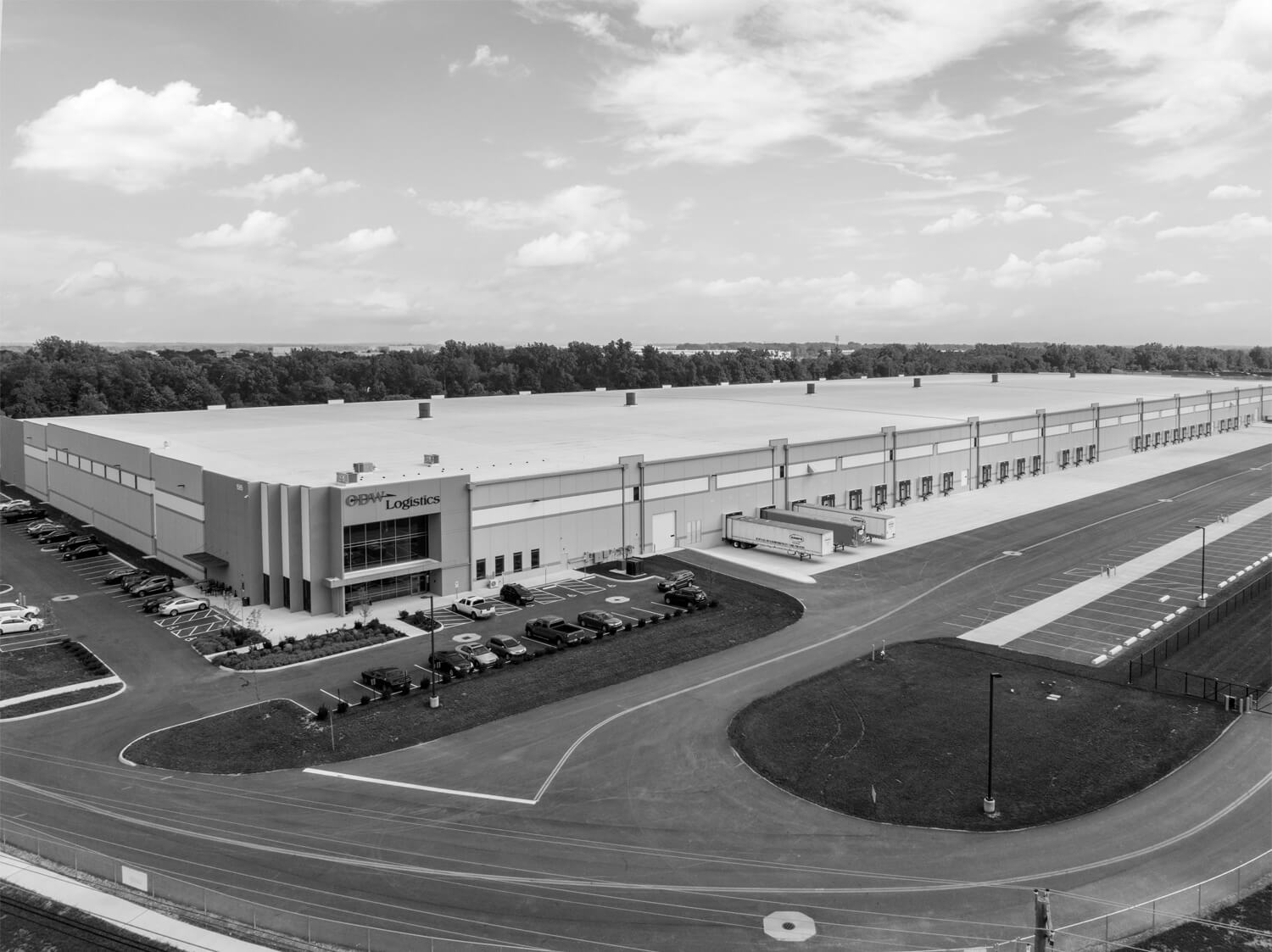
The company remains Ness-family-owned, with John R. Ness as CEO. Its culture names respect, trust, team and opportunity as values. Those words acquire practical meaning when warehouse employees, planners and customers have to resolve the same problem. ODW’s employee care program and assistance fund give that people-first philosophy an institutional home.
03 / The bill hiding inside the box
Customers buy services rather than a piece of software: storage, fulfillment, freight brokerage, managed transportation and operational design. An engagement can combine them. The commercial attraction is access to facilities, labor, carrier arrangements and engineering without having to assemble every element independently.
ODW’s e-commerce work includes Shopify integration, Amazon fulfillment support, returns, kitting and customized packaging. Its warehouse network handles dry, temperature-controlled and frozen goods. DAT described more than 250 U.S. customers in October 2024, spanning retail, food, beauty and industrial markets.
One snack-company case shows how several costs can move at once. ODW grouped small orders into truckloads, redesigned distribution and automated multipack assembly. It reported 40% lower transportation costs and a packaging cost per case falling from 42 cents to 21 cents. The packaging saving totaled $50,000 over six months. Freight and packaging are separate lines on that bill.
Snack-company case: a redesigned multipack process.
Sabrosura Foods offers another example. ODW analyzed historical shipments, examined transportation modes and took responsibility for load planning. The food company reported 28% freight savings in its first six months. Those figures describe particular operations; a new customer needs a baseline of its own.
04 / Robots with a very ordinary assignment
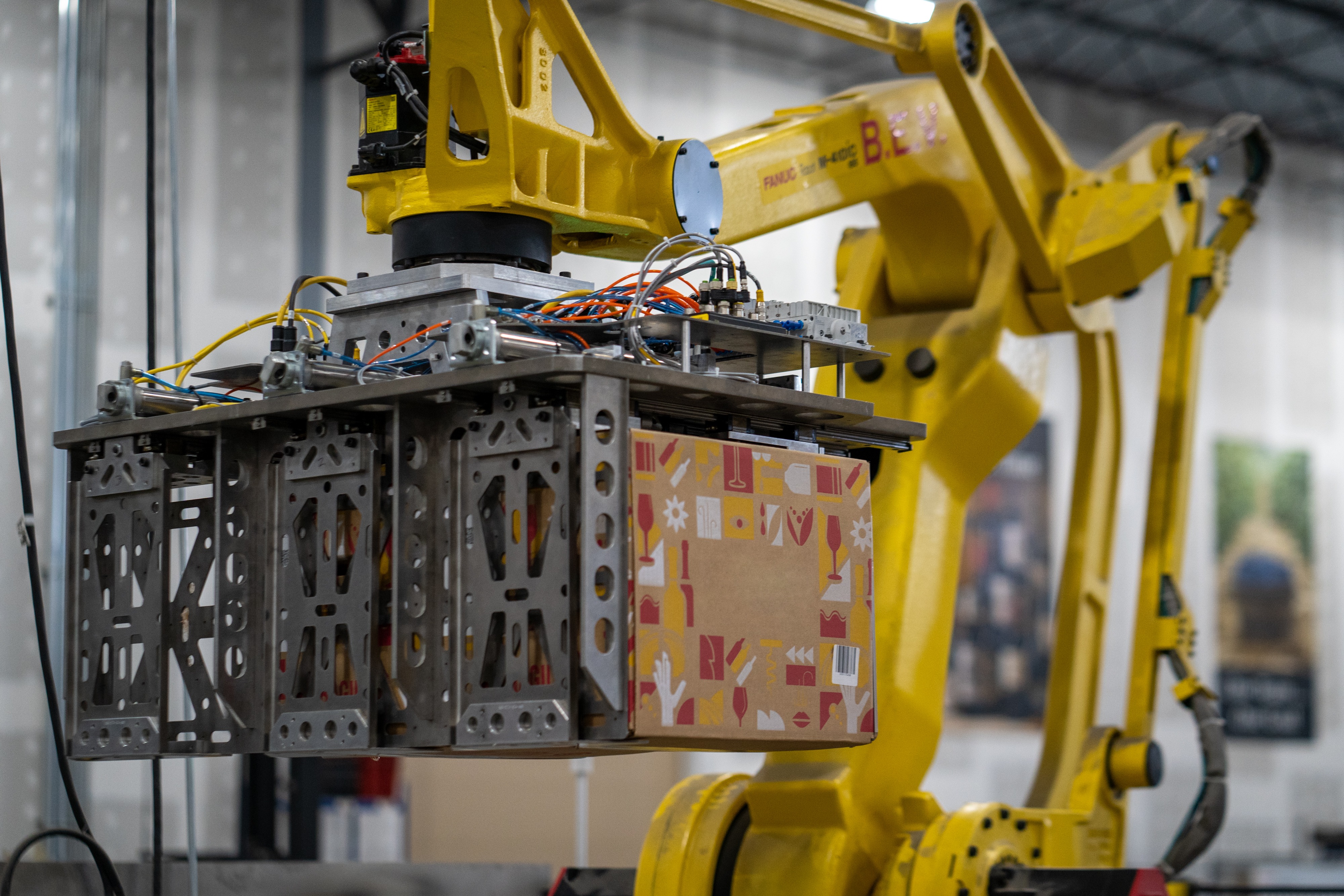
The quieter bottleneck is knowing what is actually in the warehouse. In a July 2026 case, ODW described working with Dexory after manual inventory audits had taken weeks. Autonomous scanning enabled a million-square-foot audit in under 24 hours. ODW said 90% of inventory issues were identified before picking, with deployment completed in two weeks.
Meanwhile, a September 2026 footwear case tackled packing. An automated bagging system measured orders and produced appropriately sized packages. ODW reported a 30% labor efficiency improvement within packing. The intervention addressed a specific constraint: growing demand had increased manual work and packaging consumption.
Visibility matters for people, too. Takt’s vendor case study describes replacing inadequate labor tools with a dashboard combining workforce, warehouse and automation data. It reports a 29% productivity improvement. The operational idea is straightforward: supervisors can address a bottleneck while the shift is still happening.
05 / Buy the coordination, not just the ride
ODW sits among national logistics providers, with a particular emphasis on integrated operations and retail consolidation. The technique is shared across the market: RJW offers retail consolidation, while GXO and DHL Supply Chain offer broader contract logistics. ODW’s pitch is the combination of these capabilities within its network.
A brand considering it should start with shipment history, retailer requirements and delivery windows. Compare delivered cost per case, chargebacks, damage and service performance. ODW’s discovery process includes an operational assessment and network analysis; its ongoing approach includes business reviews and performance visibility.
Consolidation depends on compatible products, destinations and schedules. Waiting to complete a load can erase its savings if the appointment is missed. Bad order data can defeat an elegant route. The lesson to copy is coordination measured against the whole bill. Empty space is expensive; so is a beautifully packed truck arriving late.
Open the loading doors
Company website ↗ · News & logistics blog ↗
LinkedIn ↗ · Instagram ↗ · Facebook ↗
Watch: Paul Boothe on private ownership and logistics strategy ↗