A pallet is a rather accomplished impostor. Sitting quietly on a warehouse floor, it looks like an object at rest. In an accountant’s spreadsheet, it is busy: occupying space, tying up money, waiting for a truck, perhaps missing its appointment with a production line. The trick in distribution is to notice the activity hidden inside the stillness.
- Warehousing, freight and production support work together.
- Rail access and an owned fleet widen the transport options.
- PDC Fulfillment gives individual online orders a dedicated workflow.
Distribution Technology has spent decades attending to that problem. Based in Charlotte, the privately held logistics company stores goods, arranges their movement and supports the operations waiting at the other end. Manufacturers, importers and retailers can buy combinations of warehousing, transportation, production support and fulfillment. The company’s proposition becomes clearer when you stop looking at a building and start following a shipment.
Its warehouse service page describes more than 1.2 million square feet across eight buildings. That is useful capacity. But capacity alone explains surprisingly little. The more interesting question is what happens when a customer needs the same goods to serve a factory, a retail distribution network and someone who has just pressed “buy” on a phone.
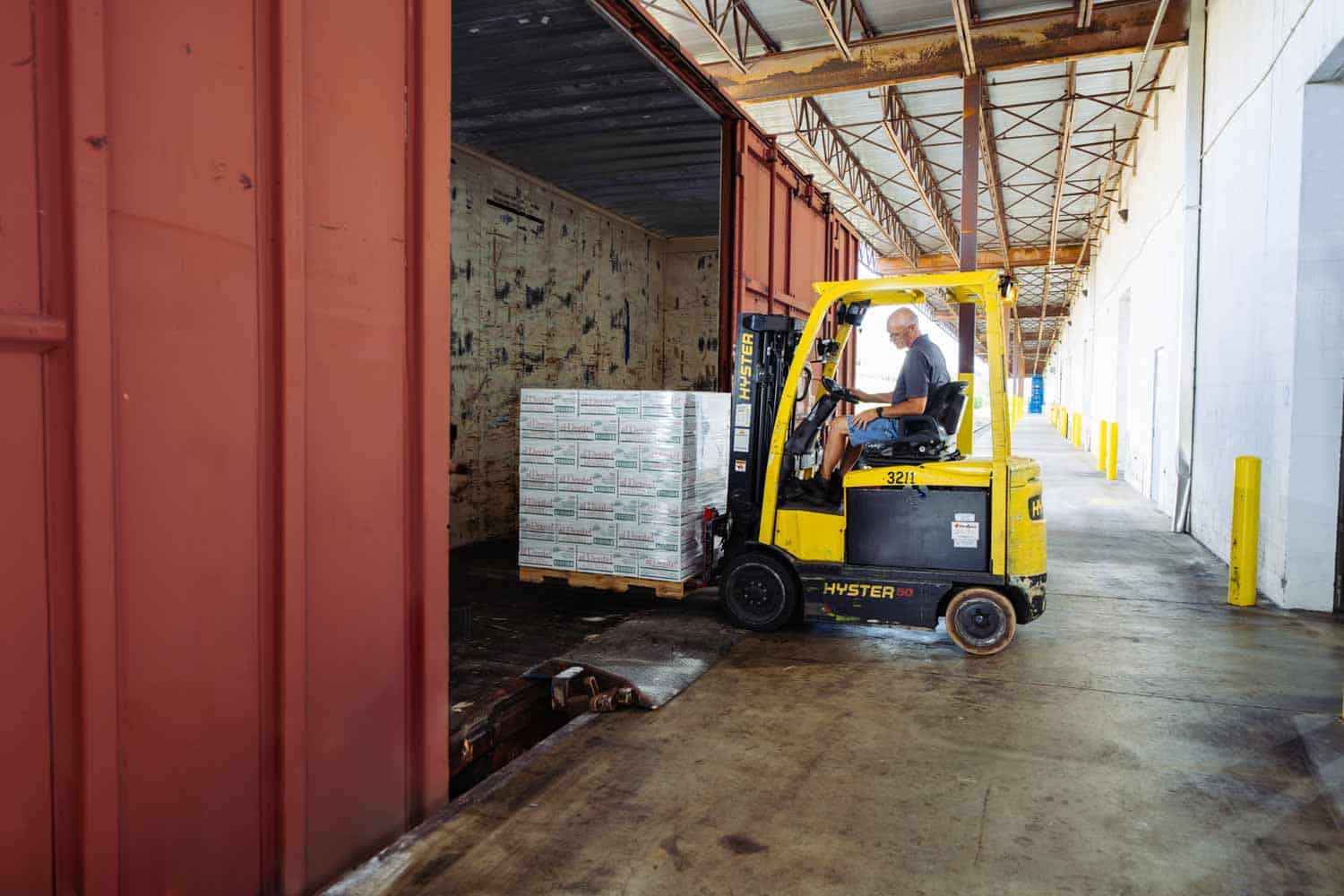
Seven employees, then a longer chain
The company’s history begins in 1969 with 100,000 square feet and seven full-time employees. It incorporated in 1970. Co-founder Rock Miralia acquired full ownership in 1974. His background included engineering, an MBA and corporate distribution work at Xerox: experience with the machinery of moving things before he owned the machinery himself.
The additions tell the story. A foreign-trade-zone milestone followed in 1979, a transportation division in 1982, records storage in 1984 and Piedmont Distribution Centers in 1992. These were extensions into neighboring customer problems. Storage creates a question about transportation; transportation creates questions about timing, handling and the next destination. A supplier able to answer several questions earns a different place in the relationship.
Tom and Mark Miralia joined in 1988, as staff engineer and warehouse supervisor. Tom, now president and CEO, trained in nuclear engineering and worked at Duke Energy. His company biography describes designing and starting distribution-center projects for Gallo Wine and Sam’s Club. Robert Hoffman, senior vice president of operations, began at Distribution Technology as a forklift operator. There is something reassuring about an operations leader who once occupied the seat everyone else draws on a process chart.
The expensive distance between two cheap things
Distribution Technology owns buildings and equipment, and says that ownership helps it reduce customers’ costs. It also has an asset-based trucking operation, PDC Trucking, alongside freight brokerage through IFB. One arrangement supplies its own vehicles and drivers; the other reaches beyond that fleet through outside carriers. The combination gives customers several ways to move a shipment.
Rail adds another option. The company identifies itself as a Norfolk Southern Warehouse Connect partner and offers transloading: transferring goods between trucks, railcars and containers. Its import-export service describes processing hundreds of containers a week. Food-grade, temperature-controlled and chemical storage broaden the kinds of freight that can pass through its facilities.
These capabilities matter because inexpensive storage can produce expensive travel. In its August 2026 discussion of Southeast distribution, the company argues that linehaul, drayage and additional transportation charges can outweigh the warehouse rate over a contract. That is a useful way to evaluate its offer: calculate the journey rather than admire the rent.
The business model is service contracts for physical logistics, with programs tailored to a customer’s requirements. A meaningful comparison includes storage, handling, freight, special treatment and the work of moving inventory into a new operation. A lower rate for one step does not establish a lower cost for the shipment. Ask where the savings actually appear in your own shipping profile.
- 01Receive
Port, truck or rail - 02Stage
Store or transload - 03Dispatch
Factory, store or home
A wine pallet is not a shopping basket
A manufacturer needs materials arriving in rhythm with production. Distribution Technology’s manufacturing service combines storage of raw materials and finished goods with just-in-time supply and cloud-based inventory visibility. The attraction is practical: additional capacity without making the manufacturer build and operate every piece of the supporting infrastructure.
Online shopping asks a different question. Bulk distribution moves quantities toward factories or stores; direct-to-consumer fulfillment picks individual orders, packs them and handles returns. Distribution Technology’s ecommerce page explicitly recognizes that the two models operate differently. It coordinates with affiliated PDC Fulfillment for dedicated ecommerce execution, drawing on the broader warehousing network and systems.
That distinction is more revealing than a promise to do everything. The company identifies a specific source of inefficiency: forcing different fulfillment models through the same workflow. Its current approach gives each operation room to work while maintaining coordination. For a retailer adding an online channel, the copyable idea is to design around order size and handling requirements before buying more shelves.
The cheapest place to store a pallet may be an expensive place to leave it.THE QUESTION TO TAKE INTO A WAREHOUSE PROPOSAL
Thirty-five years is an operating test
In March 2026, Distribution Technology announced that Sam’s Club had named it Third-Party Partner of the Year. The company says this was its ninth such recognition in a relationship spanning 35 years, and that it has operated the Charlotte Sam’s Club distribution center since 1991. An award is a moment; operating a customer’s distribution center for decades is the more consequential claim.
The company’s careers page connects its family-business identity to profit sharing for associates. Its values emphasize teamwork, quality, reliability and flexibility. Those words appear on plenty of walls. Here, the profit-sharing commitment and an operations executive’s progression from forklift work supply something more concrete than a decorative motto.
Its market position sits between a warehouse-only supplier and the sprawling menus of national logistics networks. Customers comparing providers should examine which assets, carriers and specialist workflows their particular contract would use. Distribution Technology’s appeal lies in combining Charlotte infrastructure with transportation choices and experience running customer operations.
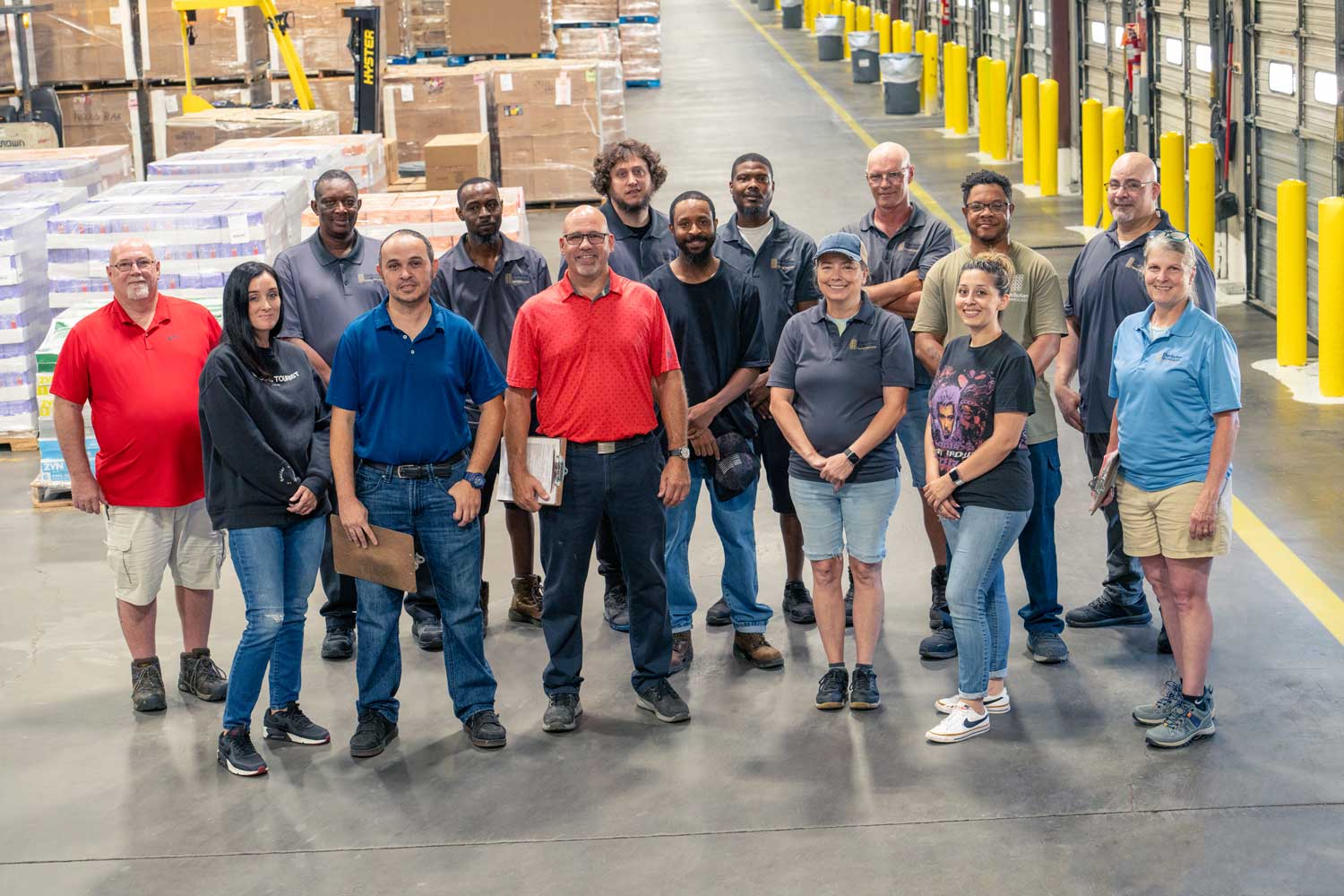
Count the touches before counting the shelves
There is a useful exercise in the company’s March 2026 inventory-reset article: examine the dock, cycle counts, staging areas and picking routes before seasonal volume rises. A mislocated pallet becomes harder to correct when the warehouse is busy. The advice gives an operator a starting point that does not require signing a new contract.
The same discipline applies to selecting this company. Map shipment origins and destinations, monthly volumes, storage conditions and peak demand. Then compare the complete route through the proposed operation. A Charlotte hub makes less sense when the resulting freight journeys are longer or when a product’s handling requirements exceed the agreed facility capabilities. Rail only helps when volume, routing and timing fit.
The appeal is modest and valuable: make fewer awkward handoffs, keep inventory visible and give different kinds of orders appropriate paths. A warehouse can be full and still be poorly used. Distribution Technology’s story asks a better question than how much it can hold: how effectively can it help a customer get something out?