Consider the pet-food cart. At a GEODIS warehouse in Dallas, moving heavy loads was consuming effort that could have gone into picking orders. The expensive part of the journey was inside the building. A product can cross an ocean and still lose time in an aisle. That is a useful place to begin understanding GEODIS, a company whose work becomes conspicuous mainly when something arrives late.
- GEODIS connects international freight, warehouses, distribution, and road transport.
- Its automation cases target wasted movement and fulfillment bottlenecks.
- The useful lesson: diagnose the delay before purchasing the cure.
The cart was doing too much
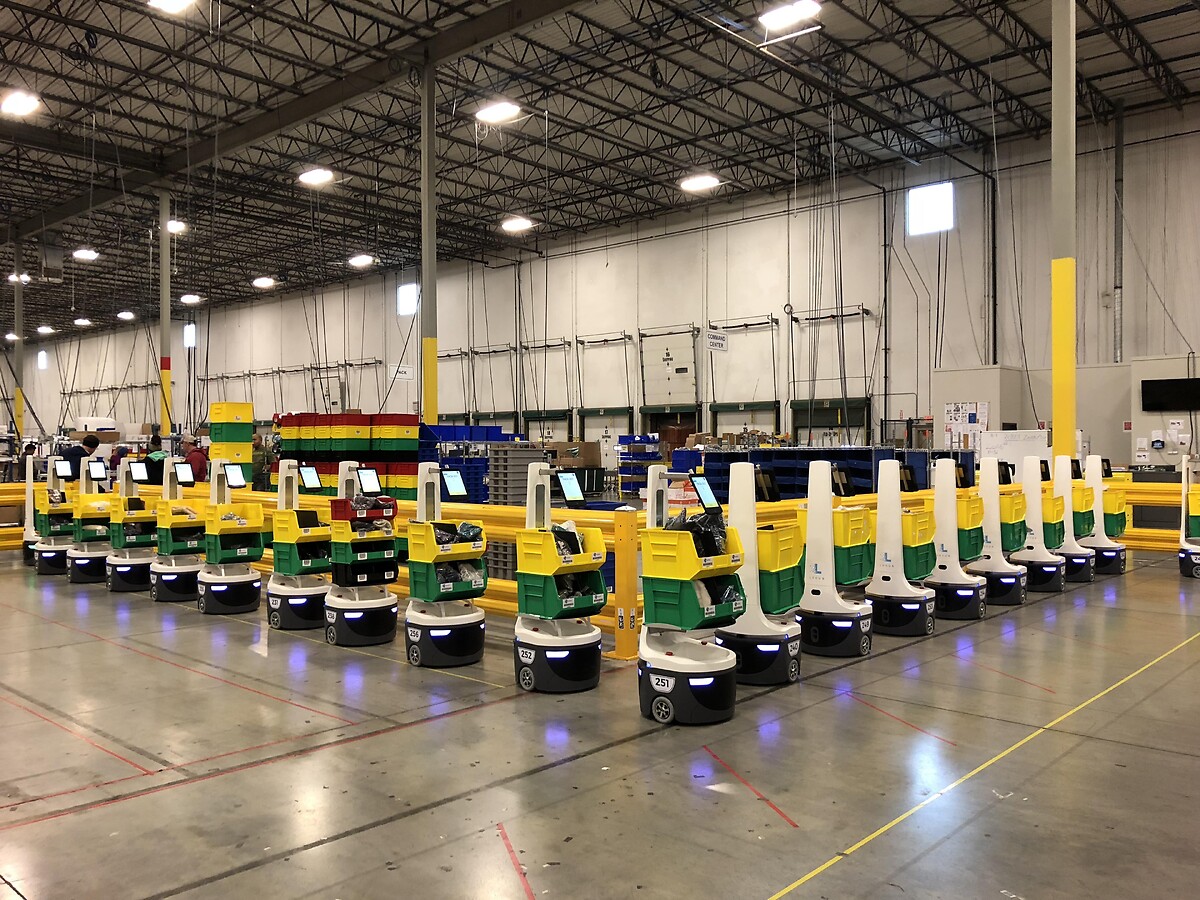
The Dallas operation introduced 12 Locus Vector robots with carts. GEODIS reports picking productivity rising from 65 to 98 units per hour and overtime falling by 75%. These are results from one operation, rather than promises attached to every robot. Their significance is wonderfully mundane: changing how goods moved gave people more time to perform the work customers were paying for.
Buying automation is easy to describe as a technological leap. Here, it looks more like editing. Remove an unnecessary movement; improve the sentence. The warehouse remains a warehouse. The dog still expects dinner. The commercial advantage lies in reducing the effort between the two.
Units per hour. Approximately 51% higher, rounded to 50% in the company case study.
A century spent joining the dots
GEODIS has been attending to such gaps for a long time. In 1904, Emile Calberson began a freight business in Le Havre. Parcels and luggage travelled by passenger train toward Rouen and Paris, then needed delivery from the station. The railway solved distance. Somebody still had to solve arrival.
Calberson moved toward road transport in 1920. The GEODIS group emerged from a merger in 1995, and became wholly owned by SNCF in 2008. Its modern size came partly through acquisition: TNT Freight Management expanded forwarding in 2006; OHL enlarged the American operation in 2015; trans-o-flex added German temperature-controlled delivery expertise in 2023.
Today, its four core businesses cover freight forwarding, contract logistics, distribution and express delivery, and road transport. Forwarding arranges international movement. Contract logistics handles warehouse operations and fulfillment. Distribution and road services carry goods onward. Customs expertise helps shipments negotiate borders, where the paperwork can be as obstructive as the geography.
A retailer can use GEODIS to bring stock into a market, store it, prepare orders, and dispatch them. A manufacturer can outsource logistics work instead of assembling that operation itself. GEODIS earns transport and forwarding charges and revenue from logistics contracts. Buyers pay for an agreed service scope; there is no single price for making an entire supply chain behave.
Even robots form a queue
At Mount Juliet, Tennessee, GEODIS fulfills orders for Black Rifle Coffee Company. Locus technology was included from the new facility’s beginning. The company reports an increase from 100 to 170 units picked per hour and training reduced from an eight-hour day to twenty minutes.
“We had a congestion issue with 10 bots in an aisle”Theresa Marsic, Director of Operations
Support staff changed routing so robots could wait in another aisle. Automation had introduced its own traffic problem. This detail matters more than a photograph of an immaculate robot: equipment needs mapping, rules, and people who can adjust the operation when reality becomes inconvenient.
The relationship with Locus began at an Indiana site in 2018. In 2022, GEODIS announced an agreement targeting 1,000 robots over twenty-four months. That was a deployment plan, not a count of completed installations. Demand growth and labor constraints supplied the business case; accumulated operating experience supplied reasons to expand.
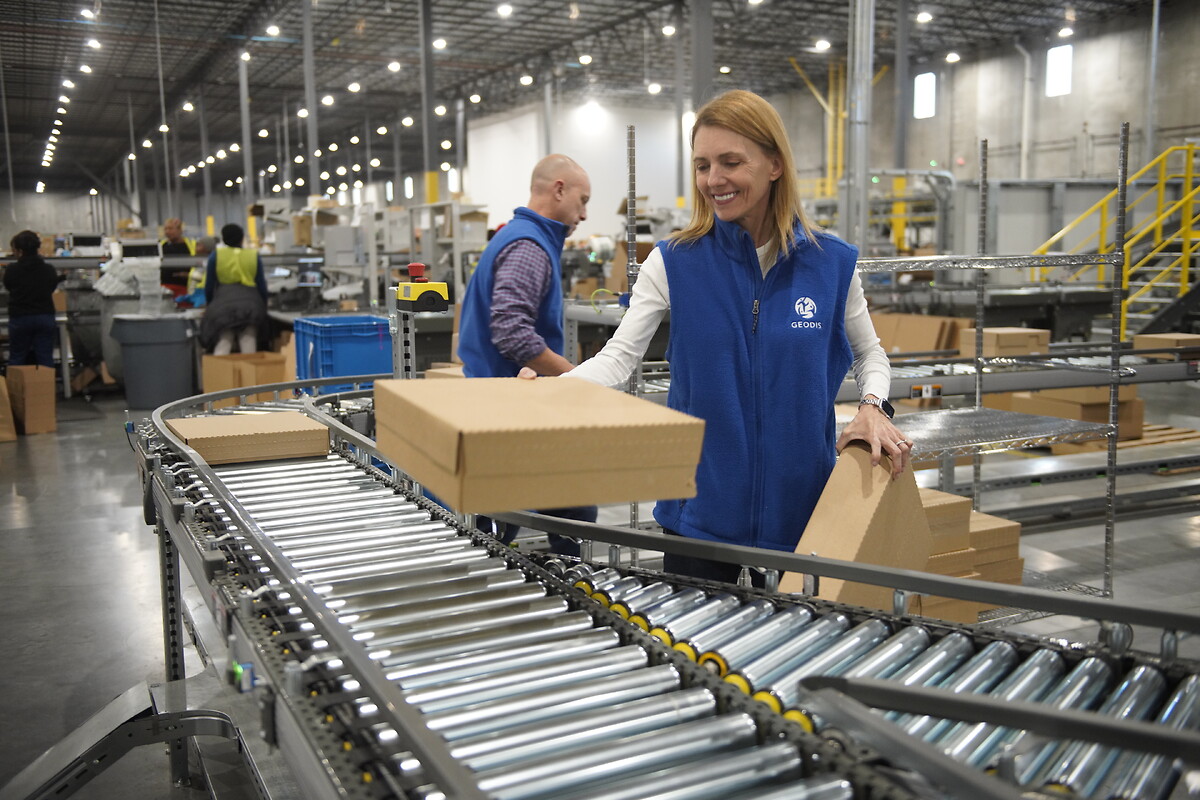
GEODIS’s French Douvrin campus supplies another concrete example. Its cosmetics operation deployed 43 Locus robots and reported one million units picked after twenty weeks in 2024. The company described reducing employees’ walking and manual cart handling. The unglamorous work of implementation is supported by a logistics engineering community, including specialists devoted to warehouse innovation and automation.
The skincare takes the train
For NAOS, whose brands include Bioderma, GEODIS is changing the journey outside the warehouse. Since January 2026, a recurring French flow has combined trucks with a train between Dourges and Avignon. Trucks collect the goods in northern France and complete the delivery in the south.
Truck to Dourges
Train to Avignon
Truck to warehouse
The flow represents nearly 300 full truckloads annually. GEODIS estimates roughly 400 tonnes of annual carbon savings against exclusively road-based transport. That is a company estimate for this arrangement. It illustrates a practical method: find a repeatable lane, preserve the pickup and delivery legs, and reconsider the middle.
Buying the missing pieces
The acquisition strategy follows similar logic. Keppel’s 2022 announcement put aggregate cash consideration for Keppel Logistics at approximately S$80 million, including S$10 million held against performance conditions. GEODIS gained additional Asian warehousing and e-commerce capabilities. It bought an operating foothold rather than waiting to construct every local relationship.
On September 30, 2026, GEODIS announced a planned acquisition of selected Deret transport and logistics activities, strengthening its proposed French footprint in sectors including cosmetics and luxury. Consultation and regulatory conditions still apply. The distinction between an agreement and a completed purchase is small in a headline and considerable in a business.
GEODIS competes with other integrated logistics providers, including DHL, Kuehne+Nagel, DSV, and CEVA; warehouse contracts also bring specialists such as GXO into consideration. Its proposition is the breadth of services that can be connected. The buyer’s question is whether those connections actually reduce handoffs and improve performance on the required lanes.
Copy the diagnosis
Start with measurements: movement time, picking rate, overtime, errors, and delivery windows. Then ask what a proposed change costs to install, integrate, operate, and support. GEODIS describes hundreds of millions of dollars invested in automation across its facilities, a reminder that a productive robot belongs to a funded operating system.
The economics depend on volume, product mix, layout, and reliable integration. Rail needs suitable terminals and schedules. A quieter warehouse or an awkward route may justify a different answer. GEODIS reported a 10% EBITDA margin in the first half of 2026 while road demand remained weak in several markets. Operational improvements still live inside a market. The habit worth borrowing is to inspect the obstruction closely, then pay to remove it.