warehouse-automation
(63)
Ocado built the robots. Now comes the hard part.
The British grocery technology company taught machines to pack the weekly shop. Warehouse closures and new customers are teaching it where automation earns its keep.

Ocado Put the Supermarket on a Grid. Now It Has to Prove the Grid Travels.
The British grocer became a robotics company by solving its own least glamorous problem: picking milk, melons and frozen peas without losing money. After a costly first act, Ocado is making the machine lighter, the software looser and the pitch more practical.

Ken Ramoutar Wants the Warehouse to Listen Better
After a career translating complex enterprise technology into customer value, the Lucas Systems CMO has fixed his attention on a stubbornly physical problem: making warehouse work easier, smarter and more adaptable.
Infios Is Betting Your Warehouse Is Only One-Third of the Problem
Infios is stitching order, warehouse and transportation software into one execution layer. For operators, the pitch is less dashboard, fewer handoffs - and no mandatory rip-and-replace.
IKEA Bought Made4net to Fix the Mess Behind the Box
Made4net spent two decades arguing that warehouse software should bend before operations break. Then IKEA's largest retailer bought the company and put that thesis inside one of retail's most demanding fulfillment systems.

The $361 Million Machine Behind the Mail You Never Think About
BlueCrest turns statements, ballots and parcels into trackable, compliant output at industrial speed. Its bet is simple: in the least glamorous corner of communications, reliability is the product.
CBQA Built the Software Shop for Companies That Can't Afford a Science Project
CBQA sells the unglamorous work that keeps digital transformation from becoming a very expensive slideshow - then packages what it learns into software for warehouses, clinics and regulated operations.

The $6.1 Million Bet That Turned an Electrical Wholesaler Into Ontario's Quiet Logistics Machine
Gerrie Electric grew from one employee and a service van into a C$200-million-plus distributor. Its useful lesson is decidedly unglamorous: remove the tiny procurement delays that make expensive crews stand around.

How Jomashop Made the Gray Market Feel Like a Department Store - and Put Robots Behind the Bargain Counter
Jomashop built a global luxury business on an awkward bargain: lower prices in exchange for leaving the authorized-dealer lane. Then it taught robots, recommendation software and a Brooklyn warehouse to make that trade feel almost ordinary.
Logiwa Bet the Warehouse on Software That Gets Paid When the Boxes Move
The Chicago software company wants 3PLs and high-volume brands to stop treating warehouse complexity as a consulting annuity. Its pitch: faster launches, smarter pick paths, open integrations, and a bill tied to throughput instead of headcount.

The 10-Minute Robot Changeover: Southie Autonomy Wants the Line Lead to Run the Machines
Factories do not only need smarter robots. They need robots that can survive Tuesday afternoon - when the SKU changes, the labor roster thins, and nobody has time to call an integrator.
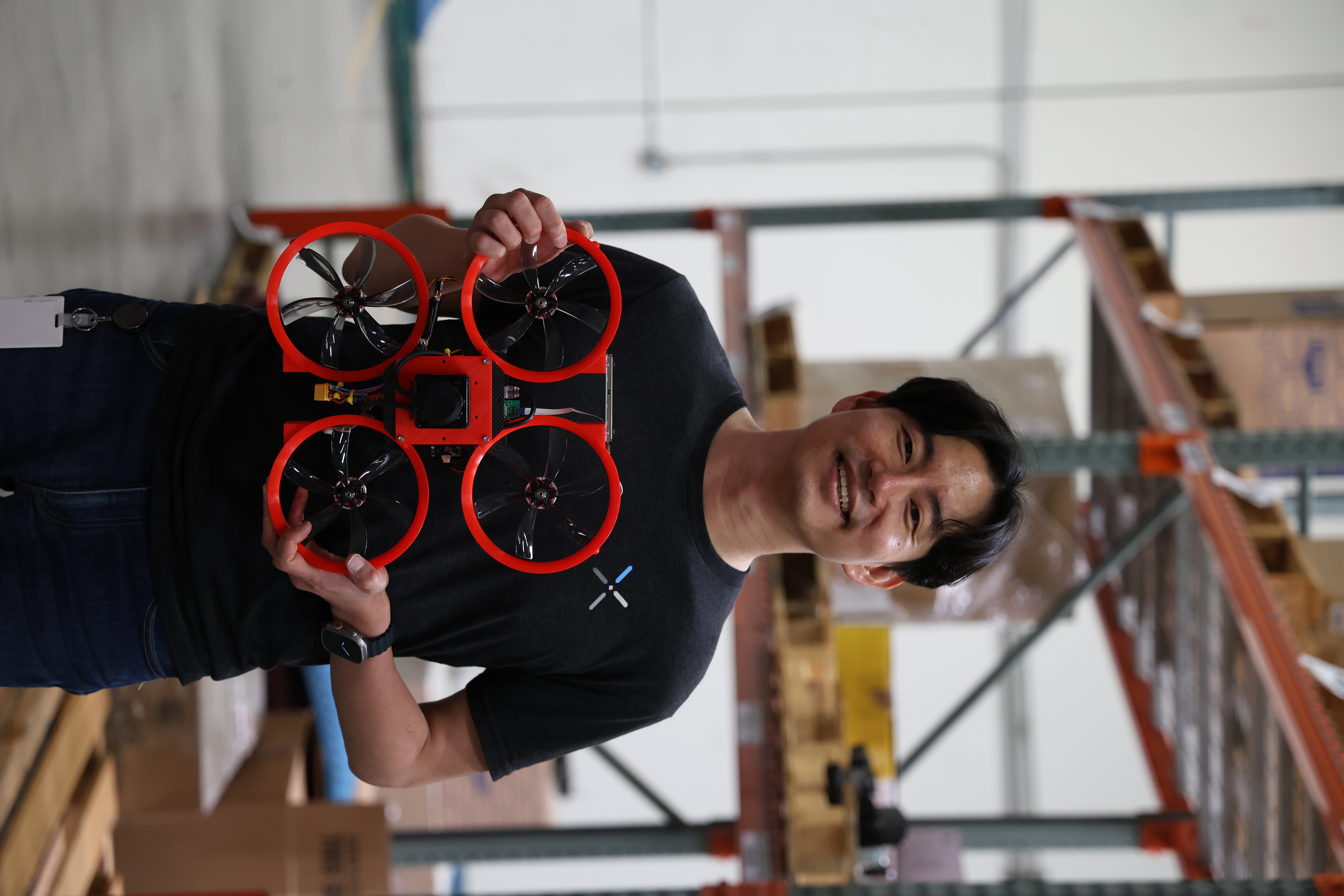
Aiden Kim Built a Drone for the Places GPS Forgot
The B GARAGE founder spent years studying decisions under uncertainty. Then he turned that training toward a stubborn warehouse problem: knowing what is actually on the shelves.

The Factory Floor's Babel Problem - and Botsync's Plan to Make Every Robot Talk
Factories rarely suffer from a shortage of machines. They suffer from machines that cannot coordinate. Botsync is building the traffic controller - and some of the traffic - for the industrial floor.

The Poker-Chip Seller That Built Retail’s Invisible Endless Aisle
Trademark Global started with collector plates, swords and a mountain of poker chips. Twenty-seven years later, its real product is the machinery behind the product - brands, data, warehouses and direct-to-door fulfillment for retail’s endless aisle.

The Truck-Rental Name That Quietly Became a Port-to-Door Machine
Ryder still owns the red logo everyone recognizes. The more consequential business now runs behind it - warehouses, drivers, maintenance bays, software and roughly $10 billion in freight under management.

Wolter
The Wisconsin forklift dealer that turned a garage full of spare parts into a thirteen-state material handling empire - one acquisition at a time.
Hyster-Yale Materials Handling
The century-old names on its forklifts are only the visible part. Hyster-Yale is rebuilding the machine behind the machines - mixing dealer service, automation, telemetry and cleaner power into a business that follows goods from port crane to warehouse rack.
Imperial Trading
For more than a century, a New Orleans wholesaler has quietly kept America's corner stores stocked. Now Imperial Trading is betting that the future of the convenience store isn't the shelf - it's the kitchen.

Zakariea Sharfeddine
Zakariea Sharfeddine is the co-founder and CEO of InLoop Robotics (YC P26), a startup building AI-native warehouse fulfillment powered by robotic arms you hire by the month. A KIT-trained informatics engineer who did machine learning work at Bosch and BMW and reinforcement learning research at RoboTUM, he now leads a team deploying bimanual robots that pack, kit, and fulfill orders, with remote human operators stepping in on edge cases so the line never stops.

InLoop Robotics
InLoop Robotics deploys intelligent bimanual robotic arms into warehouses as a service - handling packing, kitting, and order fulfillment for a flat monthly fee with no upfront hardware cost. Instead of waiting for a perfect model, InLoop ships imperfect policies into real warehouses, detects failures in real time, recovers automatically when it can, and hands off to a remote human operator when it can't. Every intervention becomes training data, so the system keeps getting faster and cheaper with each order.

Powerhouse AI
Powerhouse AI is a Y Combinator (W22) startup building an AI vision copilot for warehouse operators. Using an ordinary phone or tablet camera, its software counts boxes on pallets, reads shipping labels and logistics documents, and verifies inventory without manual data entry - aiming to make receiving, cycle counting, and shipping up to 20-40% faster while cutting human error. Founded in 2021 by Ivo Verhaegh and Kushal Pillay, the company operates between Singapore and New York.

Remy AI
Remy AI is a San Francisco robotics startup in Y Combinator's Winter 2026 batch building dexterous, AI-powered robots for e-commerce third-party logistics (3PL) warehouses. Its core bet is data: the team captures real human dexterity on real job sites using head-mounted cameras paired with wearable tactile sensors, recording synchronized vision, motion, and contact force. That data trains robotics foundation models so a bi-manual mobile robot can pick, pack, kit, and receive across changing inventory without reprogramming, deploy in weeks rather than months, and target roughly half the cost of legacy automation via a robot-as-a-service model.

PT. Global Jet Express (J&T Express)
PT. Global Jet Express, known globally as J&T Express, is an Indonesia-founded express delivery and logistics company built for the e-commerce era. Launched in Jakarta in 2015 by Jet Lee and Tony Chen, it grew from a domestic Indonesian courier into one of the world's largest parcel networks, operating across Southeast Asia, China, and new markets in the Middle East and Latin America. The company blends a dense physical network of sorting centers, depots, and couriers with digital tracking and automation, moving tens of millions of parcels a day for online sellers, marketplaces, and consumers.
XSQUARE Technologies
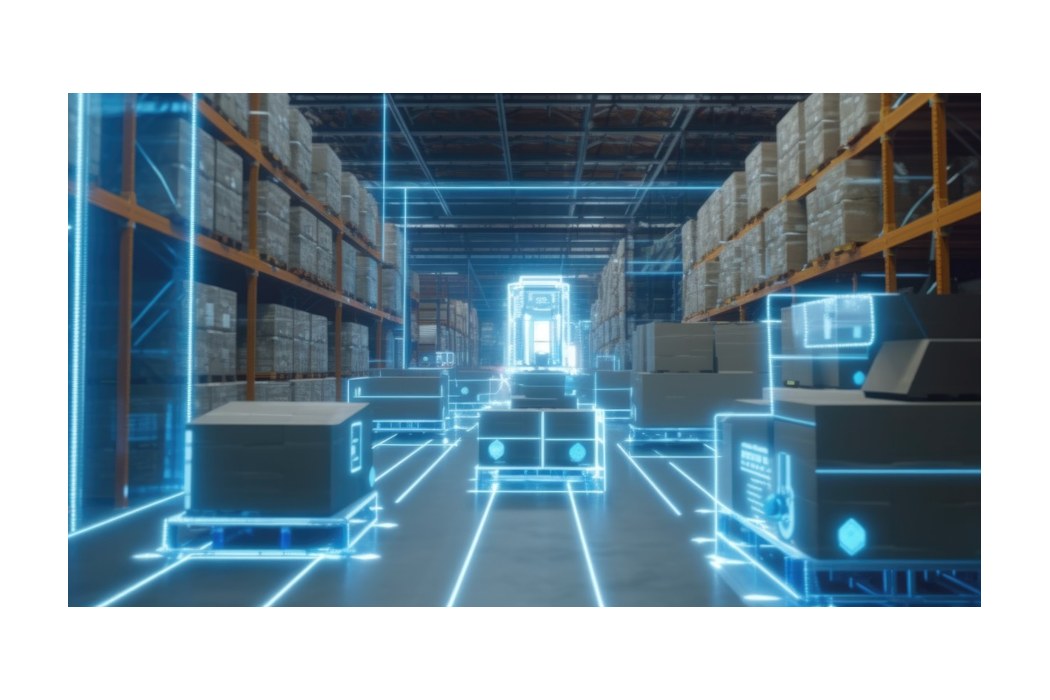
XSQUARE Technologies is a Singapore-based intralogistics company that builds autonomous forklifts and the Xymphony warehouse orchestration software to automate warehouses without requiring reconfiguration. Founded in 2019 and backed by Goldbell Group's four decades of material-handling expertise, XSQUARE pairs its own line of AGVs with an AI-driven control layer, offered largely through a Robots-as-a-Service subscription model. Its clients include Coca-Cola, GSK and Katoen Natie, and it raised S$10.5 million in Series A funding in May 2024 led by Wavemaker Partners.

Apptronik
Apptronik is an Austin-based robotics company building Apollo, a general-purpose humanoid robot designed to work alongside people in manufacturing, logistics and other physically demanding settings. Spun out of the University of Texas at Austin's Human Centered Robotics Lab in 2016, the company grew from custom actuator work for NASA into one of the most heavily funded humanoid robot developers, with commercial pilots at Mercedes-Benz and GXO and an AI partnership with Google DeepMind's Gemini Robotics team.
Jeff Cardenas
Jeff Cardenas is the co-founder and CEO of Apptronik, an Austin-based robotics company building Apollo, a general-purpose AI-powered humanoid robot. He spun the company out of the University of Texas Human Centered Robotics Lab in 2016 and has since raised close to $1 billion, secured a strategic partnership with Google DeepMind's Gemini Robotics, and positioned the company among the small handful of credible US humanoid players. He frames the race to build practical humanoids as the 'space race of our time.'

Ati Motors
Ati Motors is an industrial robotics company building autonomous mobile robots (AMRs) that move material inside and around factories. Its Sherpa family of self-driving robots uses 3D lidar, high-precision mapping and AI - the same principles behind self-driving cars - to tug, lift and transport loads from about 500 kg to 4,600 kg without the magnetic tape or fixed guide-paths of older AGVs. Founded in Bengaluru in 2017 and now dual-headquartered with a North American base near Detroit, Ati has deployed robots at 50-70+ manufacturing plants worldwide - including Fortune 500 names such as Hyundai, Bosch, Forvia, Daimler and Airbus - logging over 500,000 autonomous kilometers. The company raised a $20M Series B in early 2025 to expand across North America and APAC.

B GARAGE
B GARAGE builds fully autonomous drones and inventory-management software that scan warehouse shelves without pilots, added infrastructure, or pre-mapped facilities, helping logistics operators count inventory faster and cover labor shortages in remote distribution centers.

Duality AI
Duality AI is a San Mateo-based simulation software company behind Falcon, a digital twin platform built on Unreal Engine. Falcon lets engineers create photorealistic, physics-accurate virtual replicas of robots, sensors, and environments, then generate the labeled synthetic data used to train and validate AI vision and autonomy models - closing the gap between simulation and the real world. Founded in 2018 by Pixar graphics veteran Apurva Shah and robotics pioneer Mike Taylor, Duality serves customers including DARPA, the U.S. Army, Honeywell, and P&G.
Fulfil
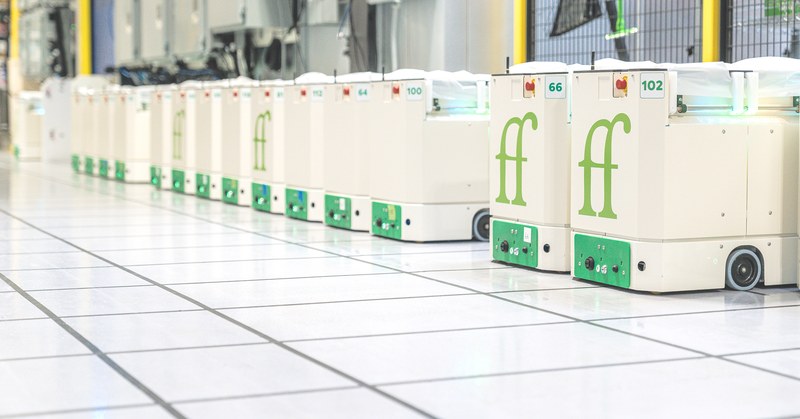
Fulfil (Fulfil Solutions) is a Mountain View robotics company building a fully automated grocery pick-and-pack system. Its ShopBot robots handle every grocery category and temperature state - produce, refrigerated, frozen - with item-level tracking powered by AI, computer vision and sensor fusion. The goal is to make online grocery, a famously unprofitable business, actually pencil out for retailers while cutting food waste. Fulfil emerged from stealth in February 2023 with $60M in Series B funding and powers Save Mart's Lucky Now same-day delivery service.