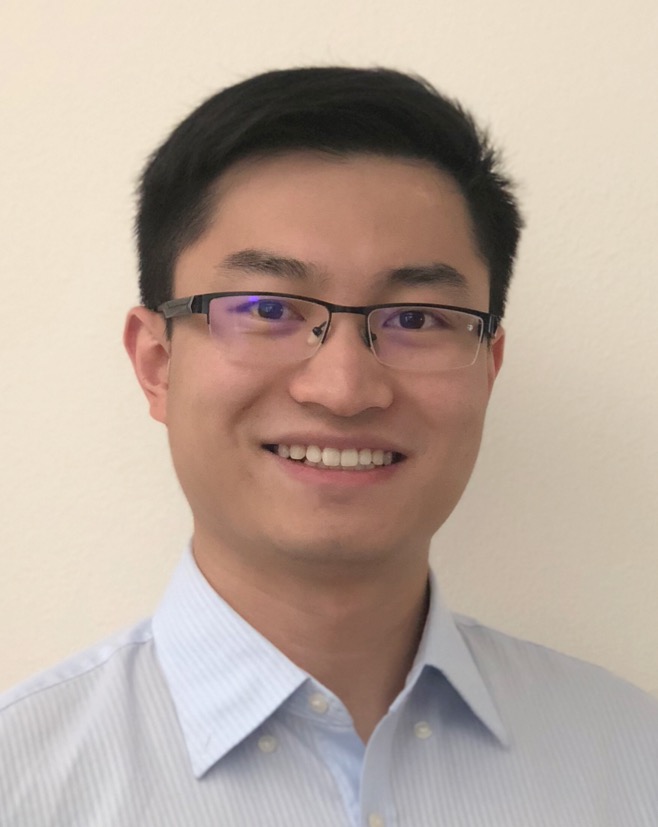
Four seconds. That's how long it takes Pixmo - the robot Thomas Tang built - to grab a box from a shipping container, orient it, and move it down the line. Multiply that by an eight-hour shift and you get roughly 7,200 boxes moved, in temperatures that hover near freezing, with no injury reports. This is the specific problem Tang decided to dedicate his post-Berkeley career to, and it's worth pausing on the specificity of that choice.
There are 28 million shipping containers entering the United States every year that need to be unloaded by hand. The work is relentless, physically punishing, and disproportionately performed by people with limited alternatives. Tang, who completed his PhD at UC Berkeley in 2018 under the supervision of Prof. Masayoshi Tomizuka - one of the world's leading experts in motion control - could have spent his career building surgical robots or autonomous cars. He chose the loading dock.
Before Anyware Robotics, Tang spent several years at FANUC, the world's largest industrial robot manufacturer, where he was a founding member of the company's Silicon Valley research center. He didn't just conduct experiments there - he commercialized a product. FANUC's AI palletization system, which Tang led from concept to market, established his reputation as someone who knew how to move technology out of a lab and into a factory floor. It's a distinction that matters enormously in hardware startups, where many promising technologies die in a valley between research and deployment.
Tang founded Anyware Robotics in January 2023 alongside three co-founders, all of them robotics PhD graduates from UC Berkeley: Bruce Fan (CTO), whose research combined AI and control for manipulation tasks and who had previously developed AI picking capabilities at FANUC; Sam Zhou (Chief Engineer), whose PhD focused on autonomous driving systems and who has worked at Porsche and BMW; and Torsten Schreiber (VP of Product), formerly of GreyOrange, who brought the logistics industry perspective the team needed. The founding team collectively holds 25 patents.
Pixmo - Anyware's flagship robot - is an autonomous mobile manipulator: a pallet-sized AMR base carrying a 6-degree-of-freedom collaborative arm with a vacuum-powered end effector. What distinguishes it from competing systems is a commitment Tang has been unusually vocal about: almost all components are off-the-shelf. "We've put a lot of effort into making sure that most of the components of our robot are off-the-shelf," he told IEEE Spectrum. In an industry where startups routinely overbuild proprietary hardware as a moat, Tang is betting that simplicity, reliability, and cost are the actual competitive advantages.
The robot can handle boxes up to 65 pounds, processes approximately 1,000 boxes per hour, and is estimated to cost roughly one-third the price of competing solutions, with a predicted payback period of 24 months for customers. Its AI perception system - Anyware's core proprietary stack - uses force sensing, vision-based guidance, and real-time learning to handle the chaos of a real container: varying box sizes, orientations, SKUs, and packaging conditions. No two loads are the same, and the robot adapts.
In March 2025, Anyware Robotics closed a $12 million seed round led by GFT Ventures, with participation from Foothill Ventures, Black Forest Ventures, and Alumni Ventures. Jay Eum, Founding Managing Partner of GFT Ventures, joined the Board of Directors. The same month, the company disclosed its first commercial customer: Western Post, a third-party logistics provider that expected to process over 45,000 containers through Pixmo units in 2025 alone.
One month later, at ProMat 2025 in Chicago, Pixmo won MHI's Best New Innovation award - selected from 232 competing submissions by an independent industry panel. The award recognized, in part, a patent-pending conveyor add-on Tang's team had developed: a quick-connect attachment that transforms Pixmo into a purpose-built unloading line by allowing the arm to pull boxes directly to the conveyor rather than rotating through a full pick cycle. It's a detail that captures Tang's engineering philosophy in miniature. The solution that won a major industry award is, at its core, a mechanism that eliminates a rotation.