Profile
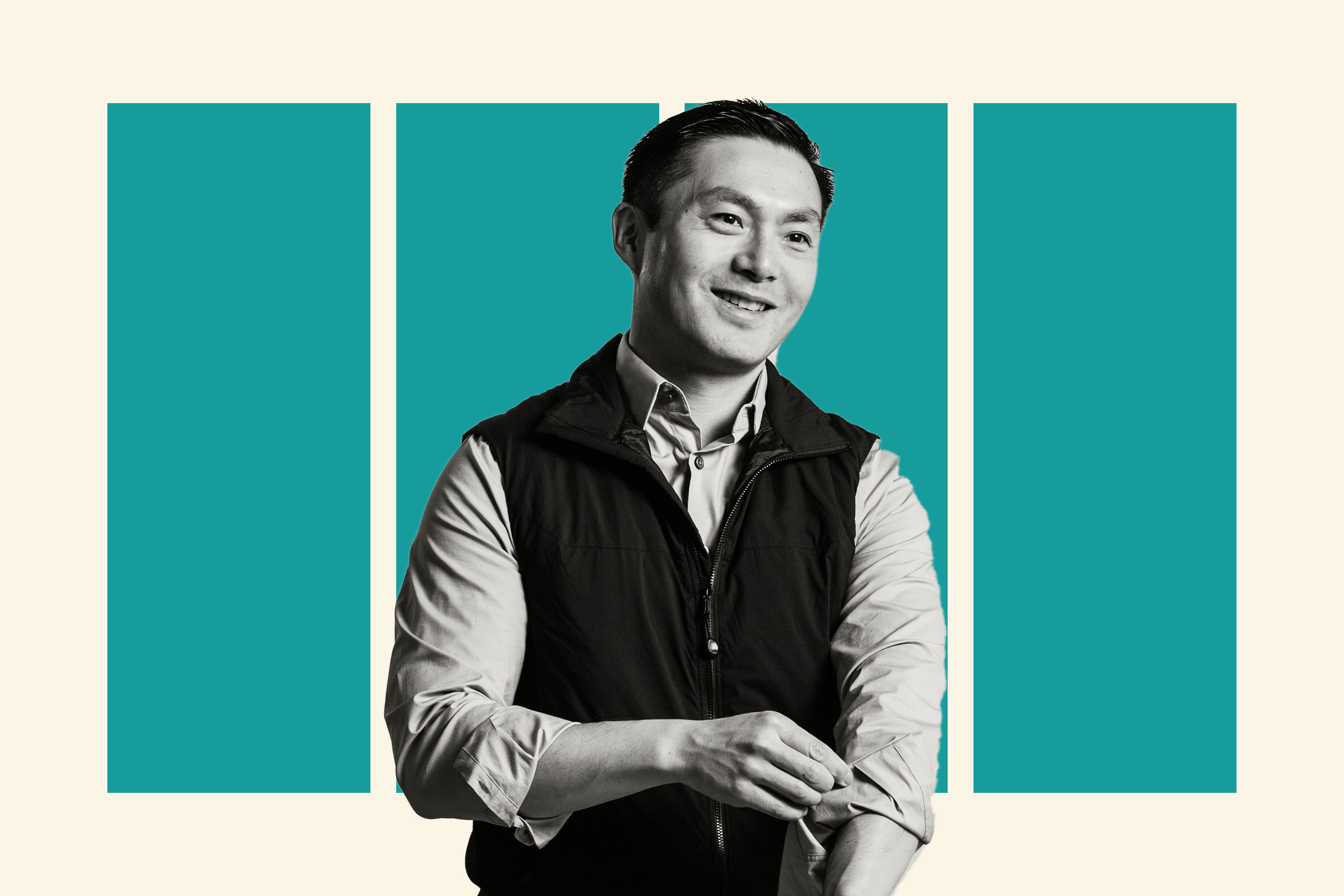
The Operator in the Room
Alfred Lin got the call while standing in a wedding party. Tony Xu, founder of a fledgling food delivery startup called DoorDash, was on the other end asking for a seed investment. Lin declined. He had concerns about the market. He went back to the ceremony. Then something kept nagging. He called back. He wrote the check. Fifteen years later, his DoorDash board stake sits at roughly $5.5 billion.
That story - hesitation, precision, reversal - is Alfred Lin in miniature. He is not the VC who arrives with theses and frameworks polished to a shine. He is the one who dropped out of a Stanford statistics PhD program, moved into a startup, built it into a company worth $265 million in 18 months, did it again with a shoe retailer no serious investor thought was serious, and only then took the partner's chair at Sequoia Capital.
By November 2025, Sequoia's board handed him and Pat Grady the whole firm. In April 2026, they closed a $7 billion AI expansion fund - the biggest in the firm's history. Lin has spent more than 30 years getting to this exact chair, and it doesn't look like an accident from any angle.
Great founders are on a mission to build a product or service that corrects something they believe the world got wrong. They are incredibly hard working, brutally intellectually honest, and insanely curious.
- Alfred Lin
The origin story runs through Taiwan. Lin was six when his family landed in New York, chasing better schools across four districts before he arrived at Stuyvesant High School, the city's most competitive public school on paper. His parents - an international banker and a banking executive - told him "we're temporarily poor, but we're smart, we're well-educated, and we'll figure things out." That framing stuck. Lin applied it to every company he'd ever touch.
At Harvard, he majored in applied mathematics and stumbled into what would become a 15-year partnership. Tony Hsieh ran the dorm pizza place. Lin, perpetually in need of laundry quarters, started buying whole pies at bulk discount and reselling slices to roommates at per-unit markup. Hsieh noticed. "Sometimes a quarter is worth more than a quarter," Lin would later explain - his cheerful framing of what was, structurally, an arbitrage operation in the basement of a college dormitory.
After Harvard, Lin started a Stanford statistics PhD program, lasted two years, dropped it, and joined Hsieh's LinkExchange as CFO. Eighteen months later, Microsoft bought it for $265 million. The pair co-founded Venture Frogs, a seed fund that backed Ask Jeeves, OpenTable, and - almost accidentally - Zappos.
Founders start companies by ignoring everybody's advice. If they listened carefully to all the feedback, they would just not start the companies.
- Alfred Lin
Zappos was, by any rational analysis, a bad bet. Selling shoes online. High return rates. Warehouse logistics. No serious investor thought it worked. Lin and Hsieh thought otherwise. Lin joined as CFO and COO and Chairman in 2005. He led the company to its first profitable year in 2006. He managed the 9/11 fallout. He navigated the 2008 crash - watching sales drop 30% after years of 30% growth. He handled Amazon's $1.2 billion acquisition in 2009, structuring it to protect the company's culture, the one thing that made Zappos Zappos.
The pattern across all three companies - LinkExchange, Zappos, Sequoia portfolio - is the same: Lin is the person you bring in when the operational complexity exceeds what the founding team can manage alone. Not because he simplifies things. Because he does the math and then does the work.
At Sequoia, Lin joined as a partner in 2010. His portfolio assembled quietly: Airbnb before it was anything; Uber in the early days; DoorDash despite the wedding call; Instacart; Reddit; Zipline; Faire; OpenAI; Physical Intelligence. He sat on the Airbnb board when the company's revenue dropped 80% in March 2020. His counsel at that moment: issue debt, don't dilute the founders, bet on recovery. The stock eventually hit $165 at IPO. The stake was worth roughly $15 billion.
Anecdote: The Airbnb Pandemic Bet
When Airbnb lost 80% of its revenue in a single month - March 2020 - the instinct in the room was a down-round equity raise. Alfred Lin pushed back. Issue debt. Protect the cap table. Bet the business comes back. It came back. The 2020 IPO was one of the biggest in history. His read of the situation, and the willingness to argue for it in the room, is what separates an advisor from a partner.
There is a particular kind of investor who arrives in a boardroom with pattern-matching and buzzwords and leaves with a check. Lin is the other kind. He spent years sleeping in warehouses and fixing cash flow problems before he started evaluating term sheets. Founders notice the difference. His core screening question is not "is this market big?" It is: would I want to work for this founder?
His personality is famously contained. Colleagues describe him as "poker-faced." His Fortune 2021 profile - at the time of the biggest IPO year Sequoia had ever seen - was described as his first major in-depth interview. He publishes occasionally on X, favors math and operations content, and has 65,000 followers. His LinkedIn says what it needs to say. He is, by design, the least visible person in the most visible seat in venture capital.
In November 2020, Tony Hsieh died in a fire in Connecticut. Lin published a farewell letter in Forbes. It was one of the only times his private register cracked into public view - and the care with which it was written made clear something about him that the investment track record doesn't: he is, underneath the analysis, someone who takes people seriously. His investments are people bets. He's been making them since he was buying pizza pies in a Harvard dorm and stacking quarters for the arcade machine.
Dream about the dent you will put in the universe. Stay grounded in your reality. Build a plan that connects.
- Alfred Lin, on what he tells founders
Now, running Sequoia, Lin is managing a firm that sits at the intersection of every major AI transition happening in 2025 and 2026. OpenAI. Anthropic. Physical Intelligence. The $7B fund is not a trend-chase; it is a continuation of the same operating principle Lin has run since 1996: find founders who believe the world got something wrong, and put real resources behind them before the market is ready to agree.
His philosophy of "founder-market fit" - not just product-market fit - asks whether a founder is the right person to solve this specific problem. Whether the obsession is earned, not constructed. Lin, who earned his through a warehouse in Kentucky and a cash flow crisis in Nevada, knows the difference on sight.