Tagged: stanford
30 results
Rohan Chopra
Rohan Chopra is the co-founder and CEO of Convey, a San Francisco enterprise AI company that lets non-technical operators build and manage autonomous 'digital teammates' to run repetitive business operations. An early DoorDash engineer who spent roughly eight years there building the logistics and dispatch systems behind its delivery network, Chopra started Convey in 2024 with childhood friends Diego Canales and Will Harvey. In June 2026 the company raised a $38 million Series A led by Andreessen Horowitz, with Khosla Ventures and Pear VC participating, after its platform logged more than one million hours of automated work for customers including NBCUniversal, Samsara, TelevisaUnivision, Unity, Faire and ChargePoint.
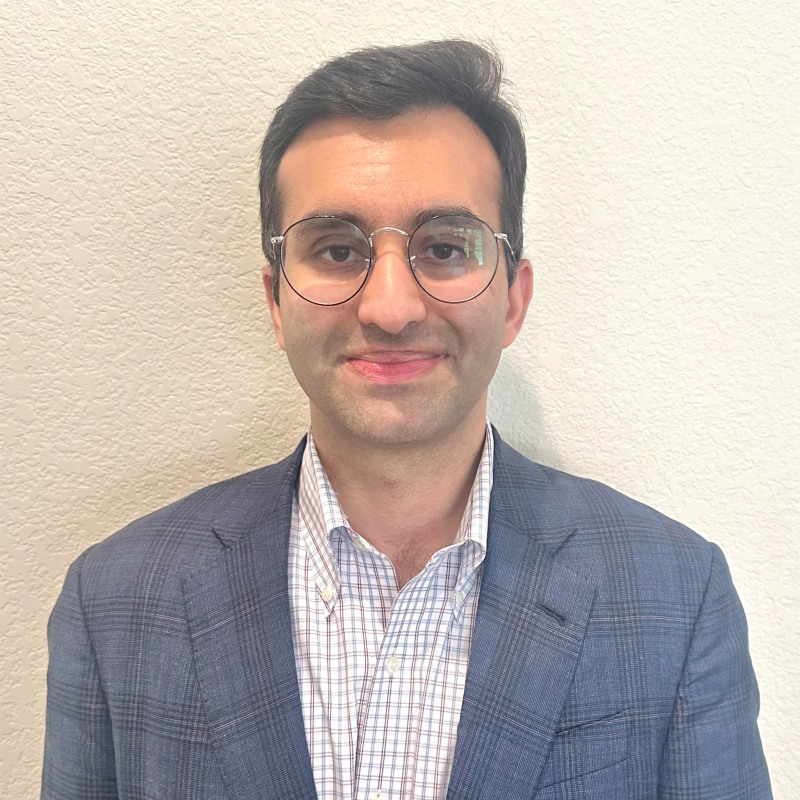
Sohaib Shaikh
Sohaib Shaikh is the CEO of Virtue AI, a San Francisco security startup building the trust layer for enterprise AI and agentic systems. A Stanford-trained electrical engineer, he spent more than eight years at C3 AI as Group Vice President of Sales before joining Virtue AI as Head of Sales in April 2026 and being named chief executive that June, after the company posted 600% year-over-year growth on the back of a $30 million seed and Series A round.

Dan Woods
Dan Woods is the Founder and CEO of Socotra, the AI-native cloud-native insurance core platform he built from scratch starting in 2014. A Stanford AI researcher and former Palantir engineer (employee #20), he left the data-intelligence world to fix insurance technology - an industry he describes as 'a decade behind banking.' Under his leadership, Socotra has raised $87M+ in total funding including a $50M Series C led by Insight Partners, and powers carriers and insurtech MGAs who can now launch insurance products in weeks instead of years.

Zakir Durumeric
Zakir Durumeric is a computer security researcher, Stanford assistant professor, and co-founder and CEO of Censys. As a University of Michigan PhD student he built ZMap, a scanner that can survey the entire public IPv4 internet in minutes rather than weeks, then turned that research into Censys, an internet intelligence platform used for threat hunting and exposure management. His work mapping the internet at scale helped expose the reach of vulnerabilities like Heartbleed and earned him a spot on MIT Technology Review's 35 Innovators Under 35.

Jon Plax
Jon Plax is a Vice President of Software Engineering (Customer Centric Engineering) at Salesforce, where he has spent the bulk of a 23+ year career building and leading globally distributed engineering teams. Known internally as a technically deep yet empathy-driven leader, he has tackled some of Salesforce's most complex scaling challenges - JVM tuning, database bottlenecks, and multi-continent team coordination. He spent five years in Salesforce's Dublin office, briefly detoured to Bumble, then returned to Salesforce. A photography hobbyist with a consistent 'spaceman1066' handle across the internet, he is married to Talia Bailey Plax, a product marketing leader at Atlassian.

Megan Mackh
Megan Mackh is Vice President of Commercial Sales at Salesforce, where she leads teams driving customer success across cloud solutions. A Stanford and UC Berkeley Haas School of Business alumna, she spent nearly 15 years at Google - rising through AdWords, inside sales, and ultimately heading Global Telecommunications Partnerships for Google Cloud across 60+ telco partners worldwide. Named to CRN's Women of the Channel in 2020 and 2021, she is known for building high-performing teams and taking bold leaps into leadership from an unusually early age - she managed 18 people at AT&T at 22. She is currently pursuing a Doctorate in Public Health at Johns Hopkins Bloomberg School of Public Health.

Ed Stevens
Ed Stevens is the founder and CEO of Scoot, a Dallas-based platform that positions itself as an AI sales environment where buyers, sellers, and live AI agents meet in real time. A serial entrepreneur with more than 25 years in retail and software, he previously founded and led the ecommerce fulfillment company Shopatron (acquired by Vista Equity Partners in 2015) and served as COO of Kibo Commerce. Scoot began life as Preciate, an appreciation and relationship platform, before rebranding and raising a $12M Series A in early 2023. Stevens is also an author, board member, and investor.

Eli Wachs
Eli Wachs is the co-founder and CEO of Footprint, a New York identity verification company building what he calls the identity layer for the internet. Footprint helps banks, real estate firms, auto dealers, and other businesses onboard customers by automating KYC and fraud checks while storing personal data inside secure enclaves. A Stanford economics and history graduate and former General Atlantic investor, Wachs started the company in 2022 with CTO Alex Grinman and has raised roughly $20 million to pursue a blunt goal: reduce digital identity theft toward zero while giving people more control over their own data.
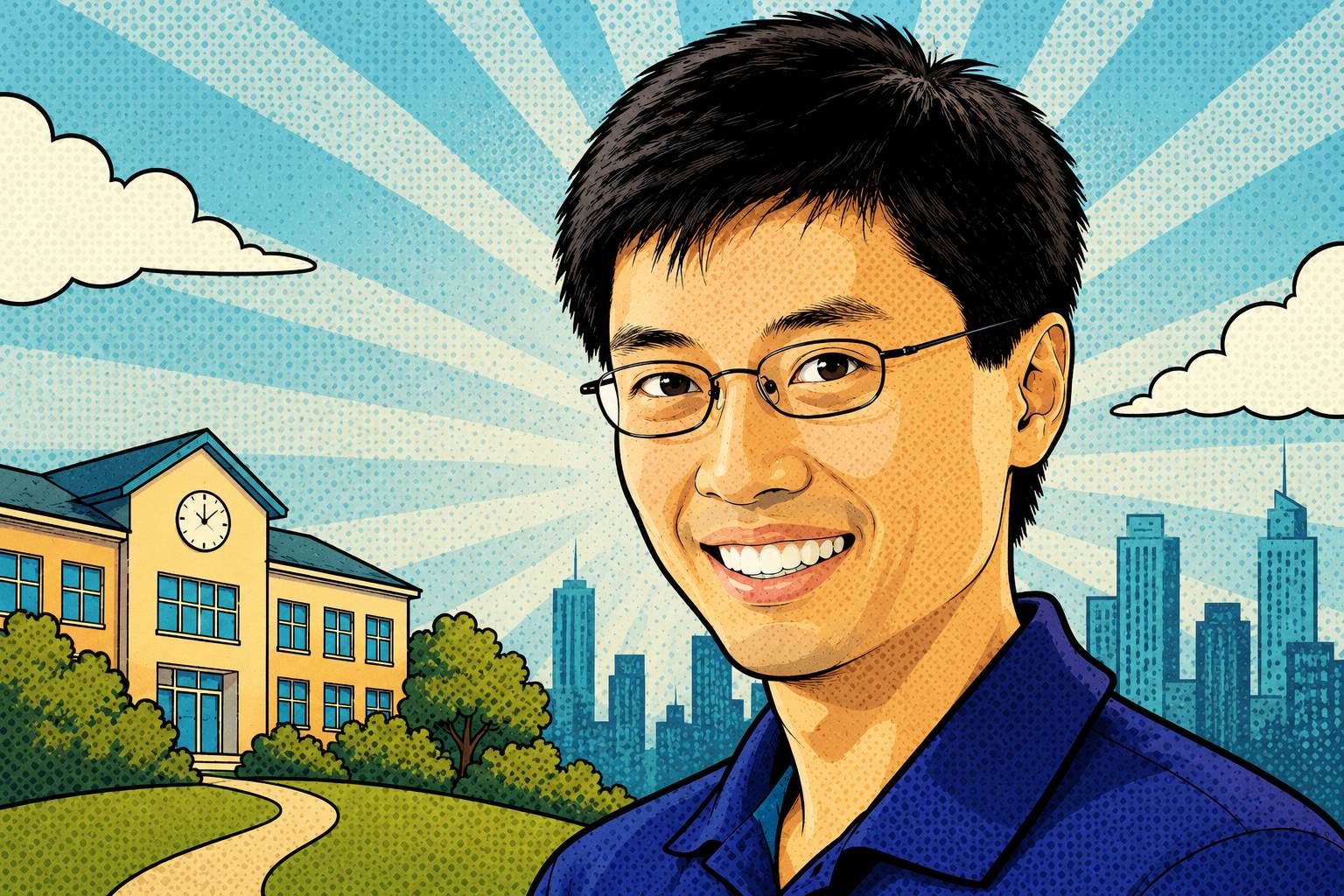
Po-Shen Loh on Education, Opportunity, and Humanity After AI
Mathematician Po-Shen Loh, the longtime U.S. International Math Olympiad coach, argues that AI is about to erase the promise of a 'stable life' and that the way humanity thrives afterward is by building high-trust networks of curious, caring people. Drawing on visits to a high-poverty fourth-grade classroom in rural South Carolina and to Africa, he describes vast untapped pools of authentic talent, a coaching pipeline where students mentor younger students across borders, and a new 'economic flow system' powered by trust and remote work. He warns about the risks of an interconnected, AI-written, robot-run world, and reframes education around intention, curiosity, and the ability to solve non-standard problems. A brief closing segment features a Stanford instructor describing the rise of the 'AI-native engineer.'

Only in America: My Conversation with Jensen Huang
In an interview for the 'Only in America' series, former Secretary of State Condoleezza Rice sits down with Nvidia founding CEO Jensen Huang at Nvidia's new California campus. Huang recounts his journey from a nine-year-old immigrant sent from Thailand to a boarding school in Oneida, Kentucky, through Oregon State University and Stanford, to founding Nvidia on a business plan many considered impossible. He reflects on the chicken-and-egg problem of introducing a new computing architecture, the decades of grit before AI validated his vision, cautious optimism about artificial intelligence, and why he considers himself the embodiment of the American dream.

Mylene Yao
Mylene Yao is co-founder, director, and CEO of Univfy, a Los Altos-based healthcare AI company that builds personalized IVF success prediction models. A board-certified OB/GYN trained at the University of Toronto, McGill, and Harvard, she was a Stanford faculty member running an NIH-funded embryo development lab before spinning her prediction research out with statistician Wing H. Wong. Univfy's models tell patients their individual odds of having a baby with IVF, and pair the prediction with financing so more people can actually pursue treatment.

Quentin Perrot
Quentin Perrot is Chief Product Officer at Zenysis Technologies, a Y Combinator-backed company that builds data integration software for ministries of health and government agencies across four continents. A Stanford-trained product leader who has lived and worked in six countries, he oversees the roadmap for Harmony, Zenysis's open-source platform used to knit together fragmented health data sources.

Darsel
Darsel is an education-technology nonprofit that teaches K-12 math over the messaging apps students already have. Instead of an app or a laptop, students practice curriculum-aligned questions through SMS, WhatsApp, and Facebook Messenger, and an AI-powered chatbot delivers hints, explanations, and personalized practice while auto-grading homework and reporting progress to teachers. Founded by Stanford MBA and MIT alum Abdulhamid Haidar during the COVID-19 lockdowns, Darsel has grown from a spring-break prototype to a platform used across Jordan, India, and Nigeria, reaching hundreds of thousands of students who have answered hundreds of millions of math questions.

Inspirit
Inspirit is a Palo Alto-based education technology company building a spatial-computing platform that brings virtual and augmented reality into STEM, career, and workforce learning. Its no-login library of 270+ interactive 3D models and simulations runs across VR headsets like Meta Quest and Pico as well as ordinary Chromebook browsers, letting teachers and trainers plan, run, and track immersive lessons without heavy hardware budgets. Founded by Stanford Graduate School of Education researchers, Inspirit grounds its content in learning science and is used across hundreds of school districts and, increasingly, in workforce and justice-reentry programs.

Marriage Pact
Marriage Pact is a research-driven matchmaking company, born as a 2017 Stanford economics class project, that runs an annual values-based questionnaire on college campuses. Instead of judging looks or swiping, students answer roughly 70 questions about their deepest values, and a stable-matching algorithm pairs each person with their single most compatible 'backup plan' on campus. Founded by Liam McGregor and Sophia Sterling-Angus, it has expanded from one campus to more than 100 schools and over 600,000 participants, and raised a $5M seed round in 2022 to keep building relationship technology.

RadixArk
RadixArk is an AI infrastructure company spun out of the team behind SGLang, the open-source inference engine that serves trillions of tokens a day for the likes of Google, Microsoft, NVIDIA, Oracle and xAI. Founded by Ying Sheng and Banghua Zhu, RadixArk keeps SGLang and its reinforcement-learning framework Miles free and open while selling managed hosting and tooling on top, aiming to make building, training and running frontier models at least 10x cheaper and 10x more accessible. It launched publicly in May 2026 with a $100M seed round led by Accel and Spark Capital at a $400M valuation.
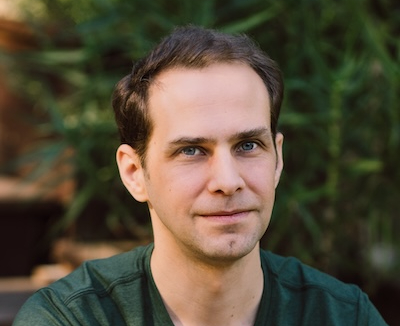
Andreas Stuhlmüller
Andreas Stuhlmüller is the cofounder and CEO of Elicit, an AI research assistant that automates evidence synthesis for scientists and analysts. A cognitive scientist by training (PhD, MIT), he built probabilistic programming languages before turning to a single question: can AI help people reason well about hard problems? His answer is process supervision, the idea that you get trustworthy machines by watching how they think, not just grading what they produce. Elicit, which spun out of his nonprofit Ought, raised a $22M Series A in 2025 and serves hundreds of thousands of researchers.

Garrett Smith
Garrett Smith is the founder and CEO of Reveal Technology, a Bozeman, Montana defense-tech company that turns drone video into offline 3D maps and runs mobile biometrics on a phone at the tactical edge. A former U.S. Marine Corps infantry and intelligence officer who still serves in the reserves, Smith built the company he wished he had in combat, where he was making high-stakes decisions off pen-and-paper maps in a digital war. Reveal's Farsight and Identifi platforms are used by U.S. Special Operations, the Army, the Marines, and allied forces in Ukraine, the UK, and Israel. In July 2025 the company closed a $30 million Series B led by Ballistic Ventures.

James Lu
James Lu is the co-founder and CEO of Helix, a population genomics company he helped launch in 2015 with Justin Kao and Scott Burke. An MD/PhD trained at Baylor College of Medicine with chemical engineering degrees from Stanford, Lu built his career at the intersection of machine learning, electronic health records, and genetics. He argues that the genome should sit alongside blood pressure and cholesterol as a core clinical input - the difference being that your genome never changes. Under his leadership Helix runs one of the largest clinical sequencing labs in the US and the Helix Research Network, and its GenoSphere dataset links more than 500,000 clinico-genomic records.

Nina Eiböck
Nina Eiböck is the Finance & Strategic Ops Lead in the Office of the CEO at Ello, the San Francisco edtech building the world's first AI reading coach for young children. An Austrian-raised, Oxford- and Stanford-trained financier, she left investment banking at J.P. Morgan and energy-sector finance to help run the numbers and the strategy behind a Series A startup teaching kids to read. She is the kind of operator who names her pet rabbits after Napoleon and Warren Buffett.

Jay Li
Jay Li is the founder and CEO of Proception, a Palo Alto robotics startup building high-dexterity robotic hands for humanoid robots. A former electronics lead on Tesla's Optimus program, he left to bet that the fastest path to capable robots runs through hardware close enough to the human hand that machines can learn directly from people. His ProHand packs 22 degrees of freedom and skin-like tactile sensors; its companion ProGlove captures human manipulation data with no robot in the loop. In June 2026 Proception shipped its first hands, settled a Tesla trade-secret lawsuit, and closed an $11M seed round led by First Round Capital on the same day.

Jen Rhi
Jen Rhi is the founder and CEO of NXN Labs, a San Francisco and Seoul based AI company building an operating system for fashion and commerce imagery. A Stanford computer science graduate and former McKinsey and SoftBank Ventures alum, she left the investor side of the table to attack a problem she kept seeing in brands: creative ideas were cheap, but the production bandwidth to shoot models, garments and campaigns at scale was the real bottleneck. NXN Labs answers that with proprietary multimodal diffusion models that generate photorealistic on-model imagery, video and virtual try-ons without a physical shoot. Two months after founding, the company was backed by Naver D2SF, KB Investment and Smilegate; by 2026 it had landed European luxury clients and a spot on the NRF Innovators' Showcase Top 50.

Jeremy Keeshin
Jeremy Keeshin is the CEO and co-founder of CodeHS, the online platform that teaches computer science to millions of middle and high school students. A Stanford computer science graduate who cut his teeth as a section leader for the university's legendary intro programming courses, he launched CodeHS in 2012 with classmate Zach Galant to bring coding to schools that had never offered it. He wrote 'Read Write Code,' a friendly primer arguing that coding is the new literacy, and he still finds time to juggle, chase crosswords, and crack jokes rooted in his college days running the satirical paper The Stanford Flipside.

Jia Xu
Jia Xu is CEO of SkyGrid, the Austin, Texas company building high-assurance airspace integration software for autonomous and unmanned flight. With a PhD from Stanford, dual master's degrees from Imperial College London and the London School of Economics, and career stints at the RAND Corporation, Airbus, General Atomics, and Honeywell Aerospace, Xu brings rare cross-disciplinary depth to one of aviation's hardest problems: teaching machines to share the sky. Under his leadership since August 2023, SkyGrid pivoted from generic airspace software to become a specialized third-party services provider for advanced air mobility - and was acquired by Wisk Aero (a Boeing subsidiary) in June 2025.

Jorge Heraud
Jorge Heraud is a Peruvian-born engineer and serial agtech founder who co-founded Blue River Technology — sold to John Deere for $305 million in 2017 — and is now CEO of TerraBlaster, a Redwood City startup using NASA-pioneered laser spectroscopy to give farmers real-time soil nutrient data, aiming to cut fertilizer waste and transform how agriculture feeds the world.

Kul Wadhwa
Kul Wadhwa is the CEO and founder of BeyondView, a San Francisco proptech company building photorealistic digital twins and game-like walkthroughs for commercial real estate. Before BeyondView, he spent six years at the Wikimedia Foundation, where he ran business development and mobile and launched Wikipedia Zero, bringing free Wikipedia access to over half a billion people in 22 developing-world countries.
Kevin Gibbs
Kevin Gibbs is co-founder and CEO of Terraton, a San Francisco climate-tech startup building a 'business-in-a-box' franchise model for biochar carbon removal. Before climate, he built two pieces of internet plumbing most people use without knowing his name: Google Suggest (search autocomplete) and Google App Engine. He went on to co-found Quip with Bret Taylor, sold it to Salesforce in 2016 for roughly $750M, and ran it to north of $100M ARR. Terraton raised an $11.5M seed in August 2025 led by Lowercarbon and Gigascale.

Josh Whisenant
Josh Whisenant is the co-founder and CEO of Roger (tryroger.com), a Salt Lake City construction-tech startup building an AI workspace that helps project managers catch scope gaps in drawings, generate scopes, find subcontractors, and stay coordinated. A Stanford engineer turned construction operator turned founder, he raised a $3.2M seed in 2022 led by Resolute Ventures and has spent the years since publicly wrestling with how hard - and how necessary - it is to drag construction operations into the AI era.

Joshua Stern
Joshua Stern is the CEO and co-founder of Telerivet, a mobile communications platform built for organizations that operate where bandwidth is thin, languages are many, and feature phones still matter. A Stanford computer science graduate who joined the Peace Corps instead of the Valley, he learned the texture of mobile networks on the island of Pemba, off Tanzania, then turned that field experience into software used by NGOs, governments, and enterprises across more than 50 countries.

Julie Nguyen
Julie Nguyen is the CEO and co-founder of Methodology, a Bay Area premium meal-delivery service that ships chef-cooked, ingredient-strict meals nationwide in reusable glass jars. A Stanford economics grad who jumped from J.P. Morgan to Lumosity to founder life, she bootstrapped the company in 2015 by emptying her 401(k) and has grown it to eight-figure annual revenue.