gtm
(60)
Julia Nimchinski and the trouble with knowing the answer
She learned B2B marketing by doing the job before anyone could show her how. With Hard Skill Exchange, Julia Nimchinski has turned that experience into a business built around practice, practitioners, and increasingly difficult questions about AI.

Trigify Hears the Buyer Before the Buyer Calls
The internet is full of prospects quietly announcing what they need. Trigify turns those stray posts, likes, job moves and competitor grumbles into named, actionable signals - if your team knows what to do next.

Seismic Won Regulated Sales, Then Merged With Its Rival
For years the choice between Highspot and Seismic split along one fault line: who could survive a compliance audit. Then, in February 2026, the two rivals stopped competing and agreed to become one company.

The Robots Fighting Over Your Sales Forecast
Clari and Aviso both promise to tell you what your quarter will close at. The real split is over who does the work - your reps clicking through a CRM, or software that acts on its own.

Alexa Grabell
Alexa Grabell turned a sales-operations workaround into Pocus, helped name a category, and sold the company to Apollo. Her story is a case study in turning messy data into a clear operating thesis.

Spekit, Glean and the End of Looking Stuff Up at Work
Two well-funded startups are attacking the same quiet tax on office work - the hours people lose hunting for answers that already exist somewhere in the company. One buries the answer inside the sales tools; the other indexes everything and lets you ask.

Savio
Centralize customer Feature Requests from Slack, HubSpot, Intercom, Zendesk, SFDC, Help Scout, and more.

Spekit
Reimagine revenue enablement with the Rep Acceleration Platform. One governed source for coaching, content creation, and deal intelligence in the flow of work.

Commsor Bet That Your Network Was the Product
The community-software startup spent six years arguing that trust, not cold email, is how companies actually grow - then folded the idea, and itself, into The Swarm.

Alex Reynolds
He lined up ten customers for February 2020, then the events industry went dark overnight. Alex Reynolds kept building anyway - and turned the messy art of picking conferences into a data problem worth solving.

Dock
Ask Dock to create sales rooms, onboarding portals, playbooks, and more.

Commsor
It started as software for online communities and became the company that told sales teams to stop cold-calling and start asking friends. The dinosaur was optional; the warm intro was the point.

FuseAI (YC W25)
FuseAI (operating as Fuse, tryfuse.ai) is a San Francisco-based, Y Combinator W25 startup building an AI-native sales platform for outbound revenue teams. It consolidates the fragmented GTM stack - contact data, waterfall enrichment, email and LinkedIn automation, deliverability infrastructure, a parallel dialer, and real-time buying signals - into one system where AI agents execute sales workflows from natural-language prompts. Founded in 2024 by CEO Saurav Bubber (former Deel GTM operator) and CTO Imogen Low (ex-SAP, co-founder of NWO.ai), Fuse aims to let one rep do the work of five.

Imagine AI
Imagine AI is a San Francisco startup in Y Combinator's Fall 2025 batch that builds B2B content pipelines for sales-led companies. It creates deep AI personas from a team's transcripts and interviews, then produces LinkedIn posts, strategic comments, and SEO blogs in each person's voice, with a dedicated content engineer per account. The goal is 'content market fit' - content optimized for qualified pipeline instead of vanity metrics.

The Hog
The Hog is a San Francisco startup from Y Combinator's Fall 2025 batch that packages people data, company data, web search, news, social signals, sentiment, and scraping behind a single pay-per-call API for AI agents and go-to-market teams. It routes each request through multiple data providers using waterfall logic, positioning itself as one endpoint that replaces a stack of tools like Clay, Apollo, Exa, and Tavily. Founded by growth operator Hudson Liao and AI engineer Paulo Nascimento, it aims to compress market research and outreach from hours into minutes.

Sam Blond
Sam Blond is a go-to-market operator turned founder who built his reputation scaling startup sales teams. He was VP of Sales at Zenefits and Chief Revenue Officer at Brex, where he helped drive revenue from near zero to roughly $400M ARR. After an 18-month run as a partner at Founders Fund, he decided investing was not his fit and went back to operating. In 2026 he co-founded and now leads Monaco, an AI-native sales platform for startups, alongside his brother Brian Blond.

Andrea Johnston
Andrea Johnston is a seasoned revenue and operations executive with over 30 years of building high-growth businesses across SaaS, consumer tech, and marketplace platforms. After a decade at OpenTable — rising from VP of Western Region Sales to Chief Operating Officer — she led global revenue at Corel/Alludo, joined Truckstop as Chief Revenue Officer in 2024, and is now CEO at Franki, the video-led restaurant discovery and rewards app that is rewriting how 25,000+ monthly users find their next great meal. Johnston is a go-to-market architect, board advisor to multiple tech startups, and speaker at the 2025 Khosla Ventures CEO Summit.
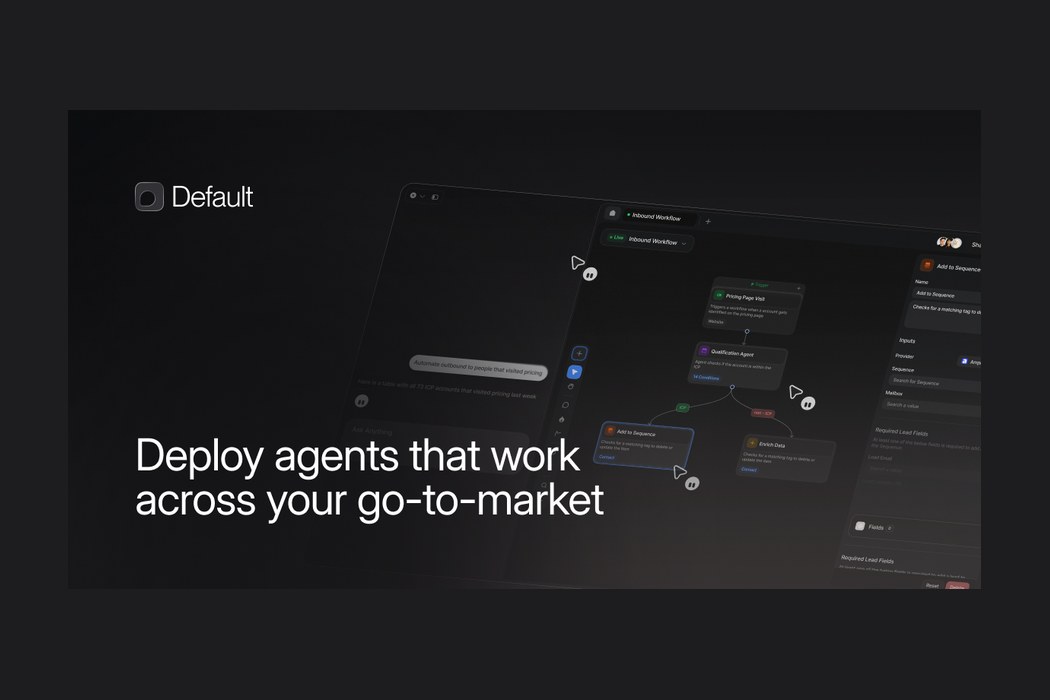
Default
Default is a New York-based go-to-market software company building the data and infrastructure layer that revenue teams - and their AI agents - use to run sales, marketing, and operations. It began as an all-in-one inbound platform for lead routing, scheduling, forms, and enrichment, then rebuilt itself around a real-time revenue data layer and an AI agent named Dot that plans and executes GTM work across a company's connected CRM, marketing, and enrichment systems. Backed by 8VC, Craft Ventures, and Jack Altman with $20M in total funding, Default serves fast-growing companies including Perplexity, Cortex, Owner, and Airbyte.

Pocus
Pocus is an AI-powered product-led sales and revenue intelligence platform that helps go-to-market teams turn scattered product usage, CRM, and intent data into prioritized action. Founded in 2021 by Alexa Grabell and Isaac Pohl-Zaretsky, the San Francisco company tells sales reps which accounts to work, who to contact, and what to say by surfacing high-intent buying signals and generating AI account plans. Used by product-led companies including Asana, Canva, Miro, Monday.com and LaunchDarkly, Pocus raised $23M in seed and Series A funding backed by a16z and First Round Capital, and was acquired by Apollo.io in March 2026 to power Apollo's AI-native GTM operating system.

Scoot
Scoot is a Dallas-based B2B software company that runs an AI sales platform built on top of a customizable virtual meeting environment. Founded in 2017 as Preciate and rebranded to Scoot in 2023, the company puts real-time AI agents inside sales meetings, webinars, and events to coach reps, engage buyers, qualify leads, and automate CRM follow-up. Led by founder and CEO Ed Stevens, Scoot pitches itself as a more engaging, brand-able alternative to static tools like Zoom and Microsoft Teams for go-to-market teams.

Vendelux
Vendelux is a New York-based, AI-native event intelligence platform that turns in-person B2B events into a measurable, pipeline-generating channel. It tracks a proprietary database of 250,000+ conferences and trade shows, matches a company's ideal customers and target accounts against real attendee data, books qualified meetings before the show, and attributes resulting pipeline back to specific events inside Salesforce or HubSpot. Founded in 2021 by Alex Reynolds and Stefan Deeran, Vendelux serves GTM teams at companies like Ramp, Coupa, Contentful and T-Mobile, and has raised roughly $71M across seed, Series A and a 2026 Series B.

Ido Gaver
Ido Gaver is the CEO and co-founder of Sweep, a New York-based software company building an agentic workspace that lets AI agents observe, document, and govern the metadata inside enterprise CRM systems like Salesforce and HubSpot. A serial entrepreneur, he previously co-founded flok, a small-business loyalty and CRM startup acquired by Wix in 2017, after which he ran B2B and partnerships for Wix. Since founding Sweep in 2021, he has raised over $45M, including a $22.5M Series B led by Insight Partners with Bessemer, and signed customers such as LG Electronics, Brex, NBC Sports, and Wix.

Kareem Amin
Kareem Amin is the cofounder and CEO of Clay, a New York-based go-to-market platform that lets sales and marketing teams pull data from dozens of sources and run AI-powered personalized outreach at scale. After a seven-year search for product-market fit, Clay crossed $100M in annual recurring revenue and raised a $100M Series C in 2025 at a reported valuation above $3B. A second-time founder and McGill-trained engineer, Amin frames Clay as a creative tool that gives non-programmers the power of code, and talks openly about meditation, founder psychology, and building 'from a place of wholeness.'

1mind
1mind is a San Francisco AI company that builds photorealistic, voice-enabled 'Superhumans' - digital go-to-market teammates that combine a face, a voice and a product-trained brain to qualify leads, run live demos, join sales calls, handle objections and onboard customers 24/7 across websites, products, video calls and deal rooms. Founded by 6sense founder Amanda Kahlow and CTO Sachin Bhat, the company publicly launched in November 2025 with $40 million in total funding and is used by more than 45 B2B companies including HubSpot, ZoomInfo, Nutanix and New Relic.

Endgame
Endgame is a San Francisco software company building an AI knowledge system for enterprise sales teams. It connects a company's CRM, emails, and call recordings with external sources like news, 10-Ks, and LinkedIn to do account research, meeting prep, deal inspection, and QBRs roughly 100x faster - aiming to turn every seller into a trusted advisor rather than a source of automated spam. Founded in 2021 by Alex Bilmes, the company first helped define the 'product-led sales' category before pivoting to an AI-native platform, and has raised about $47.5M from EQT Ventures, Menlo Ventures, Upfront Ventures, and Unusual Ventures.

Monaco
Monaco is an AI-native sales platform - billed as 'the first revenue engine for startups' - that replaces the usual patchwork of CRM, outbound tools, and pipeline software with a single system. Founded in 2025 by former Brex CRO Sam Blond alongside his brother Brian Blond, Abishek Viswanathan, and Malay Desai, Monaco builds a company's total addressable market, runs outbound, captures every call and email, and manages pipeline using AI agents paired with embedded human sales experts. It launched from stealth in February 2026 and, three months later, raised a $50M Series B led by Benchmark, pushing total funding past $85M.

Redrob
Redrob is an AI company building large language models and go-to-market tools for sales, recruitment, and prospecting. Its platform combines a 700M+ contact data pool, verified emails, and real-time buying signals to help B2B teams find prospects, automate outreach, and screen talent. Founded by former international lawyer Felix Kim, Redrob positions itself as an affordable, enterprise-grade AI stack for emerging markets and cost-conscious companies, and aims to become one of the world's most-used LLM platforms by 2028.
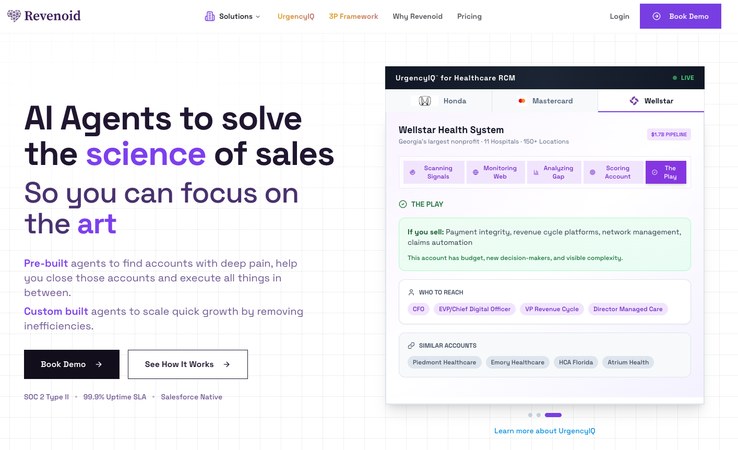
Revenoid
Revenoid is a San Francisco and Carrollton, Texas-based AI company that builds a 'system of intelligence' for enterprise go-to-market teams. Formerly known as EvaBot, the company pivoted from AI-driven corporate gifting to a suite of AI sales agents that continuously monitor thousands of accounts for buying signals, prioritize them with a pain-based scoring engine called UrgencyIQ, and automate account research, prospecting briefs, meeting prep and personalized outreach directly inside existing GTM stacks like Salesforce, HubSpot, Outreach and Salesloft. Founded by CEO Rabi Gupta, the company raised a $10.83M Series A led by Comcast Ventures in 2022.

Nico Ferreyra
Nico Ferreyra is the co-founder and CEO of Default, a New York-based B2B revenue operations platform that bundles inbound scheduling, lead capture, enrichment, qualification, and routing into one system for Series A-C go-to-market teams. Born in Córdoba, Argentina and raised in the United States, he dropped out of college, moved into a San Francisco hacker house with cofounder Victor, and launched Default in late 2021. The company raised $6.6M seed led by Craft Ventures (with Jack Altman, 8VC, BoxGroup) and has reportedly raised roughly $20M total. Ferreyra also angel-invests in ~50 companies including Anduril, Browserbase, Runway, and Wander.

CharacterQuilt
CharacterQuilt is a San Francisco AI-native marketing company that turns a written brief into a fully designed, on-brand campaign deployed straight into the tools a team already uses - HubSpot, Marketo, LinkedIn Ads and more. Built by founders who first ran a full-stack marketing agency, its computer-use agents handle the roughly 80% of campaign work that is operations: pulling and enriching audience data, generating creative against brand guidelines, and pushing it live. Work that used to span three agencies, ten tools and six weeks is designed and shipped in about an hour, with a human reviewing and approving every step.