semiconductor
(105)
Applicantz and the art of making engineering happen
AI has acquired a taste for engineering talent. Applicantz, a Houston company founded in 2001, is selling the people, coordination, and accountability that turn a technical ambition into working capacity.

Softweb Solutions and the price of starting over
A semiconductor team kept rebuilding what it already knew. Softweb’s answer reveals a useful truth about enterprise AI: the expensive part often happens before the clever part.

The Chip Bug Nobody Wanted to Read
ChipAgents sells autonomy in the least forgiving corner of computing. Its clearest proof begins with a humbler assignment: read the datasheet, build the testbench, and find the bug before it becomes silicon.
Advanced Engineering Services
AES is the engineering firm behind the engineering firm - simulating heat, stress and flow, then building the automation that makes a design work on the factory floor.
Yih Lin Teh
Yih Lin Teh is the co-founder and CEO of Axross (YC W22), a Singapore-based startup building AI-driven autonomous HVAC control systems that cut energy use and operating costs for factories and semiconductor plants across Southeast Asia. An econometrician turned climate tech entrepreneur with roots at LSE and MIT and stints across three continents, Teh returned to ASEAN to make the region's manufacturing sector greener and more competitive.

Aerogen Systems
Aerogen Systems is an Ann Arbor deep-tech startup building point-of-use contamination control for semiconductor fabs. Its modules sit inside wafer storage and process tools, continuously capturing and chemically destroying airborne acids and organic contaminants before they reach the wafer - clawing back yield lost to queue-time contamination that conventional cleanroom AMC systems miss. The company spun out of University of Michigan aerospace research and joined Y Combinator's Summer 2026 batch.

Silimate
Silimate is a Mountain View startup building an AI copilot for chip designers. Its AI-native tools find and fix functional bugs and power, performance and area (PPA) issues in digital chip designs, aiming to make hardware development move closer to the speed of software. Founded in 2023 by Ann Wu and Akash Levy, Silimate was the first EDA company Y Combinator backed (S23) and runs on-premise for Fortune 500 enterprises and chip unicorns building GPUs, CPUs and AI accelerators.
Rochan Sankar
Rochan Sankar is the founder and CEO of Enfabrica, a Silicon Valley startup building networking silicon to move data between the GPUs, CPUs and memory that power large-scale AI. A 26-year semiconductor veteran who ran Broadcom's data center Ethernet switching business before striking out on his own in 2019, he bet the company on a single idea: that AI's real bottleneck is not compute but the plumbing that feeds it. In September 2025, Nvidia paid more than $900 million to license Enfabrica's technology and bring Sankar and much of his team in-house.

Seshu Madhavapeddy
Seshu Madhavapeddy is the co-founder and CEO of Frore Systems, the San Jose deep-tech company behind AirJet, the world's first solid-state active cooling chip, and the LiquidJet direct-to-chip line for data centers. A repeat entrepreneur with two prior exits and executive stints at Qualcomm, Samsung and Texas Instruments, he started Frore in 2018 with a simple frustration: the cooling fan hasn't fundamentally changed since the 19th century. In March 2026 the company raised a $143M Series D, crossing a $1.64B valuation as cooling became a defining constraint on AI performance.

Seyed Tabatabaei
Seyed A. Tabatabaei is the founder, chairman and CEO of mmTron, a Redwood City fabless semiconductor company building high-linearity millimeter-wave MMICs for 5G, 6G, SATCOM, instrumentation and defense. A PhD engineer who has worked in mmWave since 1986, he spent decades at M/A-COM, Hewlett Packard, and Endwave before starting the design house Teramics and then founding mmTron in 2020. In April 2026 the company closed a $45M Series A led by Maverick Silicon.

Galatek
Galatek is a Singapore-based automation and AI company building intelligent infrastructure for two sectors where precision and data integrity matter most: life sciences and advanced semiconductor manufacturing. It pairs robotics and machine vision with software - its Abio platform unifying ELN, LIMS, SDMS and lab automation, and its InteVega AI vision platform - to run smart labs and inspect chips. Led by CEO David Tian, Galatek raised roughly US$30 million in a Series A round announced in December 2025 to expand across Europe, North America and Southeast Asia.

Morse Micro
Morse Micro is a fabless semiconductor company based in Sydney, Australia, that designs Wi-Fi HaLow (IEEE 802.11ah) chips for the Internet of Things. Its sub-1 GHz system-on-chips deliver roughly ten times the range of conventional Wi-Fi at a fraction of the power, letting a single access point connect thousands of sensors, cameras and devices across homes, factories, farms and cities. Founded in 2016 by Wi-Fi chip designers Michael De Nil and Andrew Terry, the company has raised more than US$190 million and ships its award-winning MM6108 and second-generation MM8108 silicon to customers worldwide.
SkyeChip
SkyeChip is a Penang-based fabless semiconductor company that designs silicon intellectual property (IP) and custom application-specific integrated circuits (ASICs) for artificial intelligence and high-performance computing. Founded in 2019 by former Intel, Altera and Broadcom engineers, it specialises in advanced memory-interface IP (HBM3E, DDR5, LPDDR5/5x), UCIe die-to-die interconnect, network-on-chip fabrics and RISC-V CPU IP built on 6nm/7nm process nodes. Recognised as Malaysia's first homegrown AI chip designer, SkyeChip listed on Bursa Malaysia's Main Market in May 2026 in the country's largest IPO in 16 years.

Syenta
Syenta is an Australian deep-tech semiconductor company building next-generation chip-to-chip interconnects for the AI era. Spun out of the Australian National University, it has developed a proprietary process called Localized Electrochemical Manufacturing (LEM) that deposits and patterns metal in a single step, producing micron-scale interconnects across large packages with fewer process steps. The technology targets the 'memory wall' that limits AI and high-performance computing, aiming to raise interconnect density and bandwidth while cutting manufacturing cost and waste. Headquartered in Sydney with a new development facility in Tempe, Arizona, Syenta has raised more than A$37 million, with former Intel CEO Pat Gelsinger joining its board.

Steve Huang
Steve Huang is the founder and CEO of KiWi New Energy, a Taiwan-born, San Mateo-based startup building what he calls an operating system for global renewable energy. A serial green entrepreneur with more than 15 years across the semiconductor and solar value chain, Huang went from NVIDIA and public silicon-wafer ventures to a near-total collapse when Chinese rivals undercut his micro-inverter business, then rebuilt around an AI-driven energy datacenter that matches clean supply with retail and small-business demand in real time.
Veerbhan Kheterpal
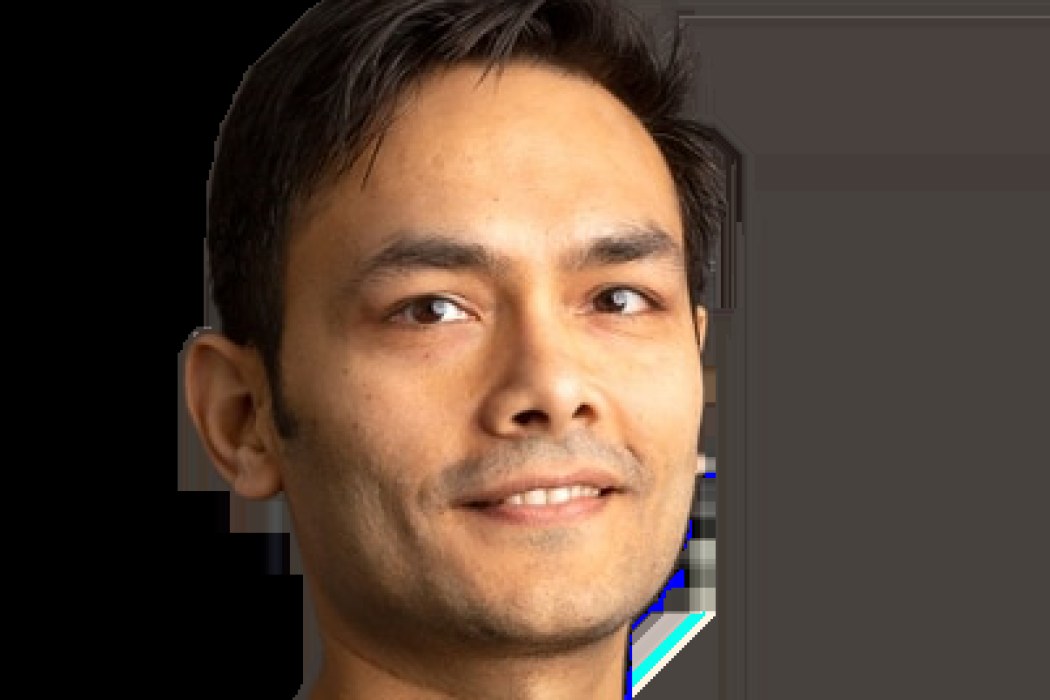
Veerbhan Kheterpal is the co-founder and CEO of Quadric, a Burlingame, California processor IP company building the Chimera general-purpose neural processor (GPNPU) for on-device AI inference. A three-time technology founder with a PhD from Carnegie Mellon University, he previously co-founded Fabbrix (acquired by PDF Solutions) and was a technical co-founder of 21, Inc. Quadric's software-first architecture aims to run any AI model without the obsolescence that plagues fixed-function AI accelerators, and the company has raised roughly $90M across its funding rounds while scaling licensing revenue sharply through 2025.

Neurophos
Neurophos is an Austin-based photonics startup building an Optical Processing Unit (OPU) that uses light instead of electrons to run AI inference. Spun out of Duke University and the Metacept incubator, the company packs more than a million micron-scale metamaterial optical modulators - roughly 10,000x smaller than conventional photonic elements - onto a single chip to perform the matrix-vector multiplication at the heart of large AI models. It positions the OPU as an energy-efficient, drop-in alternative to GPUs for data-center inference, and raised a $110M Series A led by Gates Frontier in January 2026.
Synopsys, Inc.
Synopsys is an American electronic design automation (EDA) company that builds the software, IP, and simulation tools chipmakers use to design, verify, and manufacture advanced semiconductors. Founded in 1986 around logic-synthesis technology, it is one of three companies that dominate the EDA market and, following its $35 billion acquisition of Ansys in July 2025, has expanded from chip design automation into full silicon-to-systems engineering across electronics, structures, fluids, and optics.
Gilad Shainer
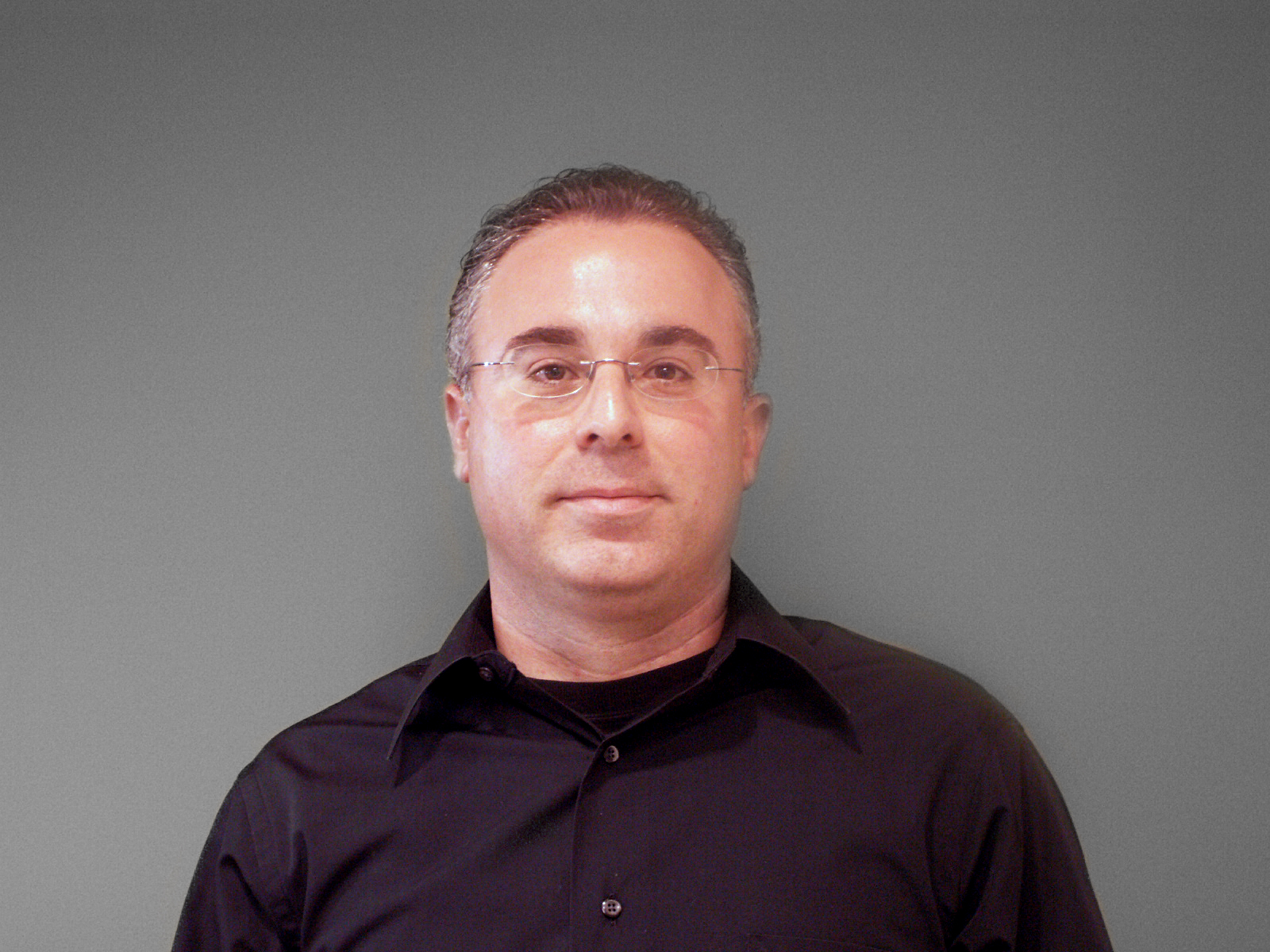
Gilad Shainer is Senior Vice President of Networking at NVIDIA, where he leads the strategy, marketing, and ecosystem development for the company's networking portfolio — including InfiniBand, Ethernet, DPUs, and interconnect technologies that power more than half the world's top 500 supercomputers. A Technion-trained electrical engineer who graduated Cum Laude at both B.Sc. and M.Sc. levels, Shainer spent nearly two decades at Mellanox Technologies before joining NVIDIA via the $6.9 billion acquisition in 2020. He founded the HPC-AI Advisory Council in 2008, which now spans 400+ organizations globally, co-founded the ISC Student Cluster Competition, holds two R&D 100 Awards (2015 and 2019), and has authored or co-authored dozens of papers across IEEE, ACM, and Springer venues. At a moment when AI factories are rewriting the rules of data center design, Shainer is the person making sure the wires — and the protocols running through them — are ready.

CyberSwarm Inc.
CyberSwarm is a neuromorphic engineering company building brain-inspired, memristor-based hardware that lets machines learn and adapt locally, at the edge, without the cloud. Founded in 2017 by Mihai Raneti and headquartered in San Mateo, California with R&D roots in Ploiesti, Romania, the company is developing a neuromorphic System-on-a-Chip for cybersecurity and energy-efficient AI, positioning its architecture as a new computational layer between conventional digital systems and quantum computing. In May 2026 it raised a $50 million Series A to scale toward commercial deployment across automotive, aerospace, defense, healthcare and robotics.

Enfabrica
Enfabrica is a Silicon Valley chip startup building the networking and memory plumbing that lets tens of thousands of GPUs behave like one giant computer. Its Accelerated Compute Fabric SuperNIC (ACF-S) moves data at 3.2 terabits per second, and its EMFASYS memory fabric lets AI clusters borrow cheap DDR5 DRAM over Ethernet instead of buying more GPUs for capacity. Founded in 2019 by ex-Broadcom and Google networking engineers, the company raised roughly $290M before Nvidia paid over $900M in September 2025 to license its technology and hire CEO Rochan Sankar and much of his team.
eTopus Technology
eTopus Technology is a San Jose-based semiconductor IP company that designs ultra-high-speed, ADC/DSP-based SerDes and die-to-die interconnect IP for data centers, high-performance computing, AI, 5G and storage. Founded in 2012 by Harry Chan and Peter Kou, the company licenses silicon-proven PHY IP - spanning 112G on advanced 6/7nm nodes down to 22nm - plus chiplet interfaces supporting UCIe, Bunch of Wires, PCIe Gen 5/6 and CXL. eTopus positions itself on low latency and low power, and has built collaborative chiplet platforms with partners including QuickLogic, OpenFive and CoMira.

Fabric Cryptography
Fabric Cryptography is a San Francisco hardware startup building the Verifiable Processing Unit (VPU) - a fully programmable custom-silicon chip with an instruction set designed specifically for advanced cryptography. Founded in 2021 by Michael Gao, Tina Ju, and Sagar Reddy, Fabric aims to do for cryptography what Nvidia did for AI: dramatically accelerate workloads like zero-knowledge proofs, fully homomorphic encryption, and multi-party computation compared with CPUs, GPUs, and fixed-function accelerators. The company has raised $39M total, including a $33M Series A in August 2024 co-led by Blockchain Capital and 1kx.

Frore Systems
Frore Systems is a Silicon Valley thermal-technology company that builds AirJet, the world's first solid-state active cooling chip, and LiquidJet, a direct-liquid coldplate for AI data centers. Founded in 2018 by two former Qualcomm engineers, Frore uses ultrasonic membranes to move air at over 100 mph with no visible moving parts, letting thin fanless devices and dense AI servers run cooler, quieter, and faster. In March 2026 it raised a $143M Series D at a $1.64B valuation, positioning its 'Thermal Stack' as foundational infrastructure for the AI era.

Point2 Technology
Point2 Technology is a San Jose-based fabless semiconductor company building ultra-low-power, low-latency interconnect chips and cables for AI/ML data centers. Its e-Tube platform sends data as radio-frequency signals through plastic waveguides - a third path between copper and optics - and its smart-retimer SoCs power 800G and 1.6T active electrical cables. Founded in 2016 by a KAIST professor and veterans of Marvell, Finisar and Samsung, the company has drawn investment from NVIDIA's NVentures, Bosch Ventures, Molex and UMC.

SecEdge
SecEdge is a Seattle-based digital security company that secures IoT and Edge devices from the silicon up to the cloud. Formed in 2023 by carving Privafy's IoT business out and acquiring embedded-security pioneer Sequitur Labs, the company packages hard problems - device identity, secure boot, key management, over-the-air updates and secure connectivity - into software products like the EmSPARK Security Suite, the EmPOWER lifecycle-management SaaS and SEC-TPM, a firmware TPM built in Arm TrustZone. Led by semiconductor and digital-security veteran Sami Nassar and chairman Rick Clemmer, SecEdge aims to make chip-to-cloud security something device makers can adopt off the shelf rather than build from scratch.

xMEMS
xMEMS is a Santa Clara semiconductor company that builds sound and cooling out of silicon. Its piezoMEMS platform produces the world's first solid-state MEMS loudspeakers - all-silicon drivers with no moving voice coils - for earbuds, hearing aids, AI glasses and headphones, and the first 'fan-on-a-chip' active micro-cooling device that moves air inside phones, wearables and AI data-center optics. Founded in 2018, the company holds more than 300 patents and has raised roughly $129M across four rounds.

Ram Sudireddy
Ram Sudireddy is the founder, chairman, president and CEO of Bento, a Boston-based dental benefits platform he started in 2017 after concluding that dental insurance, as sold, was structurally broken. Before Bento he built and sold three technology companies - Cimaron Communications to AMCC, CHiL Semiconductor to International Rectifier, and Mustbin to LifeSite - and chaired Sanovi through its acquisition by IBM. He is a semiconductor architect by training who now runs a dental payments company, which is the kind of career pivot that only makes sense if you spend a long weekend reading your family's EOBs.
Applied Brain Research
Applied Brain Research (ABR) is a Waterloo, Ontario AI hardware company spun out of the University of Waterloo's Centre for Theoretical Neuroscience. It builds brain-inspired chips and software that run real-time AI - full-vocabulary speech recognition, text-to-speech and sensor processing - directly on edge devices at power levels measured in milliwatts. Its patented state-space models and the Legendre Memory Unit power the TSP1 Time Series Processor, which ABR calls the world's first single-chip solution for full-vocabulary speech recognition, doing the work of cloud voice AI while consuming 10 to 100 times less power.

Cambridge Terahertz
Cambridge Terahertz is an MIT spinout building a chip-based imaging system that combines the 3D vision of lidar with the see-through power of X-ray, but using human-safe terahertz waves at a thousandth the power of a cell phone. Shrunk from an airport-scale scanner into a palm-sized, two-pound device, its AI-powered sensors detect concealed weapons through clothing and bags, and can see inside sealed packages without opening them. Founded in 2023 by MIT PhD Nathan Monroe, the company raised a $12M seed round led by Felicis with participation from Amazon's Industrial Innovation Fund.