The sponge sits in a cylinder. The cylinder holds a gas so dangerous that a leak would clear a building. Somewhere in Taiwan or Arizona, a machine is etching that gas onto a silicon wafer that will become the brain of a laptop. And the reason the gas stays put, quietly, at a pressure lower than the air in the room, is a material that Hernandez's company designed one atom at a time.
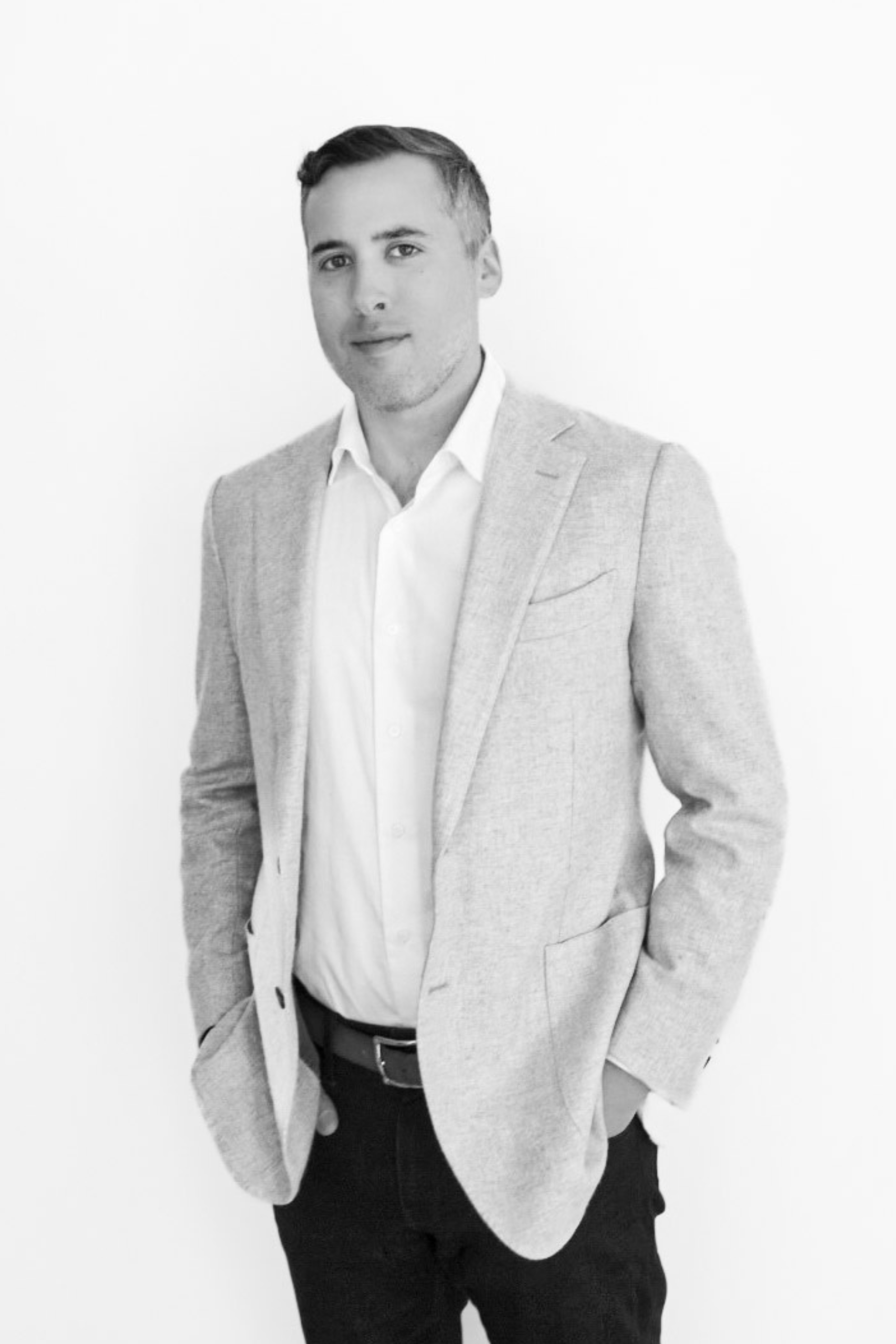
This is the odd, precise world Ben Hernandez runs from Chicago. His company, Numat, does something that sounds like a category error: it treats chemistry like software. "MOFs are really programmable materials that we can design, almost like software, for very different targeted applications," he says. Not discovered. Designed. You decide which molecule you want to trap, and you build a lattice with holes shaped exactly for it.
What he actually does all day
Numat's flagship product is called ION-X. It stores the hazardous dopant gases the semiconductor industry depends on - arsine, phosphine, boron trifluoride, names that belong on warning placards - inside cylinders packed with proprietary MOF adsorbents. Instead of cramming the gas in at bruising pressure, the MOF holds it subatmospherically, so a punctured cylinder sighs instead of erupts. The cylinders are distributed worldwide by Merck KGaA and, in North America, by its affiliate EMD Electronics. Tier 1 chipmakers on every major continent trust them. That is a remarkable sentence for a company that began as a conversation in a university hallway.
The unlikely resume
Here is the detail that explains a lot: Hernandez is not, by training, a chemist. He is an engineer who also collected a law degree and an MBA, all from Northwestern - a Juris Doctorate earned cum laude at the Pritzker School of Law, an MBA earned with distinction at Kellogg. Before Numat he worked in strategy consulting for industrial-technology clients, then moved to a global private equity firm that managed more than $30 billion, where he ran board-level strategy, operations, and human capital. He was, in short, the finance guy. The one who reads the term sheet, not the one who pipettes.
So when three people met in graduate school and decided to build a company around programmable matter, Hernandez was the one who could translate between the lab and the ledger. One co-founder was a PhD student in chemical engineering. The other was a young faculty member in the chemistry department, Dr. Omar Farha, whose research applied high-performance computing to the design of new nanomaterials. Their shared bet was simple and enormous: if you could simulate a material before you made it, you could aim it at problems - carbon capture, hydrogen storage, chemical threats - that older chemistry could only stumble toward.
Selling the sandwich, not the bread
The early strategic decision that defines Numat still surprises people in the industry. Most materials startups sell material - powder by the kilogram, a commodity racing to the bottom. Numat refused. It chose to ship a finished, integrated product instead: the MOF already inside the cylinder, the valve, the whole working system. Sell the sandwich, not the flour. It is a harder business to build and a much harder one to copy, and it is the reason a chemistry company ended up with real customers instead of a promising sample library.
Hernandez is unsentimental about his own credentials in a way founders rarely are. "My degree and pedigree stopped being relevant the day I hired the first amazing person at Numat," he has said. He talks about failure as a feature, not an embarrassment: "The best discoveries emanate from failed experiments with unexpected outcomes." It is the mindset of someone who spent years watching companies from the outside - as a consultant, as an investor - and concluded that the teams that win are the curious ones, not the credentialed ones.
Beyond the fab
The semiconductor business is the beachhead, not the whole map. In a conversation with McKinsey's Karl Hujsak about chemical-defense equipment, Hernandez laid out the wider ambition: the same nanoscale sponges that hold arsine in a cylinder can be tuned to capture and destroy toxic industrial chemicals and chemical threats. He talks about MOFs as a platform that "spans everything from addressing global challenges and climate all the way to how we manufacture the semiconductor chips." One material, many missions - protection technology, pharmaceutical purification, cutting the scope 1 emissions baked into chemical production. The pitch is that a customer can integrate Numat's material into an existing product or process and inch toward a net-zero target without ripping out their operation.
That "almost like software" line is doing more work than it looks. Software's superpower is iteration - you write, test, and rewrite faster than the physical world usually allows. By simulating a framework before synthesizing it, Numat borrows that speed for chemistry. It is why a company can credibly aim at problems as different as hydrogen storage and drug purity without pretending each one is a separate moonshot. They are, in Hernandez's telling, the same discipline applied to different targets. It is also why the failed experiments he prizes are not wasted: an unexpected outcome in the lab feeds back into the model, and the next design starts smarter.
A factory with a ghost
In 2023, Numat announced it was building the world's first industrial-scale MOF manufacturing campus. The location carries a wink of American invention history: it sits in Chicago's West Humboldt Park, anchored by a former foundry where Nikola Tesla is said to have once worked. A building that helped electrify the last century now makes materials aimed at cleaning up this one, on a block that badly needed the investment. Hernandez frames the campus as both an industrial and a community project - decarbonization and a neighborhood, in the same footprint.
Then in May 2025, Numat closed a $40 million Series C, with Aramco Ventures among the backers - a signal that the energy world sees MOFs not as a science-fair curiosity but as infrastructure. Total funding pushed past $70 million. Months later, the field itself got its coronation: the 2025 Nobel Prize in Chemistry went to the pioneers of metal-organic frameworks. Numat had been quietly commercializing the technology for over a decade before the Swedish Academy made it famous.
The bigger idea
Strip away the cylinders and the funding rounds and you find a single conviction. "The future of manufacturing," Hernandez says, "is building materials with utility at the molecular level." He and Farha believe the largest problems - the civilization-scale ones - will be solved at the smallest possible scale. Capturing carbon before it leaves a smokestack. Purifying a drug. Neutralizing a chemical weapon. Storing a gas so it cannot hurt anyone. All of it is the same move, repeated: decide what you want a molecule to do, then build the room it lives in.
It is a strange thing to have made a career of - designing rooms for molecules. But that is the work, and Hernandez has spent more than a decade proving it can leave the lab, survive a factory floor, and end up in the supply chain of the modern world. The lawyer-engineer-investor who couldn't pipette turned out to be exactly the person the chemistry needed.