decarbonization
(147)
KBC finds the money hiding in a refinery’s energy bill
The Yokogawa-owned company pairs process simulation with engineering advice to cut waste in energy and chemicals. Its most revealing lesson: even a good digital twin needs someone responsible for acting on it.
Philippe Boulanger Is Selling Steel's Second Life
At ArcelorMittal Long Products Canada, a former plant leader has a marketing problem measured in furnaces, freight and carbon. Philippe Boulanger's answer begins with customers - and with the idea that old steel can become new infrastructure.
The Company Turning Your Roof Into a Subscription
Palmetto owns the solar panels. You get the power. Inside the Charlotte software company betting that clean energy should work like a subscription - and raising billions to prove it.
The Fuel Startup Betting a Molecule Can Just Float Out of the Tank
Most biofuels get stuck in the same trap: make the alcohol, then spend a fortune pulling it out of the water. A four-person Houston team engineered a yeast whose product simply volatilizes away - and they think that changes the math.

Switch Automation Learned the Hard Part of Smart Buildings Is the Part Nobody Sees
The Denver proptech company connects old controls, new sensors and portfolio software in one operational layer. Its useful lesson is wonderfully unglamorous: before a building can become intelligent, someone has to make its data trustworthy.
The Fund Betting That Fashion Gets Fixed in the Factory, Not the Storefront
Karla Mora and Leslie Harwell don't fund T-shirts. They fund the recycling plants, the potato-waste cotton, and the software that reroutes a supply chain - the plumbing every brand quietly runs on.
The Company Betting America's Grid on a Reactor It Once Switched Off
It runs the largest nuclear fleet in the country, sells power to three-quarters of the Fortune 100, and just agreed to bring a piece of Three Mile Island back online for Microsoft. Inside the utility quietly rewiring how America pays for clean power.
The 140-Year-Old Thermostat Company Cooling the AI Boom
Johnson Controls began with a classroom that was too hot. Today, its chillers, controls and service crews sit at the intersection of two expensive problems: buildings use too much energy, and AI infrastructure produces too much heat.
Trane Technologies
The company behind Trane and Thermo King is turning a century of cooling know-how into an energy-management business for buildings, refrigerated fleets and AI data centers. Its wager is simple: the cheapest new energy is often the energy a machine stops wasting.

Avarni
Nobody put 'mandatory climate disclosure' in your finance team's job description. Avarni makes carbon accounting the least painful thing on your FY26 plate. It's expert-guided, software-powered, and done in weeks. Audit-ready, or we keep working.
錫力科技 YC Synergy
錫力科技 (YC Synergy) is a Taiwan-based clean-energy company building hydrogen fuel cell power systems and end-to-end hydrogen infrastructure - electrolysis-based green hydrogen production, storage, and refueling. Founded in 2012 and headquartered in Xindian, New Taipei City, the firm designs and integrates fuel cell systems for stationary power, maritime vessels, and road transport, working with partners such as Germany's EKPO Fuel Cell Technologies and Stan Shih's zero-carbon ship venture Porrima. It was named Asia-Pacific Fuel Cell System Company of the Year by Energy Tech Review in 2024.
Sean Burke
Sean Burke is the CEO and co-founder of Enteligent, a Morgan Hill, California clean-energy hardware company building what it calls the world's first solar-powered DC-to-DC EV charger. Before starting Enteligent in 2020, Burke spent more than two decades as an executive at HP, Dell, Flex, Nortek, Katerra and AMD, working on early notebook computers and the first dual-screen Android phone, and leading product teams credited with 260-plus patents. At Enteligent he is trying to strip the wasteful conversion steps out of charging by keeping power in DC form from solar panel to car battery.

Hysata
Hysata is an Australian clean-energy manufacturer commercialising a capillary-fed electrolyser that splits water into hydrogen at around 95% system efficiency, well above conventional electrolysers. Spun out of the University of Wollongong, the company aims to produce green hydrogen at the lowest cost to help decarbonise hard-to-abate sectors such as steel, chemicals and heavy transport, and is scaling toward gigawatt-scale manufacturing at Port Kembla, New South Wales.
ignis H2 Energy Inc.
ignis H2 Energy is a Houston-based geothermal exploration and development company that applies oil-and-gas subsurface expertise, AI/ML prospecting and a technology-agnostic approach to find, prove and produce always-on geothermal power. Founded in 2021 by former Goldman Sachs banker Richard Calleri, the company is building a globally diversified, risk-balanced portfolio of geothermal projects across Turkey, the Western U.S. and Alaska, aiming for one gigawatt of documented producible reserves by 2030. It closed a $13.6M Series A round in June 2025.

Pathzero
Pathzero is a Sydney-based climate-tech company that builds a unified software platform for financial institutions to measure, share and disclose carbon emissions across public and private markets. Its data-sharing network connects asset owners with more than 500 fund managers, giving investors direct-from-source, audit-ready emissions data where information has historically been hardest to obtain - private markets. Founded in 2020 inside the Antler incubator, Pathzero has grown into what it describes as the world's largest private-markets carbon emissions data network.
PlasmaLeap Technologies
PlasmaLeap Technologies is a Sydney-based cleantech company building modular, non-thermal plasma reactors that make ammonia, nitric acid, fertiliser and hydrocarbon eFuels from just air, water and renewable electricity. Spun out of the University of Sydney in 2019, its 'lightning-mimicking' process replaces the century-old, fossil-fuelled Haber-Bosch route with room-temperature, on-site chemical production. Its eNFix containerised units let farmers make green nitrogen fertiliser at the farm gate, cutting emissions and supply-chain dependence. The company raised roughly A$30 million in a Series A led by the Gates Foundation, Investible and Yara Growth Ventures to build first-of-a-kind fertiliser hubs in New South Wales and Tasmania.

Blue Box Air
Blue Box Air is a Dallas-based cleantech company that restores and maintains commercial HVAC heat-transfer coils using a patented, enzyme-infused bio-treatment process. By cleaning coils from the inside out - with no downtime and no equipment removal - Blue Box improves airflow and heat transfer, cutting building energy consumption and carbon emissions while improving indoor air quality. Its Bio-Automation system keeps coils continuously clean, and the company markets a 'self-cleaning deep coil' that promises far greater heat-transfer surface area than conventional systems.

Dextall
Dextall is a New York-founded construction technology company that pairs proprietary design software with factory-built, unitized prefabricated exterior wall panels for mid- and high-rise buildings. Its platform turns architectural concepts into fabrication-ready models and delivers a modular facade system manufactured by regional partners, cutting design-to-install timelines and on-site labor while improving building energy performance. The company raised a $15M Series A in July 2025 to expand its AI-powered prefab platform and address the housing crisis.

Gravity
Gravity (formerly Gravity Climate) is a San Francisco-based enterprise software company that combines carbon accounting and energy management in a single platform built for industrial businesses and their supply chains. Founded in 2022 by Saleh ElHattab, the company automates the collection of utility and emissions data, generates audit-ready Scope 1, 2, and 3 disclosures, and runs a marketplace that helps customers identify, finance, and implement energy-efficiency projects that cut both costs and emissions. Backed by more than $20M in funding, Gravity works with companies like Autodesk, WM, Geotab, Xometry, and MiddleGround Capital.

Greenly
Greenly is a French climate-tech company building carbon-accounting software that helps businesses of all sizes measure, report and reduce their greenhouse-gas emissions. Founded in Paris in 2019, its all-in-one sustainability suite automatically pulls data from financial transactions, utility bills, cloud usage and supply chains to calculate emissions across Scopes 1, 2 and 3, then pairs the data with human climate experts. Greenly serves roughly 3,500 clients across 25 countries and has raised about $78.6 million, including a $52 million Series B led by Fidelity International Strategic Ventures in 2024.
Scaler
Scaler is an ESG data platform built for the real estate industry that turns fragmented sustainability data into audit-ready reports and decarbonization roadmaps. Founded in 2021 and headquartered in New York and Amsterdam, its software helps asset managers, fund managers and compliance teams collect building-level energy, water and carbon data, run CRREM and net-zero analysis, and report against frameworks like GRESB, CSRD, SFDR and the EU Taxonomy - all from a single, traceable source of truth.
Sustainability Roundtable, Inc.
Sustainability Roundtable, Inc. (SR Inc) is a Boston-based, certified B Corporation that provides membership-based strategic advisory and support services in enterprise decarbonization. For more than fifteen years it has helped executives at nearly 100 Fortune 500 and high-growth companies set sustainability goals, drive progress, and report results through shared-cost research, one-on-one consulting, and a peer community. Its two flagship offerings are the Sustainable Business & Enterprise Roundtable (SBER) advisory service and the Net Zero Consortium for Buyers (NZCB), a confidential corporate renewable-energy buyers' community and transaction platform.
Thea Energy
Thea Energy is a New Jersey fusion power company building a simplified, mass-manufacturable stellarator. Instead of the exotic, millimeter-precise 3D magnet coils that defined earlier stellarators, Thea uses arrays of small, planar high-temperature-superconductor electromagnets steered by software - shifting complexity from hardware fabrication to control code. Spun out of the Princeton Plasma Physics Laboratory in 2022, the company is building Eos, a neutron-source stellarator meant to prove power-plant-relevant performance and generate near-term revenue, ahead of its first commercial plant, Helios.

unspun
unspun is a San Francisco-based fashion-technology company that built Vega, the world's first 3D weaving system for apparel. Vega weaves garments directly from yarn in minutes, skipping cut-and-sew steps to enable on-demand, near-zero-waste, locally produced clothing. A certified B Corp founded in 2015, unspun sells custom-fit jeans direct to consumers while licensing its hardware and software to brands and retailers aiming to decarbonize their supply chains. Its stated mission is to reduce global human carbon emissions by 1%.

James Boyle
James (Jim) Boyle is the founder and CEO of Sustainability Roundtable, Inc. (SR Inc), a Boston-based public benefit corporation and certified B Corp that advises global companies such as Akamai, Biogen, Cisco, Thermo Fisher Scientific, and Wayfair on corporate sustainability governance, renewable energy procurement, and organizational resilience. A former attorney and aide to U.S. Senator John Kerry who moved through commercial real estate before founding SR Inc in 2009, Boyle built a shared-cost research and advisory model that has helped nearly 100 Fortune 500 and growth companies pursue more sustainable high performance. In 2026 he published Dignity First Leadership, a framework arguing that companies should place human dignity at the center of value creation in an age of climate breakdown and technological upheaval.
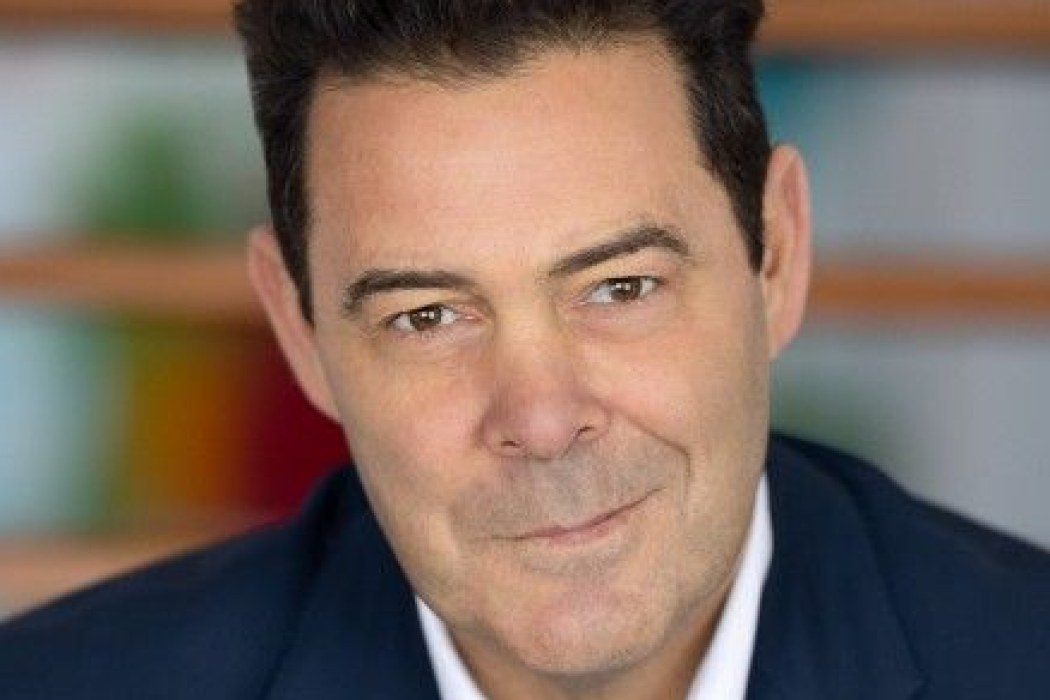
James Metropoulos
James (Jim) Metropoulos is the founder and CEO of Blue Box Air, a Dallas-based clean tech company that has built a patented, bio-automated way to clean and restore the heat-transfer coils inside commercial HVAC systems. He founded the company in 2016 in Southern California and moved its headquarters to Deep Ellum, Dallas in 2020. His enzyme-based process tackles a century-old problem in the HVAC industry - coils that were never truly cleanable - and in doing so cuts building energy use, improves indoor air quality, and lowers carbon emissions. Blue Box counts clients such as MGM Resorts, UC Berkeley, General Motors, LA Children's Hospital and the Golden State Warriors, and reports having restored tens of thousands of coils while saving hundreds of millions of kilowatt-hours.

Pulsora
Pulsora is an AI-powered sustainability management platform built for enterprises and investors to collect, measure, and report ESG and carbon data on a single governed system. Founded in 2021 by Silicon Valley veterans Murat Sonmez and Inderjeet Singh (originally as PulsESG), the San Mateo company combines carbon accounting, framework reporting (CSRD, CDP, EDCI), and agentic AI workflows to turn scattered sustainability data into audit-ready disclosures. It serves 500+ companies across 63 countries and raised a $20M Series A in 2023 led by Galvanize Climate Solutions.
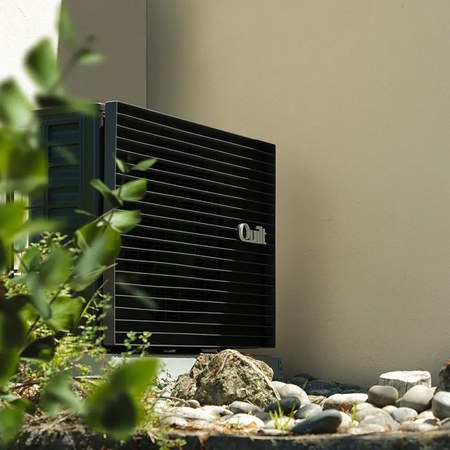
Quilt
Quilt is a Redwood City climate-tech company building a software-defined ductless heat pump for room-by-room home heating and cooling. Founded in 2022 by former Google and Nest people, its system pairs an outdoor compressor with slim indoor heads that carry millimeter-wave occupancy sensors, a Quilt Dial thermostat, and an app that ships over-the-air updates so the hardware gets smarter after install. Quilt sells direct-to-consumer through certified installers and has raised $62M across seed, Series A, and Series B rounds to move households off fossil-fuel heating.

Station A
Station A is a San Francisco climate-tech company that runs a software marketplace for buying and selling clean energy. Its platform turns a building's address into a data-driven estimate of the financial return on solar, battery storage, and EV charging, then lets commercial real estate owners list projects and collect competitive bids from a network of thousands of vetted energy developers. Spun out of NRG Energy in 2018 by a team that met at MIT, Station A aims to make clean energy transactions as simple and transparent as an online marketplace, and counts large owners like Prologis, Walmart, CBRE, Nestle, and Goldman Sachs among its users.

Verse
Verse is a San Francisco climate-tech company building AI software that turns messy energy, market, and financial data into decisions organizations can actually act on. Its flagship platform, Aria, helps companies forecast Scope 2 emissions, plan and procure clean power (including PPAs), optimize on-site assets like batteries, and - increasingly - get AI data centers connected to the grid years faster. Founded in 2022 by clean-energy veterans from Fluence, Tesla and AMS, Verse raised an oversubscribed $54M Series B in June 2026 led by Bessemer Venture Partners, with GV, NVIDIA and Norrsken.