Breaking
ENEOS, Japan's largest energy firm, takes strategic stake in AirMyne (Mar 2026) Berkeley DAC startup regenerates solvent at ~100-130°C - low enough for waste heat Seed round: $6.9M closed March 2024 Founders logged 40+ combined years at Honeywell & BASF Reported 100x cut in DAC energy use; three granted patents Pilot & demo plant planned with California Energy Commission support ENEOS, Japan's largest energy firm, takes strategic stake in AirMyne (Mar 2026) Berkeley DAC startup regenerates solvent at ~100-130°C - low enough for waste heat Seed round: $6.9M closed March 2024 Founders logged 40+ combined years at Honeywell & BASF Reported 100x cut in DAC energy use; three granted patents Pilot & demo plant planned with California Energy Commission support
Company Profile Climate Tech Berkeley, California Est. 2022

AirMyne

CO₂ removal, built for 24/7 operation - a chemical plant that eats the sky.

SECTOR  Direct Air Capture STAGE  Seed / Pilot TEAM  ~18 BACKERS  YC · ENEOS
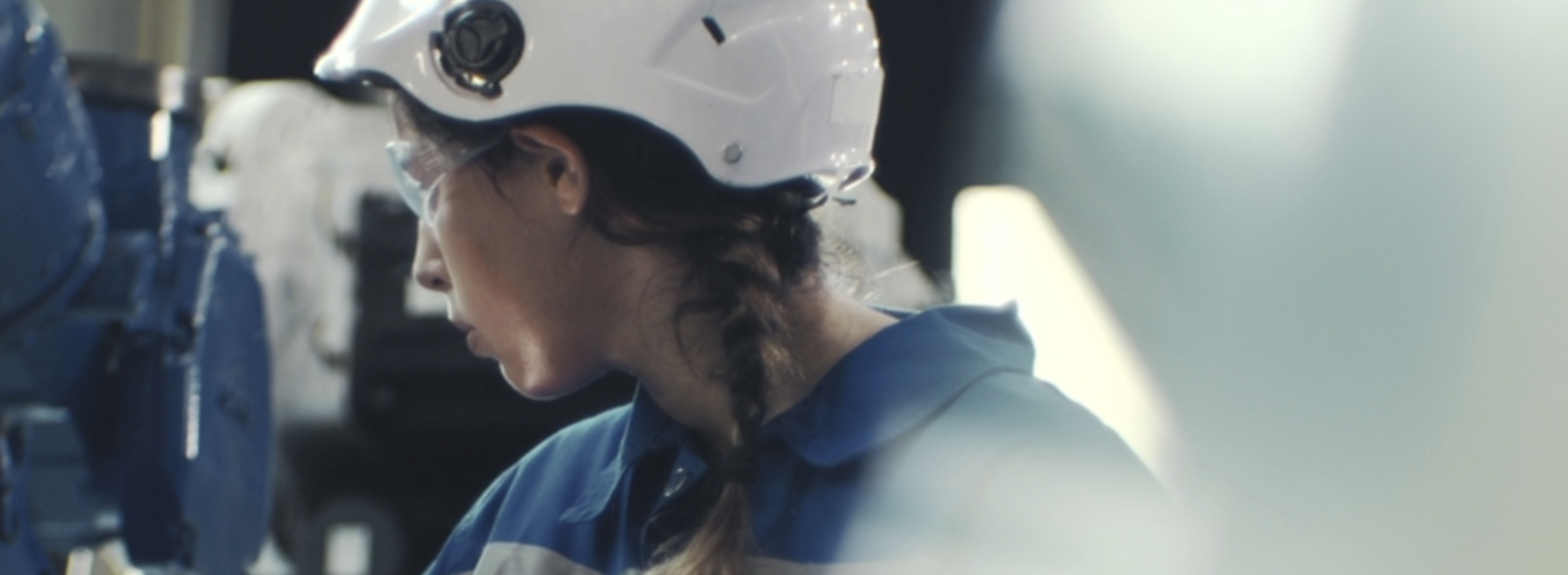
An AirMyne engineer in a hard hat working amid direct air capture equipment

THE WORK. An engineer leans into the machinery - hard hat, safety glasses, a braid, and a lot of steel. Carbon removal, up close, looks less like a moonshot and more like a Tuesday shift at a plant. Which is exactly the point.

Share this profile
The Pitch

A carbon-removal company that would rather bore you than dazzle you

There is a genre of climate startup that sells you a miracle. AirMyne, a roughly 18-person outfit in Berkeley, California, is selling you a chemical plant. That is a compliment, and it is more or less the whole strategy.

The problem AirMyne is chewing on is one everybody in the field agrees on and almost nobody has solved cheaply: how do you pull carbon dioxide out of ambient air - where it sits at a stubborn 0.04% concentration - and do it at a price and a scale that matters? Direct air capture, or DAC, is not physically hard. You can build a machine that grabs CO₂ today. The hard part is that grabbing it, and then persuading the CO₂ to let go again so you can bury or reuse it, tends to eat a punishing amount of energy. And energy is money. So the DAC business is, underneath the green branding, a very old-fashioned unit-economics problem.

AirMyne's answer is to attack the energy line item directly. Its co-founders, Sudip Mukhopadhyay and Mark Cyffka, are not climate-conference lifers - they are chemical-industry veterans who between them spent something like four decades at Honeywell and BASF inventing and scaling the kind of molecules that quietly end up in your car's air conditioner and your phone's chips. They looked at DAC and, reasonably, decided to treat it the way a chemicals company treats any process: optimize the whole system, use cheap and benign inputs, and design for the tenth plant, not the demo.

“AirMyne is building a world-class DAC technology, and this close collaboration strengthens our ability to accelerate cost reduction and commercial deployment.” - Sudip Mukhopadhyay, Co-founder & CEO
$6.9M
Seed Round, 2024
100×
Reported Energy Cut
3
Granted Patents
2022
Founded, via Y Combinator
How It Works

The trick is the temperature

Here is the part that amuses the engineers. Most DAC systems capture CO₂ onto a solid or into a liquid, and then have to heat that material up a lot to release the gas so the capture medium can be reused. “A lot” often means furnace-grade temperatures, which usually means burning something or drawing enormous amounts of electricity. AirMyne's liquid solvent instead regenerates at roughly 100 to 130°C - the temperature of a hot cup of coffee's angry cousin, not a blast furnace.

That single design choice unlocks a menu of cheap heat sources: industrial waste steam a factory was going to vent anyway, geothermal heat coming up out of the ground, or ordinary electricity when that is cheapest. It is why AirMyne keeps ending up in conversations with geothermal developers - the heat is already there.

01

Contact

Modular collectors pull ambient air across a liquid solvent that grabs the CO₂.

02

Regenerate

The CO₂-rich liquid flows to a central column and is warmed to ~100-130°C to release the gas.

03

Power

That low heat can come from waste steam, geothermal, or electricity - whichever is cheapest.

04

Use or Store

Pure CO₂ is piped to underground storage or to buyers making concrete, textiles, and fuels.

Where the heat comes from

Illustrative comparison of regeneration temperature - lower is cheaper & more flexible
AirMyne solvent
~100-130°C
Hot geothermal
available
High-temp DAC
~800-900°C

Approximate, for illustration. High-temperature calciner-based DAC typically requires far more heat than AirMyne's low-temperature approach.


What It's For

What you can actually do with captured air

USE / 01

Buy verified removal

Corporations and governments with net-zero targets can purchase durable carbon dioxide removal (CDR) - carbon physically taken out of the air, not an accounting offset.

USE / 02

Feed CO₂ utilization

Captured CO₂ becomes raw material: partners like CarbonBuilt lock it into concrete and Rubi turns it into cellulose for textiles.

USE / 03

Clean up point sources

The same platform works at concentrated emission streams (roughly 1-10% CO₂), so it isn't limited to ambient air.

USE / 04

Pair with geothermal

Energy developers can co-locate capture with geothermal heat for round-the-clock, low-cost operation.

The Founders

Two chemists who scaled molecules for a living

The resumes are the strategy. If your edge is chemistry and manufacturing, you pick the market where chemistry and manufacturing win - and DAC, underneath the climate story, is exactly that.

Co-founder & CEO

Sudip Mukhopadhyay

Spent much of his career at Honeywell, where he co-invented a low-global-warming refrigerant now used in vehicles around the world. Now runs AirMyne's push toward commercial deployment and cost reduction.

Co-founder & COO

Mark Cyffka

Came up through BASF and large chemical-plant operations. Helped scale a subsidiary, Precision Microchemicals, that was acquired for about $90M, and co-invented chemicals used in EV and 5G power electronics.

Money & Allies

Who's writing the checks - and why

AirMyne closed a $6.9M seed round in March 2024, with Y Combinator alongside Alumni Ventures, Liquid 2 Ventures, Impact Science Ventures, Another Brain, EMLES, Soma Capital, Wayfinder, and angel Justin Hamilton. Two years later came the more telling investor: ENEOS, the parent of Japan's largest energy company, took a strategic stake in March 2026.

That ENEOS deal is worth pausing on. When a giant fossil-energy incumbent invests in a DAC startup, it is buying two things a venture fund can't offer: a potential industrial customer and a supply chain. In carbon removal, who eventually buys your CO₂ - and who can build your hardware at volume - matters as much as the chemistry.

“AirMyne's technology platform and engineering approach align well with ENEOS's energy transition strategy.” - Masashi Shimanuki, ENEOS CVC Office

Investors

Y Combinator Alumni Ventures Liquid 2 Ventures Impact Science Ventures Another Brain EMLES Soma Capital Wayfinder Justin Hamilton (angel) ENEOS (strategic)

Partners & offtake

ENEOS Fervo Energy (geothermal) CarbonBuilt (concrete) Rubi (textiles) California Energy Commission
The Story So Far

From ‘hello world’ to a demo plant

2022 · May

“Hello world, we're AirMyne”

Company launches publicly out of Y Combinator.

2024 · Mar

$6.9M seed

Raises seed funding; details plans to pair DAC with geothermal and ship CO₂ to utilization partners.

2026 · Mar

ENEOS strategic investment

Japan's largest energy firm backs AirMyne to co-develop liquid-solvent DAC for industrial scale.

2026

Pilot & demo plant

Plans to break ground on a commercial pilot and demonstration plant with California Energy Commission support.

The Field

Not the only ones grabbing at the sky

AirMyne is one entry in a crowded, well-funded race. The alternatives include solid-sorbent players like Climeworks and Heirloom Carbon, high-temperature approaches from Carbon Engineering and Global Thermostat, and newer liquid or hybrid entrants such as Noya, Sustaera, and Holocene. AirMyne's distinguishing bet is not a flashier machine - it is the claim that low-temperature, energy-flexible, benign-chemistry design is the cheapest road to real scale.

Whether that bet pays off is genuinely unsettled. The reported figures - a 100x energy reduction, kilogram-per-day capture - are milestones on the way to the tons-per-day and eventual megaton scales the climate math demands. The interesting thing about AirMyne is not that it has won. It is that it is playing the game like a manufacturer, and manufacturers are the ones who usually figure out how to make things cheap.

Quick facts: AirMyne

AirMyne is a Berkeley, California climate-tech company building liquid-based direct air capture (DAC) systems that pull carbon dioxide out of the atmosphere at industrial scale. Founded in 2022 by chemical-industry veterans Sudip Mukhopadhyay and Mark Cyffka, the company designs a low-temperature, energy-flexible capture process - regenerating its solvent at roughly 100-130 C so it can run on waste heat, geothermal energy, or electricity rather than the high-temperature furnaces most DAC rivals require. Backed by Y Combinator and, more recently, a strategic investment from Japanese energy giant ENEOS, AirMyne is moving from kilogram-per-day prototypes toward a commercial pilot and demonstration plant.

Founded
2022
Headquarters
Berkeley, California, United States
Founders
Sudip Mukhopadhyay (Co-founder & CEO), Mark Cyffka (Co-founder & COO)
Team size
~18 employees
Products
Liquid-based Direct Air Capture (DAC) system, Low-temperature solvent regeneration, Point-source capture mode
Notable
Launched out of Y Combinator in 2022., Raised a $6.9M seed round in March 2024., Reported reducing DAC energy requirements by over 100x and reaching kilogram-per-day capture scale.

Last updated: