startup
(738)
She Watched 'Love on the Spectrum' - Then Built the Dating App the Giants Ignored
Holly Fowler spent two years building Wable at 3am - a dating, friendship and jobs app for neurodivergent people. A A$1.5 million round and a Times Square billboard later, it is live in four countries.

The Eye Drop That Refuses to Blink Away
A serial dry-eye entrepreneur who already sold one eye-care company to Johnson & Johnson is betting that the fix for dry eye is not a better drop - it is a drop that simply stays put.

Slite
The AI knowledge base that stays accurate - synced with your tools, verified by your team, trusted by every agent that depends on it.

Viable
The AI that read your customer feedback so you didn't have to - one of the first companies to turn GPT-3 into a working analyst.

GIVA
A Bengaluru startup bet that Indians would buy jewellery on a Tuesday, not just for a wedding. Six years and 300 stores later, that bet is worth close to half a billion dollars.

Commsor
It started as software for online communities and became the company that told sales teams to stop cold-calling and start asking friends. The dinosaur was optional; the warm intro was the point.

Why Trengo Keeps Picking Fights With a $1.7B Unicorn
Front raised more than $200 million and a unicorn valuation on the promise of a shared inbox. Trengo, bootstrapped out of Utrecht, decided the future was WhatsApp - and started aiming straight at it.
Baytonia
Behind a single furniture storefront in Saudi Arabia sits a marketplace that also warehouses, assembles and delivers - and quietly furnishes hotels, offices and government projects for the sellers who can't.

Bateriku.com
Battery Replacement & Roadside Assistance Anywhere in Malaysia - enjoy free delivery as fast as 30 minutes, free inspection and free installation.
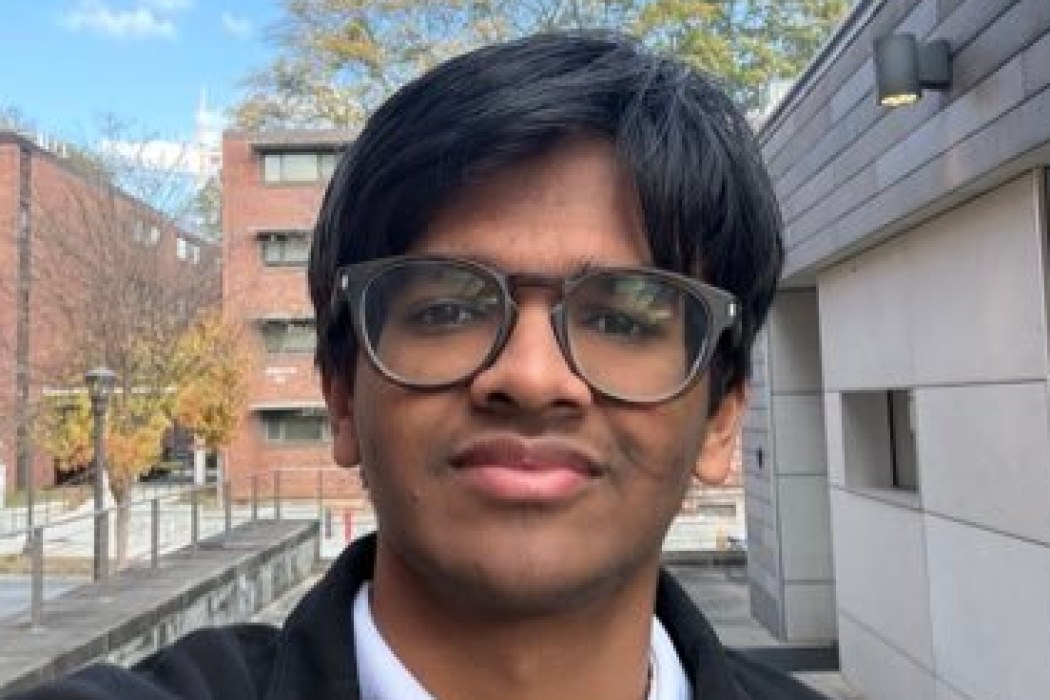
Aaryan Kushwah
Aaryan Kushwah is an 18-year-old founder from Mumbai who moved to San Francisco to build Result (YC P26), an operating system for the next generation of internet businesses that takes a founder from incorporation to their first dollar and beyond. Before Result he built 90nine, a student-led journalism agency that published writers across 13 countries, and won a $10,000 Emergent Ventures grant on the same day Stanford rejected him. He is the co-founder and CEO of Result, which he runs with co-founder Savio Martin.

BaseFrame
BaseFrame is a San Francisco AI startup from Y Combinator's Winter 2026 batch, founded by UC Berkeley classmates Anshul Paul and Vaibhav Agrawal. The company has iterated quickly across the AI stack - launching first as an AI copilot that catches hardware design flaws before boards are built, then as a desktop app that scans a team's own work history to find what AI can automate, and most recently pivoting to Clam, a 'Semantic Firewall' that adds enterprise-grade security around broad-access AI agents. Across all three, the thread is the same: make powerful AI safe, useful, and grounded in real work.

Blueshoe
Blueshoe is an AI-native law firm that pairs licensed attorneys with proprietary legal reasoning software to make quality legal help affordable and always-on for individuals and small businesses. Founded in 2025 by Harvard Law graduate Casey O'Grady and MIT-trained engineer Kai Yee Wan, the Y Combinator-backed company started as a legal-reasoning research platform piloted at Harvard, Yale, and Columbia law schools, then extended into a full-stack firm covering employment, housing, consumer, personal injury, and product-liability matters without billable hours.

Burt
Burt (YC W26) builds AI teammates for logistics. The San Francisco company helps freight brokers and forwarders deploy AI coworkers that handle repetitive, manual work end-to-end - check calls, document processing, covering loads, invoicing - by reading emails, making calls, logging into portals, and updating the customer's TMS, following each team's own processes. Founded by Bobby Zhong and Kurt Sharma, both of whom grew up in logistics families, Burt started by training specialized models that beat frontier models on cost and latency, then focused those models on freight operations.

Exla
Exla (YC W25) is a San Francisco startup building Libra, an AI site-reliability engineer that watches production logs, traces and deploys around the clock. When something breaks, Libra detects the failure, finds the deploy that caused it, opens a fix pull request with a regression test, and verifies recovery in production - so engineers do not have to wake up at 3am. The company began as an SDK for running large transformer models on edge devices and pivoted to autonomous incident response.

Inkbox
Inkbox is the identity and communication layer for AI agents. With one API, an agent gets its own email inbox, a phone number that can call and text, iMessage, a persistent internet address for webhooks, and an encrypted credential vault with TOTP/2FA - so agents can sign up for services, receive confirmation codes, and act on context that flows across every channel. Founded in 2025 and part of Y Combinator's Summer 2026 batch, Inkbox is built by a team of MIT and Harvard-trained researchers.

MindFi
MindFi is a Singapore-based corporate mental health platform that helps global employers care for their people. Through a single app it offers on-demand therapy and coaching, 24/7 text and chat support, guided self-care programs, and community support, matching employees to culturally relevant, multilingual providers. Founded in 2017 and a Y Combinator Summer 2021 company, MindFi positions itself as an APAC-first alternative to Western employee-assistance programs, blending clinical care with wellbeing analytics for HR teams.
Outrove
Outrove is a San Francisco AI company from Y Combinator's Summer 2025 batch, founded by Egyptian entrepreneurs Saif Elhager and Ahmed ElShireef. It launched as an AI recruiter that sourced candidates and ran lifelike video and voice interviews, then pivoted to Sapien (asksapien.ai) - a platform that builds simulated populations of real people so companies, investors, and governments can test a pricing, product, campaign, or policy decision against how audiences will actually behave before committing to it.

Skillsync
Skillsync is a Y Combinator W26 startup building 'GitHub for agent sessions.' It captures the work of AI coding agents like Claude Code, Codex and Cursor, stores every session in one searchable place, and turns the best sessions into reusable skills any agent on a team can load. Founded by ex-Juspay Rust engineers Narayana Aaditya Ganeshkumar and Nishant Joshi, the company started as a tool for finding elite engineers by their GitHub code and evolved into infrastructure for sharing agent knowledge across teams.

The Marketplace That Grew on Commissions, Not Cash
Tagvenue, the London-born venue-hire marketplace founded in March 2015 by Lancaster University friends Artur Stepaniak and Maksim Kondratjuks, grew into a platform spanning six countries, 22,000+ venues and a million monthly visitors — without ever raising a funding round. This is the story of how a business built on commissions, word-of-mouth demand and disciplined hiring reached global scale on its own revenue instead of venture capital.

Sparkles
Sparkles is a Y Combinator W26 web platform that lets non-engineers - marketers, designers, operations and PMs - make real code changes to a company's existing production codebase without ever touching a terminal, Git or a dev server. A technical person connects a GitHub repo once; teammates then describe changes in a browser, an AI agent works in an isolated sandbox, and every change comes back as a pull request for an engineer to review and merge.
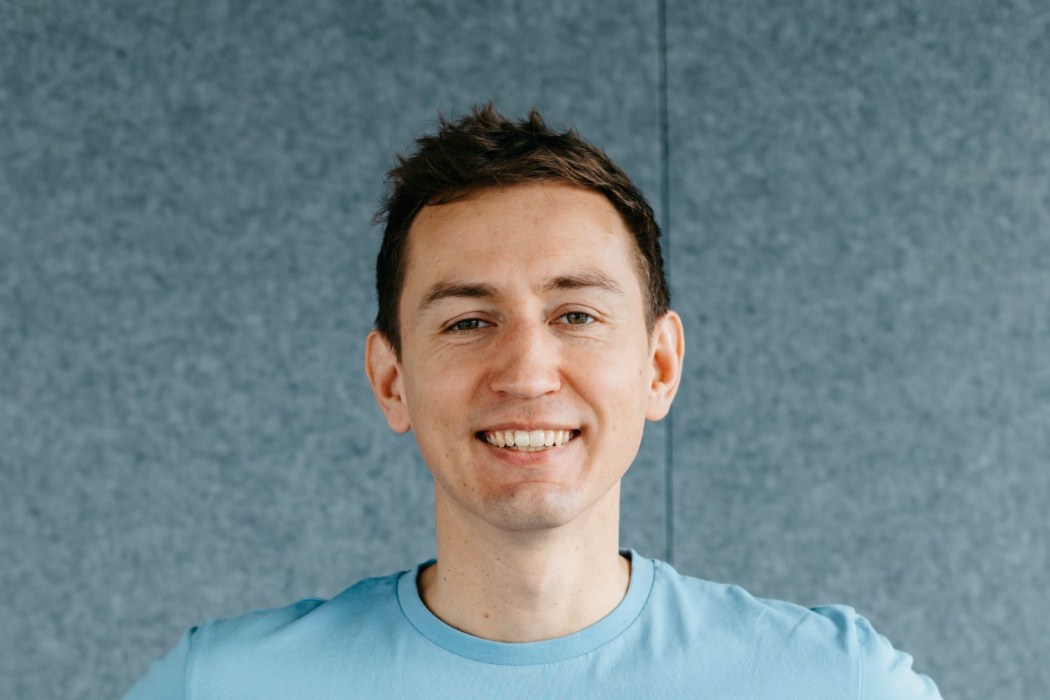
Maksim Kondratjuks
Maksim Kondratjuks is the co-founder and Chief Product Officer of Tagvenue, an online marketplace for booking event venues that he started in London in 2015 with Artur Stepaniak. The idea grew out of his own frustration finding conference and wedding spaces while working in equity capital markets at the London Stock Exchange. What began as a UK venue search engine now spans six countries with more than 20,000 verified venues and around 700,000 monthly event organizers.

Tempo
Tempo is a Toronto-based, Y Combinator-backed (S23) AI development environment for React. It pairs a drag-and-drop visual editor with AI code and reasoning agents so founders, product managers, designers, and engineers can build and ship production-grade React apps from the same canvas. Optimized for Vite and Tailwind, it works on real production codebases rather than throwaway prototypes, and connects to backends like Supabase and payment tools like Stripe through its MCP App Store.

The New Money Company
The New Money Company (YC W24) is a San Francisco fintech that protects B2B invoices against nonpayment and moves the money across borders. Its product, Numo, underwrites a buyer's creditworthiness instantly, guarantees the seller gets paid even if the buyer defaults, and settles funds to more than 80 destinations - with an early focus on getting international contractors in emerging markets paid in USD within seconds. Founded in 2023 by three former Hologram operators, it aims to let businesses sell into new markets without carrying the risk of a buyer who never pays.

Trusty
Trusty is an agent-to-agent matchmaking network for residential real estate that surfaces homes whether or not they are officially listed. Founded by Tim Hyer and Nicholas Meyers and part of Y Combinator's Winter 2022 batch, the company lets agents share off-market intent, gives buyers access to hidden inventory, and lets homeowners field private offers - all outside the traditional MLS. By 2022 it had onboarded roughly 350 agents covering about 80% of California.
Vespper
Vespper (YC F24) builds infrastructure that lets AI agents produce real Microsoft Word documents. Its product is a docx MCP (Model Context Protocol) server that turns raw agent output into clean, tracked, review-ready .docx files - aimed at regulated, legal, and compliance workflows where the final artifact has to be a Word doc with tracked changes, not a chat window. The two-person, Tel Aviv-based team originally launched an open-source, 24/7 AI on-call engineer for incident triage before pivoting into agent document infrastructure.

Shubham Mishra
Shubham Mishra is the co-founder and Global CEO of Pixis, a Burlingame, California company building codeless AI infrastructure that lets marketers deploy AI models without writing code. He dropped out of BITS Pilani to build a virtual reality headset with the startup Absentia, then pivoted into AI-driven marketing and grew Pixis from an early bet on AI to roughly $85M in ARR, raising $209M across its funding rounds. His pitch is consistent: strip the friction out of AI so any team can use it in minutes, not months.

majoo Indonesia
majoo is an Indonesian software-as-a-service company that gives micro, small and medium enterprises (MSMEs/UMKM) an all-in-one cloud platform combining a point-of-sale cashier, inventory, accounting, employee management, CRM, business analytics and an owner app. Founded in Jakarta in 2019, it lets small merchants in food & beverage, retail, services and beauty run and grow their businesses from a single dashboard and sell across offline and online channels.

Stas Sokolin
Stas Sokolin is the co-founder and CEO of Amae Health, a specialty integrated-care company for people with severe mental illness. A former impact investor at the Chan Zuckerberg Initiative with earlier stints at Google X and the American Medical Association's Health2047, he started his career as an investment banking analyst at BNP Paribas before setting out to rebuild how the hardest cases in behavioral health are treated - using in-person clinics, multidisciplinary teams, and a data platform built on Palantir. In November 2025 Amae raised a $25 million Series B led by Altos Ventures, pushing its total funding past $50 million.

Podeo
Podeo is a Dubai-based podcast platform that gives creators an end-to-end toolkit to record, host, produce, distribute and monetize their shows. Started in Beirut and now the largest podcast platform in the Middle East and North Africa, it has onboarded more than 100,000 creators reaching an audience of roughly 50 million listeners. Its distinguishing move is distribution beyond the usual apps - pushing audio into radio stations, airlines, ride-hailing, gaming and chat apps - paired with a programmatic advertising model that keeps the service free for creators while sharing revenue as their audiences grow.

Telgani | Rent a car
Telgani is a Riyadh-based digital car-rental marketplace that lets people in Saudi Arabia book a vehicle from their phone and have it delivered to their door - or waiting at the airport - in about an hour. Founded in 2018, the platform aggregates 75+ rental brands and tens of thousands of cars into a single app, offering daily, monthly and yearly plans plus flexible subscriptions. Backed by strategic investors including Toyota distributor Hala Auto and Elm Company, Telgani has raised more than $9 million to modernize a fragmented car-rental sector across the Kingdom.