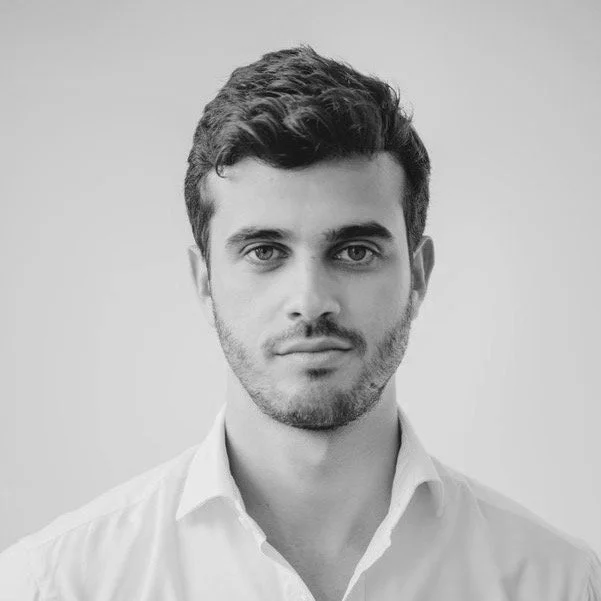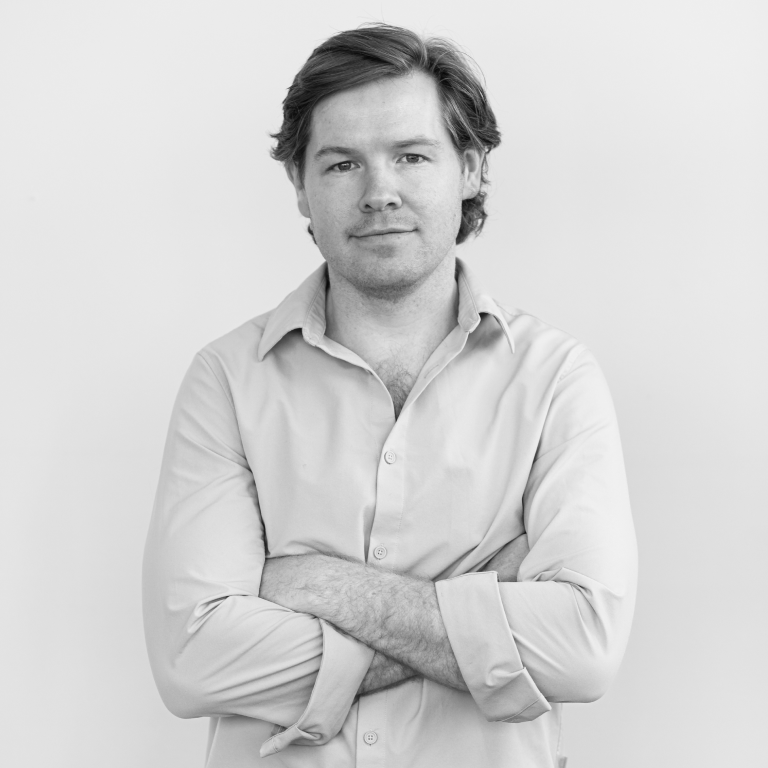
Will Villanueva is the co-founder and CEO of DELV (formerly Element Finance), a San Francisco-based decentralized finance company building fixed and variable yield markets on Ethereum. A physicist by training and former Ethereum researcher at ConsenSys, he co-founded Element Finance with Jonny Rhea in 2020 to bring fixed-rate income to DeFi. The company raised a $32M Series A in 2021 at a $320M valuation and later rebranded to DELV, whose flagship product Hyperdrive reimagines fixed and variable rate markets with an everlasting-liquidity AMM design.
August Digital is a New York-based institutional crypto company building on-chain prime brokerage infrastructure. Its platform gives trading desks, funds, protocols and treasuries secure smart-contract accounts, real-time risk and pricing engines, cross-margining, lending, and structured products so they can borrow, lend, trade and settle across DeFi and CeFi with any liquid collateral - all with on-chain auditability. August also operates Upshift, a vault product that opens institutional-grade yield strategies to a wider set of users. The company raised a $10M Series A led by Dragonfly in March 2025 and reports having processed roughly $45B in cumulative volume.
DeFi Devs is a Miami-based blockchain and AI development company that serves as the lead community developer of the Accumulate Protocol, an identity-based, delegated-proof-of-stake blockchain built for decentralized finance, digital identity, and enterprise tokenization. Founded in 2021 as a subsidiary of Inveniam Capital Partners and led by Factom founder Paul Snow, the firm builds infrastructure for cross-chain atomic transactions, human-readable addresses, and hierarchical key management, positioning Accumulate as an 'Internet of Blockchains' that bridges regulated real-world assets onto decentralized rails.
David Wells is the CEO of Ondo Perps, the equity-perpetuals trading arm of Ondo Finance, where he leads the push to bring leveraged trading of U.S. stocks, ETFs, and commodities onchain with tokenized shares usable as collateral. He founded and ran Enclave Markets, the first Fully Encrypted Exchange, incubated within Ava Labs, after earlier roles at Two Sigma and Paxos. A Harvard Business School graduate and long-time markets operator, Wells has spent his career building institutional-grade trading infrastructure and arguing that crypto markets still hold real inefficiencies for those who can build fair, private, and efficient venues.
Noble is a purpose-built blockchain for native asset issuance, focused on stablecoins and tokenized real-world assets. Built on the Cosmos SDK and connected through IBC, it is the canonical home of native USDC in the Cosmos ecosystem and the issuer of the yield-bearing Noble Dollar (USDN). Founded in 2022 by Jelena Djuric, Stefan Coolican and John Letey after the collapse of Terra's UST, Noble gives issuers such as Circle, Ondo Finance, Hashnote and Monerium a neutral, compliant rail to mint dollars and distribute them across dozens of connected chains - with no gas token required and fees paid in USDC.
Startale Group is a Singapore-headquartered Web3 infrastructure company building the onchain stack for finance, entertainment, and consumer applications. Led by founder and CEO Sota Watanabe - who also created Astar Network - Startale operates a vertically integrated portfolio spanning the Sony-backed Ethereum Layer 2 Soneium, the Astar Network, the Strium blockchain for tokenized securities and real-world assets, the JPYSC and USDSC stablecoins, and a consumer Startale App. Backed by Sony and SBI, the company aims to bring Web3 to billions by bridging traditional finance with onchain systems.
Jelena Djuric is the co-founder and CEO of Noble, a blockchain built for issuing and moving stablecoins natively across the interchain. She started Noble in early 2023 with Stefan Coolican and John Letey after years working across the Cosmos, Dfinity and Celo ecosystems, and after helping found the Canadian Web3 Council. Noble powers native USDC on Cosmos and now connects roughly 50 blockchains, has attracted hundreds of millions of dollars in assets, and raised a $15 million Series A led by Paradigm in late 2024. Djuric's stated ambition is to make stablecoins as easy to send as a Venmo payment.
Kirill Gertman is the co-founder and CEO of Conduit, a New York-based B2B cross-border payments platform that settles international transactions using stablecoins. After more than a dozen years building fintech products in banking and startups - including product leadership roles at BRD (acquired by Coinbase) and Eco - he launched Conduit in 2021. The company pivoted from crypto-backed DeFi analytics to cross-border payments after the 2022 market downturn, and now processes more than $10 billion in annualized volume across a network of 20-plus banks in nine countries. In May 2025, Conduit raised a $36 million Series A co-led by Dragonfly Capital and Altos Ventures.
DELV, formerly Element Finance, was a research-driven DeFi company that called itself 'the factory for DeFi.' Founded in 2020 by Will Villanueva and Jonny Rhea, it built open-source infrastructure for fixed- and variable-rate yield - most notably the Element Protocol, the Hyperdrive AMM, and the Council on-chain governance framework. Backed by a16z, Placeholder, and Polychain Capital with about $36.4M raised, the team pursued the idea that reliable fixed rates were essential to mainstream DeFi adoption. After a March 2025 Hyperdrive vulnerability and a conclusion that the product had not found market fit, DELV wound down operations in June 2025 with no reported loss of user funds.
Futureswap is a decentralized, non-custodial protocol for leveraged perpetual trading, letting users take long or short positions on crypto assets with leverage while liquidity providers earn fees and token incentives. Built by a small San Francisco team led by founder Derek Alia, it launched on Ethereum in 2020, later moved to Arbitrum and Avalanche for lower-cost transactions, and pioneered an AMM-based design that plugs into pools like Uniswap and Trader Joe. Backed by roughly $13.5M from investors including Ribbit Capital, Framework Ventures, True Ventures and Placeholder, it was governed by the community via its FST token.
Huma Finance is the first PayFi (Payment Financing) network, a blockchain protocol that lets businesses and payment providers borrow stablecoin liquidity against real-world receivables and invoices, settling cross-border payments and card transactions in seconds instead of days. Liquidity providers deposit USDC and earn double-digit yield sourced from the fees borrowers pay for that instant settlement. Founded in 2022 and built natively on Solana, Huma has processed more than $4.5 billion in transaction volume and launched its HUMA governance token in May 2025.
Slingshot is a San Francisco-based crypto trading app that lets people buy, sell, and swap hundreds of thousands of tokens across multiple blockchains from a single USDC balance - hiding the usual friction of wallets, bridges, and gas fees behind a clean consumer interface. Founded in 2020 by Coinbase alum Clinton Bembry, it raised roughly $18M through a Ribbit Capital-led Series A and was acquired by NFT marketplace Magic Eden in April 2025.
Thesis* is a Bitcoin-focused venture production studio founded in 2014 that builds companies and protocols in-house rather than investing in outside teams. Operating under the banner "Money is power, Bitcoin is empowerment," it has incubated a portfolio spanning Bitcoin infrastructure and consumer finance - including tBTC (a decentralized, trust-minimized bridge that tokenizes Bitcoin on Ethereum), Mezo (an on-chain Bitcoin banking layer backed by the MUSD stablecoin), Fold (a Bitcoin rewards app), Acre (Bitcoin staking), and Taho (a community-owned web3 wallet). Led by CEO Matt Luongo, Thesis raised a $21 million Series A in 2021 and has become one of the most prolific studios building Bitcoin-native financial products.
Mike Love is the CEO and a founding team member of Fintiv, an Austin-based fintech that builds patented digital wallet infrastructure bridging traditional finance, loyalty, and Web3. A computer scientist by training and a career-long payments architect, he helped lead technology transformation at First Data (Fiserv) before joining Fintiv in 2012, and also founded Cloud Payments Network. He describes himself as a serial technology entrepreneur with over four decades in TMT and work across 75+ countries.
BAXUS is a New York-based peer-to-peer marketplace for fine and rare wines and spirits, built on the Solana blockchain. It authenticates physical bottles, stores them in climate-controlled vaults, and issues digital tokens representing direct ownership - giving collectors and institutions real-time pricing, instant trade settlement, and the ability to use bottles as loan collateral. The platform has facilitated over $20 million in whiskey trades and raised a $5M seed round led by Multicoin Capital in 2024.
N1 (formerly Layer N) is a high-performance Layer-1 blockchain built specifically for onchain finance at scale. Founded by DeFi veterans Dima Romanov, David Cao, and Sheheryar Parvaz, N1 pairs an ultra-low-latency, congestion-free execution layer with native financial primitives - an onchain orderbook, atomic transaction bundles, unified margining, and RFQ - so that trading applications that previously had to run offchain can run natively onchain. Every app runs in its own isolated environment with no state congestion, and developers can write smart contracts in TypeScript (with Python and other languages on the way). Backed by Founders Fund, Multicoin Capital, dao5, Kraken Ventures, and Arthur Hayes, the New York-based team is targeting the performance ceiling that has kept serious finance from moving onchain.
Normal is a Chicago-based crypto company building a non-custodial wallet and investment protocol on the Stellar blockchain. Its app lets everyday users buy crypto, earn yield on USDC savings (routed through the Blend lending protocol), and swap assets with sub-second settlement and sub-cent fees. Beyond the wallet, Normal is building an on-chain 'investment layer' of diversified crypto index tokens - a Top 5 index, plus AI, DeFi, RWA and meme baskets - aiming to make holding a slice of the whole crypto market as simple as opening a savings account. The company's stated goal is blunt: 'make crypto normal.'
Ola Guild Games (OLA GG) is the largest Web3 gaming community in the Spanish-speaking world, operating as a regional subDAO of Yield Guild Games. Founded by lifelong Hispanic gamers, it onboards players across Latin America and Spain into blockchain games through NFT scholarships, Web3 education, and a shared-rewards model that lets people play and earn without upfront cost. In 2022 it raised $8 million in seed funding from investors including Galaxy Interactive, BITKRAFT, and Arca.
Re is a blockchain-powered reinsurance protocol - often described as a decentralized Lloyd's of London - that connects alternative capital to regulated insurance risk. Built originally on Avalanche, Re lets stablecoin depositors back baskets of real reinsurance treaties and earn premium-driven yield, while the on-chain design brings transparency and auditability to a historically opaque, intermediary-heavy market. Founded in 2022 by former Cover CEO Karn Saroya, Re has grown to roughly half a billion dollars in total value locked and launched its $RE governance token in June 2026.
Nikos Andrikogiannopoulos is the founder and CEO of Metrika, a Cambridge, Massachusetts SaaS company that measures the reliability of blockchains the way a control tower watches air traffic. A Greek-born MIT engineer who spent a decade in telecom strategy consulting, he built Metrika to answer a plain question institutions kept asking about crypto rails: how do you know it is working, and how do you prove it. He served on the U.S. CFTC's Technology Advisory Committee and helped author its landmark 2024 DeFi report, and his platform now underpins risk work with names like S&P Global Ratings, Zodia Custody, Hedera, Algorand and Solana.

Justin Benjamin is the co-founder and COO of Normal, a Chicago-based crypto savings and index investing platform built on Stellar. He is also a beach wrestling world champion - the first U.S. man to win a Senior Beach World Series gold medal - and serves as Head of Strategy for USA Wrestling. He was a Big Ten wrestler at Northwestern University and earlier built products at CoinFlip and Bitcoin of America before co-founding Normal through the Antler Boulder accelerator in 2022.
Karn Saroya is the co-founder and CEO of Re, a decentralized reinsurance protocol built on Avalanche that connects alternative capital to the nearly $1 trillion global reinsurance market. A Canadian-born, MIT-trained Fulbright scholar, he previously co-founded the YC-backed insurtech Cover and worked as a financial-services consultant at Oliver Wyman before deciding the insurance stack itself needed to be torn down and rebuilt on-chain.

Adam Silver is the co-founder and CEO of Plural (Plural Finance / Plural Energy), a San Francisco startup building a financial operating system for energy infrastructure. Plural tokenizes real-world clean energy assets - solar arrays, batteries, and data centers - turning them into programmable, investable products, and runs a FINRA-member broker-dealer with a transfer agent license. A former Deloitte consultant and ServiceNow product lead, Silver became obsessed with what he calls 'the miracle of lights turning on,' then with the unacceptable difficulty of financing the assets behind it. In September 2025 Plural closed an oversubscribed $7.13M seed round led by Paradigm, bringing total funding to roughly $9.3M, with over $300M in distributed solar and battery assets available for investment.
David Cao is the co-founder and self-styled 'Chief Get Shit Done Officer' of N1, a Layer 1 blockchain built for finance that promises ultra-low latency and 100,000+ transactions per second. With co-founders Dima Romanov and Sheheryar Parvaz, he spent years building 01, a fully on-chain Solana derivatives exchange, weathered a two-year crypto winter, pivoted through Layer N, and relaunched the whole effort as N1 in December 2024. Backed by Founders Fund, dao5, Multicoin Capital and Arthur Hayes, the New York-based, Harvard-schooled builder is betting that congestion-free, developer-friendly infrastructure is the missing piece for moving real markets onchain.

Hugo Renaudin is the co-founder and CEO of P00LS, a Web3 platform building social and community tokens for creators and brands. A French-born, math-trained entrepreneur, he ran the largest ICO in France (raising roughly $20-30M in under 10 hours for LGO, a crypto exchange he sold to Voyager Digital), then co-founded the DeFi venture Bender Labs before launching P00LS in 2021. P00LS has raised around $18M to turn fandom into ownership: creators mint non-speculative tokens that reward and identify their most loyal supporters across chains.
Nico del Pino is the co-founder and CEO of Ola Guild Games (OLA GG), the largest web3 gaming community in the Hispanic world. A subDAO of Yield Guild Games, OLA GG sets out to turn play into financial inclusion for the 500-million-plus Spanish-speaking market across Latin America and beyond. A crypto and fintech operator for more than a decade, del Pino co-founded Liquid Meta (the first publicly traded liquidity-mining company), ran fintech at Endeavor, and led sales at NASDAQ-listed dLocal before betting his career on the idea that owning your in-game economy could change a household's bottom line.
Nicolás Jaramillo is a Chilean engineer turned serial fintech founder who wants to be the BlackRock of web3. After helping build MACH, Chile's first widely adopted digital bank, and scaling the cross-border payments company Global66 across Latin America, he co-founded Arch in 2020 to make crypto investing as boring and accessible as an index fund. Arch packages the chaos of DeFi into tokenized, risk-rated portfolios, raised $5M in seed funding from Digital Currency Group and Upload Ventures, and aims to bring traditional-market discipline to the decentralized economy.
dYdX is a decentralized trading protocol best known for perpetual futures, where traders take leveraged long and short positions on crypto without handing custody to a centralized exchange. Founded by ex-Coinbase engineer Antonio Juliano in 2017, it evolved from an Ethereum DeFi app into its own sovereign Cosmos appchain (dYdX v4) that runs a high-performance, validator-operated order book settled in USDC. The protocol is governed by the DYDX token and, with the 2025 launch of spot trading, opened access to U.S. traders for the first time.
Edge is a San Diego company building a self-custody, privacy-first mobile wallet for buying, storing, swapping and spending more than 120 cryptocurrencies. Founded in 2014 as Airbitz and rebranded to Edge in 2018, it pioneered a username-and-password login model backed by client-side encryption and a zero-knowledge architecture, so private keys and account data never leave a user's device unencrypted. The same security layer is offered to developers as the Edge Login SDK.
Halliday is a San Francisco blockchain infrastructure company building the Agentic Workflow Protocol, a system that lets developers create onchain financial applications without writing smart contracts. Its flagship product, Halliday Payments, gives developers a single interface for fiat onramps, cross-chain bridging, swaps, and offramps. Backed by a16z crypto across both its seed and Series A rounds, Halliday has raised $26 million total and works with teams including DeFi Kingdoms, Avalanche, ApeCoin, Story Protocol, and Metis.