rag
(98)
Openxcell and the work between the apps
The software company is betting on a familiar office problem: good tools that leave people doing the connecting. Its answer is custom software, with AI given a carefully measured job.
DataStax found AI’s missing memory
The company that made Cassandra easier to live with is now helping IBM connect AI to enterprise data. Its story begins with a failed intervention and keeps returning to the same problem: making useful technology usable.

Douwe Kiela and the art of looking things up
A pub quiz helped send Douwe Kiela into logic. Years later, the RAG co-inventor gave language models a way to consult the evidence - and built a company around the demands of getting an answer right.
Pinecone Learned That a Smart Agent Still Needs a Good Memory
The company made vector search easy to rent. Then its own support agent showed why finding a document was only the beginning.
Your Website Has Read the Manual. Finally.
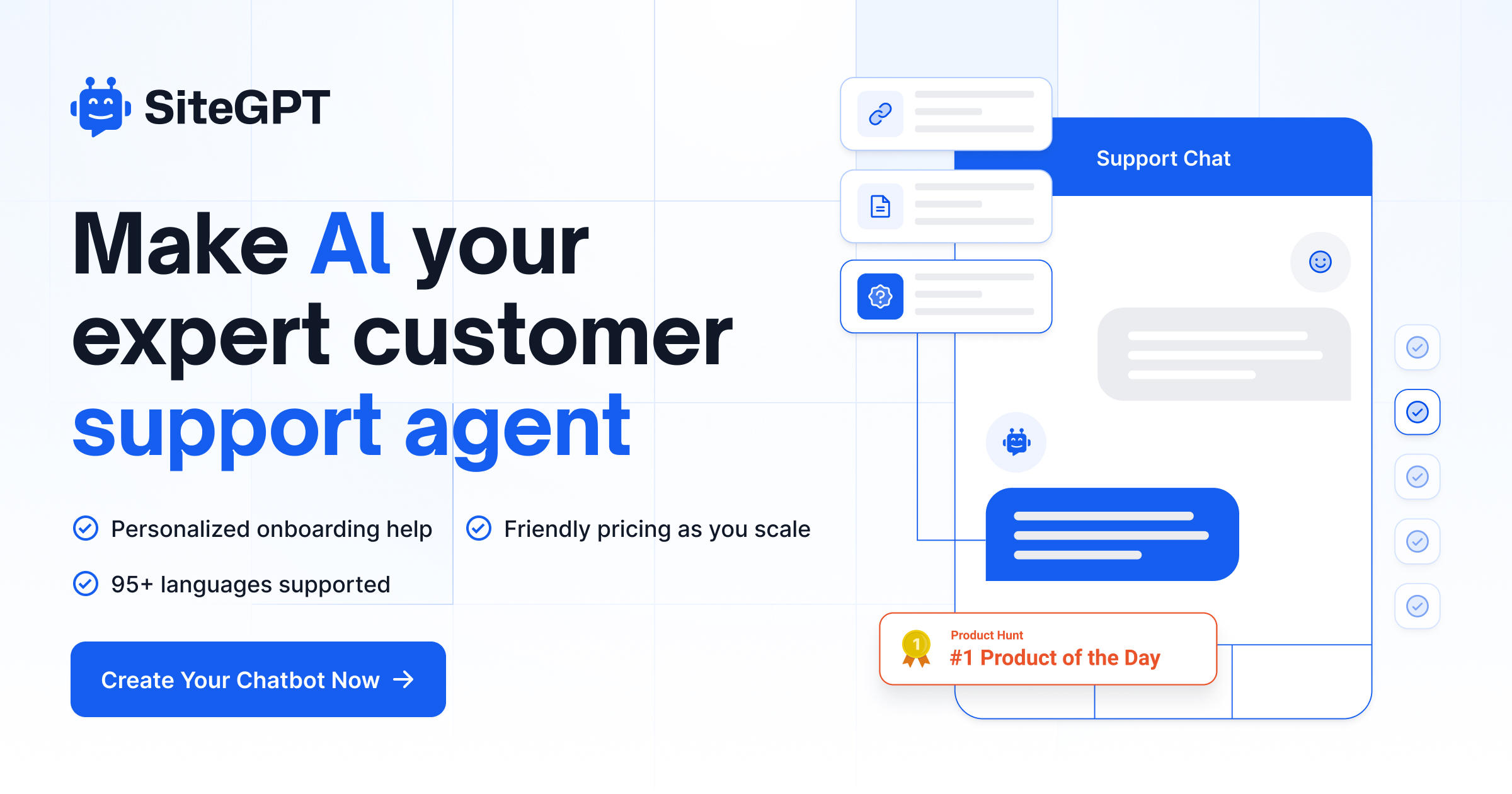
SiteGPT gives your website a support agent trained on the material customers already ignore. It is quick to install, unusually serious about handoffs, and priced for businesses that can prove the bot earns its keep.
StackAI Wants the Boring Work - and Knows When to Ask a Human
The enterprise agent builder turns documents, models, approvals, and business systems into visible workflows. It is built for the awkward stretch between a clever demo and software an audit committee might actually approve.
The 10-Cent Support Agent That Knows When to Leave
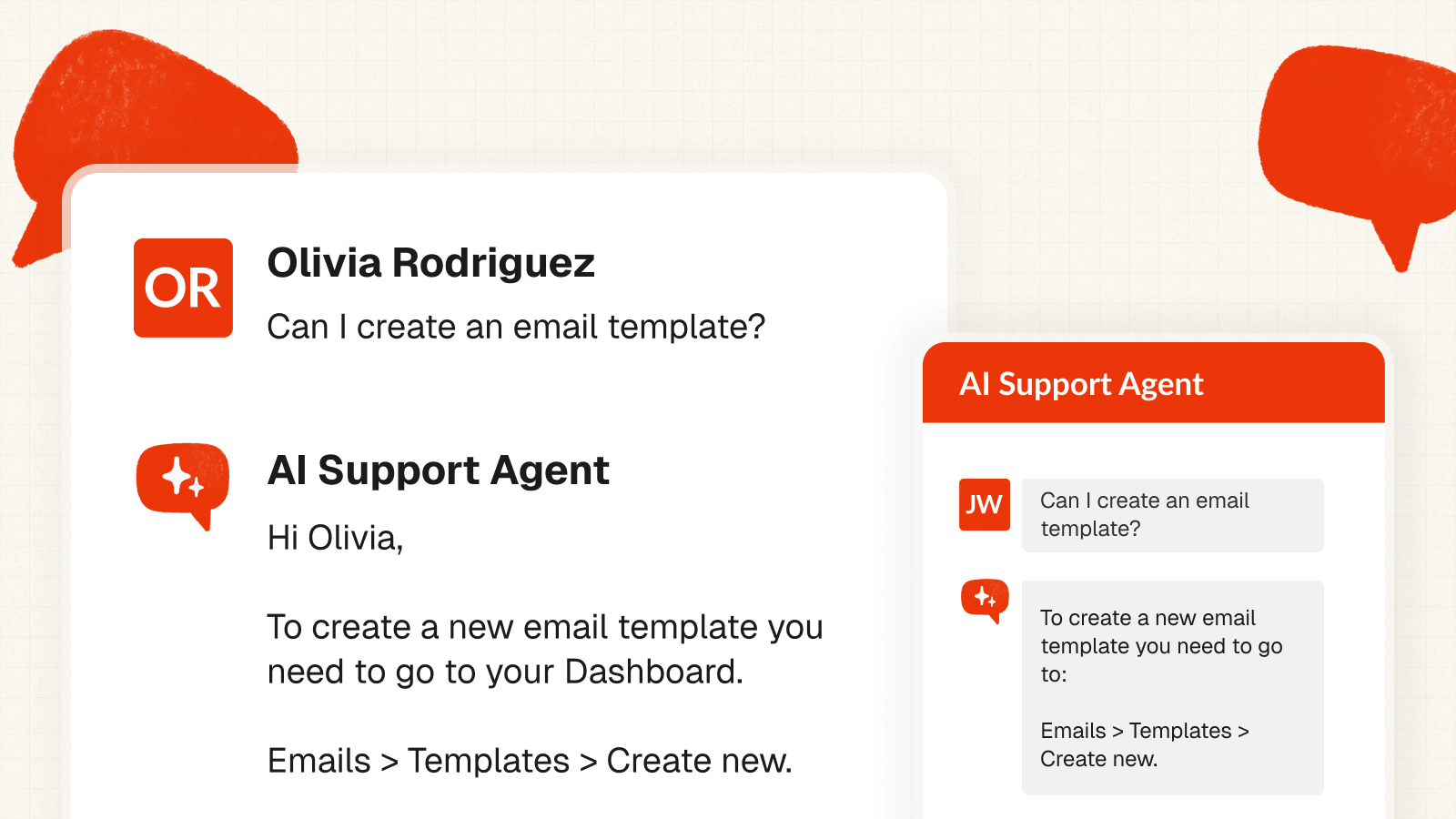
My AskAI slips into the helpdesk you already use, answers the repetitive questions, and steps aside when a human should take over. The clever bit is not the chat. It is the escape hatch.
eesel AI Hires the Bot That Actually Reads the Manual
The support bot plugs into the helpdesk, studies the old tickets, and clocks in for 40 cents a conversation. The clever part is not the chat. It is the rehearsal room before the bot meets a customer.
Dust Wants Your AI Agents in the Group Chat
Dust turns scattered company context into shared AI work - useful for teams ready to build repeatable agents, provided they watch the credit meter and keep humans in the loop.

Wonderchat Gives Your Help Docs a Night Shift
Feed it the manuals, policies and webpages your customers ignore. Wonderchat turns that pile into a support and sales agent - with citations, a human escape hatch and a bill worth reading twice.

Chatbase Hit $10M ARR by Outgrowing the Product That Made It Famous
The two-week PDF bot got a paying customer in 30 minutes. Three years later, its bootstrapped creator runs a 26-person support platform - and the pivot explains more than the revenue chart.

Lewis Polansky Is Teaching AI to Find the Right File
Before Captain became a search engine for AI agents, its CEO built a translation app, tested a soy-based carton, and made a code checker review itself. The connecting idea is simple: useful intelligence begins with finding the right evidence.

Sixteen Years, No Funding, and the AI Nobody Demos
ITRex Group has spent sixteen years turning other companies' hardest problems into working software. Now it is doing the same with AI - the part that runs in production, not the part that looks good on stage.
The Search Company That Decided Keywords Weren't Enough
Lucidworks grew up inside open-source Solr, then bet its future on a harder problem than matching words: understanding what people mean. Here is how the Salt Lake City and San Francisco company sells relevance to the world's largest catalogs.
The Lahore Shop That Sells Silicon Valley Its Software
Founded in 2006 with five people in Lahore, PureLogics now ships custom software and AI systems to Fortune 500 names from a New York address - without ever taking a dollar of outside funding.
Nobody Reads the Company Wiki. Now AI Reads It For You
Atlassian, Notion, Zendesk, Glean and a pack of rivals spent a decade helping teams write things down. The AI scramble of 2025 rewrote the job description - now the software has to read it all back.
Spekit, Glean and the End of Looking Stuff Up at Work
Two well-funded startups are attacking the same quiet tax on office work - the hours people lose hunting for answers that already exist somewhere in the company. One buries the answer inside the sales tools; the other indexes everything and lets you ask.
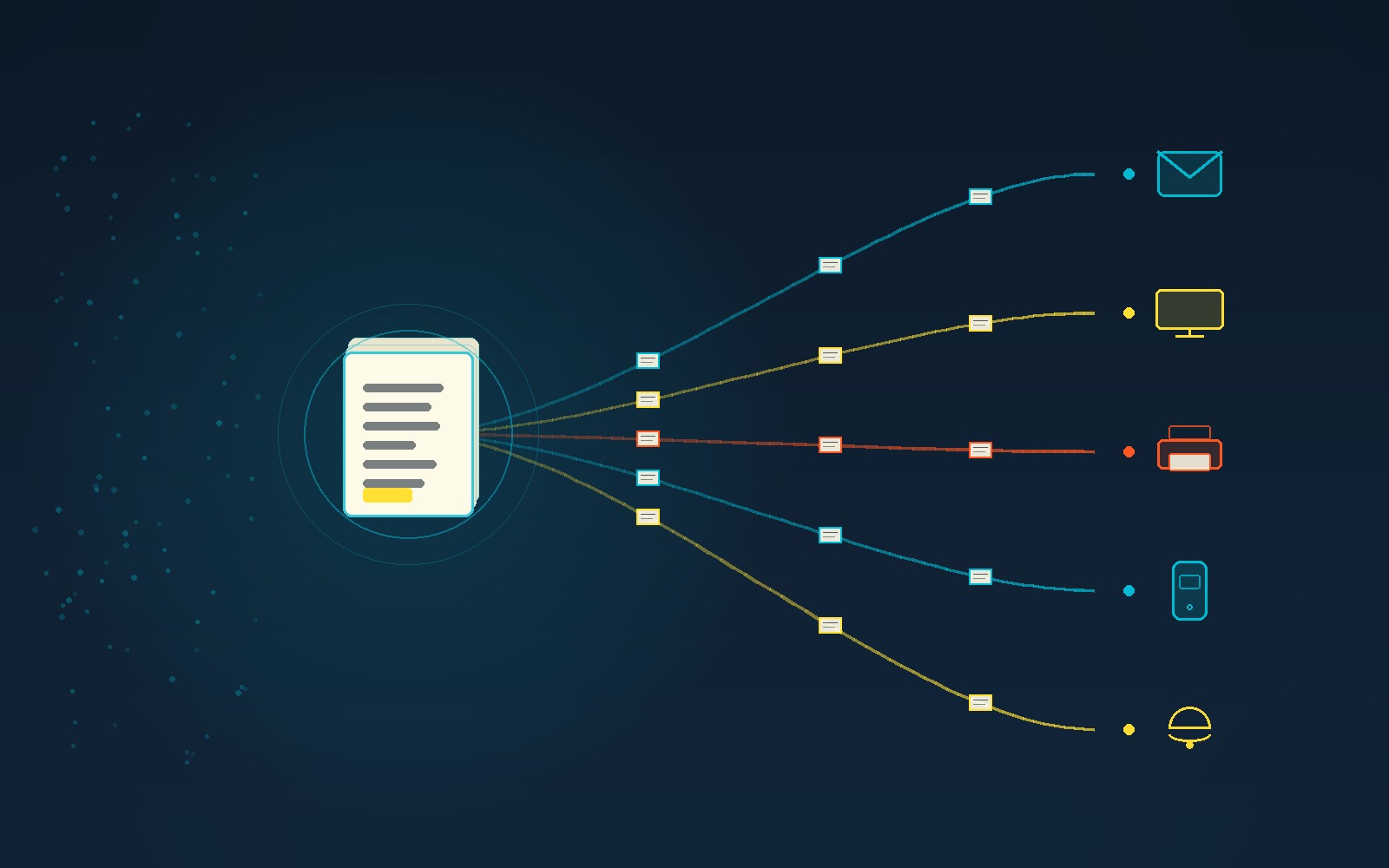
Who Owns Your Company's Brain? Inside the Knowledge Base Wars
ProProfs, Slite, MadCap, and Intercom all sell the same promise - a single place for what your company knows. The AI era just turned that quiet market into a fight over who feeds the machine.

Guru
Stop running your business on confidently wrong AI. Guru turns scattered company knowledge into a governed source of truth that answers employees and AI agents alike.
Captain
Captain is a managed retrieval-augmented generation (RAG) platform out of Y Combinator's Winter 2026 batch. It lets developers connect data sources - S3, SharePoint, Google Drive, Slack, Notion and more - with a couple of API calls, then handles the full pipeline behind the scenes: OCR, chunking, embedding, vector storage, hybrid search, and re-ranking. The company claims roughly 95% retrieval accuracy on a published benchmark versus about 78% for hand-built pipelines, and positions itself as 'the Snowflake for unstructured data.' In March 2026 it added Odyssey, a proprietary private-market intelligence dataset queryable through the same API.
DXwand
DXwand is a Dubai- and Cairo-based enterprise AI company whose ORXTRA platform lets large organisations build and deploy generative AI agents on top of their own documents, databases and workflows. Founded in 2018 by two former Microsoft executives, Ahmed Mahmoud and Mahmoud Gomaa, the company built its edge on two hard problems most Western vendors skipped: understanding spoken Arabic across its many dialects, and running useful AI cheaply enough that a bank or a ministry can afford to put it in front of millions of people. Its knowledge-mining and RAG engine removes the manual data-labelling step that normally stalls enterprise AI projects, and its agents ship as pre-built modules for customer service, procurement and HR, or as custom builds through a no-code Agent Builder that supports 20+ language models and 80+ data sources. DXwand serves financial services, government, healthcare, telecom, education, media and retail clients across MENA, has raised roughly $6.9 million to date including a $4 million Series A led by Shorooq Partners and Algebra Ventures, and says it reached about $5 million in annual recurring revenue while remaining profitable.

Tallat Shafaat
Tallat Shafaat is the founder and CEO of Vectara, a Palo Alto based enterprise AI company that pioneered retrieval-augmented generation (RAG) as a service. A former core engineer on Google's Knowledge Graph indexing team, he holds a PhD in distributed systems from KTH Royal Institute of Technology in Stockholm. He co-founded Vectara in 2020 with Amr Awadallah and Amin Ahmad, led the engineering behind the company's Boomerang retrieval model and the open-source HHEM hallucination detection model, and stepped up from chief architect to CEO as the company entered its next growth phase.

Chris Mahl
Chris Mahl is President and CEO of Pryon, a Raleigh-based enterprise AI company building a retrieval-augmented generation platform that turns unstructured enterprise data into accurate, source-attributed answers. With more than two decades in enterprise software, he was part of the early leadership teams at Salesforce and Informatica, later ran revenue and operations as CRO at Botkeeper and Opentron Labworks, and held an executive role at Right Media Exchange before it was acquired by Yahoo. He focuses on scaling go-to-market and operations for technology companies and positions Pryon at what he calls the 'knowledge layer' of the AI stack.

Contextual AI
Contextual AI is a Mountain View enterprise AI company that builds a context engineering platform for production-grade, retrieval-augmented generation (RAG) agents. Founded in 2023 by RAG co-inventor Douwe Kiela and Amanpreet Singh, it packages retrieval, reranking and grounded language models into an end-to-end system that lets regulated enterprises deploy accurate, source-grounded AI on their own documents. The company has raised $100M from backers including Greycroft, Nvidia, Snowflake, HSBC and Bezos Expeditions, and counts Qualcomm and HSBC among its users.

What ChatGPT Actually Knows About Your Company
When a customer asks ChatGPT about your company, the answer is not pulled from your website in real time. It is assembled from what the model absorbed during training - Common Crawl web pages, Wikipedia, news, reviews, Reddit threads, job postings and structured databases like Crunchbase and Wikidata - frozen at a knowledge cutoff months before the model shipped. This story explains where that knowledge comes from, why it drifts stale, how gaps and old narratives creep in, and what companies can actually do to correct the record.

Nomic AI
Nomic AI is a New York-based artificial intelligence company building tools to make large, unstructured datasets and AI models understandable and usable by everyone. It is best known for Atlas, a browser-based platform for visualizing and interacting with massive datasets; the open-source Nomic Embed family of text, code, and multimodal embedding models; and GPT4All, an ecosystem for running large language models privately on everyday hardware. Since 2025 the company has focused its platform on the architecture, engineering, and construction (AEC) sector, applying its embedding and retrieval technology to drawing review, code compliance, and document-heavy construction workflows.
Pryon
Pryon is a Raleigh, North Carolina enterprise AI company that builds a secure retrieval-augmented generation (RAG) platform for regulated organizations. Founded in 2017 by Igor Jablokov - the entrepreneur whose earlier voice-recognition company Yap became Amazon's first AI acquisition and seeded Alexa - Pryon ingests text, audio, images and video from enterprise systems and pairs that content with large language models to deliver fast, source-attributed answers. Its RAG Suite and Memory Layer are designed to run anywhere from public cloud to fully air-gapped environments, targeting customers in government, defense, energy, life sciences, manufacturing and finance where accuracy, security and verifiability matter more than novelty.
Shaped
Shaped is a New York-based AI company that builds a real-time relevance engine for recommendations, search, and agent retrieval. Its managed platform, Shaped Cloud, combines embeddings, machine-learning models, and fresh behavioral data to return personalized results in under 50 milliseconds, letting product and engineering teams add for-you feeds, hybrid search, and personalized discovery without building ranking infrastructure from scratch. Founded in 2021 by Tullie Murrell, Daniel Camilleri, and Shai Bruhis, the company raised an $8M Series A led by Madrona in 2024 and was acquired by live-commerce marketplace Whatnot in July 2026.
UneeQ
UneeQ builds AI-powered digital humans - lifelike, real-time animated avatars that give chatbots and enterprise AI a human face, voice and body language. Founded in New Zealand in 2009 as FaceMe and now headquartered in Austin, Texas, the company pairs its Synanim synthetic-animation engine and Synapse AI-orchestration brain to deploy digital humans for customer experience, brand engagement and immersive employee training across banking, airlines, telecom, retail, healthcare and government.
Jay Chen
Jay Chen is the interim CEO of Contextual AI, the Silicon Valley enterprise company building a 'context layer' for grounded AI agents. He stepped into the top job in 2026 after co-founder Douwe Kiela and a group of researchers moved to Google DeepMind under a licensing deal. A Wharton MBA who started as a chip engineer at NVIDIA, Chen built his career across product marketing and growth roles at Confluent, Starburst, Opendoor and Twingate before joining Contextual AI as VP of Marketing, where he helped launch its enterprise RAG platform.