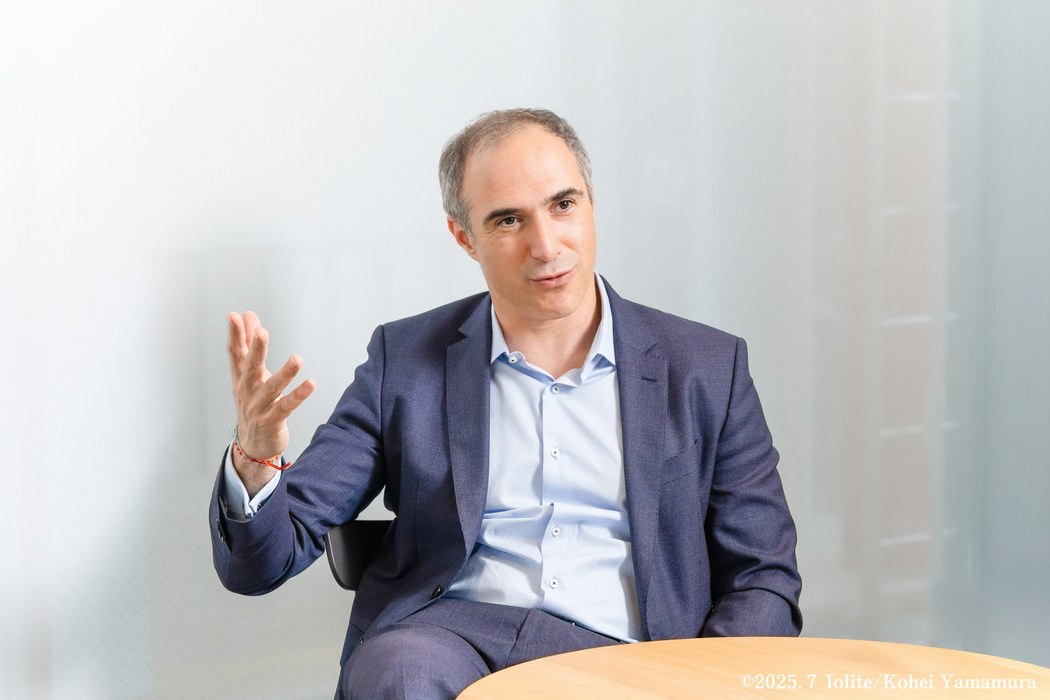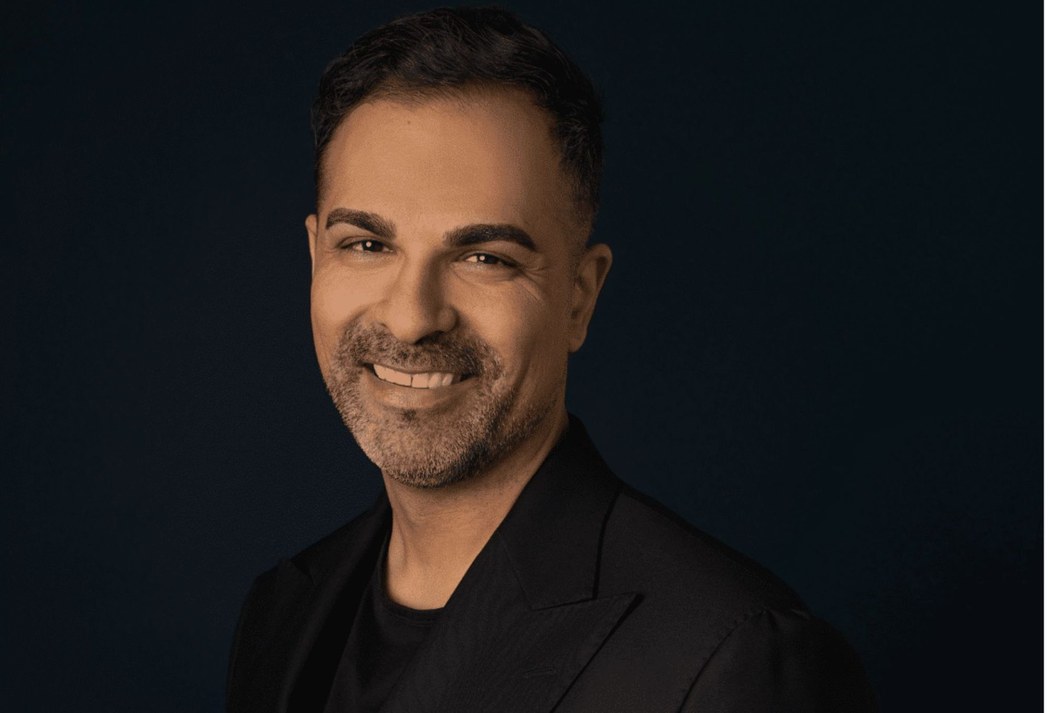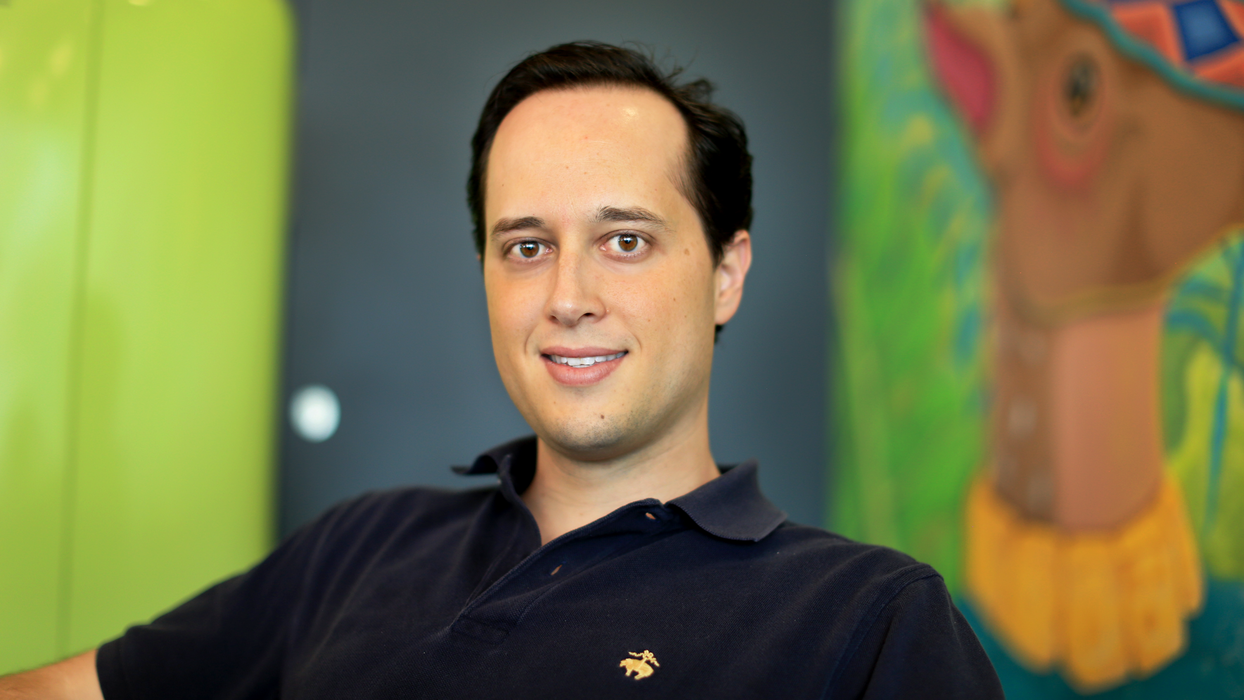
TransFi is a Dubai-headquartered payment infrastructure company that moves money across borders on stablecoin rails. Its platform lets businesses and Web3 apps collect, convert and pay out funds across fiat and stablecoins, spanning 100+ markets, 40+ currencies, 250+ local payment methods and 130+ digital assets. Founded in 2022 by former McKinsey payments partner Raj Kamal, TransFi targets high-friction emerging markets across Asia, the Middle East, Latin America and Africa, replacing slow correspondent-banking and SWIFT flows with near-instant settlement.
Bruno Caratori is the co-founder and Global CEO of Hashdex, one of the world's leading regulated crypto asset managers. A Brazilian electrical engineer turned financial technologist, he helped build Hashdex from a 2018 startup into a firm operating across eight countries with regulated crypto investment products including Bitcoin and Ethereum ETFs. He was named Global CEO in March 2026 after years as COO, having earlier worked in investment risk at Gavea Investimentos and led product at the education network Edmodo.
Chris Lipowicz is the CEO of Elementus, a New York based blockchain intelligence company that helps hedge funds, financial institutions, government agencies, and legal teams interpret what happens on-chain. An enterprise operator with more than 20 years of experience building revenue and operations teams, he came up through real estate and security technology firms including Building Intelligence and Cherre before moving into crypto data. He argues that on-chain activity is public but hard to read without the right tools, and positions Elementus as the layer that turns raw blockchain data into real-time, compliant, risk-aware decisions.
Catena Labs is a Boston-based fintech building what it calls the first AI-native financial institution - a regulated bank and governance platform designed for AI agents that autonomously send and receive money. Founded in 2025 by Circle co-founder and USDC co-creator Sean Neville, Catena pairs agent identity, deterministic spending policies, and audit trails with account management and stablecoin, card, ACH and wire payment rails. It also open-sourced the Agent Commerce Kit (ACK), a set of protocols for agent identity and payments built on W3C web standards.
Conduit is a stablecoin-powered cross-border payments network for businesses. Through a single API it connects banks, local payment rails, and blockchains so companies can move money internationally faster and cheaper than legacy systems like SWIFT. Founded in 2021 by Kirill Gertman and Michael Gregson, the company processes more than $10 billion in annualized payment volume and raised a $36 million Series A in May 2025.
CryptoQuant is a crypto on-chain and market data analytics platform founded by Ki Young Ju that collects raw blockchain data, enriches it with exchange and entity labels, and delivers it as actionable metrics, charts, alerts and APIs. Often called 'the Bloomberg of crypto,' it serves professional traders, researchers and 200-plus institutional clients, and was the first on-chain data provider listed on CME Group's DataMine marketplace.
Dave Hendricks is the co-founder and CEO of Vertalo, an Austin-based platform that acts as an SEC-registered transfer agent and tokenization engine for real-world assets. He has spent close to a decade building infrastructure to turn illiquid private securities into compliant, transferable digital assets. A serial entrepreneur, he previously co-founded LiveIntent, the programmatic email advertising platform, and helped build CheetahMail into the world's largest email service provider before its 2004 sale to Experian. Earlier he ran the worldwide relationship between Arthur Andersen and Oracle and worked on large securitization projects. He is known for a pragmatic, institution-focused view of crypto and a habit of dismissing hype cycles in favor of durable financial plumbing.
Noble is a purpose-built blockchain for native asset issuance, focused on stablecoins and tokenized real-world assets. Built on the Cosmos SDK and connected through IBC, it is the canonical home of native USDC in the Cosmos ecosystem and the issuer of the yield-bearing Noble Dollar (USDN). Founded in 2022 by Jelena Djuric, Stefan Coolican and John Letey after the collapse of Terra's UST, Noble gives issuers such as Circle, Ondo Finance, Hashnote and Monerium a neutral, compliant rail to mint dollars and distribute them across dozens of connected chains - with no gas token required and fees paid in USDC.
Startale Group is a Singapore-headquartered Web3 infrastructure company building the onchain stack for finance, entertainment, and consumer applications. Led by founder and CEO Sota Watanabe - who also created Astar Network - Startale operates a vertically integrated portfolio spanning the Sony-backed Ethereum Layer 2 Soneium, the Astar Network, the Strium blockchain for tokenized securities and real-world assets, the JPYSC and USDSC stablecoins, and a consumer Startale App. Backed by Sony and SBI, the company aims to bring Web3 to billions by bridging traditional finance with onchain systems.
VelaFi is a stablecoin-powered financial infrastructure platform that helps enterprises move money across borders quickly and at lower cost. Built out of TruBit Business, the B2B unit of Galactic Holdings, VelaFi connects local banking rails, cross-border networks and major stablecoin protocols to offer on/off-ramps, pay-ins and pay-outs, multi-currency accounts, FX and treasury tools - delivered directly or through developer-first APIs. With roots in Latin America and operations across the U.S., Hong Kong and Singapore, the company says it has served hundreds of institutional clients and processed billions of dollars in payment volume. In January 2026 it raised a $20M Series B led by XVC and Ikuyo.
Ian Krotinsky is the co-founder and CEO of Fin, a New York based payments company that uses stablecoin infrastructure to move large sums of money instantly across borders. A former quantitative portfolio manager and trader at Citadel, he and co-founder Aashiq Dheeraj first built TipLink, a tool for sending crypto with a link, before rebranding around a broader ambition: to build the payments app of the future for high-value transfers. In December 2025 the company raised a $17 million Series A led by Pantera Capital, with Sequoia and Samsung Next participating.
Jelena Djuric is the co-founder and CEO of Noble, a blockchain built for issuing and moving stablecoins natively across the interchain. She started Noble in early 2023 with Stefan Coolican and John Letey after years working across the Cosmos, Dfinity and Celo ecosystems, and after helping found the Canadian Web3 Council. Noble powers native USDC on Cosmos and now connects roughly 50 blockchains, has attracted hundreds of millions of dollars in assets, and raised a $15 million Series A led by Paradigm in late 2024. Djuric's stated ambition is to make stablecoins as easy to send as a Venmo payment.
Kirill Gertman is the co-founder and CEO of Conduit, a New York-based B2B cross-border payments platform that settles international transactions using stablecoins. After more than a dozen years building fintech products in banking and startups - including product leadership roles at BRD (acquired by Coinbase) and Eco - he launched Conduit in 2021. The company pivoted from crypto-backed DeFi analytics to cross-border payments after the 2022 market downturn, and now processes more than $10 billion in annualized volume across a network of 20-plus banks in nine countries. In May 2025, Conduit raised a $36 million Series A co-led by Dragonfly Capital and Altos Ventures.
Maggie Wu is the CEO and co-founder of VelaFi, a stablecoin-powered payments infrastructure company that helps businesses move money across borders faster and cheaper than traditional banking rails. Born in China and now based in Frisco, Texas, she built her name in Latin America, where her earlier venture TruBit grew to more than 300,000 users. In January 2026 VelaFi raised a $20 million Series B led by XVC and Ikuyo, with backing from Alibaba Investment and BAI Capital, pushing total funding past $40 million as the company expands from Latin America into the United States and Asia.
Huma Finance is the first PayFi (Payment Financing) network, a blockchain protocol that lets businesses and payment providers borrow stablecoin liquidity against real-world receivables and invoices, settling cross-border payments and card transactions in seconds instead of days. Liquidity providers deposit USDC and earn double-digit yield sourced from the fees borrowers pay for that instant settlement. Founded in 2022 and built natively on Solana, Huma has processed more than $4.5 billion in transaction volume and launched its HUMA governance token in May 2025.
Checker is a New York-based financial infrastructure company that lets regulated banks, fintechs and payment providers plug into stablecoins, digital-asset liquidity, cross-border payments, treasury and credit through a single API. Founded in 2023, it stitches together 50+ liquidity and infrastructure providers across 75+ currencies, and processed roughly $3 billion in volume over its first year - about 1% of global B2B stablecoin payment flows. In May 2026 it raised $8 million from Galaxy Ventures, Al Mada Ventures and Framework Ventures to expand its network across Brazil, Kenya, Hong Kong and the United States.
Karn Saroya is the co-founder and CEO of Re, a decentralized reinsurance protocol built on Avalanche that connects alternative capital to the nearly $1 trillion global reinsurance market. A Canadian-born, MIT-trained Fulbright scholar, he previously co-founded the YC-backed insurtech Cover and worked as a financial-services consultant at Oliver Wyman before deciding the insurance stack itself needed to be torn down and rebuilt on-chain.
Arnold Lee is the co-founder and CEO of Sphere Labs, the software company behind SpherePay, a cross-border stablecoin payments API, and SphereNet, a Solana-virtual-machine settlement ledger built for regulated fintechs. A Columbia computer science grad who first stumbled into Bitcoin in 2009 trying to buy video games, he spent his early career in embedded systems for IoT startups before incorporating Sphere a week after the FTX collapse, off the back of a global Stripe hackathon win and a stint in Jump Crypto's incubator. Sphere now moves billions in annual volume through corridors legacy banking forgot - Latin America, the Caribbean, Southeast Asia and the Middle East - on the thesis that every payments company eventually becomes a compliance company.

Jack Chong is the co-founder and CEO of Checker, a New York fintech that gives banks and payment companies a single API to reach the world's stablecoin and digital-asset liquidity. An Oxford PPE graduate who once trained to be a Chinese diplomat in the Arab world, he co-wrote one of the industry's first rigorous primers on real-world-asset tokenization before building Checker, which moved more than $3 billion in volume in under a year and raised $8M led by Galaxy Ventures, Al Mada Ventures and Framework Ventures.
Piero Núñez Del Risco is the founder and CEO of Pana (YC S22), a cross-border neobank building borderless USD accounts and a zero-fee remittance network for the 62 million Latinos living in the United States. A Dominican operator who spent more than a decade inside Caribbean banking - including leading a 130-person team that rebuilt Scotiabank's digital platform for 2 million customers across 11 countries - he left the corner office to attack the 6% fee that immigrants pay to send money home. Pana lets people open a US bank account with just a passport, and has grown into a 'global bank on chain' blending fiat and stablecoins across 125 countries.
Dots is a San Francisco-based global payouts infrastructure company that lets marketplaces, platforms, and service businesses pay workers, sellers, and creators anywhere through a single end-to-end API. One integration unifies bank transfers, PayPal, Venmo, Cash App, and stablecoins, and bundles recipient onboarding, KYC/anti-fraud, and tax form collection so platforms can move money to over 1 million payees across 190+ countries without building payment rails themselves.

Edward Woodford is the co-founder and CEO of Zero Hash, the Chicago-based crypto and stablecoin infrastructure company that quietly powers digital-asset features inside Stripe, Interactive Brokers, Franklin Templeton, BlackRock and Shift4. A Goldman Sachs commodities alum who bought his first Bitcoin from an ATM as an MIT grad student, he built and sold a regulated derivatives venue before turning Zero Hash into a billion-dollar 'plumbing' business that has settled more than $45 billion in volume and onboarded over five million people to crypto.
TBCASoft is a Silicon Valley blockchain company building a consortium-based distributed ledger that lets telecom carriers, mobile payment apps and banks interoperate across borders. Its HIVEX payment network lets travelers pay with their home QR-code wallet abroad without merchants changing POS systems, while the CBSG Consortium and CCIS identity framework extend the same trust rails to digital identity and authentication. Founded in 2016 by Ling Wu, it is backed by SoftBank and Naver and connects payment apps reaching tens of millions of users across Asia.
Ling Wu is the founder and CEO of TBCASoft, the Silicon Valley company behind HIVEX, a blockchain-based cross-border payment network that has connected over 1.5 billion mobile payment users worldwide. A mathematician, physicist and engineer by training, Wu spent years at Oracle and BroadVision before betting that the world's telecom carriers - not banks - would become the rails for global digital money. He co-founded the SoftBank-backed Carrier Blockchain Study Group, raised $25M from Naver and SoftBank, and is now pushing regulated stablecoins into instant cross-border settlement through a 2025 partnership with Singapore's StraitsX.
Sentz (formerly MobileCoin) is a San Francisco-based fintech building a free, self-custodial mobile wallet that lets people send, save, receive and earn in stablecoins. Its dollar-pegged eUSD moves money across borders in seconds for a fraction of a cent, with end-to-end encryption and full user custody. Used in 180+ countries with deep traction in Nigeria, Sentz targets freelancers, remote workers and families sending remittances, and offers up to 8% yield through Sentz Earn.
Allium is a New York and Singapore based blockchain data infrastructure company that turns raw, messy on-chain activity from 150+ chains and thousands of protocols into clean, query-ready data. Through APIs, real-time streams, data shares, and an analytics terminal, it serves as a system of record for on-chain finance, powering institutions like Visa, Stripe, Coinbase, and Phantom. The company raised a $16.5M Series A in July 2024 led by Theory Ventures.
Fun (fun.xyz) is a payments infrastructure company that moves money on and off blockchains for modern fintech apps. Its rails power deposits, withdrawals, orchestration, and checkout for platforms like Polymarket, Aave, and Lighter - processing more than $18 billion a year. Founded in 2022 by Stanford dropout Alex Fine, the company raised a $72 million Series A in early 2026 led by Multicoin Capital and SignalFire, aiming to be 'the front door' to the new digital economy.
Alex Fine is the founder and CEO of Fun (fun.xyz), a crypto-fiat payments company that builds the deposit and withdrawal rails behind apps like Polymarket, Lighter, and Aave. Fun processes over $18 billion in annual payment volume and raised a $72 million Series A in early 2026 led by Multicoin Capital and SignalFire. A Stanford math and computer-science dropout who shipped his first acquired app at 16, Fine wants Fun to be 'the front door' for a tokenized economy where anyone can buy anything with anything.
Ethan Chan is the co-founder and CEO of Allium, a New York and Singapore based company building the system of record for onchain finance. After leading machine learning and data engineering teams at Primer and lecturing at Stanford, he turned to the unglamorous work of cleaning up blockchain data, translating raw events from 150+ chains and 10,000 protocols into standardized, finance-ready datasets used by Visa, Stripe, Coinbase, Uniswap and Phantom. He cheerfully calls himself the Chief Data Plumber.
Ankit Kumar is a software engineer and technical leader at Modern Treasury, the San Francisco-based fintech building payment operations infrastructure for companies moving money at scale. With a Master's in Computer Science from Syracuse University, he built the foundations of Modern Treasury's full-stack Payments product - an integrated payment service provider (PSP) handling fiat and stablecoin payments across ACH, RTP, FedNow, and wire rails. Before payments, his career ranged from AR helmet prototypes for BMW's CES 2016 showcase to Android apps that earned the title 'The Ultimate Camera App' from the tech press.