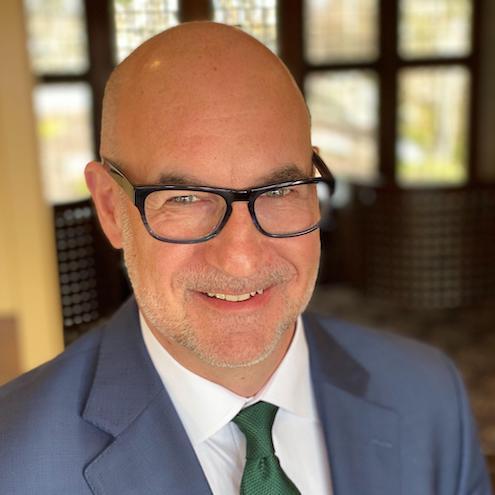
Building the plumbing beneath the hype
Dave Hendricks runs Vertalo, an Austin-based company that most people outside of financial infrastructure have never heard of - which is more or less how he likes it. Vertalo is an SEC-registered transfer agent and a tokenization platform, which means its job is unglamorous and essential: keeping accurate records of who owns what, and giving private-market securities a way to move on modern, blockchain-based rails. Hendricks co-founded it in 2017 and has been its CEO ever since.
His current pitch is simple and stubborn. Most of the addressable market for real-world assets, he argues, is still locked away in private, permissioned systems that ordinary investors cannot reach. Vertalo exists to change that - to take illiquid holdings and make them transferable, fractional, and compliant. “We want to rescue investors who are stuck in illiquid venture-funded companies,” he has said.
Today his attention is on the tokenization of private equity, a trend he calls the most interesting one on the horizon, and on the regulatory shifts reshaping the market - the GENIUS Act, the arrival of institutional stablecoins, and the slow, grinding acceptance of distributed ledgers by the same banks that once dismissed them. Vertalo now operates across Austin, New York, and Seoul.
What separates Hendricks from the louder voices in crypto is a refusal to get swept up. “Every couple of years, the crypto industry loses its collective mind over some new thing,” he told an interviewer. “This happens in each cycle, and this one is no different.” He would rather build the boring layer that survives every cycle.
A career measured in exits and ledgers
From Arthur Andersen to on-chain ownership
Hendricks did not arrive at blockchain through speculation. He came, in his words, “through a side door” - a technologist who kept ending up wherever data needed to be trusted.
How a verification headache became a company
The signed-agreement scare
At LiveIntent, a funding round nearly collapsed when the lead investor demanded proof of signed agreements. The scramble planted a question: what if records could verify themselves?
Not securities - contracts
Vertalo v1 was not about tokens at all. Hendricks first wanted to put employment agreements, stock options, and NDAs on a blockchain so both parties could trust the paperwork.
The ICO that never happened
In 2017 he considered an ICO. Co-founder Gautam Gujral, a former SEC regulator, argued against it. That single “no” steered the company to a compliant Reg D offering - and kept it alive.
The Hendricks doctrine
Security tokens are a liquidity enablement technology - they are programmable liquidity, not guaranteed liquidity.
I got into blockchain through a side door.
We want to reduce the risk, complexity, and cost for issuing digital assets.
The most interesting trend is the renewed interest in tokenizing and packaging private equity.
Things you would not find on the cap table
On camera
Tokenizing $500M on Tezos
Vertalo CEO Dave Hendricks on the Thinking Crypto podcast, discussing the plan to tokenize half a billion dollars in assets on the Tezos blockchain.
Daily Call with Dave Hendricks
A wide-ranging conversation with the founder and CEO of Vertalo on the state of RWAs, transfer agency, and compliant tokenization.
The short answers
Who is Dave Hendricks?
He is the co-founder and CEO of Vertalo, an Austin-based SEC-registered transfer agent and tokenization platform for real-world assets, and a serial entrepreneur with prior exits at LiveIntent and CheetahMail.
What is Vertalo?
Vertalo is a digital asset management platform and SEC-registered transfer agent that helps issuers, broker-dealers, and investors turn illiquid private securities into compliant, transferable, and fractional digital assets.
What did he do before Vertalo?
He co-founded LiveIntent, helped build CheetahMail (sold to Experian in 2004), ran the Arthur Andersen-Oracle relationship, and worked on securitization projects at Arthur Andersen.
When was Vertalo founded?
Vertalo was founded in 2017, emerging from SeriesX after the team pivoted away from an ICO toward SEC-compliant security token offerings.
What is his view on crypto hype?
He is openly skeptical of hype cycles, noting the industry “loses its collective mind” every couple of years, and focuses instead on compliant, institution-grade tokenization infrastructure.