vendor-management
(43)
Gatekeeper Wants Your Contracts to Stop Renewing Themselves
The vendor-management company connects contracts, supplier risk and spending in one place. Its most persuasive pitch is the money and hours customers say they recovered from work nobody wanted to own.

The $149 Gatekeeper Standing Between 5 Million Apartments and a Bad Contractor
NetVendor built a business around the least glamorous risk in real estate: the contractor whose insurance looked fine last month. Its wager is that compliance should stop bad work before it starts - not explain it after the claim.

Fexa Wants to Stop the Repair Bill Before the Truck Rolls
The dullest software in retail may protect the most interesting line on the P&L. Fexa is turning work orders, refrigerant logs and vendor calls into decisions made before the money is gone.

Openforce Built the Back Office for the 1099 Economy - Now It Has to Make the Mess Feel Invisible
The Scottsdale company moves $5 billion a year through the unglamorous machinery behind independent work. Its bet: the winner in contractor software is the one that turns paperwork, insurance and payments into one clean trail of proof.
The $10 Trillion Supplier Ledger: How Apex Analytix Turned Payment Mistakes Into a Risk Platform
A 1988 recovery-audit shop now watches the supplier records behind more than $10 trillion in annual spend. Its real product is not a dashboard - it is the moment a company stops trusting bad data by default.

Jennifer Addabbo Built a Fintech Consultancy by Making the Vendor Sit on the Other Side of the Table
She spent years selling financial technology. Then she crossed the table, built Engage fi around the buyer, and learned that the most useful growth strategy begins with people.

Alan Pendleton Put Customer Service in an Arena - Then Made the Contest Useful
The ArenaCX founder borrowed a supply-chain idea, tested it inside a wireless company, and spun the result into a marketplace where customer-service vendors compete on performance. His larger bet is that procurement can be both more rigorous and more humane.
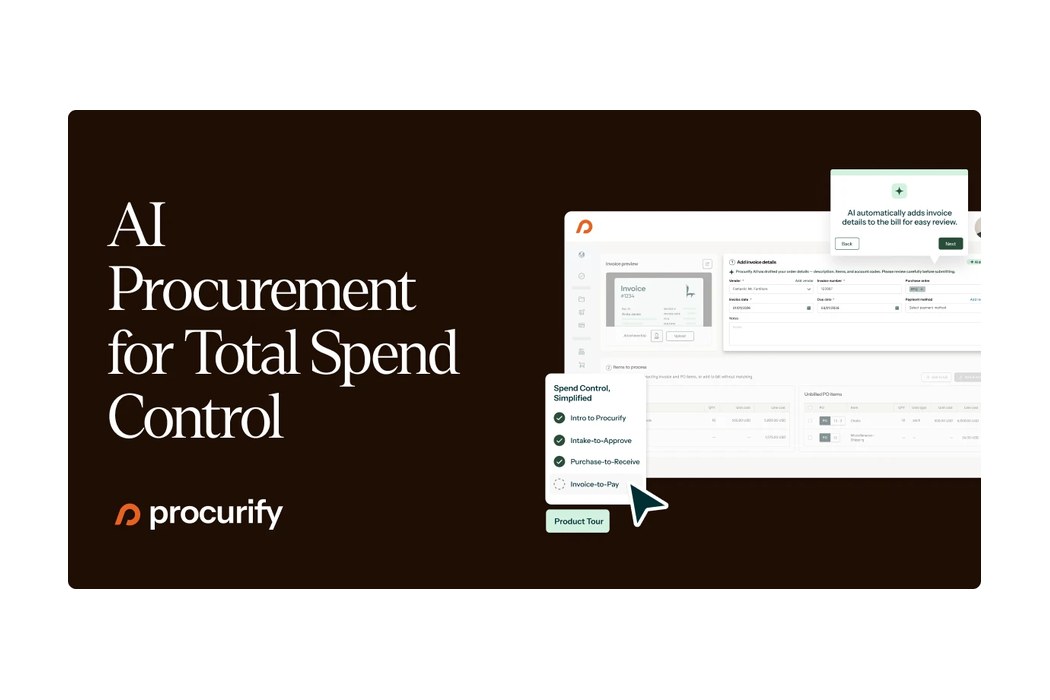
Procurify Wants to Catch Every Bad Purchase Before the Money Moves
The Vancouver company found a valuable gap between spreadsheets and enterprise procurement suites. Now it is betting that a decade of customer spend context can turn AI from a chatty assistant into a careful operator.

ArenaCX Put the Call-Center RFP on a Diet - Then Built a Marketplace Around It
The Raleigh startup turned an internal customer-support fix into a marketplace of BPOs, software vendors and specialists. The useful idea is not simply outsourcing - it is making vendors easier to compare, contract and change.

The Startup That Turned the Office Supply Closet Into Software
Kathryn Madden built OfficeLuv around a boring truth: someone always ends up ordering the paper towels. Her bet was that the someone should be software - plus a person who shows up.
Engage fi Found a $12 Million Hole in a Credit Union - Then Rewired the Org Chart
The Florida consultancy makes its living in the least photogenic corner of fintech: vendor contracts, core conversions and branch math. Its case studies show why that corner can be worth millions.

The Back Office That Decided Spreadsheets Were the Enemy
Alek Koenig left Affirm to build the financial plumbing for the soda, skincare and snack brands blowing up your Instagram feed. The pitch is boring on purpose: stop reconciling five systems by hand.

The Most Expensive Thing in Property Management Is the Repair Nobody Can See
Property Meld turned the humble work order into a trail of decisions, messages and measurable outcomes. Now its bet is bigger: that maintenance deserves an operating system of its own.

Mbiz
Mbiz is an Indonesian business-to-business e-procurement platform, founded in 2015 by the Lippo Group, that digitizes how companies and government institutions buy goods and services. It connects enterprise buyers with a network of certified vendors across categories such as office supplies, IT equipment, electronics and services, while bundling free e-procurement tools including online approval, e-tendering, e-invoicing and inventory tracking. Its sister platform, Mbizmarket, extends the same total-procurement approach to micro, small and medium enterprises.
penny.
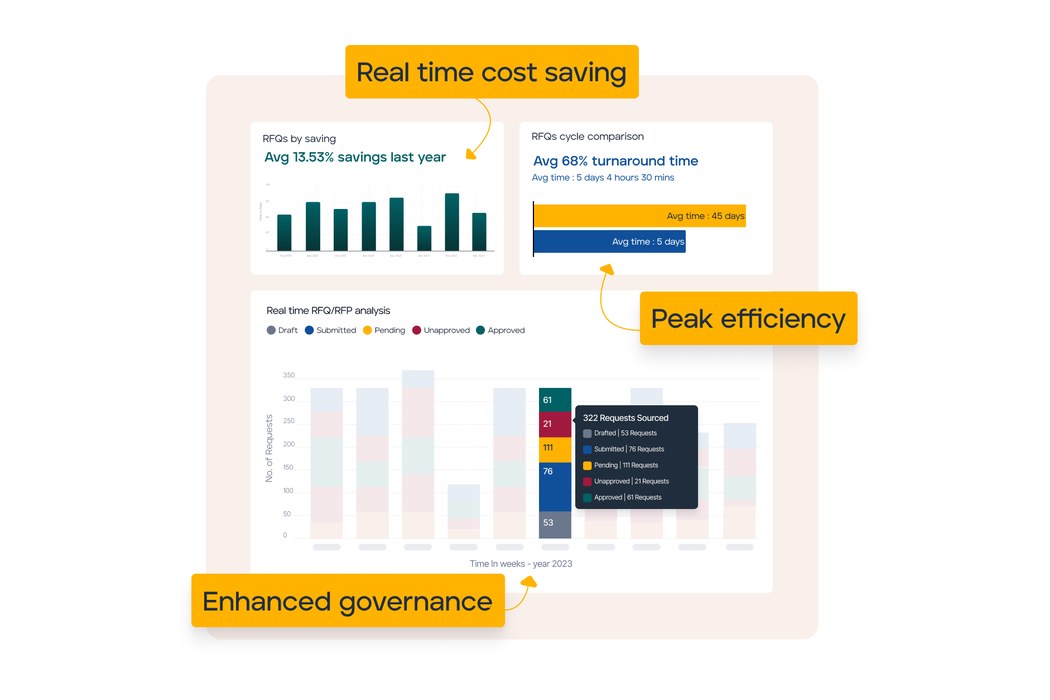
penny. is a Saudi-based B2B SaaS company that digitizes the full source-to-pay procurement cycle on one cloud platform. It combines e-sourcing, RFQs, purchase orders, supplier management, spend analytics and AI-driven automation so enterprises can cut costs, tighten governance and speed up buying. The modular, customizable system is used by companies across 75+ countries and is layered with AI tools like the Bidly.ai sourcing assistant to make procurement faster and more transparent.
Adaptive
Adaptive is a New York-based fintech building an AI-native financial platform for the construction industry. It sits on top of QuickBooks to automate the money side of building projects - reading incoming bills, matching them to the right job and cost code, routing approvals, tracking budgets and draws, managing vendor compliance, and processing payments. Founded in 2021 by Matt Calvano, Henry Bradlow, and Francisco Enriquez, the company serves custom homebuilders, general contractors, developers, and specialty trades, and raised a $19M Series A led by Emergence Capital in 2024.

Cledara
Cledara is a software management and spend platform that helps growing companies discover, buy, manage and cancel their SaaS subscriptions from one place. By pairing virtual cards with a system of record for every application, Cledara gives finance and IT teams real-time visibility into software costs and usage, automates invoice collection and accounting, and enforces approval workflows. Founded in 2018 by Cristina Vila Vives and Brad van Leeuwen, it serves 1,000+ customers across 32 countries.
Daisy
Daisy is an AI-native property management company for condos, co-ops and HOAs, founded in 2020 in New York City. It replaces the manual workflows and patchwork of tools legacy managers rely on with a single platform that unifies building finances, maintenance requests, compliance, board decisions and resident communication. Pairing proactive human managers with automation and AI agents, Daisy manages more than 4,000 units across nearly 200 buildings in NYC and has begun expanding into New Jersey, with a stated goal of national and global reach by the end of the decade.

Geniemode
Geniemode is a Gurugram-based B2B cross-border sourcing and supply chain platform that connects global retailers and brands with a vetted network of manufacturers across apparel, home textiles, furniture, and accessories. Founded in 2021 by Amit Sharma and Tanuj Gangwani, it uses technology, AI-driven design, and integrated logistics to manage the end-to-end procurement cycle - from sample development and manufacturing to compliance, quality control, and delivery - offering buyers cost transparency, smaller MOQs, and faster turnaround than traditional sourcing agents.

Odeko
Odeko is a New York-based operations platform for independent cafes and small food-and-beverage businesses. It combines supply-chain logistics - overnight delivery of cups, lids, syrups, dairy and other back-of-house essentials from its own warehouses - with software for inventory management and mobile ordering. By aggregating buying power across more than 10,000 shops, Odeko helps owners cut costs, save time on vendor management, and reduce waste, letting small operators compete with national chains.

Omnea
Omnea is an AI-native procurement orchestration platform that turns the slow, fragmented process of requesting, vetting, buying and renewing suppliers into a single, governed workflow. Founded in 2022 by former Tessian executives Ben Freeman and Ben Allen, the London- and New York-based company gives employees one 'front door' to make purchase requests in natural language, then automatically routes those requests to the right people and systems while tracking spend, risk and renewals. It serves enterprises including Spotify, Wise, MongoDB, Albertsons and Adecco, and has raised over $75M from Insight Partners, Khosla Ventures, Accel and others.

Procol
Procol is an AI-powered procurement platform that automates the full source-to-pay lifecycle - intake, strategic sourcing, eAuctions, supplier management, and spend analytics - for enterprise procurement and finance teams. Founded in 2018 by Gaurav Baheti and Sumit Mendiratta, the company pairs autonomous AI agents with white-glove service to help large enterprises cut procurement cycle times and unlock cost savings. Procol says it serves 200+ enterprises managing over $20B in spend, including IKEA, Hershey's, Havells, Emami, and the Tata Group.

Torii
Torii is a SaaS Management Platform (SMP) that helps IT and finance teams discover, optimize, and govern the software running across their organization. Founded in 2016 by three serial entrepreneurs, Torii pioneered a discovery-first approach that surfaces shadow IT - and, more recently, shadow AI - through browser extensions, SSO, direct integrations, and financial data. On top of that visibility it layers spend analytics, license optimization, and no-code automation for tasks like onboarding, offboarding, and renewals. Headquartered in New York with R&D in Israel, Torii counts customers such as Instacart, Bumble, and Palo Alto Networks, and was named a Leader in Gartner's 2025 Magic Quadrant for SaaS Management Platforms.

Routable
Routable is a San Francisco fintech that automates the unglamorous plumbing of business payments - accounts payable, mass payouts, and vendor onboarding. Founded in 2017 by Omri Mor and Tom Harel and backed by Y Combinator and the Altman brothers, its cloud-native platform captures invoices with AI-powered OCR, runs approval and compliance workflows, handles tax forms, and pushes money out via ACH, real-time rails, and cross-border methods while syncing back to accounting systems.

Zachary Garippa
Zachary Garippa is the co-founder and CEO of Order.co, the New York B2B spend-management and guided-purchasing platform he started in 2016 as Negotiatus. A Boston College finance grad who once worked a Morgan Stanley desk and a luxury-building door, Garippa built Order into a company connecting 40,000-plus vendors, serving 300-plus customers, and processing nearly half a billion dollars in annualized spend. He rises at 3:30 a.m., says he is 'trying to build the greatest company New York has ever seen,' and is chasing a Series C to get there.

Clad
Clad is project management and billing software purpose-built for infrastructure. It unifies project operations and finance so telecom operators and construction subcontractors can track production in the field, automate invoicing and payments, manage vendor compliance, and handle 811 utility locate requests - all in one place. Founded in 2022 by ex-Instagram product manager Jason Rudin and backed by Y Combinator (W23), Clad aims to help the companies rebuilding America's internet and power networks build faster and get paid faster.

Grapevine Technologies
Grapevine Technologies is a healthcare procurement software company that acts as an intelligent purchasing agent for medical buyers. Founded in 2021 out of the University of Pennsylvania by Luka Yancopoulos and William Danon, Grapevine grew out of their pandemic-era supply venture and now helps specialty practices and physician groups compare vendors, cut ordering time, and reduce medical supply spend - in some categories by more than 50%.

Prefix
Prefix is a New York-based facility management platform for multi-site restaurant and retail operators. It acts as the connective layer between brands and local service technicians - coordinating on-demand and preventive repairs across HVAC, refrigeration, plumbing and electrical, and managing the full job lifecycle from request to invoice. With AI-powered vendor management and 24/7 support, Prefix says it delivers roughly 3x efficiency gains and 15%+ cost savings for the nearly 2,000 locations it serves.

Jared Schwartzentruber
Jared Schwartzentruber is the founder and CEO of Prefix, a New York facility management platform that keeps the ovens, freezers, and HVAC humming for multi-site restaurant and retail chains like Chipotle, Bojangles, and Famous Footwear. A mechanical engineer trained at Purdue and Columbia, he traded bio-inspired robotics and a healthcare startup for the deeply unglamorous world of broken walk-in coolers, wagering that agentic AI plus a real service layer can cut a chain's maintenance costs by more than 15%. In April 2026 Prefix raised a $7.5M seed round to push toward 10,000 locations.
BRM
BRM is an AI-powered vendor management and procurement platform that gives finance, legal, and IT teams a complete, organized view of every vendor, contract, and renewal. Its AI 'SuperAgents' automatically discover vendors across a company's email, ERP, corporate cards, and other systems, extract contract terms, build a live renewal calendar, monitor compliance, and even help negotiate renewals - replacing the spreadsheets and manual data entry that procurement has long depended on.