There is a job in almost every office that has no title, no salary line, and no glory. It is the job of noticing that the coffee is nearly gone, that the printer paper is down to one ream, that the kitchen is out of the good sparkling water again. Somebody always ends up doing it. OfficeLuv, a Chicago company founded in 2015, was built on the idea that this somebody should not be a person quietly resentful about it. It should be software - and, crucially, a person who actually shows up to stock the shelves.
That combination is the whole trick. Plenty of startups have tried to sell procurement dashboards. OfficeLuv, co-founded by Kathryn Madden and Chris Hartman out of the Roniin startup studio, went further: it wrapped the ordering, the analytics, and the vendor-wrangling into one platform, then put its own attendants inside client offices to run the physical program. The result is a company that looks unglamorous from the outside and turns out to be very hard to cancel.
Two friends, one startup studio
OfficeLuv did not begin as a grand plan. Madden and Hartman were, by the company's own telling, two office mates inside Roniin, a Chicago startup studio - close enough to the problem to feel it daily. Madden had come up through operations roles at Playboy Enterprises, the venture firm Lightbank, and a studio called Builders; Hartman had a finance background out of Goldman Sachs. Between them they had spent enough time inside offices to know that the supply-and-services mess was universal and unsolved.
The early trajectory was fast. A seed round in January 2016 was followed by the $3.8 million raise that March, and by June the company had brought on Kimberly Miller as CEO to steer a period of triple-digit growth - a detail that gives OfficeLuv the unusual distinction of having had two CEOs in its short history, with leadership later returning to co-founder Madden. By 2017 it was running programs in more than 250 offices and announcing plans to hire 50 more people.
The chore nobody priced
Office management is invisible until it breaks. When the supplies are stocked and the snacks are full, nobody thinks about it. When they run out mid-meeting, it becomes a small crisis. OfficeLuv's founding insight was that this invisible, mission-critical work was a real market - fragmented across dozens of vendors, buried in expense reports, and handled by whoever happened to have a spare afternoon.
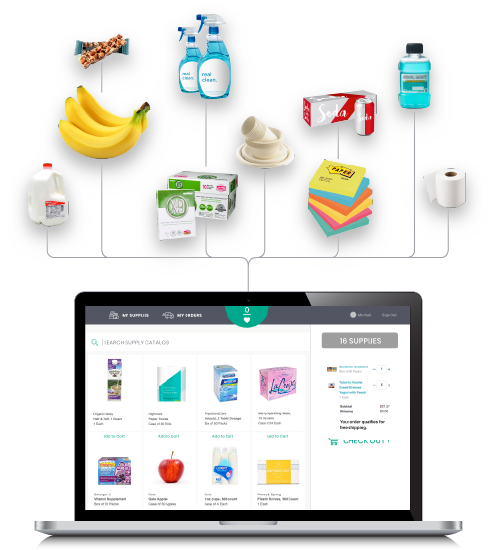
The company's answer was consolidation. Instead of separate relationships with a supplies distributor, a snack service, a cleaning vendor, and a coffee supplier - each with its own invoice - OfficeLuv offers a single catalog spanning thousands of products and a single consolidated bill. For the person who used to juggle all of it, the pitch is simple: order everything in one place, and stop being the office's unpaid logistics department.
Software with a body
The part that makes OfficeLuv unusual is also the part most software founders would avoid: it hires people. Its on-site attendants manage programs, negotiate pricing, handle deliveries, restock, organize, and set up equipment inside the offices they serve. It is operational headcount, which is messier and more expensive than pure SaaS - and it is exactly what customers talk about most.
That decision reframes the whole business. The software is the interface; the person is the moat. A competitor can copy a marketplace and a dashboard. Copying the attendant who already knows where everything goes in your kitchen is a different problem. For a company selling into offices that hate switching vendors, that human last mile is the reason contracts renew.

What you actually get
OfficeLuv is really five products wearing one login. Each one attacks a different part of the office-management headache.
- 01MarketplaceA unified catalog across dozens of vendors and thousands of products, from supplies to snacks to groceries - billed as one invoice.
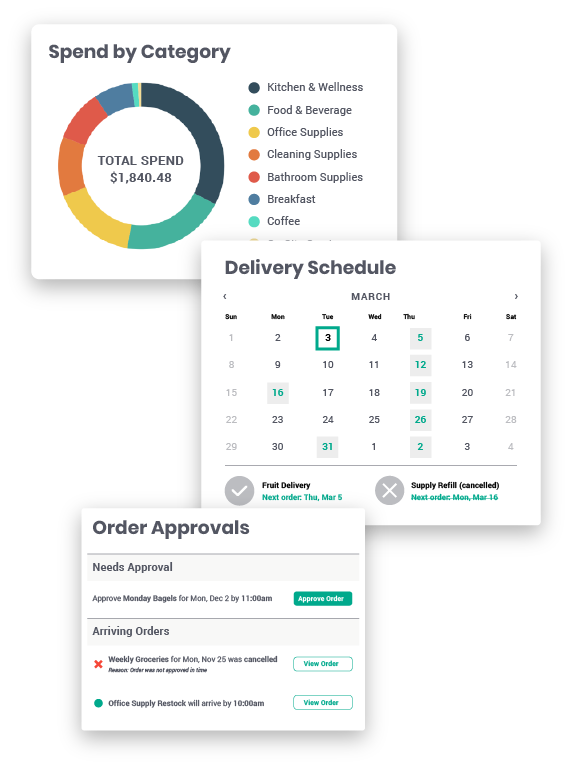
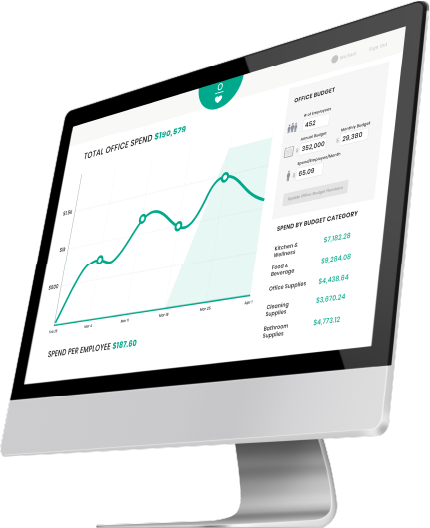
- 02Reporting & AnalyticsSpend visibility, exportable expense reports, and budget alerts so office spend stops being a guessing game.
- 03Automation & WorkflowsMulti-user approvals, favorite lists, and recurring orders so routine restocks happen without anyone chasing them.
- 04On-Site ServiceAttendants inside the office who run the physical program - restocking, organizing, deliveries, setup.
- 05Employee StipendsAllowances that let remote and hybrid staff order work necessities, with delivery tracking - the supply closet extended to the home office.

Who it's for
The buyer is the in-house office, facilities, or procurement team - the people whose calendars fill with vendor calls and whose inboxes fill with "can someone order more coffee?" OfficeLuv has served more than 250 offices, and its customer roster has included names most people would recognize.
The through-line is size. These are companies big enough that the supply-and-services problem is real, but not so bureaucratic that they want to build an internal procurement function for snacks. That is the sweet spot OfficeLuv sells into.
How it makes money
The model is B2B and two-sided in an unusual way. There is the SaaS layer - the marketplace, analytics, and automation software - and there is the managed-services layer, the on-site attendants who run the physical program. Revenue comes from the purchasing platform and marketplace plus the staffing and services model. It is not the cleanest software P&L, but the services attach is what makes the software sticky.
The software
Marketplace, spend analytics, approvals and recurring orders. High margin, easy to demo, easy to copy.
The service
On-site attendants who physically run the office program. Lower margin, harder to scale, very hard to rip out.
The money behind it
OfficeLuv has raised roughly $7.8 million across four rounds since 2016, from investors including 500 Global and KGC Capital. The headline round was a $3.8 million raise in March 2016; the most recent disclosed financing came in 2019.
Seed rounds in January and March 2016 are shown combined; some round amounts are approximate per third-party databases.
How it's different
The procurement-software space is crowded - Order.co, Procurify, Precoro, Tropic, and the older Managed by Q model, plus the traditional distributors like Staples Advantage and Quill. Most of them are software-only or distribution-only. OfficeLuv sits deliberately in the middle: enough software to satisfy a finance team that wants spend visibility, and enough hands-on service to satisfy an office manager who just wants the shelves full.
That middle position is also a comment on how offices actually work. Spend visibility is nice, but it does not stock a fridge. OfficeLuv's wager is that the winning product in this category is not the smartest dashboard - it is the one that also handles the physical reality nobody else wants to touch.

Built for the office that emptied out
When offices went remote and hybrid, a company whose whole model was the physical office had an obvious problem - and an obvious opportunity. OfficeLuv leaned into stipends: allowances that let remote and hybrid employees order the same work necessities, delivered and tracked, without an office to walk into. The supply closet, in other words, followed people home.
It is a neat illustration of the company's core idea. The thing OfficeLuv sells is not a room full of supplies. It is the answer to a recurring question - who is handling this? - wherever the work happens to be.
Where it fits
OfficeLuv is a small, operations-heavy, woman-led B2B company out of Chicago, working a market most investors find too boring to chase. That is arguably its best feature. The office-chore economy is unglamorous, fragmented, and mission-critical - which is precisely the kind of niche a focused team can quietly own while flashier categories fight over attention.
The lesson worth copying is narrow and useful: the best software wedge is often a chore everyone hates, and sometimes that software needs a body. OfficeLuv found the chore, built the software, and then did the un-startup-y thing of sending real people to finish the job. The catch is the same as the strength - operational headcount is hard to scale and hard to fund, which is why this remains a category more talked around than crowded into.