procurement-automation
(24)
The Fine Print Behind PayEm's $247 Million Headline
PayEm set out to turn every company purchase into a controlled, traceable decision. Its journey from expense-report frustration to a $500,000 acquisition is also a lesson in reading fintech's biggest numbers carefully.
The Contract Was Hiding in Plain Sight
The clever part of Workday’s contract business is not writing agreements. It is teaching a company to notice what its agreements have been saying all along.
ContractPodAi Outgrew the Contract Drawer
Now called Leah, the former CLM specialist wants to run the work hiding between legal, procurement and finance. The ambition is large; the buying decision still comes down to implementation discipline.
Jesal Mehta Spent Decades Watching Contracts Leak Value. Then He Built the Fix Into the Workflow.
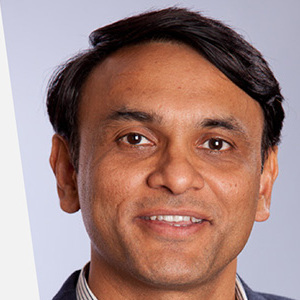
After building software teams across India and the United States, Jesal Mehta chose a stubborn enterprise problem: contracts full of value, obligations and risk that organizations still manage like paperwork. Aavenir is his attempt to make the work visible, searchable and useful.
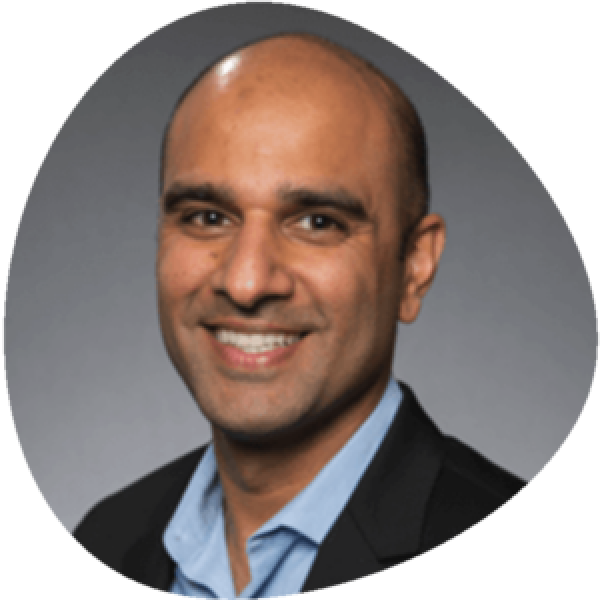
Kamran Saddique Is Making Government Paperwork Behave Like Software
His route from Sun Microsystems and Gulf finance to public-sector software explains an unusual bet: the least glamorous government workflows may be where technology can do its most practical work.
OpenGov’s $1.8 Billion Bet: Make City Hall Software Less Painful
OpenGov started by making municipal budgets readable. Fourteen years, ten acquisitions and a $1.8 billion deal later, it is trying to become the operating system behind the permit, purchase order and pothole.

The Startup That Turned the Office Supply Closet Into Software
Kathryn Madden built OfficeLuv around a boring truth: someone always ends up ordering the paper towels. Her bet was that the someone should be software - plus a person who shows up.
The Italian Integrator Turning Client Work Into an AI Product Shelf
Mashfrog built a 500-plus-person business by joining jobs that companies usually split across consultancies, agencies and software vendors. Its next test is whether that broad services engine can keep producing focused AI products.
Cedalio
Cedalio is an AI agent platform for the office of the CFO that automates accounts payable, procurement, and utility-bill processing. Its specialized agents read invoices and bills from email, portals, and drives using vision models, run 3-way matching against purchase orders and receipts, flag duplicates and anomalies, and handle LATAM tax compliance before data reaches the ERP. Founded by ex-Wolox engineers and backed by Y Combinator (S23), the company began as a blockchain-verifiable database and evolved through sustainability data into finance automation, keeping auditability as its throughline.
LumiBot
LumiBot (YC W22) builds AI copilots for factories. Its current product uses a camera and computer vision to watch operators' hands during manual assembly, catching mistakes in real time before a defective unit moves down the line. Founded by Aswin Andrison and backed by Y Combinator, Monk's Hill Ventures, Alpha JWC and Goodwater Capital, the company grew out of earlier work automating repetitive back-office and procurement workflows for industrial and e-commerce operators.

Spaceflow
Spaceflow is a San Francisco startup (Y Combinator S26) that makes enterprises 'agent-native.' Instead of selling companies another dashboard, it turns the systems they already run - ERP, email, spreadsheets - into a 'company brain' that AI employees and any MCP agent can read and operate securely, with a human keeping the final say. It starts with procurement and supply chain, where it has processed roughly $400M in annual supplier spend and reached six-figure ARR while in early stage.
DXwand
DXwand is a Dubai- and Cairo-based enterprise AI company whose ORXTRA platform lets large organisations build and deploy generative AI agents on top of their own documents, databases and workflows. Founded in 2018 by two former Microsoft executives, Ahmed Mahmoud and Mahmoud Gomaa, the company built its edge on two hard problems most Western vendors skipped: understanding spoken Arabic across its many dialects, and running useful AI cheaply enough that a bank or a ministry can afford to put it in front of millions of people. Its knowledge-mining and RAG engine removes the manual data-labelling step that normally stalls enterprise AI projects, and its agents ship as pre-built modules for customer service, procurement and HR, or as custom builds through a no-code Agent Builder that supports 20+ language models and 80+ data sources. DXwand serves financial services, government, healthcare, telecom, education, media and retail clients across MENA, has raised roughly $6.9 million to date including a $4 million Series A led by Shorooq Partners and Algebra Ventures, and says it reached about $5 million in annual recurring revenue while remaining profitable.
penny.
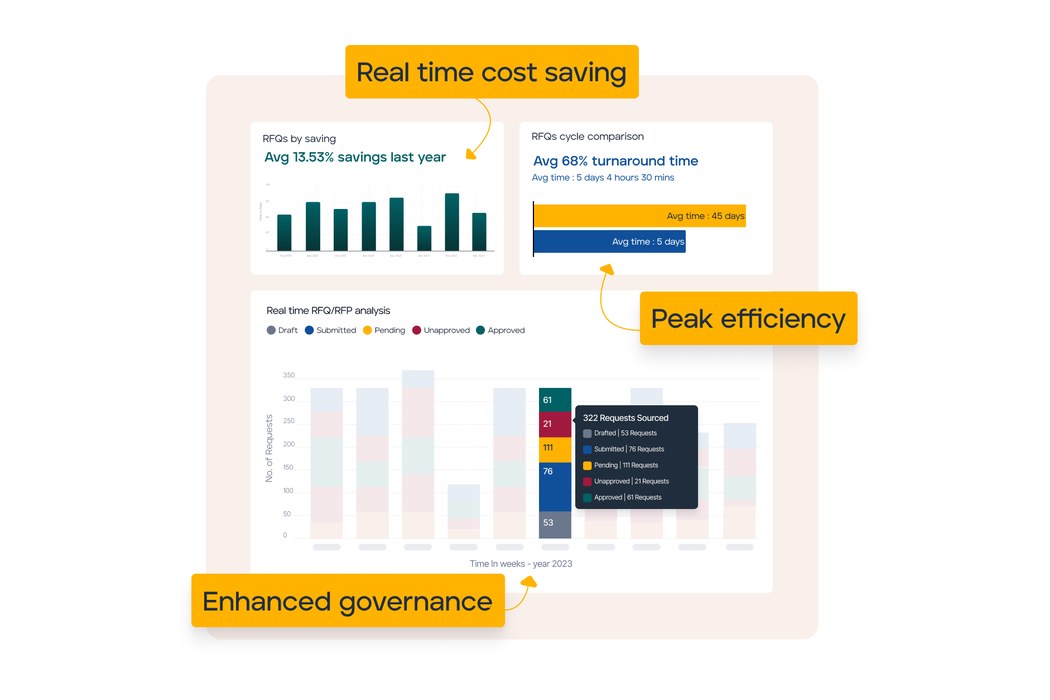
penny. is a Saudi-based B2B SaaS company that digitizes the full source-to-pay procurement cycle on one cloud platform. It combines e-sourcing, RFQs, purchase orders, supplier management, spend analytics and AI-driven automation so enterprises can cut costs, tighten governance and speed up buying. The modular, customizable system is used by companies across 75+ countries and is layered with AI tools like the Bidly.ai sourcing assistant to make procurement faster and more transparent.
Procol
Procol is an AI-powered procurement platform that automates the full source-to-pay lifecycle - intake, strategic sourcing, eAuctions, supplier management, and spend analytics - for enterprise procurement and finance teams. Founded in 2018 by Gaurav Baheti and Sumit Mendiratta, the company pairs autonomous AI agents with white-glove service to help large enterprises cut procurement cycle times and unlock cost savings. Procol says it serves 200+ enterprises managing over $20B in spend, including IKEA, Hershey's, Havells, Emami, and the Tata Group.

Levelpath
Levelpath is a San Francisco-based enterprise software company building an AI-native procurement platform that unifies intake, sourcing, contracts, and supplier management in one system. Founded in 2022 by the team behind Scout RFP (acquired by Workday for $540M), Levelpath aims to make procurement software people actually enjoy using - mobile-first, fast, and powered by AI agents that automate the repetitive 'ugh' work of buying at large companies. It has raised roughly $100M total, most recently a $55M+ Series B led by Battery Ventures in June 2025.

Marketplace.city
Marketplace.city is a Chicago-based govtech company that helps state and local governments source, validate, and procure technology. Its Clearbox platform turns a repository of historical vendor, contract, and pricing data into managed procurement services (Clearbox Procure) and a research subscription (Clearbox Source), aiming to compress technology buying cycles that once ran months or years down to roughly 100 days. Founded out of a 2016 collaboration with New York City's Mayor's Office of Technology and Innovation, the company has supported over 200 governments.

Pavilion
Pavilion (formerly CoProcure) is a San Francisco-based govtech company building the marketplace for public procurement. It lets state, local, and education agencies find and reuse contracts that other public entities have already competitively bid and awarded - a practice called cooperative purchasing or 'piggybacking' - so buyers skip months of paperwork and vendors sell more using contracts they already won. The platform is free for governments, and layers vendor search, smart intake routing, compliance guidance, and an AI Contract Hub on top of a repository of tens of thousands of shareable public contracts.
TERA
TERA is an AI-native spend management and finance automation platform that gives businesses a single command center for corporate cards, accounts payable, procurement, and payments. Built around a team of autonomous AI agents that capture receipts, code bills, enforce policy, route approvals, and post to the ERP, TERA aims to replace spreadsheets and manual finance ops with real-time, self-driving workflows. Founded by Madhu Tera in Acton, Massachusetts, the company markets itself to finance teams across healthcare, manufacturing, e-commerce, logistics, and agritech.

Madhu Tera
Madhu Tera is the founder and CEO of TERA (tera.cloud), an AI-powered finance automation platform that bundles corporate cards, expense management, accounts payable, procurement and payments into a single command center for finance teams. Before founding TERA in 2018, Madhu spent years as a solutions architect inside the engine rooms of American finance - Fidelity Investments and State Street - an experience that shaped a conviction that small and mid-size businesses are badly underserved by traditional banks. TERA today reports more than 1,200 customers across healthcare, manufacturing, e-commerce, agritech and logistics.

Luká Yancopoulos
Luká Yancopoulos is the co-founder and CEO of Grapevine Technologies, a software company that acts as an intelligent purchasing agent for healthcare buyers - scanning vendors, prices, and supply routes in real time to cut what hospitals and clinics spend on medical supplies. A University of Pennsylvania VIPER dual-degree graduate in bioengineering and environmental studies, he pivoted from renewable-energy research to pandemic logistics in 2020, founding Pandemic Relief Supply, which delivered roughly $20 million in PPE to frontline workers. Grapevine grew out of that work, won the 2022 President's Innovation Prize, and raised about $2 million in early funding. His aim is blunt: drop the average national medical-supply spend by half, and ultimately make shopping for supplies unnecessary.
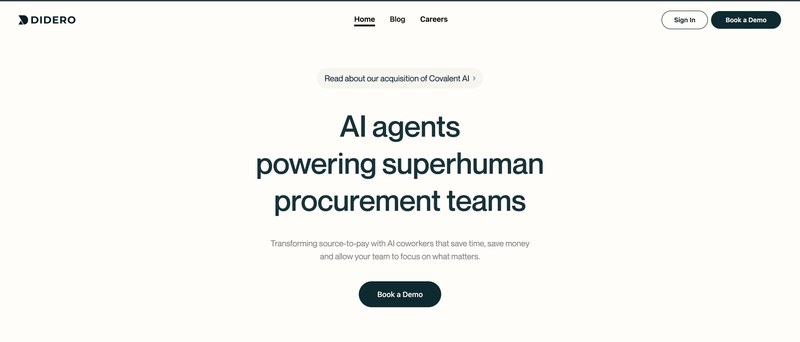
Didero
Didero builds AI agents that automate enterprise procurement for manufacturers and distributors. Its platform sits as an agentic layer on top of existing ERP and procurement tools, reading the messy stream of emails, purchase orders, packing lists, and supplier messages, then executing the routine source-to-pay work - sourcing, quoting, PO lifecycle management, invoice reconciliation, and supplier communication - so supply chain teams can stop chasing exceptions and focus on strategic decisions.

Rajiv Ramanan
Rajiv Ramanan is the Co-Founder and Chief Revenue Officer of Spendflo, an AI-native procurement platform that helps fast-growing companies bring structure, visibility, and control to how they buy and manage software vendors. A Chennai native now based in San Francisco, Rajiv spent years at Freshworks building partner ecosystems and working with over 5,000 vendors before co-founding Spendflo in 2021 alongside Siddharth Sridharan and Ajay Vardhan. Under his GTM leadership, Spendflo has raised $15.9M in total funding, grown to 140 employees, and manages over $100M in SaaS expenditure for customers—delivering an average 23% reduction in software spend.

Rujul Zaparde
Rujul Zaparde is the co-founder and CEO of Zip, the $2.2 billion AI platform for enterprise procurement trusted by OpenAI, Anthropic, Snowflake, and hundreds of leading enterprises. A serial entrepreneur who dropped out of Harvard at 17 to co-found FlightCar (acquired by Mercedes-Benz in 2016), he later joined Airbnb as a product manager and served as a Visiting Partner at Y Combinator before launching Zip in 2020. Under his leadership, Zip has raised $371 million in funding, processes over $107 billion in spend, and manages 3.9 million suppliers, while enabling over $4.4 billion in customer savings. He also co-founded Drinking Water for India, building 50+ wells serving 100,000+ people.

Siddharth Sridharan
Siddharth Sridharan is the Co-Founder and CEO of Spendflo, an AI-native procurement platform that helps fast-growing and enterprise companies manage SaaS vendor relationships and cut software spend. He co-founded Spendflo in 2021 after spotting a universal blind spot: CFOs had no centralized way to track or negotiate SaaS contracts. Backed by $15.9M in funding including a Series A, Spendflo has grown to 140 employees and operates out of San Francisco, promising guaranteed savings on software procurement through a hybrid AI-plus-expert-negotiation model.