A scientist shopping for an antibody has a question that an ordinary purchasing system struggles to answer: will this thing work in my experiment? The finance department has another question: are we buying it on the right terms? Both questions concern the same little bottle. Yet the evidence for answering them tends to live in different places. Labviva’s business begins in that separation.
- Scientific purchasing, inventory, and spend analytics in one software platform.
- Products connected to papers and protocols, alongside prices and buying rules.
- Customers include research universities and biopharma organizations; UC and Regeneron are named examples.
The company gives research organizations a private marketplace for reagents, chemicals, consumables, and equipment. Researchers can compare products and suppliers; procurement teams can preserve negotiated contracts and purchasing controls. Its ambition is to make those two groups less likely to obstruct each other. Anyone who has waited for an approval while a project clock keeps ticking can appreciate the proposition.
01 / A catalog number is only half the story
A product listing tells you what a supplier sells. A scientific paper tells you what somebody did with it. Labviva connects those records, gathering specifications, citations, and experimental protocols into product discovery. A researcher can inspect how an item has been used while considering price and availability. The distinction is useful: inexpensive material that cannot support the intended method is a rather expensive bargain.
The founders knew the territory. Siamak Baharloo, Nicholas Rioux, and Aaron Miramontes started Labviva in 2017 after careers in scientific commerce and technology. Baharloo trained as a geneticist, earning a UCSF doctorate before working in life sciences marketing. Rioux brought technical implementation experience; Miramontes brought user-experience and product expertise. This was a team familiar with the distance between a researcher’s question and a supplier’s checkout.


02 / Keep the system. Improve the encounter.
Labviva’s adoption argument is unusually practical. It integrates with systems including SAP Ariba, JAGGAER, Oracle Procurement Cloud, Microsoft Dynamics 365, and Coupa. An institution can retain its procurement infrastructure while changing how people discover and compare supplies. Existing supplier relationships and contract prices remain part of the buying experience. That matters when the customer has already spent years making approvals, accounting, and compliance coexist.
The market includes specialist alternatives such as ZAGENO, along with distributor catalogs and adjacent scientific purchasing tools. Labviva’s particular proposition combines scientific context, a configurable private marketplace, and inventory visibility. Its supplier offering also emphasizes control: sellers know their customers, set pricing, and manage buyer relationships. It gives smaller suppliers a route into institutional purchasing without requiring scientists to abandon the rules of their employer.
- 01Scientific fitPapers · protocols · specifications
- 02Buying termsSupplier · price · availability
- 03Institutional rulesContracts · approvals · compliance
03 / California supplies the useful details
UC San Diego began using Labviva in 2022. In January 2024, UC announced a systemwide agreement; UC Merced went live that September. The requirement was broader than a tidier shopping screen. UC needed software that could connect with procurement technologies across ten campuses, six academic health centers, and three national laboratories. Configurable supplier visibility also supported its small-business and diverse-supplier purchasing objectives.
“This tool helps our shoppers find items quickly, compare prices at a glance, and easily make repeat purchases.”Greg Muller, Strategic Sourcing, UC San Diego · September 2024
Here, the commercial model becomes tangible. Labviva sells subscriptions. UC’s published agreement offered a 38% discount against the annual subscription price list, a three-year initial term with fixed pricing, and two optional annual renewals. The discount describes the software contract, not savings on laboratory supplies. Confusing those two numbers would make a procurement officer reach for a red pen.
Labviva separately reports that an unnamed research university reduced spend by 13% in its first year, with about $2 million flowing through the platform monthly. Its website advertises average first-year savings of 20%. These are company-reported outcomes, useful as questions for a buyer to investigate rather than a budget to book in advance. The anonymous university should not be mistaken for UC.
First-year spend reduction in Labviva’s unnamed university case
04 / The bottle already on the shelf
Purchasing is only part of the problem. Once a chemical arrives, somebody must know where it is, how much remains, and whether it needs replacing. Labviva announced general availability of its Inventory Management System in September 2024. It adds stockroom visibility, configurable workflows, and replenishment to the purchasing platform. Dashboards consolidate usage and spending information so lab operations and procurement can inspect the same activity.
HarperChem followed in June 2025. The chemical search suite supports similarity and substructure searches, brings together chemical and safety information, and supports stockroom check-in, checkout, dispensing, and weighing. A researcher can look beyond a product name to a molecular structure. The practical attraction is straightforward: connect the search for a substance with the question of whether the organization already possesses it.
A molecular structure can be a shopping query.
Harper Scientific Selectors in the Labviva interface.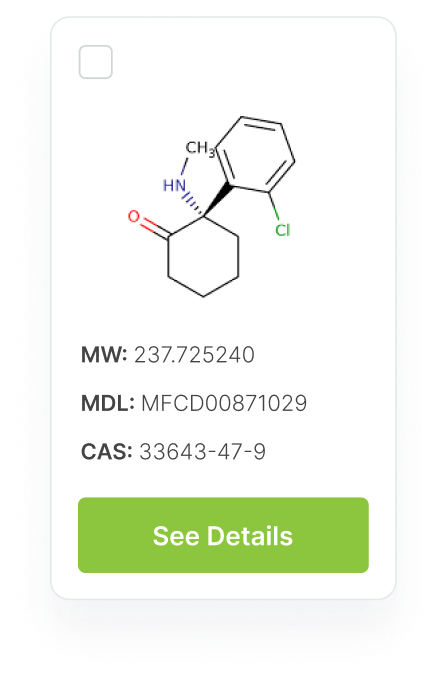
05 / An AI crew still needs good records
Labviva raised a $25 million Series B in January 2025, bringing reported total funding to $55 million. Expansion into Europe and additional products followed. By June 2026, its announcement of the Agentic Crew proposed specialist small language models coordinated by a larger-model orchestrator. The design addresses the company’s stated concerns about general-purpose models’ cost and reliability in specialist scientific work.
The launch carries a useful qualification: analytics and inventory agent categories were still in development and unavailable for commercial purchase. Those proposed agents should be distinguished from existing dashboards and inventory software. The architecture emphasizes logged actions and reviewable decisions, sensible priorities when an automated purchase must satisfy institutional controls as well as a scientist’s requirements.
The transferable lesson is modest enough to copy. Put the evidence people need at the point where they choose: scientific use, actual buying terms, stock information, and approval rules. That arrangement depends on accurate records, working integrations, and researchers willing to use it. Software cannot make a poorly maintained stockroom truthful. But a purchasing screen that answers better questions can give a laboratory more time for the questions that brought it into existence.