You buy a chair from a retailer’s website. The confirmation arrives. A supplier, somewhere else, receives an instruction to ship it. The retailer may never touch the chair. Yet the customer expects the whole performance to proceed as though everybody works in the same building. CommerceHub made a business out of helping those separate parties behave like one shop.
- The job: connect retailers, suppliers and sales channels so listings become fulfilled orders.
- The trick: enlarge the online assortment using inventory held by suppliers.
- The new name: CommerceHub’s combined business became Rithum in December 2023.
- The useful lesson: expansion needs repeatable rules for data, stock and delivery.
This is a company whose importance is easiest to notice when its sort of work goes wrong. A product is advertised but unavailable. A listing is rejected for a missing attribute. An order is accepted but sent to the wrong fulfillment location. Each mishap looks small from an office chair. From the customer’s chair, it is the entire transaction.
The store grows. The stockroom needn’t.
CommerceHub began in Albany in 1997, founded by Frank Poore and Richard Jones. Its original territory was ecommerce data and business-process integration. Put less ceremoniously, retailers and their trading partners needed to exchange information without making every order a correspondence course.
The dropship model gives this work its economic purpose. A retailer offers goods held by a supplier, which ships directly to the shopper. The retailer can try a wider assortment without buying and storing every item first. The supplier gains another route to customers. Both inherit the responsibility of keeping their systems in agreement.
Rithum’s retailer tools manage supplier connections, stock updates, order routing and fulfillment visibility. Retailers define the rules. Software carries those rules through the network and exposes exceptions. A warehouse full of goods becomes useful to a distant shop only when that shop can trust what is available and what will happen after a sale.
- 01RetailerLists supplier stock.
Accepts the order. - 02RithumExchanges data.
Applies routing rules. - 03SupplierPicks the product.
Ships to the shopper.
The spreadsheet reaches its limit
Consider Flat River Group, an ecommerce distributor whose growth ran into the cost of building marketplace integrations internally. The obstacle, in Rithum’s account, was IT capacity. Flat River wanted broader distribution without assigning its own staff to construct every connection.
It chose Rithum and reports adding six channels in eight months without increasing IT headcount. Listings, prices and stock could be managed together. Error reporting helped the team correct product attributes for channel-specific classifications. The buying decision turned on a concrete constraint: expansion had become too demanding for the existing integration process.
“Life without Rithum was limited.”
Kristopher Nickolaus, Flat River Group
In Rithum’s customer case study
Crazy Dog T-Shirts supplies a different example. It manages roughly 95,000 active SKUs in Rithum. Novelty shirts may be amusing; preparing them for a curated marketplace is meticulous work. Target Plus has particular requirements for titles, keywords and attributes. The team uses bulk uploads, word swaps and lookup lists to send the appropriate content to each channel.
Initial SKUs went live on Target Plus.
This is one customer’s launch, not a universal implementation promise.

The lesson travels well beyond these customers. Keep a master catalog, give each channel its own mappings, and make corrections repeatable. These are operating habits a retailer can adopt with many tools. Rithum’s proposition is to support them across more connections, with less manual repetition.
How the connections became Rithum
CommerceHub’s scope expanded through acquisitions and changes of ownership. It became a standalone public company in 2016 following a Liberty spin-off. In May 2018, GTCR and Sycamore Partners completed a take-private transaction announced at approximately $1.1 billion. Insight Partners joined the investors in 2020.
In November 2022, CommerceHub completed its acquisition of ChannelAdvisor at $23.10 per share in cash. ChannelAdvisor brought a business devoted to helping brands sell across ecommerce channels. The combination joined CommerceHub’s retailer-and-supplier connections with marketplace listings, advertising and multichannel operations.
The Rithum name arrived in December 2023, bringing CommerceHub, ChannelAdvisor and Dsco under one identity. The company also announced its acquisition of AI business Cadeera. The logic of this expansion is visible in the product range: finding demand, preparing a listing, allocating stock and delivering an order are related tasks, even when separate departments own them.
Rithum says its network encompasses more than 40,000 companies and supports over $50 billion in annual gross merchandise value. GMV is the value of merchandise moving through customer commerce. It is not Rithum’s revenue. Large shopping numbers become considerably less mysterious when one remembers whose money is being counted.
A fee for the software. A bill for the journey.
The business sells cloud software and managed services to retailers, brands and suppliers. For the marketplace module, public terms describe a recurring subscription or managed-service fee, a variable GMV fee, and possible setup or launch charges. The applicable statement of work determines the rates.
That makes the contract part of the product evaluation. A buyer should calculate the fee at expected sales volumes, establish which transactions enter the GMV calculation, and include implementation work. Marketplace charges, advertising spend and shipping also belong in the operating budget. The acquisition price of a software company tells a prospective customer very little about that customer’s bill.
Rithum occupies several overlapping markets. Mirakl offers enterprise marketplace and dropship capabilities. Logicbroker connects retail and supplier operations. Linnworks emphasizes multichannel inventory, orders and warehouse workflows. Rithum’s distinction is the combination of its supplier-network heritage with marketplace selling, media tools and delivery capabilities. The sensible comparison begins with the workflow a buyer needs to improve.
For a simple operation on one channel, a broad system can introduce more work than it removes. For a larger one, poor supplier data remains poor supplier data after automation. Nor does a longer catalog repair a margin that vanishes in freight and returns. The useful buying test is whether the system can reduce a measured operational burden at an acceptable total cost.
The parcel is where the promise gets tested
Once products are listed, inventory has to stay credible. Rithum’s inventory tools support stock visibility across locations, quantity buffers and routing rules. Holding back a reserve quantity can reduce the risk of promising the same remaining units across multiple channels. That is a small setting with a direct connection to customer disappointment.
Advertising adds another moving part. Rithum’s retail-media tools combine campaign automation with product, inventory and performance information. The practical attraction is straightforward: a brand should understand which products it is promoting and whether those products can support the resulting orders. Reporting ties spending to product-level sales outcomes.
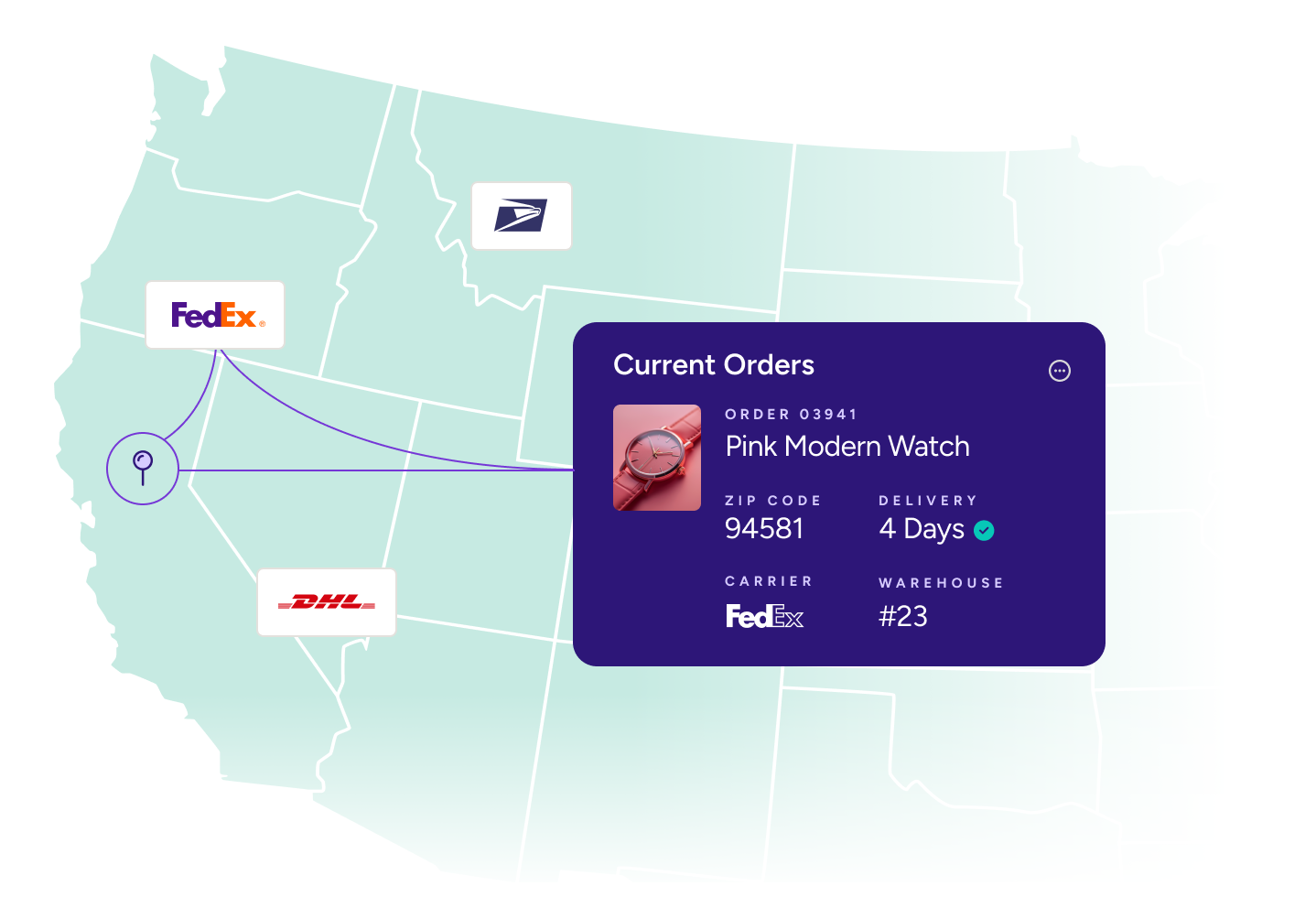
Delivery tools bring the promise closer to the doorstep. Shipping Optimization uses inventory, warehouse information, carrier rates and historical performance to choose a shipping method and origin. Retailers set preferences; suppliers receive instructions. Delivery prediction, labels and reporting address other points where separate businesses must agree on what happens next.
The next aisle begins with better data
The newer announcements follow that same operational thread. In September 2025, Rithum introduced RithumIQ, its embedded AI engine. A December partnership with Stripe addressed AI-ready product data and payments for shopping through AI agents. These announcements concern another destination for commerce information, with the familiar requirement that the underlying product data be accurate.
In April 2026, SupplyExplorer moved upstream into supplier discovery. Its Merchant Match module recommends suppliers using network signals, while Network Profiles show supplier capabilities and performance. In July, a Veeqo partnership connected seller-managed orders to shipping workflows and sent tracking confirmations back to Rithum.
For a retailer studying the company, a useful first move is modest: choose one product category, one expansion channel and a supplier whose performance can be measured. Establish the content rules, the stock buffer, the delivery expectation and the economics. Then test the entire order. CommerceHub’s story rewards attention to that sequence. An endless aisle becomes a credible shop one dependable transaction at a time.
Visit Rithum, explore its customer stories, or follow the newsroom and blog.