Carbatec had already tried being everywhere. The Australian woodworking retailer had sold on eBay for five years, uploading products by hand and receiving orders by email. Then somebody had to enter those orders. Eventually, the company withdrew from the marketplace to save time and resources. An additional shop window had become an additional desk job.
- The job: keep listings, stock and orders coordinated across sales channels.
- The customer: brands and retailers with more complexity than their team can comfortably manage.
- The twist: ChannelAdvisor now belongs to Rithum. Its familiar problem has followed it into AI shopping.
The paperwork won
When Carbatec’s marketing manager and digital marketing coordinator resigned around the same time, chief operating officer Brendan Mulheran looked for help. He wanted someone to run the operation, beyond supplying another login. In the published customer account, he puts it plainly: “I wasn’t looking for a piece of software”.
Carbatec adopted ChannelAdvisor’s managed marketplace service in 2021. It returned to eBay and expanded to Catch, MyDeal and Amazon, listing more than 2,400 SKUs on each. The company reported exceeding an initial monthly revenue target of $25,000. This was a customer-reported outcome during a favorable period for online shopping, rather than an experiment proving what software alone could deliver.
The interesting detail is the retreat that preceded the expansion. Finding customers was only part of the task. Carbatec needed a tolerable way to serve them. The retailer’s experience suggests an overlooked question for anyone planning a new channel: what happens if people actually buy?
An additional shop window had become an additional desk job.
The operational puzzle
A business built between the tabs
In 2001, Scot Wingo and Aris Buinevicius formed ChannelAdvisor from an auction-business spinout at GoTo.com. They had previously sold AuctionRover to that company. Contemporary reporting described roughly 40 employees coming along. A small team had emerged from a larger company with a problem that would become steadily less small.
Wingo’s later account of the founding idea was straightforward: ecommerce might spread across hundreds of marketplaces, and merchants would need somewhere to manage their products and orders across them. Every destination could attract buyers while adding another set of requirements. Fragmentation would create demand for coordination.
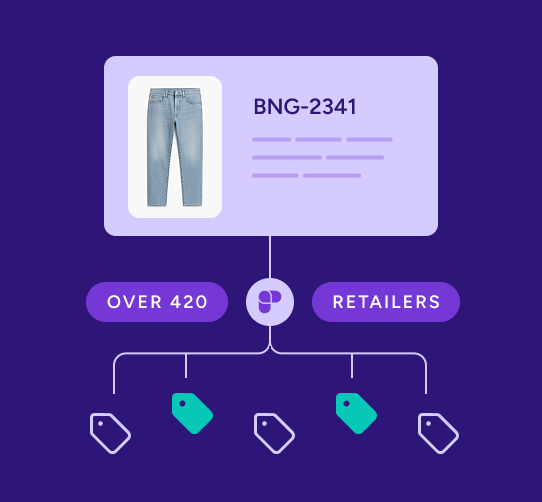
This places ChannelAdvisor in a particular part of the market. It supplies the operating layer connecting a seller’s catalog and business systems with places shoppers already visit. Amazon and eBay are destinations. A merchant’s webstore is another destination. ChannelAdvisor’s expertise lies in the connections, the translations and the maintenance between them.
There is a certain commercial elegance in selling relief from chores. A new shopping experience gets the applause; the stock update makes sure the applause does not end with a refund. Wingo’s anniversary reflection credits the team’s execution and describes employees who stayed for years. That emphasis fits a business whose utility depends on continuing to make connections work after the launch announcement has disappeared.

The last item has several lives
Imagine a merchant with one remaining pair of headphones advertised on several channels. This is an illustration, rather than a reported customer incident. The first buyer pays. Every other listing must now reflect the depleted stock. An order has to reach the right fulfillment system. Any advertisement inviting another shopper to buy needs to be considered too.
Each step is ordinary. Their combination is where the trouble lives.
Current Rithum marketplace tools adapt catalog information to channel requirements, update listings and flag errors with suggested fixes. A rejected listing is a useful reminder that uploading a product and making it available for sale are separate achievements. The merchant still needs to review exceptions; automation changes where attention goes.
- 01CatalogProduct data enters once
- 02ChannelsListings follow local rules
- 03OrderStock and routing update
- 04ReviewErrors and results return
Inventory management keeps quantities synchronized and allows rules such as stock buffers. It also handles bundles, where selling a collection of items changes the availability of its components. A quantity is an accounting fact with a surprisingly active social life: several systems want a copy, and each copy needs to stay informed.
Order management consolidates visibility and routes orders according to predefined rules. Rithum describes connections to enterprise resource planning systems, warehouse software and logistics providers. A merchant can fulfill from its own operation or external partners, while configuring where orders should go. Choosing those rules remains a business decision.
In July 2026, Rithum added Veeqo as a recommended shipping software partner. Orders flow into the shipping tool, while tracking and fulfillment confirmations sync back every ten minutes. Even the return journey of the data has a timetable.
Digital marketing adds another dependency. Rithum’s retail media tools manage campaigns across retailers, automate bids and schedules, and use product-level information. The sensible attraction is being able to consider advertising alongside availability and economics. Paying to promote an item that cannot be supplied is an expensive way to advertise disappointment.
ChannelAdvisor also offered brand analytics and shoppable media: ways to monitor a product’s retail presence and direct shoppers toward purchase destinations. Managed services add specialists to the software. The customer is buying expertise in operating channels as well as a means of connecting them.
What the convenience costs
ChannelAdvisor’s historical pricing followed that operating role. Its 2021 filing described subscriptions, usually under annual contracts, with variable fees on merchandise value or advertising spend above agreed thresholds. Implementation assistance and training could carry fees too. The contract could therefore get more expensive as activity increased, even if a merchant’s own margin did not.
There was also a smaller offer. At its US launch in 2020, Starter Edition connected Amazon, eBay and Shopify, with ShipStation integration. The reported price was $40 a month plus 2.5% of GMV above $10,000. That is a dated example of how the company packaged its service, rather than a price to use in a purchase order today.
Sales − goods − fees − ads − fulfillment − returns − software
Evaluate contribution after the costs you actually incur. Then measure the staff time and exceptions the new channel creates.
A useful buying process begins with a small, representative set of products. Include an awkward variation, a bundle, a low-stock item and an order that needs different routing. Ask the team to follow each through the workflow. Counting supported destinations tells you about reach; observing your own exceptions tells you about fit.
For a seller with few products and one straightforward channel, native tools may be sufficient. A merchant with poor catalog data should expect to repair it. A business with thin margins must compare software and service costs with the contribution it expects to retain. These are economic conditions for success, not defects that another dashboard will politely remove.
Alternatives include ChannelUnity, Zentail and Descartes Sellercloud. Each publishes accounts of merchants moving from ChannelAdvisor. Those are competing vendors’ stories, with the incentives that implies, but they establish a useful point: breadth does not settle every buying decision. Ease of operation, specific integrations and the team’s capacity matter.
The company that joined the other side of the counter
ChannelAdvisor went public in May 2013. By 2021, it reported $167.7 million in revenue, up 16% for the year. Brands supplied 45% of subscription revenue. The business had grown beyond the image of software for an individual auction seller.
CommerceHub completed its cash acquisition on November 15, 2022, paying $23.10 per share. The transaction was reported at approximately $663 million. The strategic proposal was to combine marketplace capabilities with retailer and supplier connections, bringing public marketplaces, dropshipping and other commerce relationships closer together.
In December 2023, CommerceHub, ChannelAdvisor and Dsco came under the Rithum name. At that announcement, Rithum described a network of more than 40,000 brands, retailers and suppliers processing $50 billion in annual gross merchandise value. Those are combined-network figures. GMV measures merchandise moving through a network; it does not measure the software company’s revenue.
The distinction matters because the headline number can otherwise do a little unauthorized acting. A large network may be commercially useful, but it says little by itself about what an individual merchant earns. The question remains whether a particular connection produces profitable orders with manageable effort.
New shoppers, old plumbing
In December 2025, Rithum announced a partnership with Stripe for agentic commerce. Eligible clients could connect catalogs for distribution to selected AI shopping destinations, with Stripe supplying payment infrastructure. By June 2026, Rithum was describing the approach as one connection to multiple agents, while noting that dedicated monitoring and optimization tools were still being built.
That development adds a new destination to a familiar task. An AI shopping assistant needs accurate product information, a current price and reliable availability. A beautifully phrased recommendation cannot repair an incorrect stock count. The old integration problem has found another audience.
The part of ChannelAdvisor’s history a merchant can copy is the sequence. Find the work that becomes unbearable first. Make the catalog dependable. Set fulfillment rules. Test a channel. Measure contribution and the effort required to produce it. Expand when the evidence supports expansion.
Carbatec’s return to eBay makes that sequence tangible. It had already discovered demand and already discovered the labor attached to serving it. Changing the operation made the channel worth attempting again. For all the invitations to sell everywhere, a merchant still needs an answer to a much smaller question: who will handle the next order?
Follow the connections
Explore the current platform, its product pages and its public channels.