The dangerous moment in online shopping comes after the customer finds something worth buying. Is it actually in stock? Which store has it? Can another seller supply it? Will the delivery promise survive contact with the warehouse? VTEX makes software for this stretch of commerce, where an attractive website has to become a business that can keep its word.
Its customers include retailers and brands whose names are more familiar than its own: Carrefour, Sony, Colgate and Whirlpool. They use the platform to build online stores, sell to businesses, manage orders and operate marketplaces. The company’s pitch rests on a practical observation: selling across several channels becomes expensive when each channel needs a separate conversation about products, inventory and fulfillment.
In 2025, merchants moved $20.5 billion of goods through VTEX. The software company recorded $240.5 million in revenue. Keeping those numbers separate is essential. VTEX supplies the machinery; its customers sell the merchandise. Today, it is trying to extend that machinery into customer-service AI and advertising, while proving that a business born in Brazil can win more enterprise work abroad.
Two different measures: goods sold through the platform versus revenue earned by the software company.
A textile venture, two engineers and an eight-month deadline
VTEX started in 2000 as Vitrine Têxtil, a procurement venture for the textile industry. Geraldo Thomaz and Mariano Gomide de Faria were mechanical engineers with a shared enthusiasm for spearfishing. The long Portuguese name proved awkward with international prospects. Its shortened form was easier to export.
The initial business did not provide a straight road to success. In an interview with The J Curve, Thomaz described a succession of experiments: the textile marketplace, website outsourcing, software for salespeople and a CRM system. Each supplied lessons; none was yet the enterprise commerce business that would eventually reach the stock market. The failures came before the familiar product category.
Walmart supplied the turning point. In their IPO letter, the founders recalled promising to launch the retailer’s first Brazilian online store within eight months. The assignment exposed an imbalance. Their team spent its energy on servers, security, deployment and scalability, leaving too little attention for the shopper. Delivering the project helped persuade them to build shared infrastructure that other enterprises could use.
The change had a price. The founders say choosing multi-tenant software meant giving up the immediate cash flow of bespoke installations. They also chose implementation partners over doing every project themselves. By 2010, the company had consolidated around commerce SaaS. Its defining move was to stop selling the same foundational work one project at a time.

The stockroom belongs in the software pitch
The core product combines commerce, order management and marketplace tools. A retailer can publish a catalog, set prices and promotions, accept an order and coordinate its fulfillment. It can also add outside sellers’ goods to its assortment. These functions belong to the same platform, reducing the number of separate systems a merchant must assemble for those jobs.
The surrounding tools make the proposition more concrete. Sales App puts inventory and customer information in store associates’ hands. Pick and Pack supports the work of locating products, preparing orders and handling substitutions. For business buyers, capabilities include company-specific catalogs, negotiated pricing and buyer hierarchies. A wholesaler’s purchasing department has different needs from someone buying a single toothbrush.
Customization remains part of the deal. FastStore provides developers with tools for building storefronts; VTEX IO supports applications and extensions. The public GitHub organization includes storefront code, API schemas and a JavaScript SDK. Developers can adapt the customer experience while relying on shared commerce services underneath. This is what the company means when it describes its platform as composable.
The customer sees a delivery date. Behind it sits a chain of operational decisions.
Partners fill out the system. Adyen’s integration supplies payment processing, acquiring and fraud tools, including connections between online and physical retail. Other partners handle implementation, logistics and applications. VTEX’s expertise lies partly in this connective work: knowing how a commercial requirement travels through several systems before an order can leave the building.
Five months at Carrefour. A smaller bill at Sony.
Carrefour Brazil offers a useful example because the problem extended beyond replacing a website. The retailer selected VTEX and brought in CI&T to lead the transformation. The published case describes a move away from slow, monolithic processes toward continuous delivery. The migration took five months and produced a reported 30% improvement in order conversion.
That result belongs to the whole project. Software, implementation and changes in working practices arrived together. A reader looking for something to copy should start there: give the migration a business outcome, enlist the people who operate the service, and measure what happens after launch. A platform purchase cannot carry that work on its own.
Sony Latin America supplies the financial example. Its published case attributes a reduction in total cost of ownership to VTEX’s shared cloud architecture and combined commerce, marketplace and order-management capabilities. Gabriel Cabrera, Sony Latin America’s digital acceleration director, put the result plainly:
“With VTEX, our total cost of ownership went down 60%.”
Gabriel Cabrera · Sony Latin America
Customer case study published by VTEX
Both stories are vendor-published accounts, so they are evidence of particular deployments rather than a forecast for another buyer. Their useful lesson is about the unit of measurement. Compare the cost of operating the whole commerce system, including integration and maintenance, alongside the subscription. A cheap license can still sit at the center of an expensive operation.
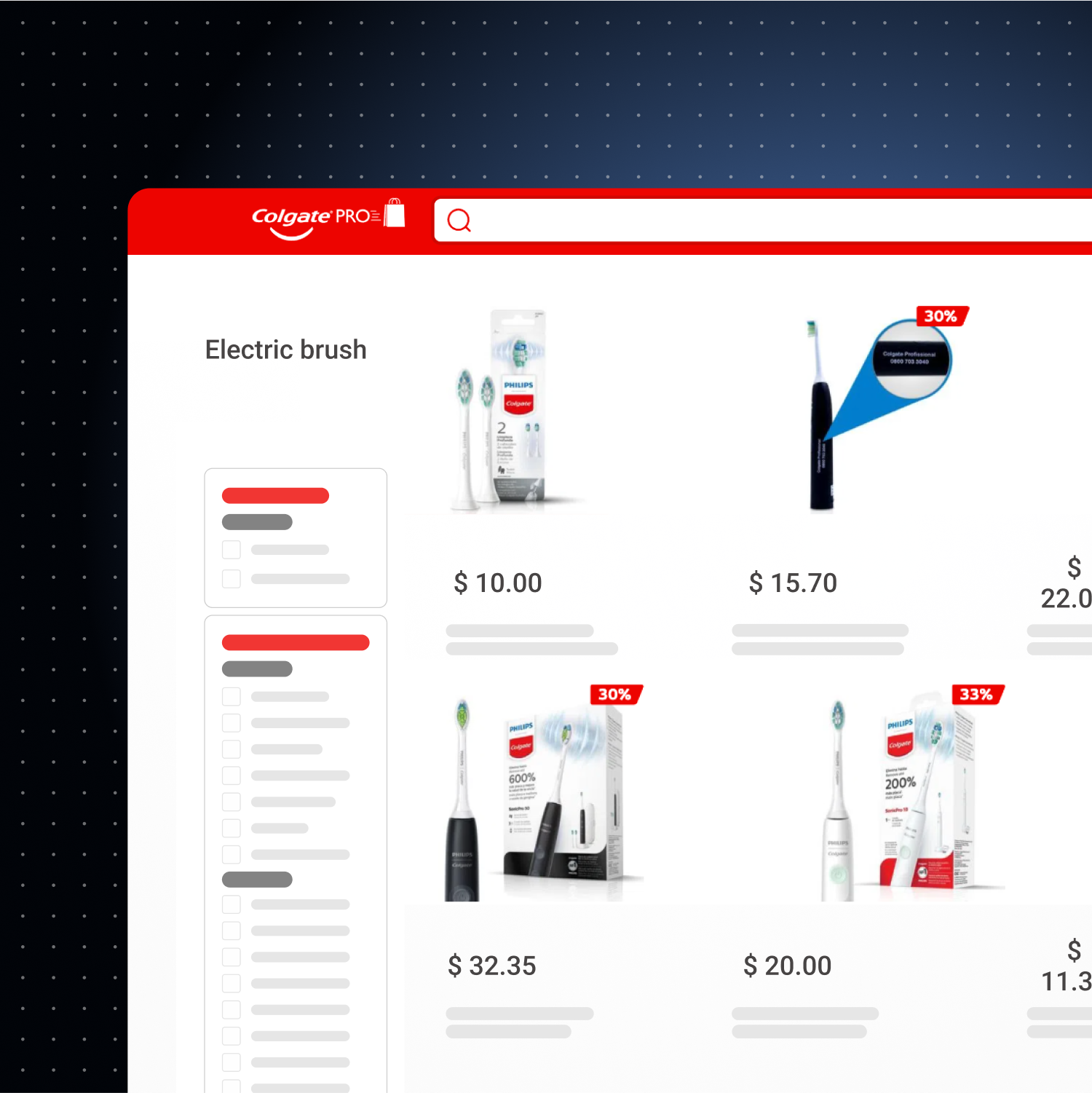
The customer range also stretches beyond conventional retail. Inter Shop used VTEX’s back end with a bank app as its front end, building a marketplace with more than 300 third-party sellers in the published case. Colgate’s professional marketplace serves dentists. These examples explain why VTEX talks about commerce networks: the buyer, seller and place of purchase do not always fit the usual storefront picture.
The subscription grows with the shopping basket
VTEX charges fixed fees and variable fees linked to gross merchandise volume. Its 2023 investor presentation described the variable component as roughly two-thirds of subscription revenue at that time. This structure gives the vendor a reason to care about customers’ sales. It also makes the software bill sensitive to the volume moving through the system.
For a prospective customer, the sensible budget includes migration, systems integration, payment arrangements, extensions and ongoing operations. Buyers should model the bill at several sales volumes and agree which orders enter the calculation. The economic appeal depends on how much duplicated work the platform removes and how much specialist work the merchant still needs.
The alternatives include Shopify Plus, Salesforce Commerce Cloud, Adobe Commerce, SAP, Oracle and an internally built system. Commercetools competes for enterprises assembling commerce from modular services. VTEX’s distinctive position is the combination of a shared core with native marketplace and order-management functions. Its appeal rises when a buyer needs those pieces together and wants to retain room for customization.
That makes fit a practical matter. A small merchant with straightforward fulfillment may have little use for this scope. An enterprise deeply committed to different systems may face substantial migration work. Where stock records are unreliable or store teams lack clear fulfillment responsibilities, connecting systems will expose those problems. It will not assign someone to count the missing boxes.
Wall Street arrived. Then the efficiency drive.
The expansion took capital. A $140 million round in 2019 was followed by a $225 million Series D in September 2020, which valued VTEX at $1.7 billion. The next year’s IPO priced 19 million shares at $19 each. That made the initial offering worth $361 million, including shares sold by existing shareholders.
The distinction matters: the initial company-issued portion was approximately $263.7 million before fees and the underwriters’ option. The full offering headline was never simply cash for VTEX to spend. Then, in May 2022, the founders announced 193 layoffs as part of an efficiency push.
Reporting from VTEX Day in 2023 captured the changed mood. Management discussed growth that had missed its earlier expectations and an operating adjustment under tougher financial conditions. The founders’ stated culture emphasizes candid communication and learning without blame. Those principles had acquired a harder test: explaining cuts to the people who helped build the business.
AI has to earn its place in the order flow
VTEX now organizes its expanding offer around Commerce, CX and Ads. At VTEX Day in April 2026, it announced AI Workspace and wider AI capabilities. The proposed jobs are recognizable: manage catalogs, surface insights, guide purchases, resolve service inquiries and help retailers sell advertising against their traffic.
There is a useful reality check on its own product pages. Some AI capabilities carry priority-access labels; the Search Optimizer Agent is marked coming soon. Buyers need to distinguish the suite’s direction from the features ready for their deployment. The everyday test is whether an automated action improves an order or a customer conversation without creating another task for staff.
Lojas Rede’s published substitution case makes the opportunity tangible. During Black Friday, the cosmetics retailer automated contact with customers when products needed replacing. VTEX reports that 40% of substitution notifications received a response within 30 minutes. The commercial point is straightforward: preserve an order that a stockout might otherwise cancel.
VTEX itself still has a growth test to pass. In the second quarter of 2026, subscription revenue rose 11.4% in dollars but only 1.3% at constant currency. Non-GAAP operating income reached $13.8 million, with a 21.4% margin. Those results show improved profitability alongside modest underlying subscription growth. AI is an investment thesis still being tested in the numbers.
For a merchant evaluating the company, the best demonstration may be an awkward order: an unavailable item, two sellers, a changed delivery address. Ask the team to follow it from purchase to resolution. VTEX’s case becomes persuasive when the systems, people and inventory agree on what happens next.