The checkout counter at rue21 had acquired a second occupation. Besides taking customers’ money, it was where staff processed shipments. The register was the place to do the work, so the work came to the register. A piece of store furniture had become an organizing principle.
- Island Pacific connects merchandise planning, stock, orders and stores.
- Its founder was a retailer before he became a software builder.
- Historical customer projects show that handheld tools require new habits.
- The useful question: which task is trapped in the wrong place?
The counter had become a traffic jam
Island Pacific’s historical rue21 case describes the problem plainly: too many tasks were happening at the cash wrap. Associates needed to handle stock transfers without making the checkout desk the center of everything. SmartStore put that work on an Apple iPod Touch fitted with a Linea Pro barcode-scanning sled.
The associate could take the scanner to the item. Stores could create transfers and see stock in transit; head office received updates in real time. The case reports more than 1,000 stores and more than 2,000 live mobile devices, with rollout occurring over the first six months. Those are historical project figures, rather than a description of rue21 today.
The portable lesson is wonderfully literal. Before asking whether a tool is clever, ask where the person must stand to use it. If every task requires a trip to the same desk, that desk has quietly become your workflow designer.
The T-shirt retailer who learned to code
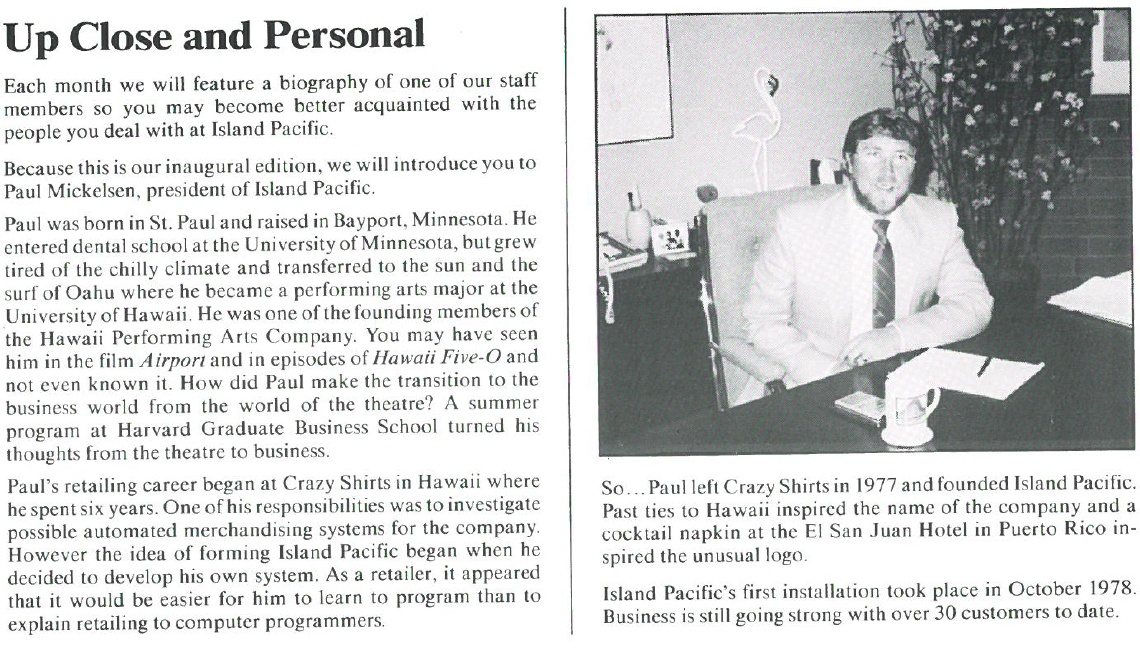
Island Pacific began with a similar impatience. In the early 1970s, Paul Mickelsen worked at Crazy Shirts on Oahu. Investigating an automated merchandising system, he concluded that learning to program might be easier than teaching retail to a programmer. He founded Island Pacific in 1977; the company dates its first customer to 1978.
It is an unusually revealing origin. The starting point was merchandise and the people trying to manage it. Software was the means. The Hawaiian connection supplied the company’s name, while a hotel napkin inspired its original logo. A napkin is an excellent place for a logo. It is a less satisfactory place for your stock ledger.
That starting point helps explain the business today. Island Pacific concentrates on retail operations, particularly the problems of fashion, footwear and specialty merchants. Colors, sizes, locations, buying seasons and sales channels multiply the questions a retailer must answer. Selling the shirt is the visible bit. Deciding which shirt should be where is the longer assignment.
A stock record with somewhere to go
SmartSuite divides that assignment into connected jobs. SmartRetail, the merchandise management system, maintains inventory and stock transactions, product information, purchasing, prices and promotions. Retail finance, sales audit and warehouse functions belong in the same operational picture. The point is to make the records agree with one another.
SmartPlanning works earlier in the process. It supports pre-season and in-season plans, assortment building, size profiling, allocation, replenishment and forecasting. A retailer needs to decide how much to buy, then which stores should receive it, then whether actual demand justifies sending more. A sales total alone cannot make all three decisions.
SmartOrder follows orders across consumer and business channels, including web orders, call centers, wholesale and franchise arrangements. SmartOmni adds central visibility and business rules for fulfillment across channels. An order has to become somebody’s picking task, and an available item has to become a credible promise to a customer.
SmartAnalytics supplies dashboards, reports and a data warehouse, using Microsoft SQL Server technologies. It lets managers drill into performance and access reports on mobile devices. Reporting becomes useful when it changes a decision: adjust an allocation, examine a weak margin, investigate an exception. A handsome chart is allowed, but it ought to earn its wall space.
The customer thought you were texting
A historical Pandora case offers a less tidy picture of progress. In January 2014, a pilot put SmartStore on Apple iPods across fifteen company stores before the Mother’s Day rush. Staff captured purchasing decisions while moving with customers, then completed payment and receipts at the register.
Training included acting out and filming customer scenarios. There was staff resistance. Some customers initially thought employees were texting; staff began showing shoppers what they were doing on the device. After some iPods were stolen, the uniform acquired a belt so the devices could be stored when idle.
“They thought staff were texting while on the job.”Winther, in the historical Pandora case
The details are more instructive than a frictionless demonstration. A device needs somewhere to live. A shopper needs to understand why a screen has entered the conversation. A process needs rehearsal. The inference for other retailers is straightforward: test the human choreography alongside the software, before the busiest day arrives.
The bill belongs to the whole project
The economics deserve the same practical treatment. In a historical SmartWeb brochure, Island Pacific reports a 10-15% cost reduction for Hamleys across outsourcing, management, order processing, stock holding and fulfillment, alongside a 21% increase in website visitors and a reduction from two platforms to one. These are vendor-reported results from that project, not an expected return for every buyer.
For a retailer considering a change, the meaningful budget includes integration, data preparation, devices, training and support as well as software. That is a procurement judgment, not an Island Pacific price quote. Compare the complete project with the expense of the current process: repeated handling, reconciliations, missed availability and work that interrupts service.
Oracle Retail and Aptos also supply merchandise and inventory systems. Island Pacific’s case therefore rests on fit: retail specialization, a modular suite, third-party integration and evidence of long customer relationships. Those features are a reason to investigate it, rather than proof that it wins every comparison. A business needing only a simple checkout has a different problem from a chain coordinating buying, warehouses and wholesale orders.
A long relationship, a changing owner
The Walking Company’s published case describes using Island Pacific merchandising software since 1994, then upgrading SmartRetail across merchandising, sales audit and financials. Its stated intention was to get current before extending into other modules. Familiarity with the supplier mattered to the decision.
This is the company’s business model in miniature: enterprise software, available as a suite or modules, accompanied by services and support. The product must keep adapting while customers continue trading. Replacing every system at once is a considerable undertaking; an upgrade within a familiar relationship can be appealing for precisely that reason.
Ownership has changed, too. Vela announced its acquisition of 3Q, whose portfolio included Island Pacific, in November 2022. Island Pacific now identifies itself as part of Constellation Software through Vela APX. Its position is that of a retail specialist within a larger software group.
The work still has to move
The current offering extends beyond the older cases. Retail Robot is marketed as a cloud-based platform for businesses from small shops to chains, combining inventory, POS, customers, purchase orders, analytics and multiple locations. It gives the company a way to address buyers who want those functions in a single product.
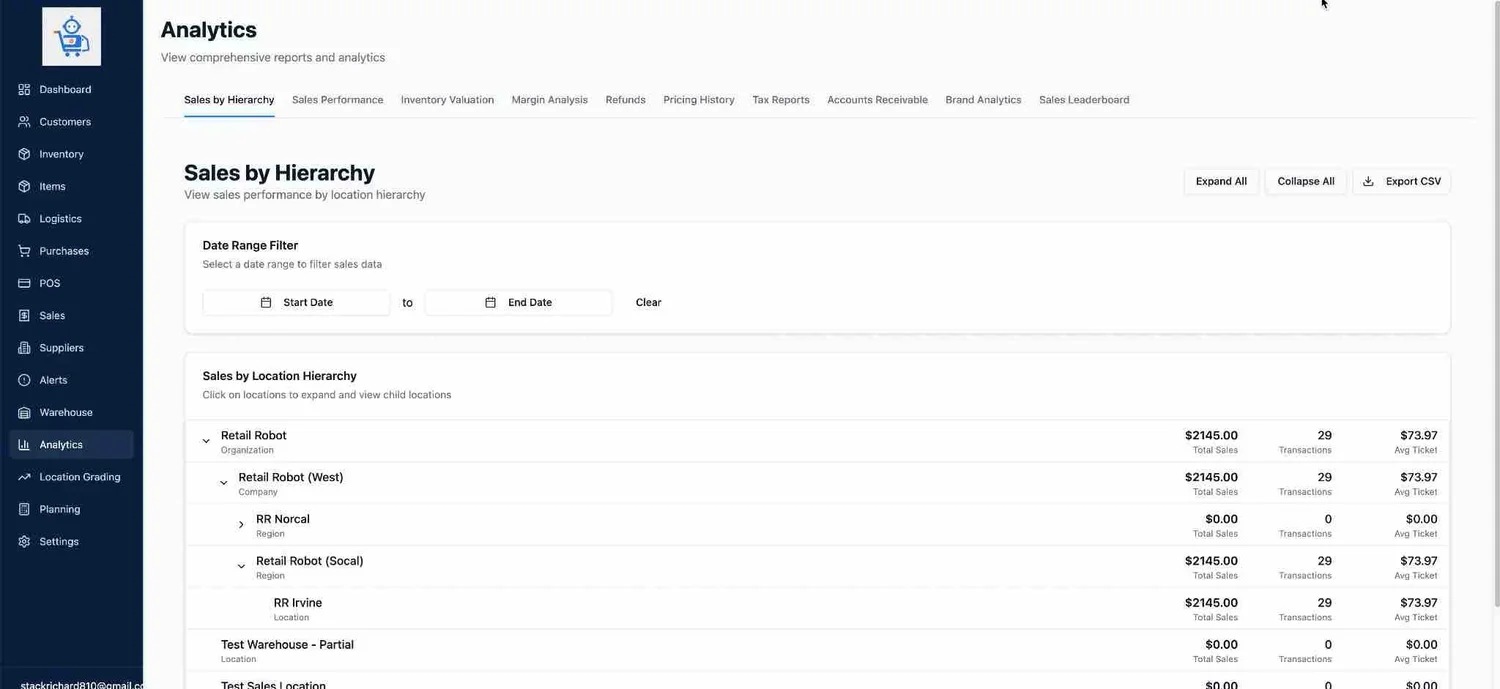
In May 2026, Island Pacific announced a Stripe partnership integrating payments into SmartSuite and Retail Robot, covering online and in-person sales. Its 2026 Retail Technology Show announcement also emphasized connected merchandise, orders, planning and store systems. The company continues working on the junctions between retail tasks.
There is a useful discipline here for any operator: choose a troublesome handoff, follow it through the business and measure what changes. An order-routing rule needs reliable stock data. A handheld workflow needs staff who use it and customers who understand it. The rue21 counter offers a good place to begin. Look for the work that has gathered somewhere merely because the computer happens to be there.