Consider the least dramatic purchase imaginable: a prescription collected at a neighborhood pharmacy, with a bottle from the front shelves added at the last moment. Two items, one customer, one payment. It looks like arithmetic. Yet the counter has to connect a prescription record with a retail item, accept the right payment, capture any required signature and leave the stock figures in sensible condition. A register can add beautifully while leaving everyone else to tidy up.
- CashierLive joins payments, inventory, customer records and reporting in a cloud POS.
- Its pharmacy tools handle prescription-system connections, signatures and HSA/FSA purchases.
- CashierLive Rx adds patient texts and payment from a phone.
- The buying test: demonstrate your real workflow, then price the whole arrangement.
CashierLive’s most interesting proposition lives in that untidy space. The company sells software to independent retailers, with a particular focus on pharmacies. Its current range also addresses hardware shops and feed and supply stores. These are businesses where the person standing at the till may need to know rather more than whether a card has cleared.
A register with a memory
CashierLive began in 2009. Its public web service followed in early 2010. Tom Greenhaw came to the business after working in operations at Nova Libra, a supply-chain software developer. In a January 2011 article, he made the case for bringing stock management, financial reporting and customer information into a web-based point of sale. The attraction was access: an owner could inspect the business without standing beside its register.
That distinction remains useful. A payment is an event; managing a shop means connecting events. Selling the last item should matter to whoever orders the next shipment. A return should appear in the accounts. A regular customer’s record should survive the departure of the employee who remembers their name. CashierLive puts those activities in the same working environment.
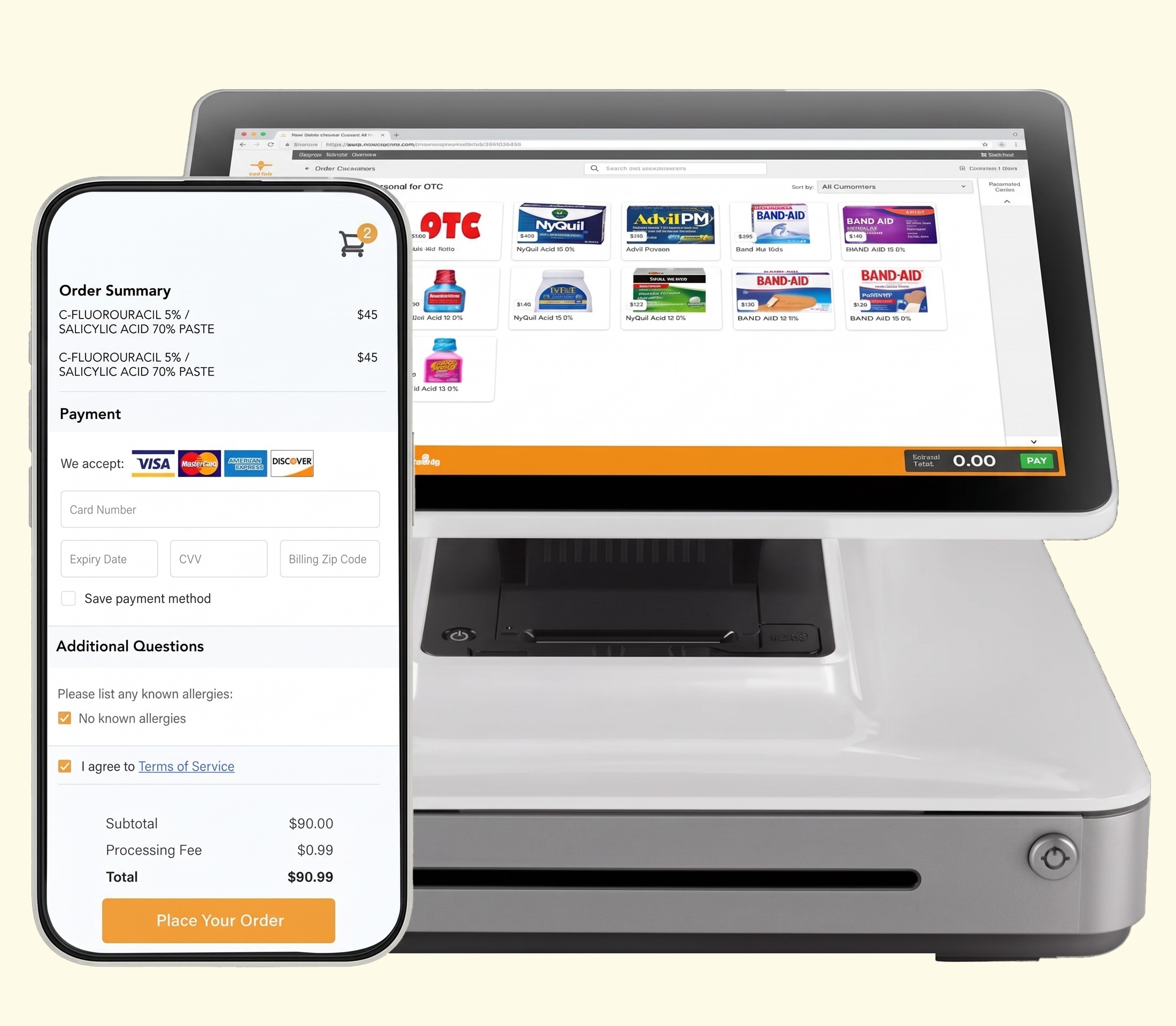
The expertise here is practical retail software: barcode-based stock, customer accounts, returns, reports and the equipment needed at the counter. It is an unglamorous collection. That is part of its appeal. Independent shop owners have little use for a handsome dashboard that requires a second evening of bookkeeping.
The checkbox behind the checkout
A pharmacy adds its own complications. CashierLive connects to pharmacy management software, including a named integration with PK Software for compounding pharmacies. Its help center explains how staff can retrieve transferred prescriptions by customer name, date of birth or prescription number. The search field has a specific job: find the record needed to complete the sale.
Another guide describes marking inventory items as HSA/FSA eligible. Staff edit the item, tick the relevant box and save. The interface action is small; the distinction it records is consequential. The software needs to know which goods belong in which payment workflow. It cannot infer everything from a price sticker.
Conceptual workflow, not a measured performance chart. Availability depends on the configured integration.
The pharmacy package also advertises digital signature capture on the payment device and MethCheck integration for regulated OTC sales. These features place specialised tasks where staff are already working. The competitive argument is strongest when a shop needs those connections every day. A buyer should have the vendor run them with the pharmacy’s actual systems before mistaking a feature list for a finished installation.
The phone call moves to the phone
CashierLive Rx, an optional add-on, extends the job beyond the counter. It sends patient texts about refills and supports payment from the patient’s phone. The advertised sequence is straightforward: notify the patient, let them pay, and reduce the confirmations and payment calls handled by pharmacy staff.
There is an appealing economy to this. The phone already belongs to the person whose response is needed. Moving the request there gives that person a way to act without coordinating a call with the pharmacy. The useful question is how the response rejoins the pharmacy’s existing work, especially when an order needs attention rather than a routine payment.

“It depends on a store’s volume.”
Tom Greenhaw, discussing mobile checkout in 2012
That short observation, made when mobile registers were still a novelty, deserves to travel with every software demonstration. A phone can be convenient without being the right device for every job. Patient payment from home and a cashier processing a large basket are different situations. The hardware should follow the work.
A wine ticket, a contractor, a bag of feed
An early customer makes the distinction unusually clear. In 2012, Tony Klausing of Good Vibes Winery in Westerville, Ohio, described using CashierLive on a PC. His business needed to keep a tasting-room ticket open while also selling bottles to take away. The useful combination was the sales workflow and browser access; a roving phone register was not essential.
The company’s current hardware-store offering stresses large inventories and contractor house accounts. Its feed and supply offering addresses seasonal stock, bulk pricing and account billing. General retail gets stock tracking, customised discounts and remote reporting. Across these categories, the interesting similarities are operational: many items, repeat customers and business that continues after an individual sale.
This places CashierLive among retail management systems with integrated payments. Square and Lightspeed are alternatives in general retail; pharmacy buyers can also compare specialised offerings such as BestRx’s BestPOS and CAM Commerce. The sensible comparison starts with required connections, account handling and the people who will use the screen.
The gift shop that chose Square
A customer can decide differently. Meadow Garden’s gift-shop discussion in the Georgia State Society DAR’s 2016-2017 proceedings records a switch from CashierLive to Square. The treasurer described Square as easier to use, put new equipment at roughly $900 and compared that with CashierLive fees exceeding $800 a year. Existing receipt-printing and cash-drawer equipment could be reused.
That was the customer’s calculation in 2016, rather than a comparison of today’s packages. It shows how training and recurring cost can outweigh features for a particular shop. The proposed equipment payback was an expectation, not a documented result. For this buyer, a simpler daily experience was persuasive.
Count the costs, then count the stock
CashierLive uses a subscription model. G2’s Standard pricing entry, updated in October 2024, lists $75 per store per month with unlimited registers, inventory and support. Capterra lists pharmacy pricing by quotation. Treat the published figure as a starting point for questions about terminals, processing charges and optional software.
G2 pricing entry updated October 2024. Confirm the current quote.
Setup deserves attention too. CashierLive’s pharmacy page includes support for inventory importing, hardware installation and reports at no extra cost. Its wider support offering includes guided onboarding and live help. These services can matter when a shop has to translate existing stock records and working habits into a new system.
There is a habit worth copying before buying anything. In his 2011 inventory advice, Greenhaw urged retailers to schedule counts, inspect incoming shipments and use reports to distinguish fast sellers from stock collecting dust. A packing list, he observed, could be wrong. Software makes a discrepancy easier to record; someone still has to notice it.
Bring that discipline to a demo. Try a prescription lookup, an eligible-item basket, a return and a customer-account payment. Ask who configures each connection. Check the report the accountant will receive. For a shop with modest needs, fewer steps may be the decisive benefit. For a pharmacy with repeated handoffs, those extra connections may earn their keep. The counter is where the claim becomes testable.
Take it to the counter
Explore the product, inspect the working guides, or revisit the early retail argument.