The cash register is a deceptively small piece of a petrol station. Behind a sale sit a pump, a payment, a stock count, a promotion and somebody at head office who wants to know whether the shop made money. MADIC UK has built its business around making those pieces talk to one another. The company once concentrated on keeping pumps working. Today, its ambitions extend from the nozzle to the sandwich order.
That journey makes MADIC UK an instructive corner of British technology. Its customers include national forecourt groups and independent shopkeepers. They buy systems that have to survive ordinary trading: deliveries arriving, staff changing shifts, prices moving and customers wanting to leave. A clever feature has limited value if the queue stops moving.
The till is only the beginning
The central product family is called evolution. evoPOS handles the sale; evoBackOffice deals with the store’s inventory and suppliers; evoHeadOffice brings information and control together across a retail estate. The names are almost aggressively literal. For a retailer deciding which part of the operation needs attention, that is useful.
MADIC sells evoPOS as software as a service. Around the applications sits a wider business in equipment, installation, maintenance, training and bespoke development. A customer can need software that understands a fuel transaction, an engineer who understands the dispenser and someone who will answer when either misbehaves. MADIC operates across those boundaries.
This puts it in the specialist forecourt technology market, where rivals include Gilbarco Veeder-Root’s Passport products. Passport also combines fuel and shop sales with payments, loyalty and head-office oversight. Integration itself is therefore no exclusive invention. MADIC’s case rests on its particular mix of software, sector knowledge, customisation and deployment experience.
A service engineer’s route into software
Founder Lee Papper came from the forecourt industry. In a 2017 first-person account, he described starting as a trainee, becoming a service engineer and working for businesses including Gilbarco and Torex. He saw room for a pump-maintenance company built around service quality and technical experience.
The legal company dates to November 2010, while Papper placed TLM’s founding in 2011. The distinction is mundane but useful: company registration and an entrepreneur’s starting line need not be the same event. What followed was a substantial change in the work it sold.
MADIC’s own history says pump maintenance generated 95 percent of revenue in 2013. TLM acquired Ocean Dynamics in 2015 and opened its Support Hub in 2016. By 2017, software solutions accounted for 96 percent of revenue. Those percentages describe different business lines at different dates, but the direction is unmistakable. Software had become the centre of the business.
Pump maintenance share of revenue
Software solutions share of revenue
Company-reported historical mix; different revenue categories.The money behind the change
Expansion required a different financing arrangement, too. A 2017 account of TLM’s borrowing described an invoice-finance facility that could not keep pace with its investment needs. The company turned to ArchOver, using both receivables and contracted income to support borrowing.
In May 2017 it raised £1.1 million through two loans: £600,000 against accounts receivable and £500,000 against contracted software-licence and maintenance revenue. Another £250,000 followed in July. The total was £1.35 million. That was financing for the business, rather than a price tag for its software or a customer installation.
In April 2019, French industrial group MADIC acquired TLM. The buyer wanted to expand its management and payment offering; TLM gained a parent with an international footprint. The MADIC UK rebrand followed in 2023, alongside an expressed ambition to take evolution into European and wider markets. This was a software business finding a home inside a company that also understood physical infrastructure.
A national rollout, two hours at a time
MFG provides a tangible measure of the work. MADIC group reported 918 sites upgraded and 1,604 evoPOS units installed in the programme completed in 2021. Each site was connected to evoHeadOffice, bringing product ranges, pricing and promotions under shared control. A national chain could now act on a common system.
MFG programme completed in 2021
The trigger was operational fragmentation after MFG’s acquisition of MRH. Different systems made estate-wide visibility and new integrations difficult. MADIC’s case study puts average store closure during the POS work at around two hours. The later back-office programme finished in June 2022 using remote deployment and training.
For another customer, EG Group, delayed information was the irritant. Its older process left managers looking backwards when they wanted to influence what stores were doing. EG commissioned evoHeadOffice in 2019, and MADIC subsequently converted as many as 60 sites a month. The case study describes improved central control of purchasing, prices and stock, with a reported lift in margins.
Those accounts suggest a practical reason to change systems: the retailer’s decisions had outgrown the information available to make them. Faster checkout matters, but so does knowing which products and prices are working across the business before the opportunity has passed.
Park Garage Group faced a related problem when it wanted to standardise a mix of older and newer tills. Its evoPOS installations began in July 2020. After it bought 27 more forecourts the following year, MADIC installed evoPOS at those sites within 30 days. Acquisitions make the appeal of standardisation particularly visible: buying another shop also means inheriting another set of systems and routines.
The cashier should not be the integration
MADIC’s partner directory is a useful picture of modern convenience retail. Deliverect aggregates online orders. Azpiral supplies loyalty capabilities. Gander promotes reduced-price food. EDGEPetrol provides fuel-sales analytics. The store has become a meeting point for services that originate elsewhere.
The company also offers custom development for reporting, data imports and exports, payments, loyalty and delivery workflows. That gives a retailer a route to fitting technology around a particular operating model. It also makes the specification important: a requested connection should be described in terms of the transaction and the staff work it removes.
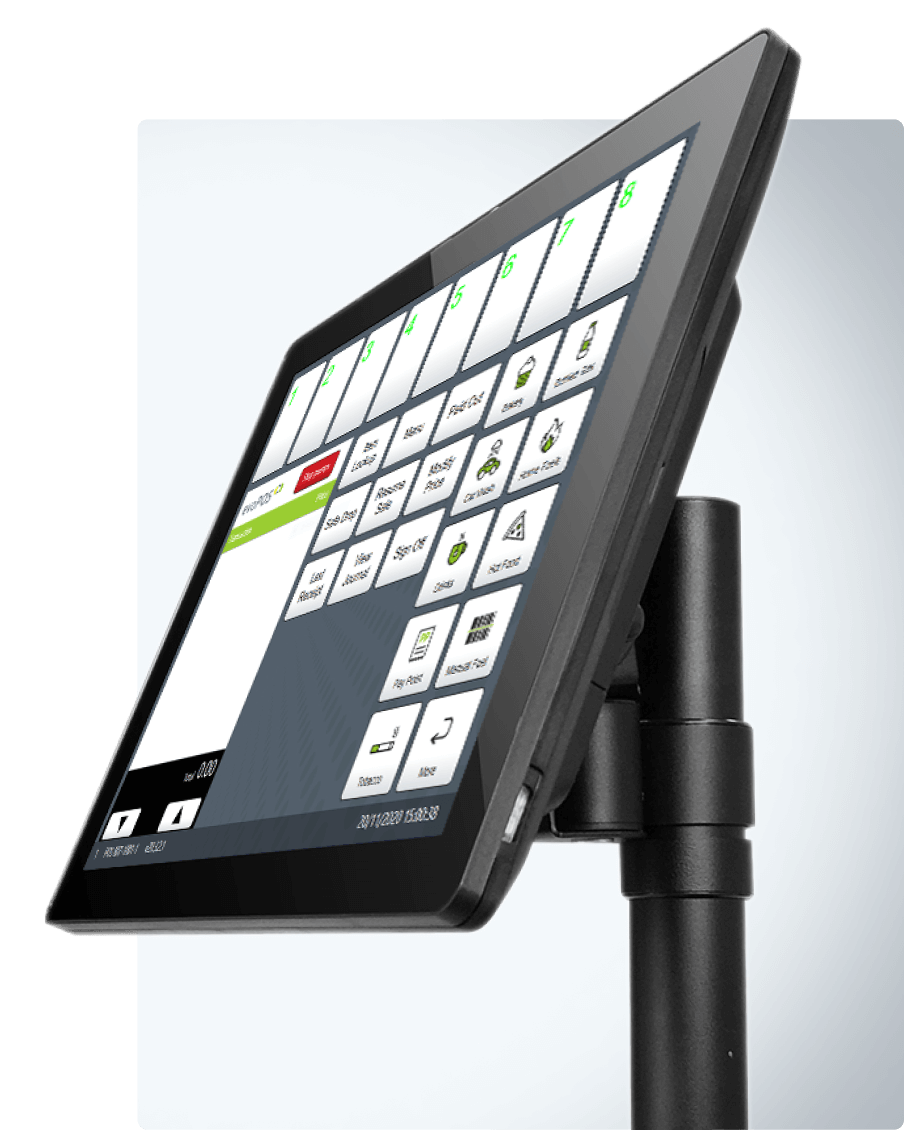
For independent retailers, access can be as valuable as centralisation. Westhead Stores managing director Paul Gilson highlights being able to reach evoBackOffice from different devices and locations. The owner’s view of the shop no longer has to stay in the shop.
“You can connect to it from anywhere on any device.”Paul Gilson, Westhead Stores, on evoBackOffice
A charger becomes a shop window
Park Garage Group offers a glimpse of where the product is going. At its EV hub, Bakery 79 food ordering is available through a QR code. Altaine’s Q-jump platform connects the order to evoPOS, so it appears on the store’s tills and stock continues through the normal process. Customers can order without downloading an app.
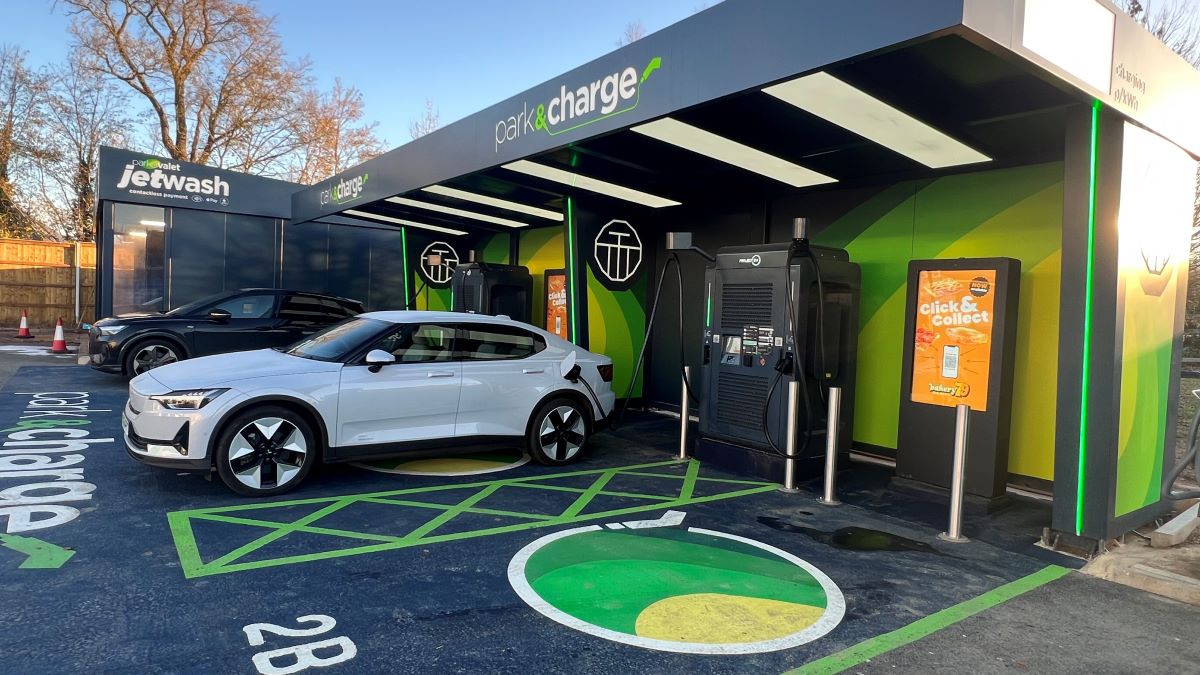
The display uses MADIC digital equipment and Highview3 media management. A separate Ubacart integration supports Bakery 79’s loyalty app. Park Garage Group described kiosk ordering and delivery to the car as a next step. That distinction matters: the QR ordering is the documented service; the delivery-to-car idea was a plan.
The commercial logic is easy to follow. A charging stop leaves time for another purchase, provided ordering and collection are convenient. The technology connects the invitation outside to the working shop inside. Whether that invitation earns a sale still depends on what the retailer offers.
The unglamorous work is the product
MADIC’s scope includes Tatsuno fuel dispensers, outdoor payment terminals, EV charging equipment and construction work. Pipework and repairs sit beside software development in its service catalogue. That breadth helps explain its position: it can be involved in both the digital transaction and the site where it happens.
Its recent discussion of fuel drive-offs makes the connection explicit. evoPOS can require customers to prepay inside the shop without additional hardware. Outdoor terminals offer another route, with payment authorisation before dispensing. MADIC describes retrofit options for its MG PAY terminal as well as installation with new pumps.
The choice affects customer behaviour. Requiring a visit to the shop before fuelling changes the sequence of the stop. Outdoor payment shifts activity towards the pump. Retailers have to decide which arrangement fits their site and operating hours; the availability of a feature does not settle that question.
The public manuals are equally revealing. They cover wastage, meal deals, electronic delivery notes and locking individual pump nozzles. Support includes hardware and software help, individual training and workshops. Much of the product’s usefulness lives in these small tasks, repeated across shifts, long after installation day.
What a retailer should copy
Independent operator Rob Gerrish describes a recognisable buying decision. His legacy software was no longer being updated, felt cumbersome and lacked the support he needed. Industry recommendations helped persuade him to change. His three sites adopted evoPOS, evoBackOffice and Tatsuno pumps.
One detail deserves attention: using a new handheld device and connected label printer required a Wi-Fi upgrade. The benefit was printing reductions on the shop floor and avoiding manual price overrides at checkout. The dependency was a functioning network. A software decision had become an infrastructure decision.
That is the transferable lesson in MADIC’s work. Start with a specific delay or repeated task. Follow the data and equipment it touches. Include the staff who will use it, then judge the change during real trading. A connected system is useful only when the surrounding operation can carry it.
A retailer needing little more than straightforward sales may find less value in this breadth. A group trying to coordinate fuel, food, loyalty, delivery and multiple stores has a different problem. MADIC UK has spent its history moving closer to that problem, one pump, one till and one back office at a time.
Go behind the counter
Explore the products, watch the controls in action and follow the company’s next installations.