Ross Lipson was standing in a dispensary queue in Oregon when a familiar problem presented itself in unfamiliar packaging. He had worked in online food ordering. Now he was waiting to buy cannabis. The merchandise had changed; the inconvenience had not. Why should a customer need to reach the counter before discovering what the shop could sell?
- Dutchie connects online ordering with the machinery inside a dispensary.
- Buying LeafLogix and Greenbits in 2021 brought point of sale into the business.
- Payments and loyalty extend the relationship beyond a single order.
- Its 4/20 outages exposed the operational cost of dependence.
The queue was the clue
In a 2020 interview, Lipson recalled wanting to “apply the online ordering concept” to cannabis. He called his brother Zach. Dutchie launched in Bend in 2017. An ordinary irritation had found an unusually complicated market.
That distinction matters. An online menu lets a shopper browse products and reserve an order for pickup or delivery where the retailer offers it. For the shop, it introduces a second stream of demand alongside customers at the counter. Unless both streams know what remains on the shelf, the convenience can become an apology.

The menu meets the register
Dutchie now supplies point of sale, ecommerce, inventory tools, payments, loyalty and marketing. Its buyers are licensed cannabis businesses, including independent dispensaries and operators with stores across several states. Ascend Wellness Holdings appears among its named customers. The company reports more than 6,500 dispensaries across the United States and Canada.
The central problem is agreement. A sale should change inventory, appear in reporting and attach to the correct customer. Cannabis adds purchase limits, traceability records and jurisdiction-specific requirements. Dutchie’s inventory tools connect with systems including Metrc and BioTrack. The retailer still has to configure and operate the business correctly; software cannot take its responsibilities home.
ChooseOnline menu02
CheckStock + limits03
CompleteRegister + payment04
RememberReports + loyalty
This puts Dutchie in the market for specialized retail infrastructure. Flowhub, Cova and BLAZE are alternatives in dispensary POS; Jane competes in online ordering and POS. Dutchie’s pitch is the breadth of its connected system. It also lists integrations with Weedmaps and Leafly, a reminder that cannabis software companies can compete in one aisle and cooperate in another.
Two rounds, one expensive year
In March 2021, Dutchie acquired LeafLogix and Greenbits, two cannabis software businesses, and announced a $200 million Series C. Its own explanation was revealing: the relationship between ecommerce and point of sale had become central. Partners with adjacent products became acquisition targets.
The move expanded Dutchie’s remit from helping shoppers order to helping retailers run the transaction. It also brought together different teams and technologies. The announced financing supported investment in that combined business; it should not be read as the price paid for the acquisitions.
October brought a $350 million Series D led by D1 Capital Partners. The $3.75 billion valuation belongs to that financing date. Dutchie’s subscription business sells merchants the software supporting their stores, with payments and other commercial services alongside it. A prospective buyer should evaluate the whole operating bill: software, equipment, migration, integrations and payment terms.
April 20 discovers the dependency
Then came the sort of test that funding announcements rarely discuss. On April 20, 2023, Dutchie’s ecommerce service suffered an outage. CEO Tim Barash attributed it to a database-provider issue and said increased holiday traffic was not indicated as the cause. He promised affected retailers a payout based on estimated lost profits.
Retailers reported further disruption on April 20, 2024. MJBizDaily described operators unable to complete online and in-store purchases; one Michigan store reported more than five hours of POS downtime. The effect was painfully physical: a digital interruption could send a real customer out of a real shop empty-handed.
The more jobs one system performs, the more consequential its absence becomes.Editorial observation
For a retailer, that history belongs in the buying decision beside the demo. Ask how sales continue during an interruption, how inventory is reconciled afterward and which integrations remain available. Consolidation can reduce everyday work. It also concentrates the consequences when that work stops.
The customer record gets a second job
Dutchie’s next expansion concerns the shopper who comes back. Pay by Bank, formerly Dutchie Pay, links a customer’s bank account through Plaid and supports cashless transactions. Loyalty and marketing tools connect rewards, customer segments and campaigns with the purchase record. A checkout becomes the beginning of another visit.
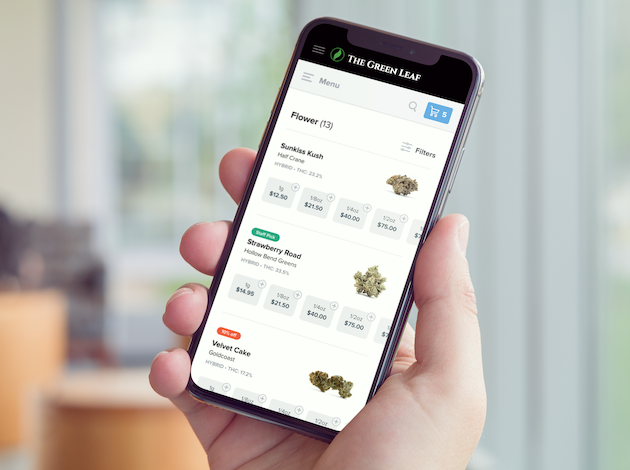
In June 2026, Dutchie launched four Consumer AI products: Voice AI for calls, Register Co-Pilot for staff prompts, Agentic Commerce for online shopping and Consumer Pulse for surveys and reviews. They share the existing POS customer identity. The practical proposition is that each interaction starts with a little more context.
September’s updates sound less theatrical and perhaps more useful: configurable duplicate-customer matching, centralized mobile-app settings and AI-assisted lab-report extraction that requires a user to confirm the values before saving. These are improvements to the records beneath the experience. Personalization gets awkward when the system thinks one person is three.
What the queue can teach another founder
The lesson worth borrowing is specific. Start with a recurring inconvenience, then follow the information that makes it recur. Dutchie followed the order from menu to register, payment and customer history. Its stated culture emphasizes customer care and collective work; its reform partnerships extend to a checkout roundup program supporting cannabis justice organizations.
That approach depends on retailers willing to connect their systems and maintain usable data. It is less convincing when a business needs only a simple menu, prefers separate vendors or cannot support the implementation work. Dutchie began by shortening a queue. Its present challenge is making everything behind that queue dependable enough to disappear from the customer’s attention.
Follow the order
Explore Dutchie’s platform, product updates and company blog. Watch the POS and ecommerce walkthrough or the Pay by Bank training videos.