At a Z Energy aviation fuel stop, the card reader has a rather serious job. Some customers are emergency services. A failed payment system can mean an aircraft cannot refuel, with no convenient alternative nearby. In a 2017 Invenco customer story, Z explained why it chose the same supplier for those stops as for its road network. Suddenly, the little machine beside the nozzle looks less like a cash register and more like infrastructure.
- The job: connect fuel payments, store checkouts and site equipment.
- The idea: separate software services so changes need not interrupt the whole site.
- The route: specialist technology, established partners, then a larger home inside Vontier.
That is a useful place to begin with Invenco. Customers see a screen, a card slot, perhaps an invitation to buy coffee. Behind them sits an argument about how a petrol station should work. Which machine authorizes the payment? Which controls the pump? And why should updating one computer inconvenience every driver on the forecourt?
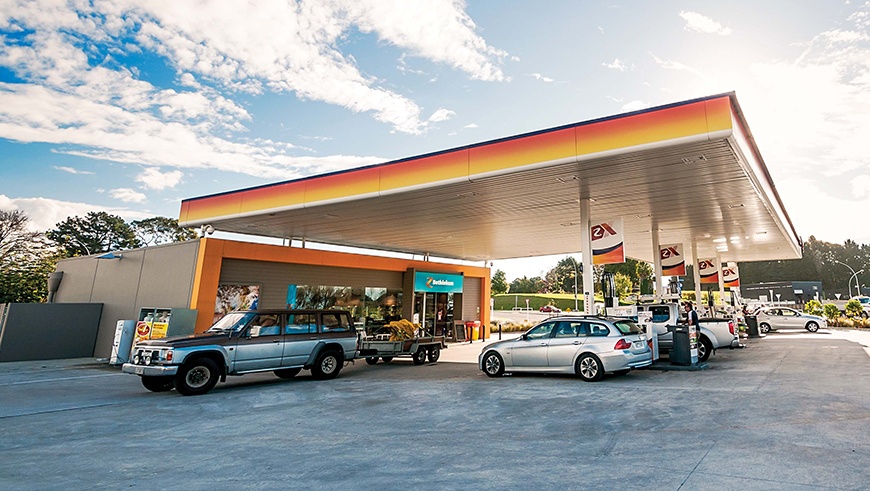
A second life, with a card slot
The business took shape in Auckland in 2009, after Peter Maire and Dave Ritten acquired the Invenco operation from failed Provenco Cadmus. Maire was already known for Navman. This venture concerned a less glamorous roadside object: the outdoor payment terminal. Its requirements were demanding enough without a publicity department. It needed to handle money securely, survive outdoors and cooperate with equipment already installed.
The predecessor’s collapse belongs to the origin story, rather than an invented tale of Invenco repeatedly failing. The subsequent company found customers beyond New Zealand, received an export commercialization award in 2017 and was named New Zealand Hi-Tech Company of the Year in 2018. The interesting question is how a specialist reached those overseas buyers.
Borrow the road to market
America’s move toward chip-card payments created an opening. Fuel retailers faced an outdoor EMV liability shift, making old payment hardware a financial concern. Invenco had relevant technology. Reaching the retailers was another problem.
It worked with NCR’s established channels. A BNZ customer account describes a major 2016 supply agreement through that partnership. The lesson for another specialist is wonderfully practical: find someone already trusted by the buyer. An unfamiliar hardware supplier can arrive through a familiar relationship.
Orders brought their own headaches. That same account describes uneven sales cycles, credit facilities and a product with more than 500 components, some requiring 40-week lead times. A growing order book could demand cash and forecasting long before it produced a finished terminal. Distribution solved access; it did not simplify manufacturing.
“Invenco’s reliability, robustness and ease of using the technology all played a part.”Z Energy customer representative · 2017
Give the pump some independence
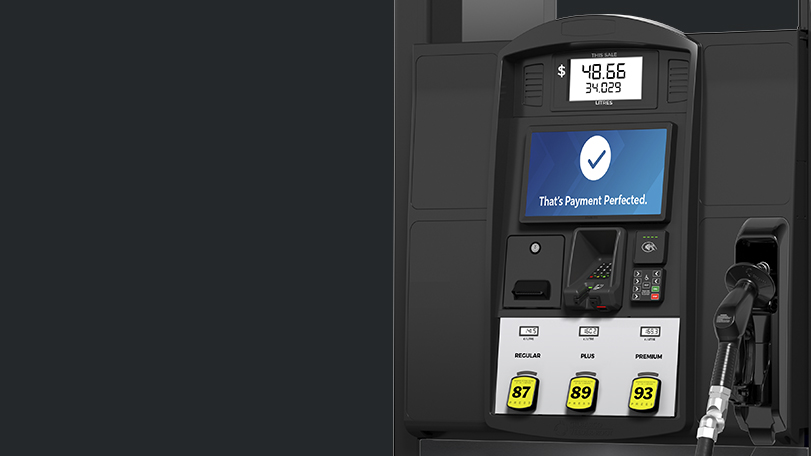
Invenco’s more distinctive proposition lives behind the screen. Its iNFX architecture divides retail functions into independent software services. Payment processing, forecourt control and site interfaces can be assembled and changed separately. For an operator, that means asking how much of the site must stop when something needs attention.
In Invenco’s description of iNFX with FlexPay 6 terminals, the electronic payment server can run on the terminals themselves. Transactions can reach the payment network without passing through the shop’s POS. The company gives two examples: updating payment software pump by pump, and keeping outdoor card payments running during work inside the store. Those are architecture claims, rather than a guarantee against every outage.
There is a second kind of independence: choosing equipment. In February 2021, Invenco announced cooperation with Verifone to support G6 and G7 terminals with certain Commander software versions. Both used the Conexxus forecourt payment protocol. For retailers, compatibility can preserve an existing investment. Verifone can be an alternative supplier and an integration partner in the same transaction.
The hardware is only the opening sale
Today’s portfolio stretches from FlexPay terminals to Passport POS, DOMS forecourt control and cloud management. The Hub connects supported devices and exposes APIs. Engage lets retailers schedule promotions on pump screens. One company may want a replacement terminal; another may want remote visibility across an entire network.
The business model follows that spread: equipment, software and continuing services. Invenco’s historical i2 programme made the bundle explicit. Its 2021 description offered a fixed monthly terminal rental with equipment, compliance management and service, including parts, labour and travel, over four years. The current product catalogue directs buyers toward quotations. A retailer’s actual bill depends on its configuration and installation.
GetGo showed what a wider purchase could look like. In January 2021, it selected Invenco for an upgrade covering 266 locations, combining payment terminals, networking, iNFX and cloud management. This was a site infrastructure purchase with a touchscreen attached.
The buyer bought a connection, too
Vontier announced its acquisition agreement in August 2022 at US$80 million plus contingent consideration. Its later annual filing records an August 31 closing and US$83.1 million net of cash received, including the measured contingent amount. Neither figure is a retailer’s installation cost. The strategic attraction included putting Invenco’s technology through Gilbarco Veeder-Root’s distribution network.
US dollars, plus performance-contingent consideration.
In July 2023, GVR’s Retail Solutions business became Invenco by GVR, bringing Passport, Orpak, Insite360 and DOMS under the brand. The name now described a broader operation than the Auckland company Vontier had bought.
The September 2026 Tesco agreement makes that combination tangible: planned deployment across more than 700 sites, joining Invenco payment terminals with DOMS controllers and Tesco’s POS. Its value depends on the connections working. Supported versions, payment certifications, connectivity and physical maintenance still matter. A modular software design cannot replace a broken reader or refill a receipt roll.
For another business, the useful idea is to design around the interruption your customer dreads. Then find a credible route to that customer. At Invenco’s forecourt, the measure is refreshingly concrete: can the next driver pay and leave?