The curious thing about Hypercom’s sale is that the buyer could not simply make the rival disappear. In August 2011, VeriFone completed its acquisition of the payment-terminal company. But the U.S. business had to go to a separate buyer. The small machine beside the till had become a rather large question about who would be left to sell the next one.
- Hypercom built the hardware and software that helped merchants accept card payments.
- Its real buyers included banks, processors and retailers, with distributors doing essential local work.
- The announced VeriFone deal was valued at about $485 million, including net debt.
- The U.S. operation survived separately and became Equinox Payments.
A terminal is an unpromising object for a corporate epic. It has buttons, a slot, perhaps a printer. Nobody puts one on a pedestal. Yet its location is unusually consequential: the point at which a customer’s intention to buy must become an accepted payment. Hypercom built a business there, where impatience meets engineering and a failed connection can interrupt a sale.
The wait was the product
George Wallner founded Hypercom in Australia in 1978. His background was electrical and communications engineering; the early opportunity was moving credit-card authorizations quickly. A company history places the beginnings in a Sydney apartment kitchen. It is a pleasingly domestic setting for a business that would eventually put equipment on counters around the world.
The same history describes an early difficulty with Hypercom’s faster, synchronous communications approach in America: customers could be satisfied with the equipment they already had. Hypercom moved its headquarters to Phoenix in 1988, closer to American Express. Proximity to a customer could help. A technical advantage alone did not compel a purchase. The early company history makes that tension plain.
Consider the decision from the other side of the counter. A faster machine is attractive. Replacing equipment also means changing something that staff, suppliers and payment partners already understand. The useful question is therefore larger than “How fast is it?” It is “How much trouble will changing it remove?” That distinction is an interpretation of Hypercom’s experience, and one a hardware founder can still use.
The buyer behind the buyer
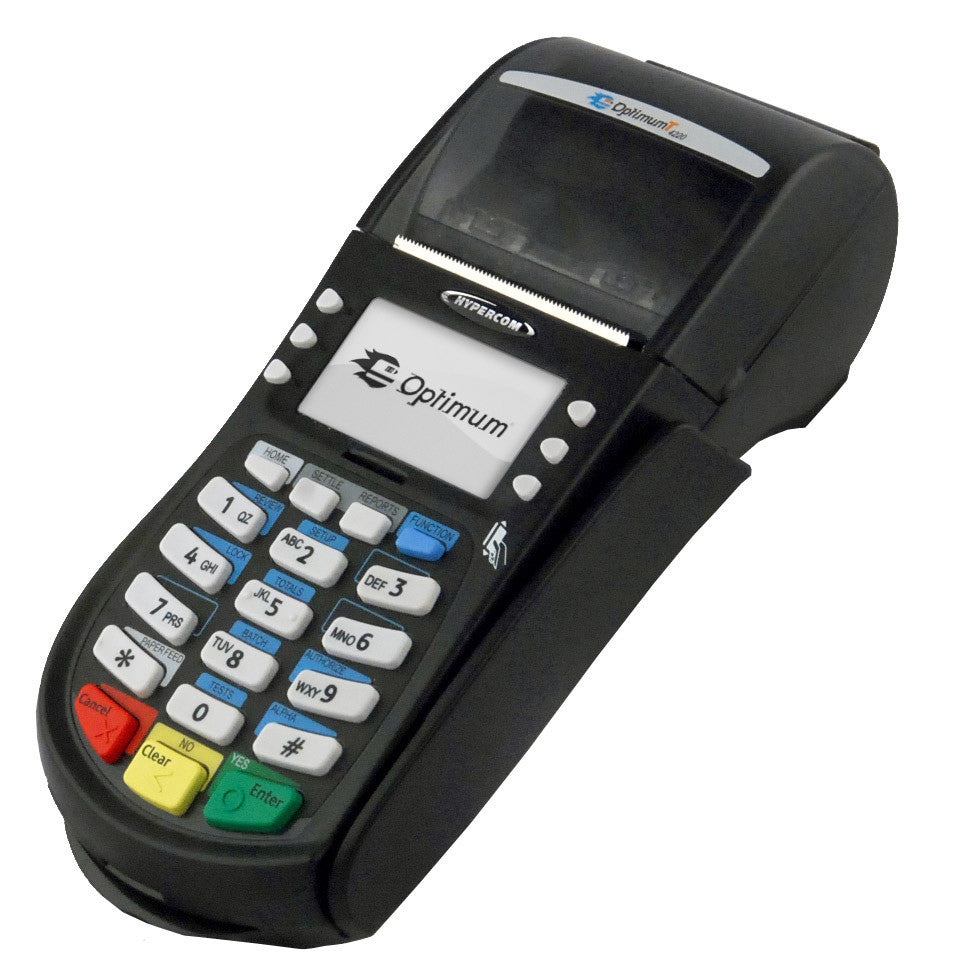
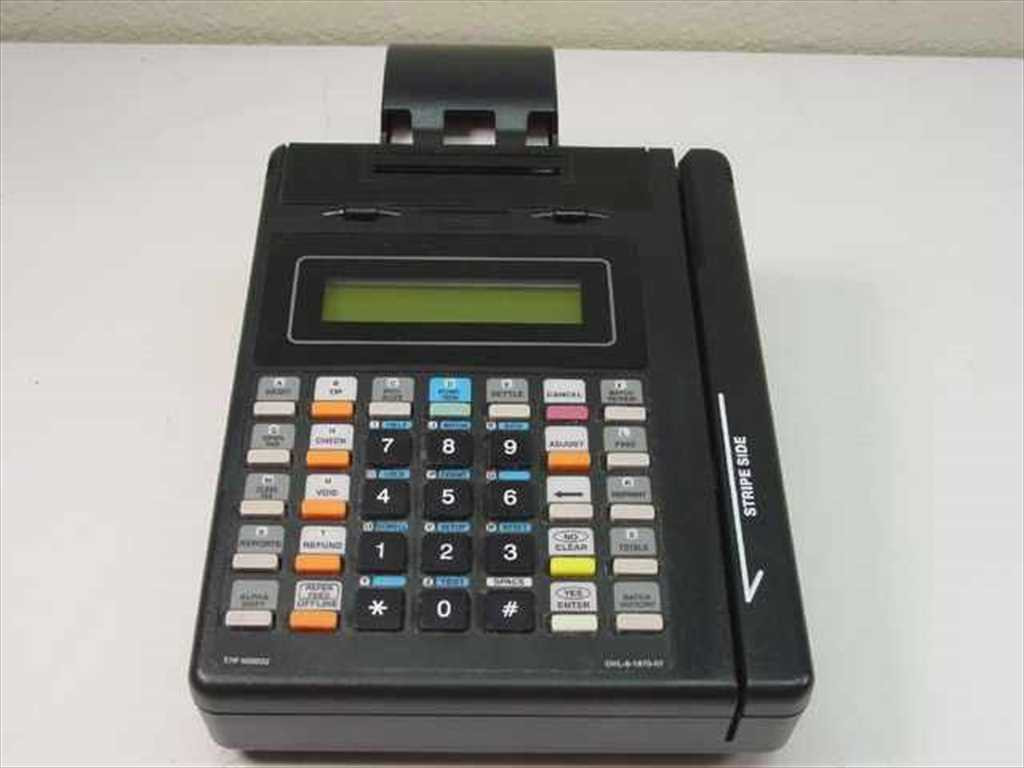
Hypercom supplied countertop machines, mobile terminals and customer-facing devices for larger stores. Its L5300, announced in 2010, handled signature capture and PIN entry for multilane retailers. Software and support accompanied the hardware. In a 2000 interview, Wallner also described Ascendent, the company’s front-end payment and transaction software. The ambition extended beyond a reader with a cable.
For a shopper, the terminal is the visible business. For the supplier, the customer may be several steps away: a bank, an acquirer, a processor, a retail chain. These organizations need equipment they can deploy and maintain across merchant locations. The merchant wants to finish the sale. The institutional buyer has to make that possible repeatedly, across a fleet.
One deployment gives this arrangement a useful shape. In October 2010, Datafast selected 4,500 Hypercom countertop and mobile terminals for merchants in Ecuador. MST Multisoft, an authorized local distributor, was to supply the equipment and field services. The rollout announcement names all three participants. The box crossed borders; the work of getting it into merchants’ hands required a local organization.
- 01 Equipment + software
- 02 Distribution + field service
- 03 Merchant deployment
This helps explain the business model. Hypercom earned money from products and related services. Its 2010 results recorded $468.4 million in revenue: 77.5 percent from products and 22.5 percent from services. The published financial results describe a substantial equipment business with an accompanying service operation.
A merchant’s bill cannot be inferred from that revenue mix. Hardware procurement, support and the payment provider’s own commercial terms are different questions. Reading an acquisition price as the cost of accepting cards would be especially misleading. The meaningful comparison for a buyer is the full arrangement: device, deployment, compatible software and continuing support.
Europe came with an invoice
In April 2008, Hypercom bought Thales’s e-Transactions business. The base share price was $120 million. The eventual recorded acquisition cost was about $150.5 million after working-capital and debt amounts, adjustments and transaction expenses. An affiliate of Francisco Partners lent $60 million to help fund it. The closing filing and annual report distinguish the headline price from the fuller bill.
The purchase brought a stronger presence in markets including France, Germany, Spain and the United Kingdom, along with integrated and unattended payment expertise. Hypercom’s announcement placed it second in Western Europe and third globally. Those were the company’s contemporary market-position claims, not a ranking for today.
Geography mattered because the next customer was unlikely to be won by shipping the same box everywhere and wishing it luck. An established business brings relationships, personnel and experience with its markets. Buying those capabilities can shorten an expansion. It also creates an integration job. The price buys an opportunity to combine operations; it does not guarantee the combination will be effortless.
The first offer did not survive
In September 2010, Hypercom rejected VeriFone’s unsolicited proposal of $5.25 a share in cash, saying it undervalued the business. The contemporary report captures a company pushing back against a rival that wanted to become its owner.
“Our relationships with our customers are our top priority”
Philippe Tartavull, customer letter, September 30, 2010
The letter to customers was an attempt to keep that argument from unsettling the people buying equipment. Whatever happened in the boardroom, customers still needed their supplier to deliver. A takeover proposal is news; the possibility of disruption is a procurement concern.
By November 17, the boards had approved a different agreement: 0.23 VeriFone shares for each Hypercom share, worth approximately $7.32 at the reference share price when announced. The terms offered a higher indicated value and continued ownership in the combined company. They provide a concrete explanation for the changed decision without requiring a guess about anyone’s private thoughts. VeriFone explicitly wanted Hypercom’s European position. The merger announcement set out both the terms and that rationale.
The rival had to survive the sale
The initial regulatory solution was to sell Hypercom’s U.S. business to Ingenico. That plan failed to satisfy the Justice Department. In May 2011, it sued, arguing that moving the assets to the other major incumbent would not create an independent competitor. VeriFone and Hypercom together controlled more than 60 percent of the U.S. market for terminals used by the largest retailers. The challenge concerned the choices left to customers after the transaction.
The eventual remedy required a Gores-backed buyer and a viable business: personnel, intellectual property, physical assets and transitional support. In the settlement announcement, the department emphasized continued competition. A warehouse of terminals would have been insufficient. Someone had to be able to develop, sell and support the next generation.
Acquired Hypercom after divestitures.
Received the U.S. terminal business, which became Equinox Payments.
The merger closed on August 4, 2011. VeriFone’s filing also records that the U.K. and Spain businesses were divested immediately beforehand. The U.S. operation continued as Equinox Payments. Later reporting on Equinox described plans to replace the Optimum line and rebuild multilane products. The company name changed; the product-development problem remained.
What to borrow from a box on a counter
Three practical lessons emerge. Make an improvement worth the customer’s switching effort. Build the distribution and support needed to deliver it. And when acquiring a capability, budget for the operation that makes the asset useful. Each lesson concerns the work around the product, where an attractive specification must become something a customer can depend on.
Those lessons have conditions. Buying an established regional business requires financing and the ability to integrate it. A distributor helps only if it can actually deploy and support the equipment. Faster communications matter most when waiting creates a meaningful cost. Hypercom’s early experience suggests that a satisfied customer may reasonably decline an improvement the engineer considers obvious.
There is also a lesson for the customer choosing suppliers. A rival has value before it wins your order: it gives the incumbent a reason to compete for it. Hypercom’s final independent chapter made that value unusually visible. At checkout, the shopper wanted the payment to go through. Behind the counter, the retailer still needed somewhere else to buy the machine.
Historical website · Hypercom on LinkedIn · George Wallner interview · The merger case · The Equinox continuation