payment-security
(28)
Privacy.com gives every merchant a card you can fire
One card number for every shop, a spending ceiling for every subscription. Privacy.com puts boundaries around online payments - and the machinery it built became a second business.

SphereCommerce and the art of getting paid once
A medical payment can succeed at the terminal and still leave a mess behind the desk. SphereCommerce built its healthcare business around closing that gap - then began reshaping the business itself.

Hypercom: the checkout rival worth keeping alive
Hypercom made the small machines that let a sale become a payment. Its $485 million takeover came with an unusual condition: America still needed a rival at the counter.
ID TECH makes the tap easy. The hard part is everything before it.
A parking gate, a vending machine and an EV charger share an awkward problem: taking money without a cashier. ID TECH has spent decades building the hardware - and now the software and services - that make that small transaction possible.
Verifi buys merchants time before a charge becomes a chargeback
A forgotten purchase can become an expensive argument. Verifi, the Visa-owned dispute specialist, gives merchants a chance to clarify the charge, refund it, or defend it before the paperwork takes over.
PAX Technology: The little box that runs the room
A card reader looks like the end of a purchase. PAX has built a business around everything that happens before the beep - and long after it.
Outseer’s $5 Trillion Question: Is the Customer Being Conned?
A familiar phone. A valid password. A payment the customer really approved. Outseer is building its fraud defenses around the uncomfortable possibility that all three can be true and the money can still be stolen.
PCI Pal makes money from the card details its customers never see
The British software company keeps payment secrets out of contact centers while agents stay on the line. Now it is bringing the same idea to AI conversations.

The Fraud Fighter That Learned to Say Yes
Ravelin began with a taxi app’s fraud problem and built a business around a counterintuitive promise: stop the thieves without turning good customers away. Worldpay bought the company in 2025 - but the more revealing story is how five engineers made restraint into a product.
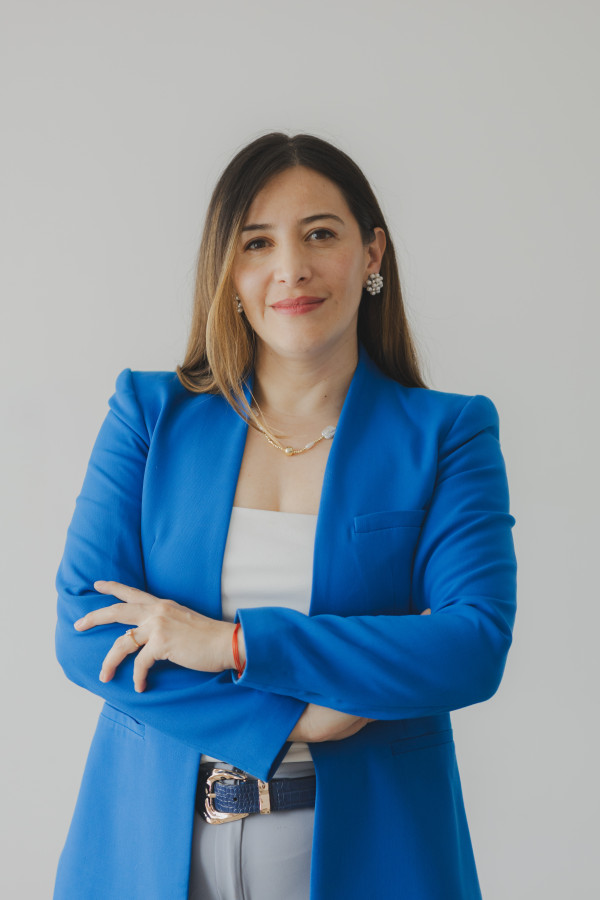
Carolina Mondragón Romero Learned to Make Invisible Payment Systems Legible
A graphic designer entered the machinery room of Latin American finance. More than a decade later, she is still translating switches, security and interoperability into decisions people can understand.

Greg Wilfahrt Has Spent Two Decades Asking Payments to Behave
Before the smartphone became a wallet, Greg Wilfahrt was trying to make phones carry music, messages and money. His later work at AP Technology has kept the ambition but added a durable condition: speed is useful only when trust travels with it.

Amitaabh Malhotra Has Spent 30 Years Making the Checkout Disappear
From a networked driving simulator to an iPhone payment sleeve to face, palm and voice authentication, his career follows one stubborn idea: useful technology should remove a step, not add one.
The quiet payment switch behind Latin America's loudest transactions
Banks see cards, wallets and ATMs. CLAI sees the brittle wiring between them - and has spent 35 years turning that wiring into a configurable payment operating system.

FreedomPay Built for the Moment Your Payment System Breaks
The Philadelphia fintech began with mobile payments, survived on cashless accounts, and became the independent plumbing behind hotels, stadiums and stores. Its cleverest choice was assuming the network would fail.

The $140 Billion Bet That Checks Aren't Dead - They're Just Badly Designed
AP Technology spent 37 years modernizing the payment method fintech forgot. Its useful trick is not killing the check - it is wrapping the check in software, controls and a choice of what comes next.

Frank Moreno Is Marketing the Moment Your Bank Decides to Trust You
After two decades marketing enterprise software, Entersekt’s CMO has landed on a wonderfully awkward product: the split-second decision between a smooth payment and a suspicious one.
The Bank Security Company That Wants You to Notice Almost Nothing
Entersekt built a global financial-authentication business around a stubborn idea: the best security step is often the one a legitimate customer never sees. Now its bet is moving from a protected phone to one context-aware layer across banking and payments.
The Checkout Terminal Is Becoming a Cloud Platform
Ingenico built its name on the machine beside the cash register. Now it is turning tens of millions of payment devices into a managed network for software, services and new ways to pay.
PayPal Wants to Be the Internet's Cash Register Again
The blue button helped teach the web to pay. Now PayPal is stitching checkout, Venmo, Braintree, credit, ads and AI agents into a new wager on how money will move.

The $1.2 Trillion Question: When Should Accertify Say Yes?
Accertify spent years teaching merchants how to spot a bad transaction. Its larger bet is that one connected view of identity, behavior and payments can show them which good customers to stop turning away.

The Payments Company You Rarely See - Even When It Moves $700 Billion
NMI built a large payments business by staying behind the curtain. Its white-label infrastructure lets software companies and payment specialists assemble, brand and monetize the route from merchant sign-up to checkout to payout.
Verifone
The card reader on the counter is only the visible tip. Verifone is rebuilding its four-decade hardware franchise as a software-connected payments grid for merchants that need every channel, processor and checkout to behave like one system.

Conor Lyden
Conor Lyden is the founder and CEO of Trustap, a Cork-born fintech that embeds escrow-style payment protection into online marketplaces so strangers can buy and sell without getting scammed. He came up with the idea at 21 as an engineering student at University College Cork, frustrated by the risk of buying football tickets from strangers, and built the concept through UCC's Ignite incubator. Since founding the company in 2016/2017, he has grown it into a global operation with offices in Cork, Dublin, London, Barcelona, Zagreb and New York, serving over 250 marketplaces across more than 100 countries and raising a $5.5m Series A led by TX Ventures.

應援科技 OenTech
應援科技 OenTech is a Taipei-based fintech that runs a one-stop integrated payment cloud platform combining third-party payment processing with a CRM-style supporter management system. Tailored for nonprofits, creators, political campaigns, temples and merchants, it lets organizations accept donations, sell tickets and merchandise, manage memberships and issue receipts on a single, security-certified stack. Certified to PCI-DSS Level 1, ISO 27001 and ISO 27701, Oen positions itself as one of Taiwan's most secure payment platforms and now serves more than 1,000 organizations.
Trustmi
Trustmi is a behavioral AI platform for payment security that helps enterprises stop socially engineered fraud and costly payment errors before money moves. Founded in 2021 by Shai Gabay and Eli Ben Nun, the company correlates signals across email, vendors, financial documents and payment workflows to build vendor 'digital fingerprints' and deliver a real-time safe/unsafe decision across the entire payment lifecycle. Trustmi says it protects over $240 billion in payments annually and has helped prevent more than $1 billion in fraud.

Hsin Hsiao
Hsin Hsiao (蕭新晟), also known as 蕭A, is the co-founder and CEO of OenTech (應援科技), a Taipei-based fintech building a one-stop integrated payment cloud platform that combines third-party payment processing with supporter-relationship management. A physicist turned software engineer, he trained at UCLA and Stony Brook before working across New York startups, co-launched the crowdsourced 'National Treasure' archival project through Taiwan's g0v civic-tech community, and ran for Taipei City Council in 2018. Since founding OenTech, he has grown it to more than 3,000 organizations, secured a NT$100 million Series A in 2025, and pushed payment security and agentic-commerce standards in Taiwan.
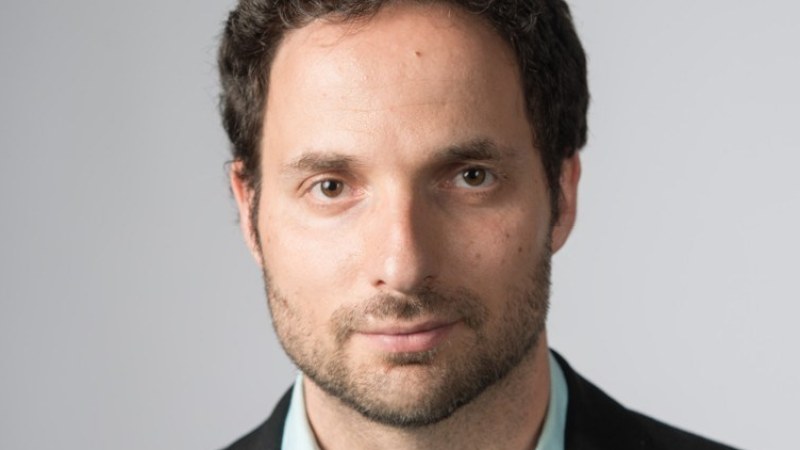
Shai Gabay
Shai Gabay is co-founder and CEO of Trustmi, an end-to-end B2B payment security platform he started in 2021 with Eli Ben-Nun. Trustmi uses behavioral AI to catch business payment fraud, vendor impersonation and process errors in real time. Gabay was an amateur hacker at 13, served in Israel's Unit 8200, and before Trustmi ran security and product for banks and cyber companies including Discount Bank, Cyberbit, Cynet and Opera.

Marshall Jones
Marshall Jones is the CTO and Co-Founder of Very Good Security (VGS), a San Francisco-based fintech company that has become the world's leader in payment tokenization with over 5 billion tokens stored. He co-founded VGS in 2015 alongside Mahmoud Abdelkader after building PCI-compliant payment vaults at Balanced Payments (later acquired by Stripe). Under his technical leadership, VGS has raised over $104 million in funding from top investors including Andreessen Horowitz, Goldman Sachs, and Vertex Ventures, serving Fortune 500 companies, merchants, fintechs, and banks globally.