The payment looks impeccable. The phone belongs to the customer. The password works. The customer presses send. Yet the money is headed toward a criminal, because someone has persuaded its owner to move it. For a bank, this is an awkward moment to discover that proving identity and understanding a transaction are different jobs.
Outseer sells technology for that awkward moment, and for the more familiar ones involving stolen credentials, suspicious card purchases and fake banking websites. Its audience is mostly invisible to the shopper: banks, card issuers, processors and the teams responsible for keeping digital money moving safely. The company reports protecting more than $5 trillion in payments annually. The question underneath that number is surprisingly intimate: what is happening to this person, right now?
Annual payments protected, according to Outseer.
Payment value, not company revenue or fraud losses prevented.
A young name with an old address book
Outseer arrived in June 2021 carrying something most new companies would envy: an existing business. RSA moved its Fraud & Risk Intelligence operation into a standalone company and brand, with Reed Taussig as launch CEO. The portfolio already included account monitoring, card authentication and cyberattack intelligence. Its launch announcement described a network drawing on 6,000 institutions and 20 billion annual transactions.
The timing mattered. RSA presented the move as a response to the pandemic’s acceleration of digital commerce and the accompanying fraud pressure. A dedicated organization could give payment security its own management and identity. This was a corporate separation with inherited technology and relationships, rather than a founder inventing a product and hunting for customer number one.
That inheritance still shapes the pitch. Outseer Fraud Manager was previously RSA Adaptive Authentication. The Anti-Fraud Command Center behind FraudAction has operated since 2004. John Filby, formerly president of Fiserv’s Risk & Compliance division, became Outseer’s CEO in 2022. The company’s expertise comes partly from having spent years inside the unglamorous plumbing of financial institutions.
The customer passed. The payment needs another look.
Traditional account protection asks whether the person signing in is entitled to be there. Social engineering complicates that test. In a scam, the real customer may do exactly what the criminal wants, using their own device and credentials. An identity check can succeed while the wider defense misses the deception.
Outseer now organizes its proposition around what it calls All-Cause Fraud Prevention: addressing both unauthorized activity and scams involving authorized payments. The language reflects an expansion of the job. Its public rationale is that disconnected controls miss context as attacks move between account compromise, manipulation and payment activity.
In March 2025, it announced native behavioral biometrics. These capabilities examine interactions such as typing and mouse activity, combining individual profiles with broader behavioral patterns. They can contribute evidence of automation, unusual behavior or possible coaching. Outseer feeds that evidence into its risk engine alongside device, location, transaction and shared fraud signals.
A pause at the keyboard is not a confession. The useful proposition is that several clues, considered together, can justify a closer look. Outseer’s design makes behavior one input in a larger decision rather than requiring it to settle the case alone. For banks, the consequential shift is from asking only who is present to evaluating the surrounding activity.
Stolen credentials, compromised devices, automated activity.
Valid access, manipulated intent, a dangerous destination.
Three jobs around the same money
Fraud Manager covers the digital banking journey from login through payment. It assembles signals, scores risk and lets institutions translate their policies into actions. Those actions can include authentication, warnings or manual review. Case management gives investigators a place to examine suspicious activity and feed outcomes back into the system. The product is aimed at operational fraud teams as much as the algorithms running behind them.
Outseer 3-D Secure serves a more specific purpose. It is an Access Control Server for issuers using the EMV 3-D Secure protocol for online card authentication. It helps assess transaction risk and determine the appropriate authentication flow. Issuers can configure policies and challenge experiences, with native behavioral analysis and FIDO passkeys among its capabilities. The commercial objective includes letting genuine purchases complete with less unnecessary interruption.
FraudAction works outside the bank’s own transaction flow. Its monitoring and takedown services target phishing, impersonation, malicious apps and related threats. The company describes a continuously staffed operation that confirms threats and pursues removal through a partner network. Its current product page reports more than 200,000 attacks detected and shut down annually, with an average phishing takedown time of 12 hours. An average is a useful operating measure; it is not a deadline promised for every hostile site.
Another bank’s bad day can become useful intelligence
Outseer’s Global Data Network gives the portfolio a shared memory. Participating institutions contribute intelligence from transactions and investigations. An indicator associated with suspicious activity can influence the risk assessment when it appears elsewhere. The company describes sharing updated signals in near real time.
This is a concrete reason to care about an established network. A single bank knows its own customers well, but another institution may have encountered a device, payee or other indicator first. Combining that experience can help the next bank recognize trouble earlier. The benefit depends on contributions being useful, timely and correctly interpreted.
Outseer also describes explainability indicators inside case management, showing which signals contributed most to a score. That matters when an investigator must decide what to do with an alert. A number alone leaves work unfinished. The accompanying context helps connect a model’s assessment to a decision a bank can review and improve.
The price includes the payments you annoy
Outseer sells enterprise software and managed services through direct sales and partners. Its agreements cover cloud and on-premises Fraud Manager deployments, alongside support, professional services and education. The cloud service agreement ties charges to the customer’s quote. Buying the system therefore involves a scoped commercial proposal and deployment choices.
The economic case extends beyond the contract. False alarms consume investigator time and can send customers into authentication loops or support calls. Unnecessary declines can also lose a sale. Outseer’s pitch puts lower fraud losses beside fewer interruptions and more completed transactions. Its buyers have to weigh all three, because a system that challenges everything can look vigilant while making the service unpleasant to use.
There is a separate financing story. In January 2026, RSA Group, described as comprising RSA and Outseer, announced a $135 million capital infusion from existing lenders and a debt refinancing. The announcement said proceeds would support innovation, including AI. That money belongs to the group-level story; treating it as an Outseer-only venture round would misdescribe the transaction.
A crowded field, and a bet on fewer handoffs
Outseer operates in a competitive market. Gartner’s alternatives list for Fraud Manager includes BioCatch Connect, Feedzai, Visa Protect and Clari5. A bank’s choice depends on what it is replacing: banking fraud detection, card authentication and external threat takedown are different requirements. A product comparison has to start with the actual job.
Outseer’s distinctive argument is the combination of its RSA heritage, consortium intelligence and connected product capabilities. Its behavioral biometrics launch explicitly emphasized avoiding the integration, contracting and vendor compliance work associated with adding a separate specialist. For an existing customer, that can make a new defense easier to adopt. Whether the package wins still depends on local performance and how well it fits the bank’s systems.
Customers visible on its website include BMO, Bank Islam, NewDay and Kiwibank. HDFC Bank’s CIO, Ramesh Lakshminarayanan, provides a testimonial connecting behavioral analytics with detecting mules and scams. Distribution matters too: a 2024 TRINEXIA agreement covered the Middle East, Africa and India. In October 2025, Outseer joined the Global Anti-Scam Alliance as a Foundation Member, extending its participation in shared research and intelligence.
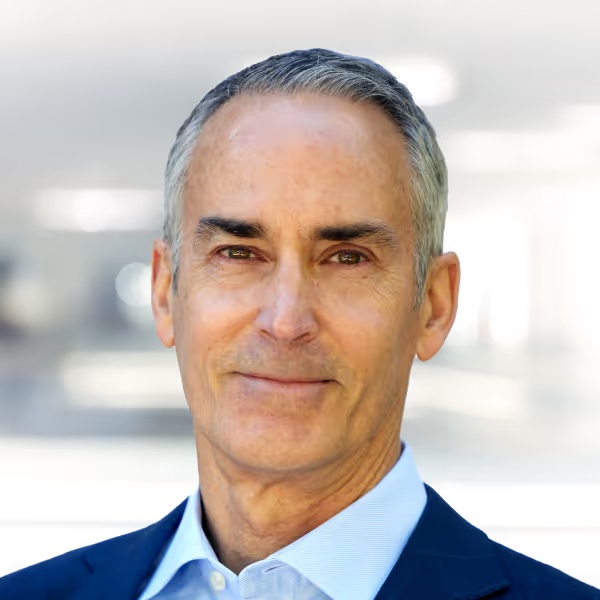
The latest badge is about governing the machines
In July 2026, Outseer announced ISO/IEC 42001 certification from Intertek. The standard concerns artificial intelligence management systems. For a company asking banks to rely on automated judgments, governance, oversight and accountability are part of the buying conversation. Certification addresses how AI is managed; it does not turn a detection claim into a universal performance guarantee.
“AI is essential to defending consumers and financial institutions against modern fraud and scams.”
John Filby · CEO · July 2026
Outseer’s declared values include integrity, innovation, customer focus and teamwork. The more revealing organizational detail is the mix of disciplines. Its technology chief, Yogesh Patel, has worked at Callsign, HSBC and Lloyds Banking Group and holds a doctorate involving neural networks and cross-channel fraud detection. The work requires familiarity with both models and the institutional decisions those models inform.
Copy the feedback loop
The practical lesson for a fraud team is to measure the whole decision. Track losses alongside customer challenges, false alerts and completed payments. Connect signals across the journey. Return investigators’ findings to the models and policies that generated the cases. Those habits follow directly from the workflow Outseer describes, and remain useful when evaluating other suppliers.
The conditions matter. Behavioral analysis needs observable interactions; shared intelligence needs relevant contributions; intervention needs time to happen before money disappears. Poor data or badly chosen thresholds can undermine the benefit of combining tools. For a small merchant seeking a simple checkout add-on, an institution-focused platform may also be the wrong buying route. The bank’s real transaction mix is the place to judge the fit.
Outseer’s case ultimately rests on a modest but demanding promise: give banks enough context to interrupt the right payment. The happy outcome may look like nothing happened. A customer buys lunch, pays a bill or sends money home, and nobody has to think about the machinery that allowed it.