Imagine a customer looking at a bank statement and encountering a name that means nothing to them. The amount is familiar enough to be annoying, unfamiliar enough to be suspicious. Somewhere, a merchant has the receipt, the order history and perhaps a delivery confirmation. The customer has a line of text and a button marked “dispute.” The button has the better location.
This is the territory Verifi occupies. The Visa-owned company works on the awkward period after a payment succeeds, when recognition, service and evidence determine whether the sale stays sold. Its proposition is disarmingly practical: get the right information, or the right refund, into the conversation before a complaint becomes a chargeback.
- Explain the charge: Order Insight shares purchase details with banks and their customers.
- Buy decision time: CDRN gives participating merchants up to 72 hours to respond.
- Automate selected refunds: RDR applies merchant rules to eligible Visa disputes.
- Keep the arithmetic honest: stopping a chargeback may still mean returning the sale.
A purchase loses its name
In a 2016 interview, founder Matthew Katz compared abbreviated statement descriptions to vanity license plates. They mean something to their owner. The rest of us are left decoding the joke. A merchant’s internal name can be perfectly sensible inside its accounting department and a minor mystery inside somebody else’s banking app.
That mismatch matters because a bank and a merchant hold different pieces of the same purchase. The merchant knows what was ordered. The issuer sees the payment. When a customer calls the issuer first, the merchant’s knowledge may arrive too late to help.
Order Insight brings enhanced purchase information into issuer call centers and participating digital banking channels. A digital receipt can supply the context the original payment record lacked. Sometimes the answer to an apparent fraud problem is a much better memory aid.
There is also deliberate abuse: a customer disputes a purchase they authorized. The industry calls it friendly fraud or first-party misuse. The adjective is doing considerable public relations work. Verifi addresses both purchase confusion and qualifying misuse, though the remedy depends on the evidence and the dispute involved.
Average cost to resolve a first-party misuse dispute, reported on Verifi’s 2026 report page.
64% of surveyed merchants report an increase in first-party misuse. Survey findings describe respondents, not every merchant.
The apartment and the unanswered phone
Katz says he started Verifi in 2005 in his apartment with $3,600. Its initial work was chargeback representment: helping merchants assemble a defense after a payment had already been challenged. That is an understandable place to start. A business has lost money, and it wants someone to help retrieve it.
But the requests coming back from customers pointed upstream. In Verifi’s account of its early years, merchants repeatedly asked for real-time communication with issuers as disputes started to escalate. The original service addressed the aftermath. Customers wanted access to the earlier conversation.
The result was CDRN in 2007, followed by Order Insight in 2016 and its formal public rollout in 2017. This was a change in where Verifi intervened. A merchant’s opportunity to explain a purchase should not depend on the customer choosing the merchant’s phone number over the bank’s.
“All of our products are designed and built with our merchants.”
Matthew Katz, 2016 interview
The useful entrepreneurial lesson here is specific. Customers were describing a missing connection between two organizations. Verifi turned that request into infrastructure. The company’s history gives a founder something to copy: listen for the point where the customer loses control of a process, then investigate who holds the missing information.
Three chances to change the outcome
Verifi’s current product family follows the dispute’s progress. PREVENT supplies context. RESOLVE offers an opportunity to credit the customer. RECOVER prepares a case when a chargeback needs to be challenged. The sequence is easier to understand than the acronyms.
Order Insight shares purchase details at the point of inquiry.
CLARIFY / DEFLECTCDRN allows review. RDR applies merchant refund rules.
RESOLVE / CREDITRECOVER specialists prepare and submit evidence.
CONTEST / RECOVERCDRN, the Cardholder Dispute Resolution Network, gives merchants up to 72 hours to initiate a cardholder credit on participating Visa and non-Visa cases. That pause lets someone inspect the order, decide whether to refund and potentially stop further fulfillment. The process connects the resolution back to the issuer.
Rapid Dispute Resolution makes the decision automatically for eligible Visa cases. Merchants specify acceptance rules; cases accepted under those rules receive a credit before a chargeback begins. Cases declined by the decision engine continue through the dispute process. The current offering also includes an RDR Decision API for businesses that want their own decision logic.
Once a chargeback exists, Verifi’s RECOVER service brings specialists into evidence preparation and submission. Automation has its place. So does somebody who understands which document belongs in which response.
The cheapest argument is sometimes a refund
A dispute prevented through a refund still costs the merchant money. Confusing chargeback prevention with revenue preservation makes a very flattering dashboard and a less flattering income statement.
The decision is economic. How much could the merchant recover? How likely is that recovery? What will the response cost in staff time, service fees and processing expenses? RDR lets a business encode its answer in advance rather than repeat the debate over every small transaction.
Under these invented assumptions, contesting the case has a negative expected net recovery. A refund sacrifices the sale but may avoid further expense. This is arithmetic, not Verifi pricing; fees and other effects must also enter the decision.
Verifi sells B2B software and managed services, reaching merchants directly and through acquirers, resellers and other partners. The bill a merchant evaluates includes its agreed service fees, the refunds it authorizes and the operational work it saves. A sensible review measures all three alongside retained and recovered revenue.
A merchant with a high-value order and persuasive evidence may reasonably choose to contest it. A business whose complaints come from poor service should fix that service too. Fast refunds can tidy the dispute workflow while leaving the original customer problem intact.
Visa bought a place in the conversation
Visa completed its acquisition of Verifi on September 12, 2019. Its announcement emphasized connecting the parties in near real time and extending dispute resolution across payment brands and partners. Verifi then combined capabilities with Visa’s Merchant Purchase Inquiry through Order Insight.
That relationship gives Verifi a distinctive position inside issuer dispute workflows, including Visa Resolve Online. Its expertise spans the merchant’s records, the issuer’s inquiry and the rules governing what happens next. The value lies partly in access to the moment when a decision is made.
The market has another substantial network-owned player: Mastercard’s Ethoca, whose Consumer Clarity and Alerts products also connect purchase information and dispute signals. Ethoca describes its capabilities as brand-agnostic. A useful comparison therefore examines the actual issuer coverage and workflow available to a merchant, rather than assuming the parent company’s card logo settles the matter.
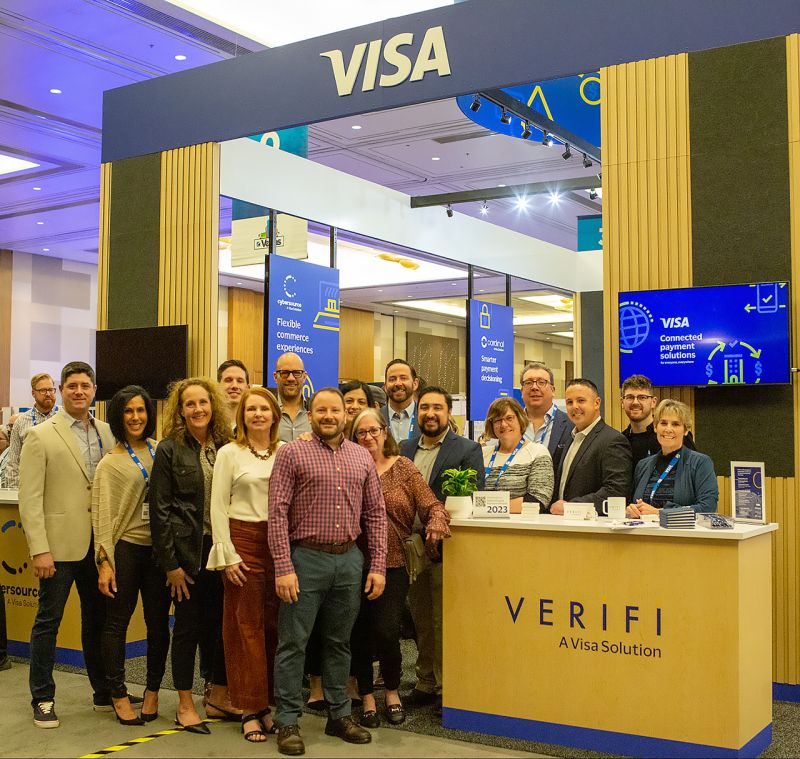
The customers extend beyond online stores. Verifi serves merchants ranging from startups to Fortune 500 businesses, as well as issuers and acquirers. Banks gain context for customer inquiries. Payment providers can add dispute services to their merchant relationships. BigCommerce offers an Order Insight Express activation route; Authorize.net’s September 2026 documentation describes a CDRN pilot for selected merchants.
Good records beat good intentions
Verifi’s evidence-based protection has conditions. Visa’s Compelling Evidence 3.0 rules, introduced in April 2023, address qualifying card-absent fraud disputes under reason code 10.4. Merchants need matching data from prior legitimate transactions. Relevant identifiers include an IP address, device ID, user ID and shipping address; the matching requirements include an IP address or device ID.
A merchant with no qualifying purchase history cannot manufacture that protection after receiving a complaint. Nor does evidence of a customer relationship answer every service dispute. Data sharing needs usable records, integrations and participating counterparts. A 72-hour review window needs a team able to act within it. Automated refunds need rules someone has thought through.
The practical habits travel well: make purchase confirmations recognizable, retain the records needed to explain a sale, distinguish confusion from a genuine complaint and give refund decisions an owner. Then measure what happens to money as carefully as what happens to dispute counts.
Verifi’s appeal rests on a small correction to the shopping story. The payment is approved, but the purchase is not finished explaining itself. Put that explanation where the customer is already looking, and fewer transactions need to become arguments.