Consider the parking garage. A driver has found the car, reached the exit and produced a card. At this point, the elaborate machinery of parking is reduced to a small question: will the gate open? A payment terminal that causes hesitation has acquired an audience. There is usually another car behind it.
In Lancaster, Pennsylvania, the trouble started well before the driver reached the reader. The parking authority had four separate parking access and revenue control vendors. Different garages offered different experiences. Support staff had several contracts and contacts to navigate. Older payment hardware did not offer the contactless options people had grown accustomed to using elsewhere.
- ID TECH supplies the readers inside payment-enabled machines, along with software and services.
- Its useful trick is reducing repeated integration work across compatible hardware.
- The buying decision includes weather, certification, processing and maintenance - the box is one line item.
The queue is the clue
Lancaster selected T2 Systems to consolidate its operation. For the off-street upgrade, T2’s Logan platform was paired with ID TECH’s VP6825 terminal. All seven garages moved onto the same parking platform. Drivers could use chip cards, contactless cards and mobile wallets. The published customer account reports more than 165,000 transactions in six months.
The interesting number is four: the old vendor count. Lancaster’s problem involved organizational seams as well as hardware. Who took the support call? Which payment options did a garage accept? How were transactions reconciled? Putting a newer reader in the same fragmented system would have addressed only part of the inconvenience.
ID TECH occupies that seam between the machine and the payment network. Its work becomes visible when an operator wants an ordinary purchase to remain ordinary under awkward conditions. A driver should be able to pay and leave. The operator should be able to keep the equipment working without turning every garage into a separate technical project.
A barcode business learns to take money
The company’s beginnings were rather smaller than a citywide parking installation. Founded in 1985 as International Technologies and Systems Corporation, ID TECH started as a barcode-solutions reseller with fewer than five employees, according to its anniversary account. Stanley Ning, identified publicly as its founder, was president and CEO when the company marked its thirtieth year.
Its first magnetic-stripe reader arrived in 1994. OEM components followed as customers sought parts they could build into their own equipment. In 2012, ID TECH acquired the ViVOpay product line, expanding its contactless offering. These are practical changes in what the company could deliver: first capturing information, then reading a payment card, then accepting a card without physical contact.
The customers explain the evolution. An equipment manufacturer needs a module that fits an enclosure. A software vendor needs an integration it can maintain. A parking operator wants payments to keep moving. ID TECH sells standard products and custom solutions to these business buyers, through direct relationships and channels that include distributors and integrators. The person tapping a card is often several commercial relationships away from the manufacturer.
The weather gets a vote
A countertop is a forgiving place to put electronics. An unattended terminal has a more demanding landlord. It may face water, sunlight, dust and impact. Nobody is standing beside it to suggest another way to insert the card. Payment design has to accommodate both the environment and the person who arrives without instructions.
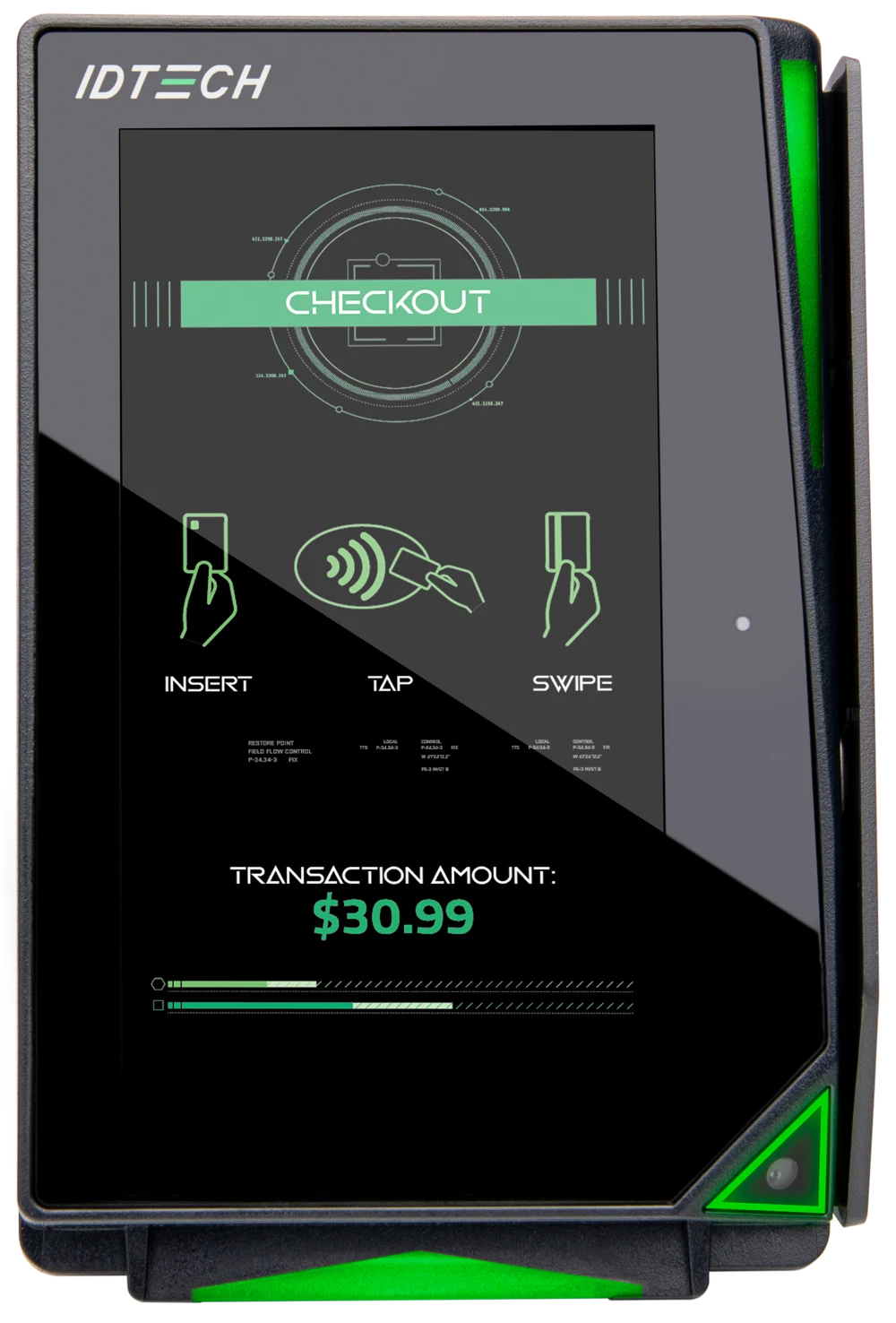
Released in April 2025, the VP6825 carries IP65 and IK08 ratings and PCI PTS 6.x certification. Its listed operating range is -20°C to 65°C. The screen can show payment instructions or advertisements; supported loyalty features include Apple VAS and Google Smart Tap. A spec sheet here is a set of promises about a particular deployment, each of which needs to match the proposed installation.
The broader product catalog lets customers make different physical choices. The VP3350 is a mobile three-in-one reader. Kiosk V serves contactless unattended applications. The VP7200 offers a compact contactless format with a QR scanner option. An OEM module allows the equipment maker to decide what the finished machine looks like.
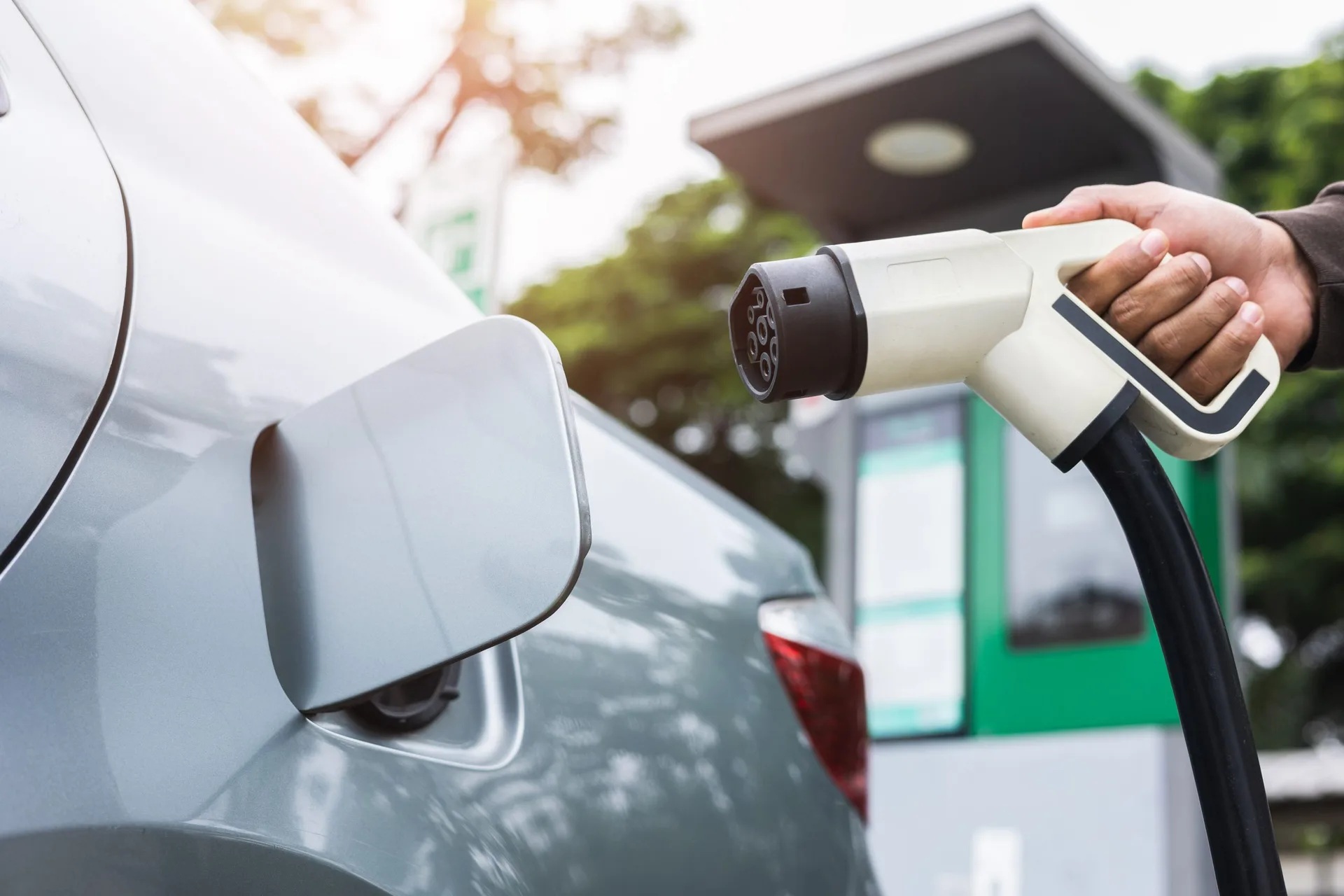
Electric Era provides a concrete example of the integration. It selected ID TECH’s VP6800 for charging stations at US retail locations, combining the terminal with Payroc’s payment application and gateway. The arrangement let the charging company use an existing payment solution rather than develop and certify one from the beginning. ID TECH supplies the payment hardware; Electric Era’s battery-backed architecture addresses a different part of getting a charging site running.
The expensive part has no screen
Two readers can look quite different while sharing the software that handles a contact-EMV transaction. ID TECH’s common-kernel approach exploits this separation. The kernel’s certification sits apart from other firmware. For a qualifying payment solution, the company says adding a compatible common-kernel product does not require repeating the contact-EMV Level 3 certification.
That claim has a boundary: compatibility. A common kernel does not make every reader, processor, payment method and country interchangeable. The attractive engineering principle is reuse. If an integrator has already completed the relevant work, a change in hardware should not automatically demand that the same work be performed again.
- 01 / APPLICATIONThe host requests a transaction.
- 02 / READERThe customer taps, inserts or swipes.
- 03 / PAYMENT SOFTWAREPAE routes the supported payment.
- 04 / PROCESSORAn approval or decline returns.
The Payment Application Engine, or PAE, extends the idea. It provides EMV Level 3-certified middleware for supported devices and processors, with functions such as sales, refunds, reversals and pre-authorizations. Token management allows applications to work with a substitute identifier for payment information. Store-and-forward supports temporary connectivity interruptions in applicable configurations. An operator still needs to understand the conditions under which a transaction is accepted and later submitted.
The reader joins the rest of the business
The service tools address problems that appear after installation. Remote Device Management provides device status, logs, grouping and scheduled firmware updates. Remote Key Injection securely provisions cryptographic keys through the cloud from certified facilities. Supported equipment can receive keys without a trip back to a physical injection facility.
These tools change the purchasing arithmetic. The reader’s price belongs beside integration effort, field visits, software upkeep and processing fees. A lower hardware invoice can lose its charm if maintenance requires repeated journeys. Conversely, remote management earns its place only when the deployment has equipment and operational needs it can actually serve.
“today our customers need much more than devices”
Justin Ning · ID TECH · March 2026
In March 2026, ID TECH announced a broader platform combining PCI-validated point-to-point encryption, certified software and integrations with Chase, Elavon, Fiserv, Global Payments and Worldpay. Encryption protects card data beginning at the point of interaction. The commercial proposition now includes more of the transaction, extending a hardware business into software and merchant services.
Its merchant-services offering includes reporting, compliance guidance and low-ticket interchange programs for eligible transactions. Those qualifications matter for vending and other small purchases, where processing economics deserve close attention. A sensible procurement exercise asks for the whole deployment quote and applicable fee schedule, then compares the cost over the intended operating life.
Buy for the machine you actually run
ID TECH has credible alternatives. Ingenico offers rugged self-service terminals for parking, transportation, vending and other unattended uses. Nayax combines payment acceptance with telemetry, management and consumer-engagement tools for unattended machines. Weather resistance and contactless acceptance are therefore entry requirements in this market, rather than reasons by themselves to choose a supplier.
ID TECH’s particular appeal is the relationship between its physical products and the payment work behind them: embedded modules, different reader formats, reusable contact-EMV logic and supported processor connections. That can suit a manufacturer or integrator trying to add payments to an existing platform. An operator seeking a broader vending-management suite may place greater weight on another supplier’s inventory and telemetry tools.
The lesson a reader can copy is pleasantly unglamorous. Describe the machine, its environment, its payment methods and the people responsible for keeping it running before choosing the terminal. Ask which certifications can be reused, which interfaces are supported and how an update reaches the fleet. A customer sees a tap. The buyer should see the entire journey that allows the gate to open.