Porter’s Thriftway had a problem that a successful grocery store might rather enjoy: too many customers for its checkout space. It needed more lanes. It had no room for them. Construction would bring expense and disruption. Yet the owner, Trae Porter, arrived at a TRUNO conference in 2014 with little appetite for self-checkout. To him, the risk was personal: customers might feel abandoned.
- TRUNO connects grocery POS systems, store software and newer shopping tools.
- Its work combines equipment, proprietary software, installation and continuing support.
- The useful lesson: identify the expensive handoff before choosing the impressive gadget.
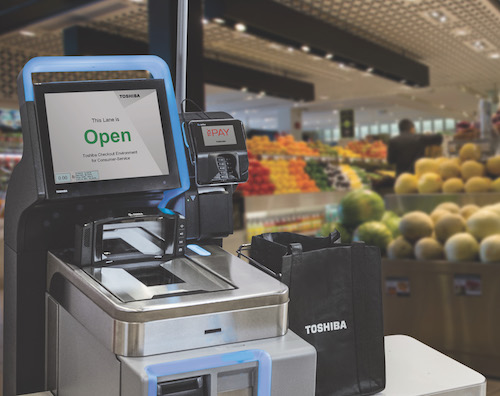
The conference changed his view. Small baskets could move into self-service, leaving traditional lanes less crowded. TRUNO replaced one staffed lane with four self-service lanes, integrated the equipment and trained employees. Its case study reports 28% adoption of the fast lanes and a 25-second improvement per customer at traditional checkouts. The benefit travelled beyond the people using the new machines.
“Our biggest concern was that customers would think we weren’t taking care of them.”Trae Porter, owner of Porter’s Thriftway
That is an unusually useful way to understand a technology company. Start with the thing the customer is afraid of losing. Then ask whether a better arrangement of the work can preserve it.
A promotion has to survive 107 stores
Food Giant’s difficulty lay elsewhere. According to TRUNO’s case study, its previous pay-as-you-go promotion software centrally covered fewer than a third of its 107 locations. The rest required work at store level. A discount might look simple on a shelf; administering it across a chain was another matter.
TRUNO supplied custom Enhanced Promotion Hosting software so the chain could manage promotions centrally. The case reports $78,000 in annual savings from eliminating the previous program’s weekly charge, alongside reduced administrative labor. Food Giant subsequently chose TRUNO as its wider technology partner. A specific nuisance had become an audition for a larger relationship.
For a retailer weighing an upgrade, the instructive number is the old recurring cost. Add the staff time required to keep a workaround alive, and the apparently inexpensive system may look rather less charming. Savings alone do not establish a project’s payback; equipment, integration, training and continuing service belong in the calculation too.
The business in the handoffs
TRUNO occupies the territory between a manufacturer’s product and a functioning grocery operation. It supplies retail hardware and software, develops integrations, stages installations and maintains systems after launch. Its particular expertise surrounds Toshiba and NCR point-of-sale environments. Those companies are partners in its offering, which makes the market more interesting than a simple contest between competing logos.
A grocer can buy through another specialist, such as DUMAC Business Systems, work with a local dealer or assign integration to an internal team. The practical comparison is who can make the chosen systems work together and keep them working. TRUNO combines a broad equipment portfolio with its own software and national service network. That gives it several ways to solve a problem before recommending a wholesale replacement.
Northgate Market offers a neat example. Its check-cashing workflow required five steps and management approval, creating waits and pulling employees away from other duties. TRUNO built an interface between the ISS45 POS system and Answers check-approval software. The company’s case describes faster approvals and a more consistent customer experience. The intervention addressed the connection between two systems already doing useful jobs.
Cox’s Foodarama needed a larger change when its POS capabilities had to accommodate Texas WIC smart-card transactions. TRUNO helped deploy ISS45 software and more than 160 Fujitsu terminals across 18 stores over five months. Customer-service counters gained transaction records too. Compliance, reporting and the shopper’s experience were entangled; treating them as separate purchases would miss the point.
A cloud bridge with shop-floor consequences
TruCommerce is TRUNO’s hosted SaaS middleware. In plain language, it passes information between the point of sale, back office and applications such as ecommerce or loyalty programs. Its published architecture includes item, loyalty, transaction and ordering APIs. Existing interfaces can reduce the need to build a fresh connection for every addition; an open API also supports custom integration.
Transactions
Shared interfaces
Mobile checkout · Back office
A conceptual view of the integration layer, rather than a deployment diagram.
Ranch Market in Clayton, New Mexico, illustrates the attraction. Limited floor space and the cost of extra lanes constrained its options. TRUNO used TruCommerce to connect Swift Shopper’s mobile checkout app to the store’s existing hardware, POS and back-office systems. Shoppers could pay in the app or at a register. Its case reports 101 mobile checkouts in the first month.
The important choice here is reuse. A new shopping experience does not always require a new store underneath it. But reuse demands compatible interfaces and dependable item and price data. If those foundations are unreliable, a convenient new channel can simply give the old error another place to appear. A retailer should test the whole transaction, including promotions and payment, before inviting customers to depend on it.
TruView addresses another problem: seeing what is happening across stores. It provides POS clients with sales summaries, transaction history, cashier performance and store trends, including mobile access. The resulting questions are practical. Which hour needs attention? Which transaction warrants a closer look? A dashboard becomes useful when someone can turn its answer into a decision.
Service is part of the product
The company began in 1978 when Curtis and Sandra Fuller started Cash Register Services. Curtis had spent 20 years at NCR. In 2014, the business adopted the TRUNO name, derived from “True North,” as its work expanded beyond register repair into security and integrated business tools. The new name was a declaration that the job had grown.
Expansion also came through acquisitions. TRUNO announced a TimeForge labor-software agreement in 2016 and the Radius Solutions transaction in 2019. The Radius announcement described a combined 12,000 retail locations and a wider service footprint. In January 2025, Instacart cited more than 13,000 North American locations in TRUNO’s network. These are locations served, rather than stores owned by TRUNO.
Its business therefore includes several kinds of work: selling technology, supplying hosted software, carrying out implementation projects and providing continuing support. A grocer’s needs do not end at installation. A scanner fails; a payment connection needs attention; staff need to learn a changed workflow. TRUNO advertises remote and on-site support around the clock.
Its careers material makes the service promise tangible. The company describes a dedicated training facility, continuing education and varied shifts for a 24/7 operation. Its stated values include communication and ownership. Those words earn their keep when somebody takes responsibility for a problem that crosses vendor boundaries.

New carts, familiar obligations
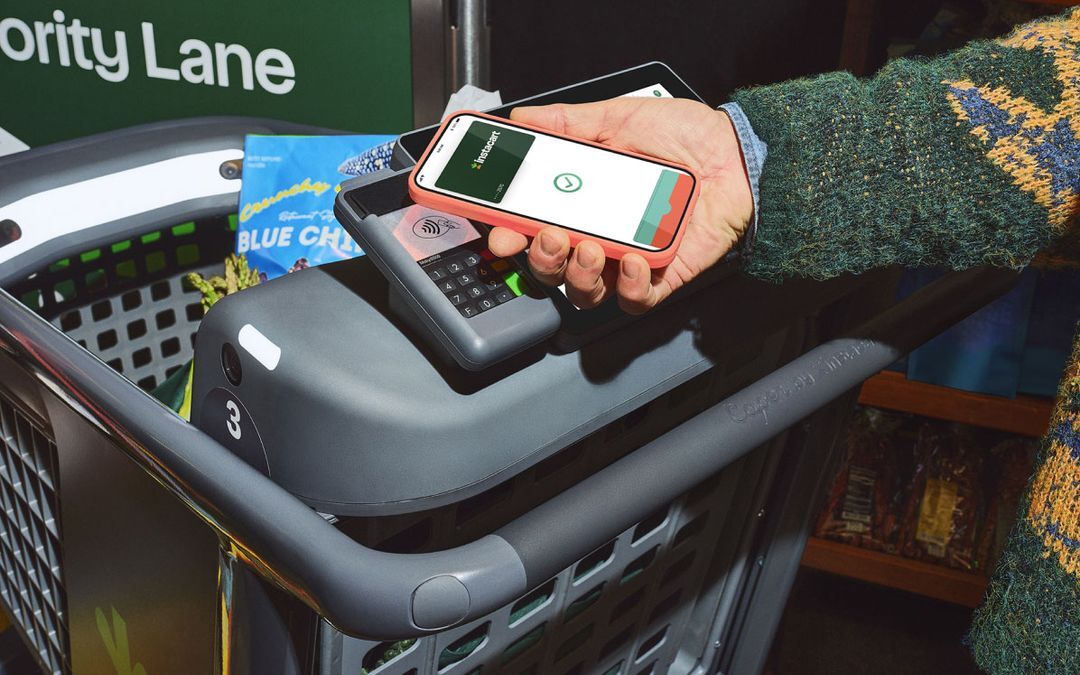
In January 2025, Instacart announced partnerships with TRUNO and DUMAC to bring Caper Carts to their grocery networks. The carts let shoppers scan products, watch spending and access discounts. TRUNO’s role includes referrals, implementation, maintenance and technical support. Instacart supplies the smart-cart technology; the retail specialist helps it find a working home.
In August 2025, SKUx and TRUNO announced Toshiba ACE certification for item-level payment acceptance. That addresses programs whose funds can be spent only on eligible products, including certain benefits and promotions. Once again, an attractive customer-facing promise depends on rules being understood correctly at checkout.
Leadership and financing have changed too. Chris St. Clair, whose career includes technology roles at Albertsons and United Supermarkets, became CEO in March 2025. On April 16, 2026, TRUNO announced a Masked Rider Capital-led recapitalization and a separate $40 million Huntington Bank credit facility. The distinction matters: the disclosed figure describes borrowing capacity.
The lesson a reader can copy is modest and useful. Observe the work before buying the tool. Count the repeated task, trace the stalled approval and test the handoff. Then give the people operating the system enough training to judge it fairly. Porter’s customers needed room to move. Food Giant needed its promotions to travel. In each case, the purchase made sense when the operational problem came into focus.
TRUNO website · Solutions · Company blog · News