systems-integration
(39)
Dharne & Associates puts a price on “What should we fix first?”
The Irvine technology firm sells a $1,995 answer, then offers three ways to act on it. Its real subject is the gap between buying digital tools and getting useful work out of them.

Helix Solutions wants your store to stop arguing with your stockroom
The company behind Ecomitize is connecting storefronts, stock counts and ad campaigns. Its most revealing work starts where a second sales channel becomes a second job.
The ERP Work Begins Where the Spreadsheet Gives Up
From cargo sheds to grocery vans, Nairobi's Software Dynamics makes Microsoft Dynamics 365 speak the language of African operations - including the awkward, essential systems already in the room.

Centerprise International builds IT for the awkward jobs
From cramped naval desktops to military classrooms and Treasury meeting rooms, Centerprise has made a business of the details that a hardware catalogue cannot solve.

KeyMark knows where the paperwork is buried
Before an AI system can answer a question, somebody has to make sense of the files. KeyMark has spent three decades doing that work - and its most revealing projects start with a very human mess.
Cyntexa Makes a Business of the Work Between the Apps
From a Jaipur basement to enterprise cloud projects, Cyntexa has built its business around a stubborn problem: expensive software still needs someone to make it work together.

Perficient Makes Its Living in the Mess Between Your Systems
The EQT-owned consultancy is betting that enterprise AI needs more than a clever model. Its work starts with the websites, customer records and workflows that big companies struggle to connect.

Fujitsu wants to modernize the world. First, earn its trust.
The Japanese computing veteran is turning decades of engineering into a growing business in AI and modernization. Its hardest assignment is proving that the institutions buying its technology can trust what happens next.
Groove wants your building to have one number to call
From hotel televisions to apartment Wi-Fi, Groove Technology Solutions sells a practical promise: one team to install the technology, connect the pieces and pick up the phone.
Fincore wants to hand over the keys
The London software company helps gaming businesses rebuild the machinery behind the bet. Its pitch: buy the parts you need, keep the systems that work, and take control of what comes next.
Cinos wants your next meeting to start on time
From Pernod Ricard’s meeting rooms to a cruise fleet’s control centre, Cinos tackles the unglamorous engineering that lets people get on with their jobs. Its best work gives users less to think about.

iSOS makes the office database earn its keep
An optician, a highway publisher and a construction firm have something in common: software that stopped fitting the job. Brighton’s iSOS builds the connections that let them get back to work.

Holovis Builds the Part of the Magic You Are Not Supposed to Notice
The British company turns cameras, code, screens, sound and scenery into attractions for the names above the gate. Its real product is the seam between spectacle and reliable operation.

Guidance Built the Plumbing Behind the Buy Button
For three decades, Guidance took on the checkout jobs with too many markets, too many systems and no room for a wobble. Now inside OneMagnify, its best argument is still the work nobody notices when it works.

The Oracle Whisperer Behind America's Unflashiest Cloud Migrations
Mythics built a durable business in the least glamorous corner of cloud computing: moving the databases, payroll systems and public records that cannot be allowed to blink. Now private-equity backing and a pair of acquisitions are turning an Oracle specialist into a full-stack modernization shop.

Justin Dagen Spent 15 Years Learning Why Doors Fail - Then He Made Them Read the Calendar
A pinball-playing software engineer found a stubborn campus problem hiding between two databases. The company he built to solve it now sits inside SwiftConnect, translating schedules into millions of quiet decisions at the door.

Rick Cantu Built Redapt by Treating Every Tech Boom Like a Customer Problem
He started with refurbished UNIX machines and kept changing the company before the market could change it. Thirty years later, Rick Cantu's durable advantage still sounds almost unfashionably simple: listen closely, own the outcome, and earn the next call.
Levio Built a 2,000-Person Consultancy by Making Big Tech Projects Feel Lighter - Now Its AI Is Headed for the Moon
The Québec consultancy found a lucrative job between strategy decks and working software: making complex change survivable. Its playbook mixes acquisitions, industry specialists and tightly governed AI - including software intended to help Canadarm3 think for itself in deep space.
Burwood Group Spent 29 Years Fixing Enterprise IT. Then It Sold the Whole Playbook.
The Oak Brook consultancy turned unglamorous infrastructure work into a durable enterprise business - then joined Sikich as AI made the plumbing more valuable, and more complicated, than ever.
Damovo’s $140 Million Bet on Keeping Enterprise Tech Boring - and Why Its No-Rip-and-Replace Playbook Works
Most digital transformations begin with a demolition fantasy. Damovo makes its money on the harder promise: keep the phones ringing, the network breathing and the auditors calm while old infrastructure learns new tricks.

The Loudspeaker Company Betting Big Sound Should Be Small Enough to Disappear
K-ARRAY USA sells a surprisingly practical idea: the best loudspeaker in a beautiful room may be the one nobody notices. Its compact Italian hardware, U.S. integrator network and expanding software stack show how design can become a distribution strategy - provided the acoustics still work.

The Cantu Brothers Sold Used Servers From a Basement. Now They Wire the Cloud for the FIFA World Cup.
For 29 years, two brothers from Bellevue have made a business out of the boring middle - the wiring, racking, migrating, and securing that every enterprise needs and few can do end to end.
How Precise Software Won Big Government Work by Staying Small - and What Other Service Firms Can Steal
A former big-contractor principal built a 150-person federal IT firm around a simple wager: agencies would trade a famous logo for faster decisions, working software and people who stay close to the mission. Two decades later, the interesting part is not its technology stack - it is the operating model underneath it.

The 23-Year-Old Company Wiring AI Into Enterprise Plumbing
Jade Global built its business in the unglamorous gaps between enterprise systems. Now it is turning that integration muscle into AI agents, data-readiness tools, and managed operations for companies that cannot afford a messy handoff.
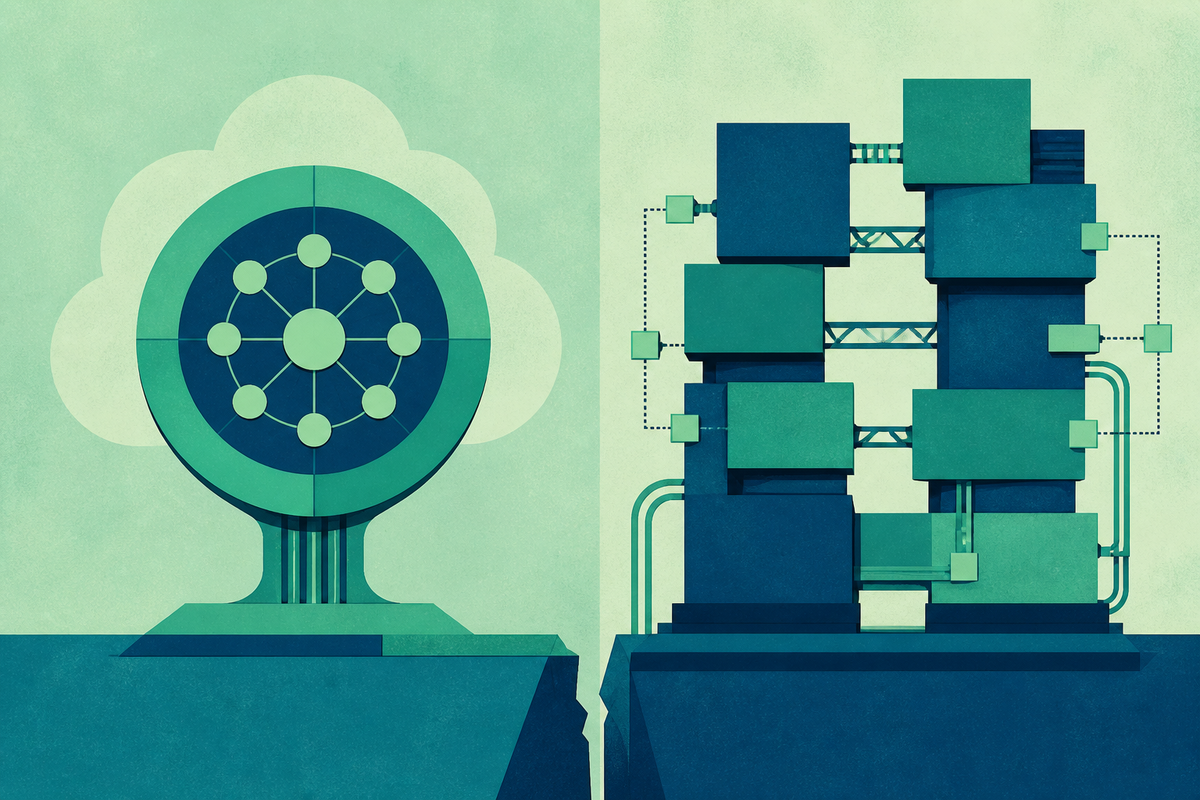
Your ERP Is Quietly Choosing Your HR Software
Workday and SAP SuccessFactors sell similar HR outcomes, but their architectures ask companies to make very different bets. The real choice is between a unified cloud operating model and the pull of an existing SAP estate.

CEI Spent 34 Years Learning the Enterprise. Now It Wants to Put AI to Work Inside It.
The Pittsburgh systems integrator is betting that the hard part of enterprise AI is not the model. It is the unglamorous work of fitting intelligence into old systems, guarded data and everyday operations - then keeping it running.
The 22-Year-Old IT Firm Teaching Enterprise AI to Do the Boring Work
From a ground-floor room with dial-up internet in Bitola, IWConnect grew into a 300-plus-person operator for the systems most companies cannot afford to break. Its bet on AI is deliberately practical: connect it to the old stack, govern what it can do, and keep a human near the final call.
The 49-Year-Old Software House Quietly Wiring the Global Enterprise
Systems Limited began with a used mainframe and an awkward problem: Pakistan barely had a software industry. Today it earns about 91 percent of group revenue in foreign currency by making the world's biggest enterprise platforms work in the places where failure is expensive.
Invio Automation Is Building the Factory Before the Factory Exists
The modern factory has a costly problem: buying a robot is easy, but making the whole line work is not. Invio Automation sells the planning, machinery, integration, and long-haul support that connect the whiteboard to the shop floor.

M.C. Dean, Inc.
The 77-year-old family company has turned electrical contracting into a $3 billion cyber-physical infrastructure business - one that builds critical systems in a factory before they ever reach the job site.