At Bromptons Opticians in Brighton, a pair of glasses could leave a trail across several systems before reaching its owner. Patient records and appointments lived in Access. Orders occupied an elaborate Excel spreadsheet. Payments and refunds were recorded on till receipts; bespoke orders involved paper forms. The shop’s problem was recognisable to anyone who has ever asked which screen, sheet or drawer contains the latest answer.
iSOS’s response was to connect the work. It built a FileMaker application for the practice and an ecommerce website tied to the same operational system. Stock, orders and customer information could move through a common structure. The interesting part of this Brighton agency is the attention it gives to what happens after somebody clicks, books or buys.
One shop, several versions of the truth
The Bromptons project covered appointments, clinical records, sales and reporting, with online product and stock synchronisation. iSOS also replaced ageing hardware and provided ongoing support. In its account of the project, the agency reports that centralising these tasks reduced administration and allowed growth without additional administrative labour.
That work puts iSOS in a particular corner of the technology market: the space between a website commission and a business-systems overhaul. It builds around a client’s operating habits, then connects the outward-facing service to the records behind it. A customer sees an available frame. Staff need the corresponding order, stock movement and payment information to make sense together.
For a buyer, the distinction matters. A polished storefront can still leave employees doing clerical gymnastics. The useful question is what happens to an order next: who receives it, who checks it and who has to type it again? Following that journey produces a more revealing software brief than a list of favourite website designs.
and patient records
operational database
and stock
The directory that needed a second life
Highway Index offers another view of the same skill. Its publisher, Spinfish, had established printed directories containing information about local authorities and the highway industry. A self-built FileMaker system had supported the publishing operation. Excel workflows also carried familiar liabilities: duplicate information, old versions and weak control over data.
The pressure came from taking that information online while continuing to serve print. The existing data remained useful; the application around it needed a rethink. iSOS describes deciding, after reviewing the system, that replacement would be more productive than modification. It cleaned and imported the records into a new FileMaker application, then built the public-facing directory in Laravel.
“we needed to make sure we had one (very safe) source database”Emma Cole, director, Spinfish Publishing
From iSOS’s Highway Index case study
This is an instructive change of mind: keeping a familiar platform did not require keeping the old implementation. The new arrangement gave staff a central place to manage information and readers a web interface for finding it. The distinction between preserving business knowledge and preserving old software is easy to miss when both sit in the same file.
The transferable lesson is to inspect what deserves to survive. A contact history may be invaluable even when the form used to enter it has become a nuisance. Rebuilding becomes more credible when the project can say precisely which records will move, how they will be checked and who will approve the result. Otherwise, a new interface can inherit the old confusion.
A foreman’s vote of confidence
For Buxted Construction, the recurring problem was attendance. Its case study describes approximately 415 operatives across multiple sites and paper timesheets vulnerable to mistakes and delays. iSOS developed a web app that sent attendance and overtime information to the existing database through an Azure API connection.
The details reflect the setting: low-bandwidth operation, smartphone site selection, records for full and half days, and a limited window for retrospective corrections. The application also incorporated vehicle and plant checks. Deployment proceeded in phases, with selected foremen trained to pass their knowledge to colleagues.
In the customer testimonial published by iSOS, other foremen requested adoption after seeing the system operating on early sites. That is a useful sign of demand from the people expected to use the software. It also suggests a practical way to judge a pilot: watch whether the next team wants it, and ask which part makes their day easier.
The broader buying lesson is about scope. A daily task gives a project something observable to improve. Before commissioning a sweeping transformation, a manager can choose one repeated handoff, establish the current burden and test a replacement with the people doing it. Adoption then becomes a question to investigate during development, rather than a ceremony after launch.
Drawings up front, database behind
Quentin Blake’s website makes the agency’s combination of design and database work especially visible. The brief called for easier navigation and responsive layouts while keeping the illustrator’s visual identity. iSOS describes using a bespoke Blake font in selected places, alongside more conventional typography for readability.
The work also connected content to the FileMaker database in Blake’s office, expanded ecommerce and introduced more capable search. It is a useful reminder that artistic character and orderly information are compatible. A visitor can enjoy the drawings while the organisation maintains a structured way to publish and retrieve them.
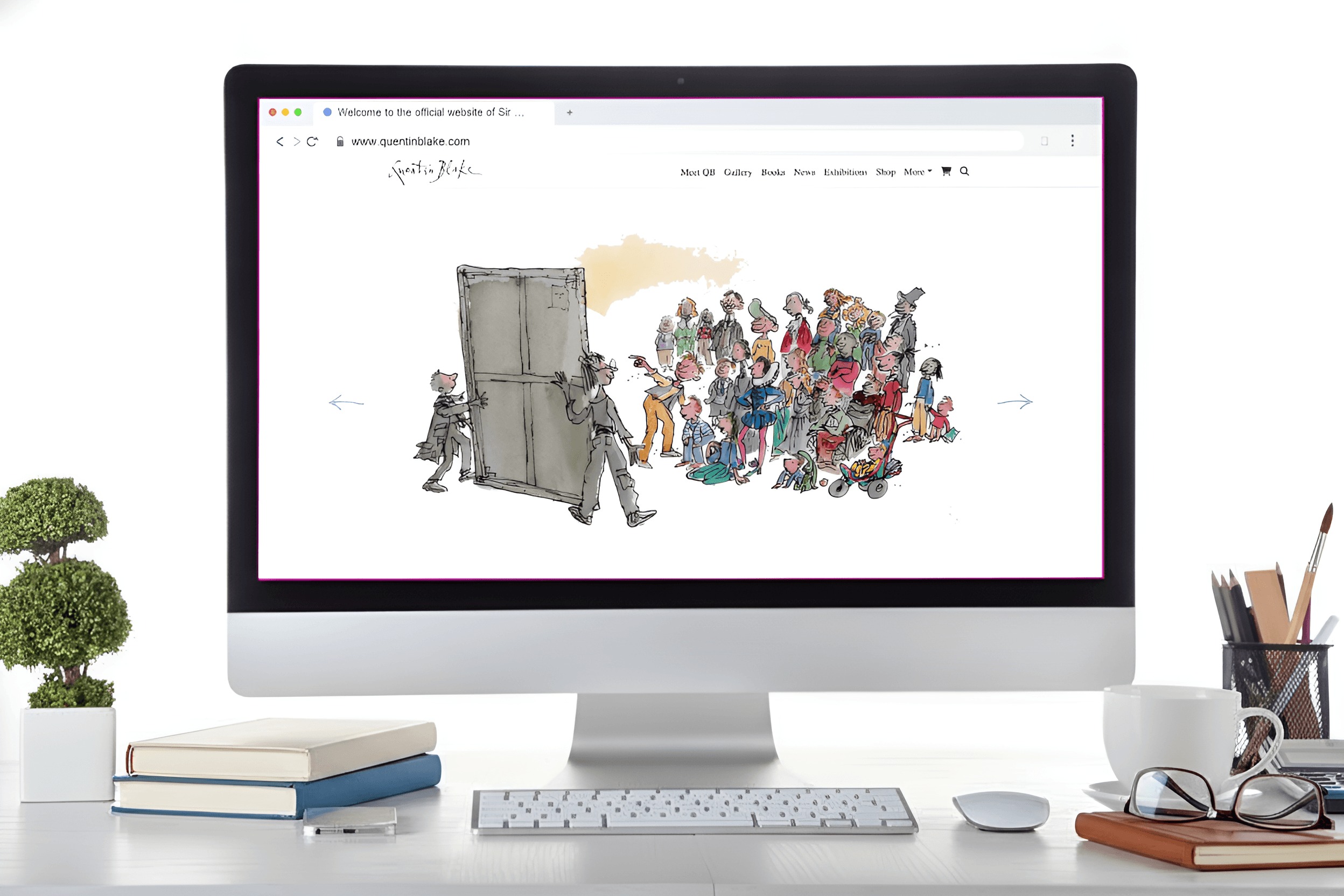
There is a commercial argument here for hiring across disciplines. Design decisions affect how information is found; database decisions affect what can be shown. Where those concerns meet, an agency handling both can discuss the whole task. Buyers should still ask to see the actual connection working, with representative records and awkward cases included.
The invoice deserves a close reading
iSOS’s business is built around commissioned development, consultancy and continuing services. Its published terms list £120 an hour for ad hoc work on a best-endeavours basis. The standard project schedule calls for a 50 percent deposit at least two weeks before work, 40 percent on delivery to the client or test servers, and the final 10 percent a month later, unless otherwise agreed.
Those terms normally quote prices excluding VAT and allow agreed adjustments as work evolves. FileMaker licensing and hosting are separate considerations: the agency’s licensing page explicitly says hosting is not included in the licence. A buyer therefore needs a budget covering the build and the running costs.
50%Before work
40%On delivery
10%One month later
The sensible comparison is total ownership effort. Add the staff time needed to explain processes, prepare records, review prototypes and learn the system. Then compare that commitment with the hours currently spent reconciling data and the cost of errors. This is an editorial buying framework, not a promised return from iSOS.
Custom development makes less sense when a standard package already handles the job comfortably. It also needs someone inside the client organisation who can settle questions about workflow and approve decisions. A developer cannot resolve competing definitions of an order, a booking or a completed job merely by adding another field.
A small specialist with a long memory
Founder and managing director Stewart Horthy’s web background predates iSOS’s formation in 2006. The company traces its origins to late-1990s projects and opened its first office in Lewes. Its services now range across databases, web and mobile development, hosting, security, marketing and Apple and Windows support.
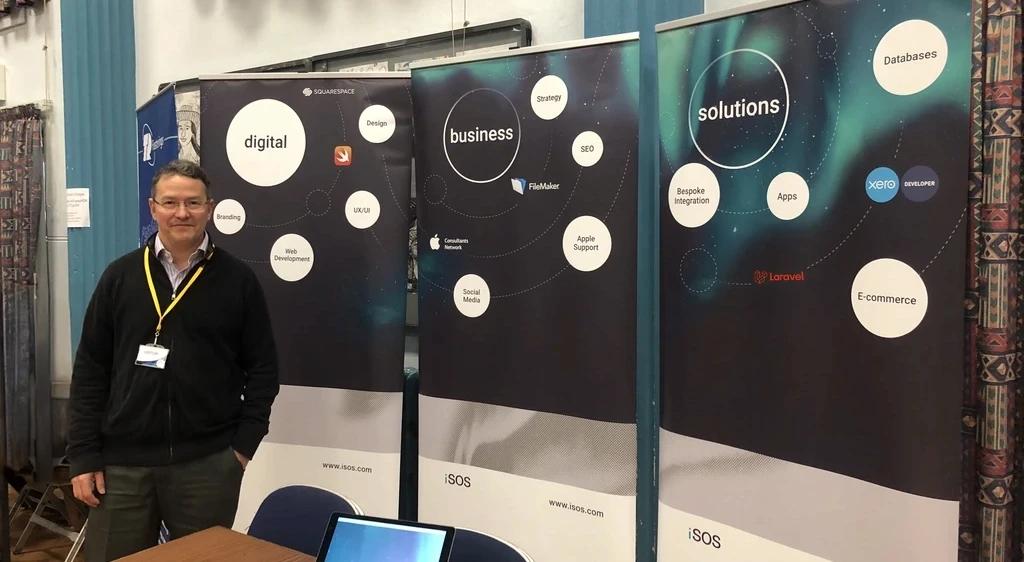
Claris independently lists iSOS as a Platinum Partner, with 14 staff and 10 certified developers at the time of research. The company’s own sustainability policy describes remote working and an emphasis on reducing commuting. Its client projects show collaboration through specifications, reviews and training, rather than simply handing over a finished application.
Within the market, iSOS is a specialist services business with a broad implementation remit. Alternatives include another FileMaker consultancy, a web agency, an internal developer or an off-the-shelf application. The choice turns on how much of the business must connect, how unusual the workflow is and who will maintain it after delivery.
AI arrives through the existing door
Prompt Service extends that integration proposition into AI. iSOS presents it as infrastructure for connecting intelligence to FileMaker, Laravel and other existing systems, with orchestration, research, content and analytical capabilities. It also describes visibility into usage and costs. These are the vendor’s stated capabilities, not a guarantee that every generated answer is correct.
In a June 2026 article, the agency argued that AI-assisted development was changing the economics of bespoke software. For potential clients, that is a reason to revisit a previously shelved project and obtain a fresh specification and quote. A cheaper first draft still has to become a usable, maintained business system.
The recurring idea across iSOS’s work is more concrete than the language surrounding AI. Find the information people need, establish where it belongs and make it travel reliably to the next task. For the optician, the publisher and the foreman, the test comes during an ordinary working day: can they finish the job without chasing another version of the truth?