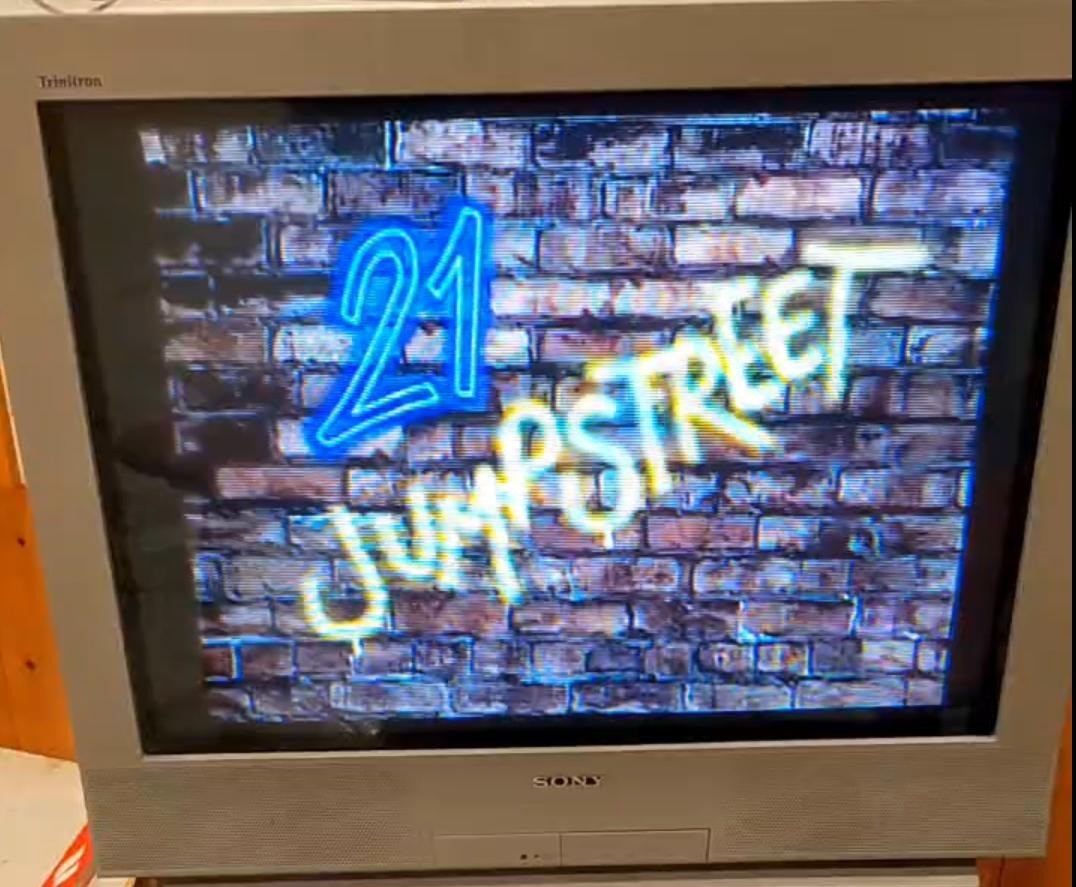
In October 2023, Matthew Gibson decided that a modern media library deserved an old television. He wanted Plex running on his Sony CRT, with the original remote control still doing the work. The resulting project involved a Raspberry Pi, software libraries, video settings and enough troubleshooting to furnish a small detective novel. His reward was a screen displaying 21 Jump Street. Some people buy nostalgia. Gibson configures it.
The point of this exercise was the experience: an older television behaving as he wanted it to behave. He worked through the awkward bits, including remote buttons whose apparent purpose conflicted with what they actually did. Then he wrote the process down. His tutorial ends with another unfinished task, getting the Pi to switch off with the television. For the moment, a manual switch would do.
That small project offers a useful introduction to Gibson, the founder of Flewid, whose work spans websites, e-commerce and IT consulting. He keeps returning to the space between an intention and a functioning result. A client needs an online store. A musician needs two devices to keep time together. A television needs persuading. The particulars change; there is usually something to connect.
An eight-year-old, two kinds of wires
Gibson grew up in Cumberland, outside Ottawa, and says he was already an avid user of computers and telephone systems by eight. His short autobiographical account pairs those interests, then mentions the operating systems, networks and computing architectures he has used over the years. The pairing matters. A telephone and a computer both invite a curious child to ask what happens beyond the thing sitting on the desk.
His adult writing retains that appetite for the workings underneath. The subjects move between telephony, Linux, Android, radio and small computers. These are particular problems with particular answers, often aimed at someone who has reached a stubborn dead end. A general enthusiasm for technology can remain pleasantly vague. Gibson’s interests tend to arrive with settings, cables and instructions.
There is room for other pleasures. His autobiographical sketch lists travel, music production, drum and bass, breaks, fiction and nonfiction, along with time at a Quebec cottage and in Minneapolis. The computers occupy plenty of territory, but the rest of his life keeps finding its way onto the page. The result reads like a workshop with the door open.
A business behind the browser
Flewid describes Gibson as its founder and says he turned his childhood interest in technology into a business more than twenty years ago. Its team works across operations, business development, Amazon, digital marketing and e-commerce. The website introduces them as geeks, an affectionate choice of word for people whose clients are likely to care more about an order going through than a fashionable job title.
The company’s account of its history reaches back to running websites in the late 1990s. It says the team has sold several sites and brought that experience into consulting. Its stated approach to search visibility emphasizes ethical methods and rejects tricks that can get a client’s website penalized. Those are company commitments, rather than a claim that any individual project is beyond criticism. They also describe a business concerned with what happens after launch day.
Its operations work includes system planning, workflow recommendations, website monitoring and warehouse fulfillment. That last item is a useful reminder that an online purchase eventually becomes a physical job. Someone must find, pack and dispatch the order. Software earns its place when those handoffs become easier. In Gibson’s professional world, the browser window opens onto a much larger set of practical responsibilities.
A lake association gets a better website
One of the more telling examples of that work comes from Quebec. In October 2020, the Association lac Poisson-Blanc thanked Gibson, its webmaster, for improvements to its website. Flewid had contributed more than $4,000 in time. The changes covered membership payments, online purchases, legibility and search. They sound modest beside the vocabulary of digital transformation. They are also the things that make a community website useful.
The association was developing its news page into a blog and keeping members informed about local activities, including water-level forecasts. Better online systems could help information circulate and make routine transactions less cumbersome. The value lived in whether a member could read, find or pay for something without an unnecessary struggle.
A 2016 association bulletin had already thanked Gibson for his webmaster work. The two acknowledgments, four years apart, put his name alongside a local organization’s everyday needs. There is a scale of usefulness here that does not require a national launch or a room full of investors. It requires someone to improve the site, and an association that notices.
The meeting that could not fit in a chat window
Gibson has also written about the limits of doing business entirely through screens. In a July 2010 account, he described meeting another affiliate marketer at Affiliate Summit East, staying in touch and partnering on ventures. When that colleague visited Canada for about nine days, the itinerary included local clubs, scenery and time at Gibson’s Quebec cottage. There were campfires and fishing, with ordinary conversation doing some of the work.
He believed they accomplished more during that visit than in the previous two or three months online. The claim was his assessment of a particular relationship, rather than a productivity formula. He pointed to gestures, sketches and the richer discussion possible when two people share a room. His father had advised him to get to know his banker in person; Gibson saw a similar lesson in business partnerships.
In 2019, he joined YEC Next, an entrepreneur community. His announcement welcomed the chance to learn from peers and support them in return. The network offered mentorship and publishing opportunities, but his expressed interest was also companionship along a difficult entrepreneurial path. An Acadium profile identifies him as a business mentor, another setting in which experience can become useful through a conversation.
Six crates, one gold bookshelf
For a different view of Gibson’s working habits, consider a furniture project. In December 2017, he documented making a bookshelf from six milk crates. He and his partner searched classified listings and sourced crates from a neighborhood shop. The design used a triangular arrangement, bolts, nuts and washers. They chose gold spray paint. Practical furniture is allowed a little vanity.
The post includes the decisions that a glossy finished photograph would conceal: how to join the crates, how to think about tight corners and whether the shelf should be assembled where it would finally stand. He calculated the cost of materials used at $42.60, with hardware left for further shelves. Even the household improvisation came with an accounting.
This is a revealing companion to the technical tutorials. Readers get the shopping, the construction and the calculation, rather than only a declaration that something was made. It gives the next person a starting point. The object is a bookshelf, but the habit is familiar: leave enough detail behind for someone else to try.
Keeping time, then watching the planet
Music gives that habit another outlet. In December 2011, Gibson wrote about synchronizing Traktor 2 with a Kaossilator Pro. He said he had spent six or seven hours experimenting after encountering claims that it could not be done. His answer involved the MIDI clock and device settings. Once he had a working arrangement, he posted a sequence of instructions.
The comments carried the experiment onward. A reader reported that no sound was coming out; Gibson replied with questions about volume, the sound card and the crossfader. The useful work continued after publication. A tutorial could start a discussion as readily as end a problem, and equipment was quite capable of supplying the next question.
By February 2023, his attention also included imagery received from GOES satellites. He adapted animation scripts for Linux, with an Odroid handling part of the image preparation and a separate computer producing the finished animations. He credited the work he built upon and described his own changes. These were images to process, resize and turn into moving sequences, with the planet providing the subject matter. The distance between a music clock and satellite pictures is considerable; Gibson’s willingness to work through the steps travels across it.
Quebec, with several projects in progress
In a June 2024 personal update, Gibson placed himself in Quebec and listed the things occupying his attention. There was a Sunfish sailboat, an off-grid cabin and a plan to replace his lawn with native plants. He was exploring the Outaouais, helping clients with IT, learning ESP32 programming and working with WLED lighting. He was also making electronica on his Eurorack.
That combination has a pleasing lack of polish. A boat, a cabin and a programming project can each demand more time than the initial plan suggests. He called the cabin a never-ending project. The joke is brief, and anyone who has tried to finish a building project will recognize its efficiency. He also listed Google Earth among his places of exploration, which makes a map another way to wander.
Cooking has its own place in his writing. In March 2023, he shared a pork-bulgogi-inspired dish made with ingredients he had available, explaining that he had improvised before documenting the result. The recipe joins the hardware projects as another record of trying something, adjusting it and passing it along. A cast-iron pan gets the same courtesy as a computer: enough instructions to give the reader a chance.
“Silly electronica on my Eurorack”Matthew Gibson, June 2024
The fix, and what comes after it
Gibson’s professional record includes Monos, the Vancouver travel brand, alongside his Flewid work. His public LinkedIn activity includes sharing a Monos retail hiring announcement. The two companies belong to different parts of his profile: Monos connects him to a consumer business, while Flewid carries the founder story he has described publicly.
His personal website introduces him with three areas of work: servers, e-commerce and IT consulting. It also mentions espresso. That is about as compact a business card as a technically inclined person could reasonably manage. Behind it sits a much longer trail of projects, each with its own small difficulty and a written attempt at a solution.
The old Sony television remains a good place to leave him. The picture worked, the remote worked, and there was still one improvement waiting. That is a recognizable ending for a tinkerer’s project: enough success to enjoy the thing, enough unfinished business to keep thinking about it. Somewhere between the client’s checkout and the cabin’s next task, Gibson has made a career of attending to what needs doing next.