A biomedical shipment has no interest in your digital transformation strategy. It needs to arrive in the right condition. The temperature matters. So does the record of what happened along the way. This is a useful place to begin with WebKorps, because an IT company’s service menu can tell you almost everything except what its work is for.
- Custom software, cloud services and extra engineering capacity for business teams.
- Published projects span shipment monitoring, cloud spending and legal documents.
- Buyers can borrow its discovery questions before committing to a build.
WebKorps’s Cryoport case study describes work on Cryoportal, a logistics platform for temperature-sensitive life-science materials. The company says its contribution joined monitoring, documentation and logistics management. Its listed tools include Angular, Node.js, Ruby on Rails and AWS. The interesting object here is the shipment, rather than the programming language. Software earns its keep by making a complicated journey legible.
01 / The business between the buttons
That same pattern appears in DigiKagaz. A user selects a form, supplies information and generates a legal document. Then comes the charmingly practical part: completed documents can be sent to a Court Service Center for printing. Paper survives. The software simply makes getting to it less troublesome.
WebKorps describes building the platform from scratch, including document generation, the printing connection and a feedback loop for improvements. Its challenge was partly technical and partly social: make the interface usable for people with different levels of comfort around technology. A clever form that confuses its audience has merely relocated the clerical work.
These projects suggest a way to read the company’s sprawling capabilities. Look for the handoff: information becoming an action, one system talking to another, a digital task meeting a physical requirement. That is where the portfolio becomes more informative than the adjectives.

02 / An invoice with a user interface
Consider CloudShim, another published project. Cloud infrastructure produces resources, usage records and bills. Understanding how those pieces fit together can become its own job. WebKorps describes a dashboard that gathers usage and costs, identifies underused resources and generates reports.
The audience includes technical and nontechnical users. That detail matters. An engineer may see spare capacity; someone in finance sees an expense. A shared interface gives them something concrete to discuss. The product’s value proposition is visibility followed by a decision, rather than visibility as decoration.
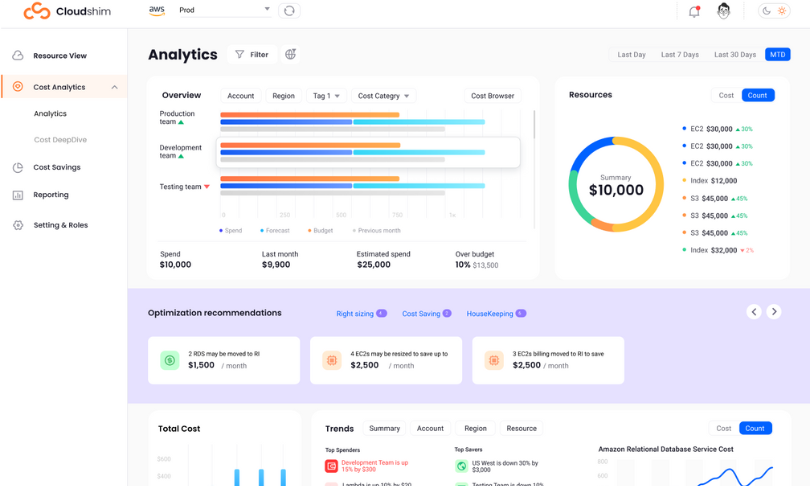
WebKorps’s case study discusses integration, monitoring, interface design and scaling. Those are four different obligations hiding inside the phrase “build a dashboard.” Readers considering a similar product can copy the sequence: establish the data connections, decide who must understand the results, then make the information actionable.
03 / Choose your unit of uncertainty
WebKorps is a services business with several ways to buy its time. Its engagement models include fixed cost, hired professionals, hourly work, prepaid “bucket hours” and discovery. Fixed cost suits a defined brief. Hourly work accommodates movement. Bucket hours cover maintenance and smaller changes. Discovery buys planning before implementation.
These choices distribute uncertainty differently. That is an editorial reading of the contract menu, and a useful one: a buyer needs to decide whether the missing ingredient is a finished application, an additional engineer or a better understanding of the problem.
Public listing figures put the hourly band at $25–$49 and minimum project size at $5,000. Treat them as an initial budget signal. A maintenance request and an enterprise integration can share a rate band while consuming very different amounts of work.
04 / The customer who asked for more paperwork
The clearest customer perspective comes from a 2022 Clutch review. Scoutr founder Brandon Stevens described a React frontend overhaul involving discovery, architecture, sprints and testing. Four people covered frontend, backend, testing and design. The reported project budget was $10,000–$49,999.
“They are highly communicative and collaborative.”Brandon Stevens, Scoutr founder and CEO
His improvement request was more complete reporting and documentation. That modest complaint is useful. Communication during delivery and knowledge preserved after delivery are separate things. A friendly team can still leave a buyer wanting a better written record.
The request also sharpens the evaluation criteria. Ask how decisions are recorded, where documentation lives and who can maintain the system when individual contributors move on. The review offers a practical friction point, without turning one customer’s experience into a verdict on every engagement.
05 / Buy the questions before the code
WebKorps’s September 2026 discovery guidance makes a pointed argument: a planning phase should challenge the brief. It calls for measurable success criteria, technical architecture, a prioritized backlog with acceptance criteria and a risk register. A senior technical architect should participate.
Its questions are portable. What does the first sprint prove? Which assumptions changed? Who owns the highest-risk dependencies? A buyer can take those questions to any vendor. If the answers leave the original sales pitch perfectly untouched, the exercise deserves another look.
The company’s September 30 staffing article extends the argument to onboarding, development standards and knowledge transfer. Hiring capacity helps when a client can supply access, priorities and an internal owner. Extra engineers cannot settle an unresolved business decision by multiplying the hours spent around it.
06 / A broad shop, judged narrowly
Founded in 2016 by Chirag Agrawal and Amul Choudhary, WebKorps describes beginning in a 500-square-foot office. It now reports more than 250 development professionals and 500 delivered projects across 30-plus countries. Those are company figures, useful for scale rather than a guarantee of outcomes.

Its offering spans mobile and web applications, enterprise systems, AI, cloud, Salesforce, managed IT and staffing. Its careers page emphasizes learning and collaboration. The position is a broad engineering partner for businesses that need outside capacity across several kinds of work. The alternatives include internal hiring, freelancers and narrower specialist consultancies.
The buyer’s task is to narrow that breadth to one relevant workflow and one accountable team. Start with a shipment, a bill or a document. Follow it all the way to the person who must use the result. That is where software gets interesting, and where a vendor’s promises become testable.