A dental cupboard is a surprisingly good place to begin a story about software. Imagine opening one and finding three boxes of the same material, a product approaching its expiry date and an implant whose paperwork lives somewhere else. The objects are present. The information is scattered. A business can have plenty of stock and very little knowledge of it.
That is the kind of problem Xicom is paid to untangle. Its work for DENVEN, a UK dental inventory business, brings stock, suppliers, ordering and implant records into a cloud platform. The interesting thing is how ordinary the underlying need is. Someone wants to know what is available, what needs replacing and what happened to a particular item. Much enterprise software begins with questions that could fit on a sticky note.
- The work: custom software, mobile apps, integrations and AI systems for business clients.
- The pattern: connect scattered records so people can act on them.
- The buyer’s job: explain the workflow, agree on acceptance checks and stay involved through delivery.
A cupboard is a database in disguise
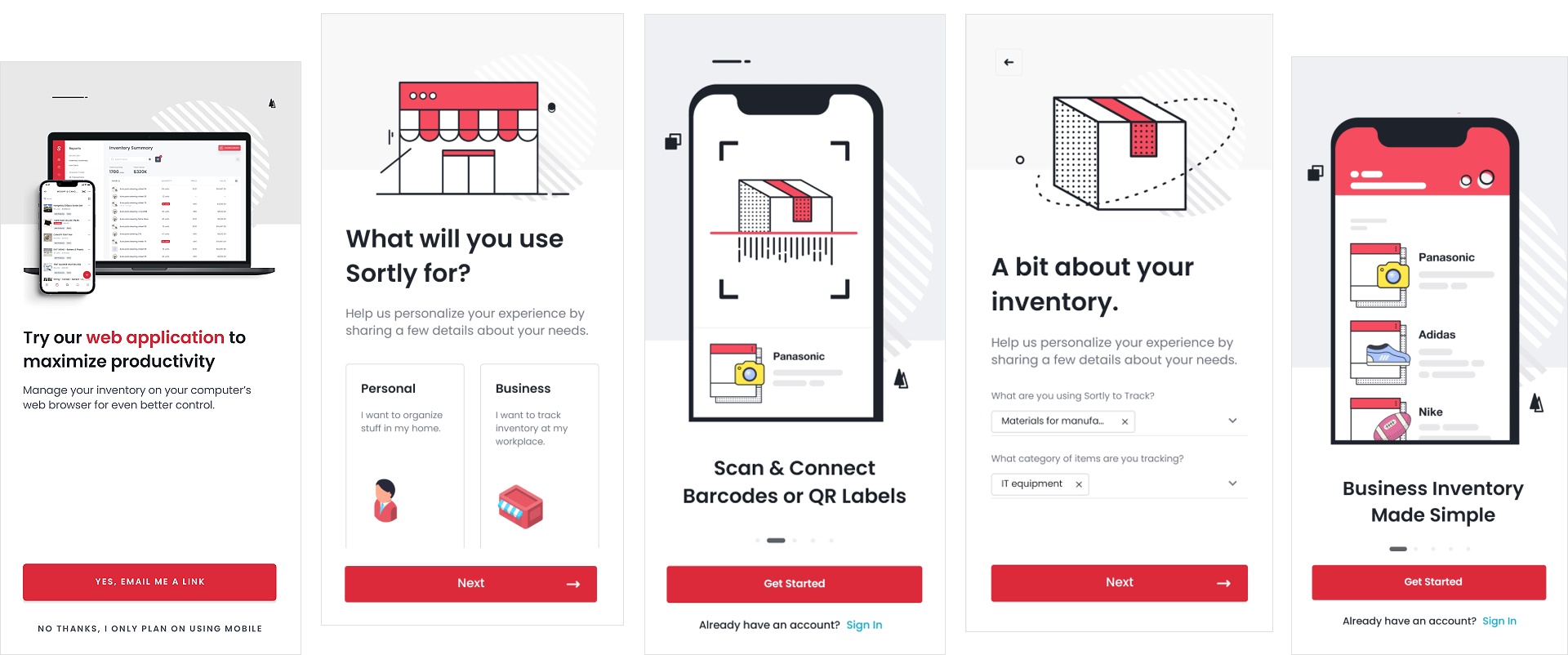
Xicom’s DENVEN case study describes a system with barcode and QR scanning, low-stock and expiry alerts, supplier catalogues and support for multiple locations. It also links implants to patient details and produces downloadable implant passports. There is something pleasingly bureaucratic about an implant acquiring a passport. Traceability gives that little document a serious purpose.
The case study identifies the original difficulty as manual, fragmented inventory management. Its response combines a web interface, mobile access and reporting. Xicom reports adoption by more than 250 UK practices within twelve months and a 40% reduction in inventory wastage. Those figures are the developer’s published account; they describe this project, rather than a guaranteed result for the next dental business.
The transferable idea is to define the things that must be remembered. A product has a quantity, a location, an expiry date and a supplier. An implant has a history. Once those relationships are explicit, a developer has something meaningful to build. A request for “a dashboard” is considerably less informative.
Before the chatbot, the barcode
A warehouse poses a related problem with more travelling involved. Xicom’s BoxxDocks work combines QR and NFC identification, mobile scanning and a central view of reusable assets. Each scan contributes a user, timestamp, location and status to the movement history. The business question is straightforward: where did the object go?
Xicom describes three separately deployable parts: a web administration panel, a mobile field app and an AI service. The latter uses retrieval-augmented generation, a method that supplies a language model with relevant records, to support questions about operational data. A conversational interface gives people another way into the information collected on the warehouse floor.
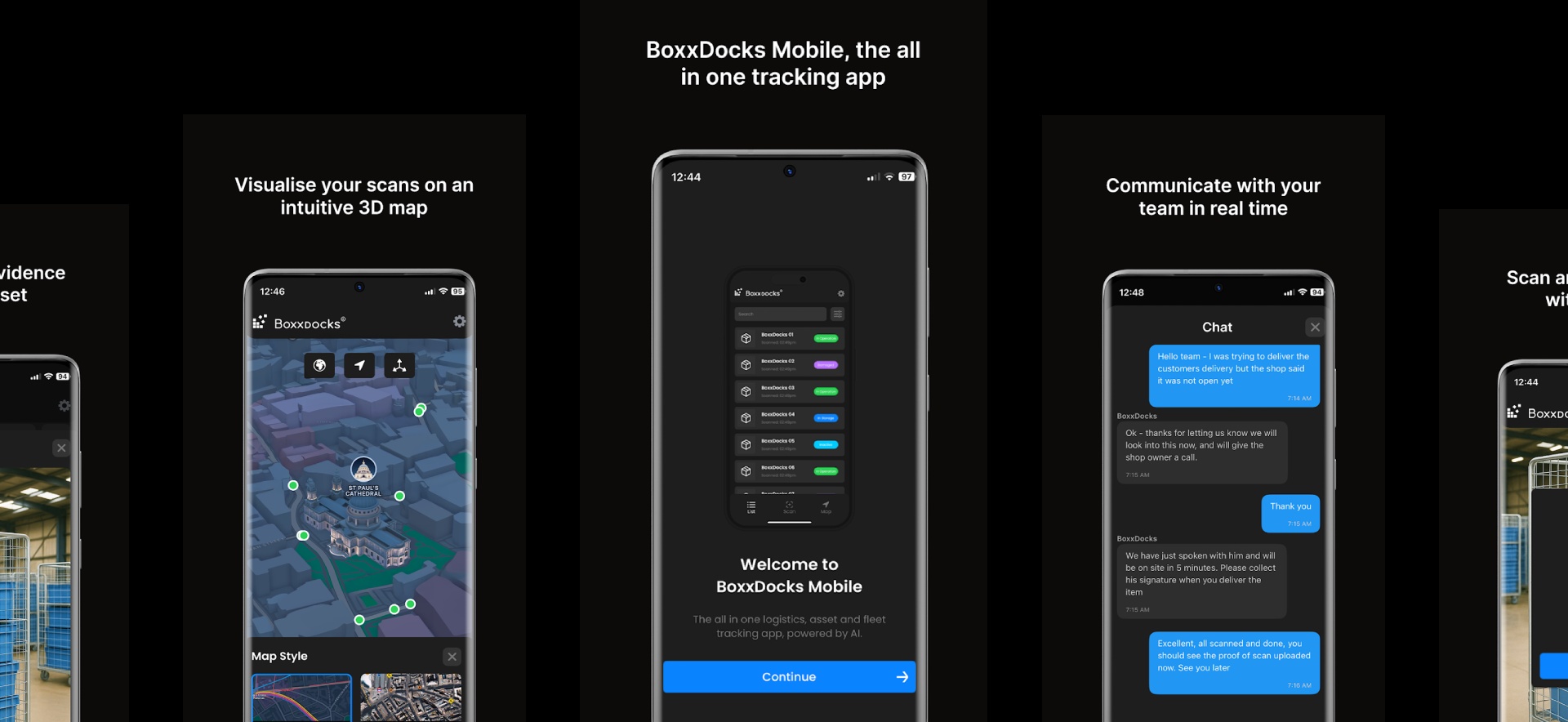
The architectural lesson is useful beyond logistics: record the event before asking a machine to explain it. A missing scan leaves a gap in the evidence available to any report or assistant. That dependency follows from the workflow itself. Better language cannot repair an event nobody captured.
- 01CaptureA person scans an asset.
- 02ConnectThe record joins its history.
- 03QueryA person asks about the data.
“Xicom helped us bring BoxxDocks to life exactly as we envisioned it.”
James Della Valle, co-founder
In Xicom’s published case study
The vending machine has a back office
SmartVend supplies another version of the same story. Xicom describes an Android kiosk linked to vending hardware and a cloud administration portal. Customers browse products and pay. The software then communicates with the machine controller to dispense the purchase and synchronize the transaction with the cloud.
For the operator, the system brings together pricing, inventory, machine settings, advertisements and monitoring across locations. A vending machine starts to resemble a small branch of a retail business. The touchscreen is merely the part that gets to meet the customer.
This explains the breadth of Xicom’s services more clearly than a list of programming languages does. The work crosses interface design, hardware integration, backend development, cloud infrastructure and testing. The boundaries matter: a payment can succeed while something else in the transaction needs attention. Designing the whole sequence requires people who can see beyond their own screen.
Tap Retail extends the theme into conventional shopping. Xicom’s case study describes synchronizing stock across retail interfaces and giving merchants tools to manage products and orders. These projects differ in their users and equipment. They share an appetite for connected information.
Buying a team, then keeping the thread
Xicom sells development services to startups, smaller businesses and enterprises. Buyers can commission a project or hire specialists through dedicated-team and staff-augmentation arrangements. Its mobile offering covers native Android and iOS as well as Flutter and React Native. Cloud deployment, quality assurance and maintenance round out the delivery work. The client systems in its portfolio illustrate that service; they are commissioned projects.
Clutch’s listed rate range, with a $10,000+ minimum project size. Scope and contract determine the actual bill.
In a September 2019 Clutch interview, a computer-parts seller reported spending about $30,000 with Xicom on a move from an older PHP platform to WordPress and WooCommerce, including custom shipping features. The owner advised sending clear information, including video explanations, and maintaining the relationship with the project manager.
Another client, food-pickup service uPick, described a project-manager change after an emergency and a later design update as competitors entered the market. These accounts show how delivery can involve personnel changes and revised requirements. A quoted budget is only one part of the purchase.
A buyer can copy a practical habit here: demonstrate a real task. Show where the information originates, who handles it next and what counts as completion. Agree on how replacements learn the project and who approves changes. A vendor needs access to the details that make this particular business different.
Custom development suits a workflow whose requirements justify the effort of specifying and maintaining it. A standard tool may be sufficient for a standard process. An organization without a clear owner for requirements, testing and data quality will struggle to make any commissioned system useful. Those are purchasing judgments, rather than promises a developer can make on its customer’s behalf.
The AI pitch meets the working day

Founder and CEO Rahul Mahajan has led Xicom since its establishment in 2002, according to the leadership page. The company describes a dedicated AI practice launched in 2022. Its current positioning emphasizes AI engineering, agents and generative systems alongside the older disciplines of software delivery.
The governance offering is particularly revealing. Xicom sells work on accountability, risk assessment, audit trails and oversight across an AI system’s lifecycle. For an enterprise buyer, those questions concern the people responsible for a system after it begins influencing real decisions. A convincing demonstration leaves plenty of work still to do.
Xicom also advertises model monitoring and ongoing optimization. The commercial implication is that deployment can begin a continuing service relationship. Software operates amid changing data, users and business rules; someone must keep watching what happens.
In the crowded custom-development market, Xicom’s useful positioning is its ability to assemble several kinds of engineering around one operational brief. That proposition deserves to be tested against a buyer’s own requirements. Its published projects make the proposition tangible: a stock record, a scan history, a payment connected to a machine.
The company’s careers page calls employees “Xicomions,” a name with the cheerful confidence of an office nickname that has escaped into public. The products have a less playful obligation. They must help someone do the next ordinary task. For a software buyer, that is a fine place to keep the conversation.
Follow the work
Explore Xicom’s services, project walkthroughs and public profiles.