A customer called Jerry gives Yashco an unusually useful compliment: “They don’t just make the website and leave.” In his account, published among the company’s testimonials, a website is followed by campaign improvements, suggestions about pictures, and regular conversations. The grand unveiling becomes a working relationship. The confetti, one imagines, has long since been swept away.
That is a good place to begin with Yashco Systems. A company can be difficult to understand when its menu includes Java, mobile apps, e-commerce, testing, consulting, and search marketing. Listen instead for the moment the customer describes. Something has been delivered. Someone is still paying attention.
- Yashco builds custom software and supplies the people to support it.
- Its published work ranges from charter-flight websites to online education.
- The buying question is scope: what gets built, who tests it, and who stays involved?
The second assignment is the interesting one
Yashco’s homepage reports more than 2,500 delivered projects and more than 1,000 customers worldwide. The figure that deserves the closest reading is 96%. The company says that proportion of clients gives it repeat business and refers it to friends. That is a company claim combining two behaviours, rather than a defined annual subscription-retention measure.
Clients who return and refer, according to the company. An invitation to examine the relationship behind the number.
The distinction matters because Yashco sells services. A returning customer might commission another website, ask for a new application module, or retain technical support. Those are different purchases with a shared advantage: the supplier already knows something about the organisation.
That accumulated knowledge is easy to overlook in a proposal. A developer who understands why an awkward field exists may be more useful than a newcomer who elegantly removes it. The second assignment tests whether the first created knowledge worth keeping. It also tests whether the customer enjoyed enough of the experience to repeat it.
A private jet needs a perfectly ordinary website
In July 2017, Yashco described its work for EmptyJets Australia. The service connected customers with empty charter flights, including aircraft repositioning between locations. Its proposition was memorable: make an otherwise empty flight available at a discounted charter price.
Yashco’s contribution was the website. Its account identifies PHP and the CodeIgniter framework, along with responsive design and navigation. The aircraft belong to the client’s business; the software supplier gives that business a way to be found and used.
There is a small lesson in the contrast. A glamorous offering still needs comprehensible information and workable interactions. The buyer may dream of a private cabin, but first has to understand what is available. Custom development earns its place where a particular business model needs a particular journey through a screen.
The company’s aviation offering goes further into operations: aircraft details, quote requests, schedules, reporting, and white-label arrangements. These are described capabilities, not evidence that every charter customer bought every feature. They illustrate how a website assignment can sit beside a more demanding operational system.
Language lessons, with a human reason attached
The same month, Yashco published another named example: TongueTry. Its account described a language-learning venture whose founder, Deano, had met a tutor named Blanca while travelling in Guatemala. Continuing Spanish study after returning to the United States brought the economics of that relationship into focus.
The venture’s idea was to bring an immersion experience to people who could not travel for it. Yashco described providing web design and development. It is a historical project example, and a particularly useful one: the business begins with a relationship between people, while the supplier’s task is to give that relationship an online home.
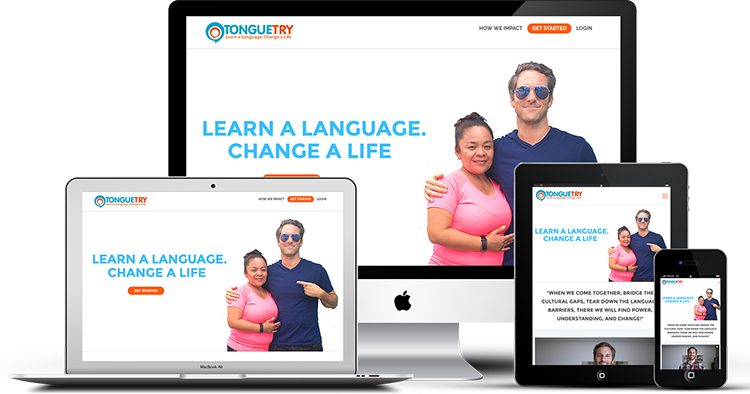
Put these two projects together and the company becomes easier to locate in the market. It is a supplier of adaptable development capacity. Its customers bring different propositions; Yashco provides technical work suited to each. The interesting continuity is the work of translation from an idea to something another person can operate.
The long middle of a software project
Yashco lists custom development, quality assurance, deployment, maintenance, security services, and IT consulting. Its testing menu includes regression checks, load testing, database integrity, and recovery from interruptions. Its maintenance offering advertises round-the-clock support for time-critical applications.
That range addresses a familiar purchasing problem: software requires several kinds of work at different times. The person who designs a feature may need help testing it under pressure. An application that passes a demonstration still needs to survive everyday use.
The process Yashco describes includes customer reviews at milestones. That is a useful practice a reader can copy immediately: put review dates in the brief and decide what the customer will inspect at each one. A checkpoint without an observable deliverable is simply a meeting with excellent calendar manners.
For a buyer, the commercial proposition is access to skills and delivery capacity. Yashco describes short- and long-term projects, additional staffing, and continuing support. Its expertise includes Java, Microsoft .NET, PHP, CMS platforms, and mobile development. Those names help identify a technical fit; the actual purchase is an agreed piece of work.
The price is also the work you keep
There are two budgets to consider in a custom software engagement. The first pays for delivery. The second pays for the obligations that delivery creates: maintenance, changes, hosting arrangements, and time spent reviewing the work. A proposal is more useful when those obligations have names and owners.
Yashco’s published customer accounts give examples of continuing work across Magento and WordPress, application projects, and website support. They are testimonials selected by the company, so they describe those customers’ experiences rather than a guaranteed outcome. Their practical value is the specificity of the tasks.
“They don’t just make the website and leave.”
Jerry, customer testimonial published by Yashco
A buyer can turn that sentence into a contractual question. What happens after acceptance? Who handles defects? Which changes cost extra? Who holds the credentials and documentation? A services company becomes easier to assess when the conversation moves from adjectives to responsibilities.
The people behind the patient work
An archived Columbus Business First workplace table supplies a compact historical snapshot. In 2009, Yashco ranked first among small companies. The table listed Simren Datta as its top officer and reported $3.5 million in revenue for 2008. A 2012 profile identified Sheetal and Simren Datta as founders and described a culture of simplicity and employee flexibility.
Yashco’s benefits page is more concrete than the usual employer prose. Qualifying full-time U.S. employees are described as eligible for medical coverage and a 401(k) from day one. The published retirement formula produces a 3.5% employer match on a 6% employee contribution. Approved professional certifications and tuition support also appear. Eligibility rules exclude project-based and seasonal employment.
These details matter in a business that sells other people’s expertise. Consistency requires people who know the work and can keep learning it. Benefits alone cannot establish a workplace’s quality, but they show some of the machinery behind the promise.
A useful brief beats a splendid slogan
Yashco fits buyers who need custom development, additional technical capacity, or ongoing application attention across several platforms. Its published examples cover very different organisations. That breadth is useful when the buyer can explain the job clearly and appoint someone to make decisions.
A standard need may be better served by packaged software. A custom engagement becomes harder when nobody owns the requirements, the acceptance criteria keep moving, or support responsibilities remain vague. Those are purchasing considerations, not findings about a failed Yashco project.
The copyable habit is simple: describe a workflow before choosing a technology. Ask for checkpoints, define acceptance, and agree on the next chapter while the first is still being written. Yashco’s story offers a reminder that launch day is only one day. Being asked back requires attention on the others.