A textbook can label a structure. It has a harder time making that structure move. For a student trying to understand the body, the distance between those two things can be surprisingly large: a page offers a diagram, while the lesson asks the reader to imagine a process. Vinformax has built a business around several kinds of technical work. Its most interesting public-facing experiment begins in that distance.
- Vinformax combines software development with animation and digital learning.
- MediMagic turns medical concepts into animated study material for students and institutions.
- The pandemic prompted a stronger focus on students learning away from the classroom.
- The useful lesson for other builders: delivery and reliability deserve as much attention as the content.
Consider the photograph of a MediMagic classroom. The students wear white coats and blue 3D glasses. It is a pleasingly peculiar combination, halfway between a medical lecture and an afternoon at the cinema. The glasses have a purpose: the institutional system uses stereoscopic imagery to give the lesson depth. A flat page has acquired another dimension.
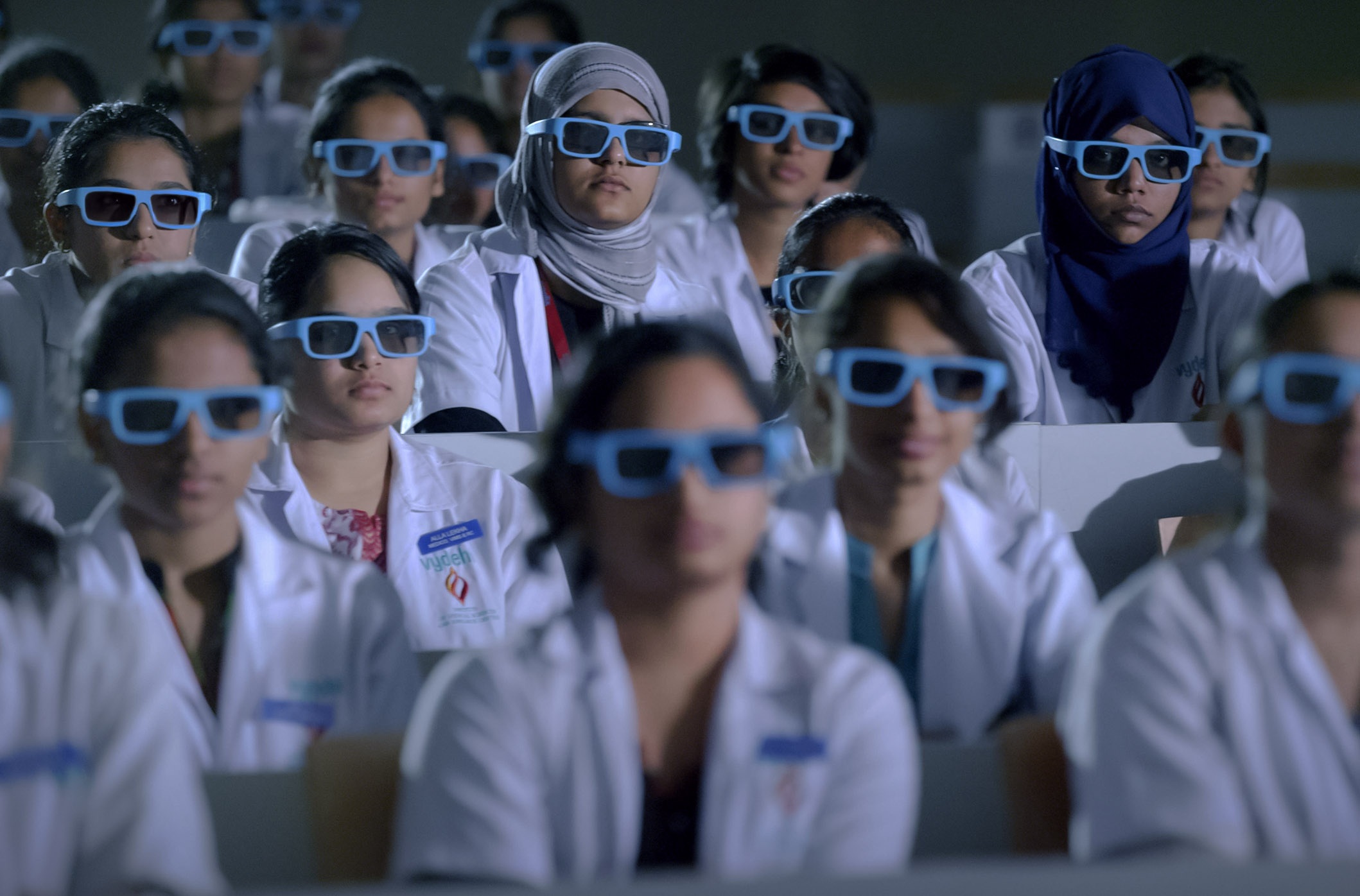
The picture before the paragraph
MediMagic is a useful way into Vinformax because it makes an otherwise broad company legible. The company offers software development, mobile applications, cloud portals, consulting and visual production. Those are substantial categories, but they do little to explain why a particular customer should care. An animated lesson about a mechanism inside the body is more concrete. Here is a difficult concept. Here is a way to show it.
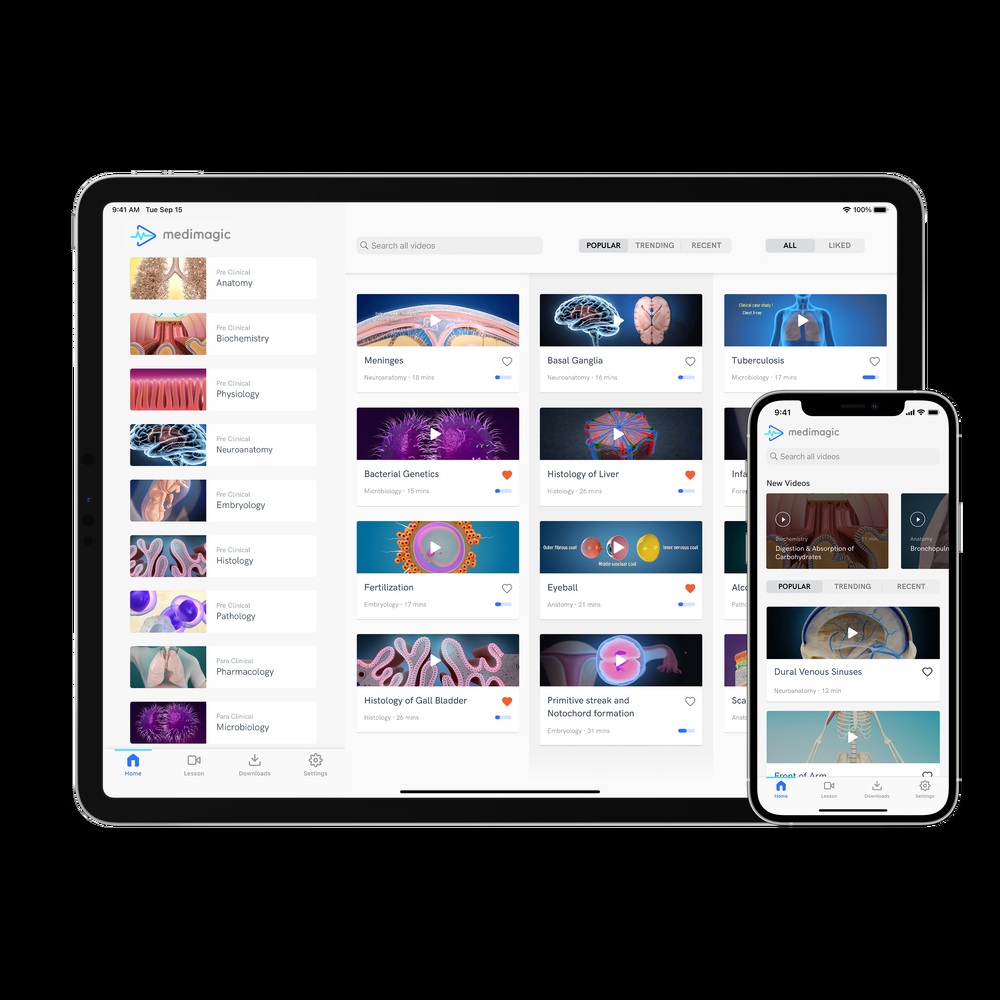
The product’s course catalogue ranges across pre-clinical and para-clinical subjects, including anatomy, embryology, physiology, pathology and pharmacology. The common thread is visibility. Some subjects involve tiny structures; others involve change over time. Animation gives the explanation a sequence. It can show a relationship, then a movement, then a consequence, rather than leaving every connection to the student’s imagination.
The appeal is easy to understand without accepting every claim made for educational technology. A useful visualization can make a lesson easier to follow. Whether it improves an examination result depends on how it is taught, studied and assessed. A polished video should earn its place in the curriculum through usefulness. Beauty alone is a rather expensive teaching assistant.
An animation department with a second audience
Vinformax’s combination of disciplines matters here. In its historical writing, the company explicitly described having IT and animation departments under the same umbrella. That arrangement suggests a practical advantage: the people making the visual material can work alongside the people delivering it through software. The finished lesson has to survive both kinds of work.
The company’s wider portfolio speaks to different customers. iPACS is listed as a way to store and manage digital healthcare assets. VinTrax addresses GPS-based fleet tracking. VinAnalytix addresses business intelligence. A hospital handling images, a fleet operator locating vehicles and a student revising physiology have very different afternoons. Vinformax’s products meet different operational needs rather than constituting one interchangeable application.
MediMagic also has a human connection to filmmaking. Co-founder Kishan SS directed the Kannada film Care of Footpath as a child. In a 2021 interview, he described the educational problem in unusually tangible terms:
“We are trying to bridge the gap between textbooks and cadavers (dissection).”
Kishan SS, 2021 interview
That is a better explanation than a parade of technology acronyms. The gap concerns what a learner can picture before encountering the real thing. Animation belongs in that interval, where a student is assembling a mental model. It remains part of an education that also needs teachers, practical work and clinical experience.
The room disappeared. The lesson stayed.
Public launch coverage in 2018 described S3D MediMagic’s second phase and a mobile app. The distinction between the two formats was already clear: stereoscopic teaching in a classroom, with a conventional screen experience for individual learning. The mobile companion existed before the pandemic. What changed was its importance.
In early 2020, according to the product’s published company profile, MediMagic was redesigned around medical students rather than principally helping professors deliver lectures. The pandemic altered the setting in which the material had to work. The expertise could travel; the classroom could not. An existing library of visual explanations became material for a different study routine.
Delivery formats, not a measured growth chart.
A concrete access offer followed. A circular from Kaloji Narayana Rao University of Health Sciences in Telangana told students that MediMagic would be free through October 31, 2020. It described curriculum-linked material for self-learning alongside textbooks. The offer had a defined audience and an end date, making it more useful than a vague promise to support education.
What did it cost the learner? Under that offer, access was free for the stated period. In a separate 2021 interview, Kishan said the startup had given 65,000 students subscriptions valued at Rs 30 crore. That figure describes the stated value of access given away. It should be read as a claim about subscriptions, rather than a bill for producing or delivering them.
Two buyers, two kinds of work
The institutional customer buys a teaching arrangement. MediMagic’s stereoscopic offering includes equipment such as a projector, screen and glasses. Its XLMS offering addresses another set of tasks: online classes, attendance, assessments and institutional course material. The student buys access to explanations that can fit around a course. These customers share content but have different purchasing decisions.
Vinformax therefore sits across services and products. Organizations can engage it for development or consulting; MediMagic also has a subscription business serving learners and institutions. Google Play identifies in-app purchases. Historical free-access programs are part of that product’s distribution story, alongside the paid model.
There is evidence of classroom use beyond a product brochure. MVJ Medical College’s published physiology teaching records include assignments referring to MediMagic/Vinformax in February 2021. That small administrative detail is revealing. The product appears in the ordinary machinery of a course: a timetable, a topic, an assignment. It shows use in teaching, while leaving the question of educational impact to assessment.
The smallest screen can stop the biggest idea
Now consider the less glamorous side of delivery. In July 2020, a Google Play reviewer praised MediMagic’s content but reported crashes and awkward playback. Vinformax replied later that year, directing the user to an updated version. In June 2026, another reviewer reported being unable to complete verification. These are individual experiences, but they identify friction at two crucial points: entering the app and watching the lesson.
Downloads listed on Google Play. Downloads describe reach; they do not measure learning.
The Android listing shows an update dated July 28, 2026, with notes about performance, security and interface fixes. For an education product, that maintenance is part of the offering. A learner does not encounter animation quality in isolation. The experience includes registration, navigation and playback. The first obstacle may arrive before the first explanation.
What is worth borrowing
The practical lesson is to separate a company’s expertise from its delivery format. Vinformax had visual and technical capabilities; MediMagic applied them to a specific learning problem. When the setting changed, the same underlying material could serve a student on a personal device. Builders in other fields can ask a similar question: which part of the work must remain specialist, and which part should become easier to access?
The conditions matter. Medical content must match the learner’s course and remain accurate. Devices and access must work. Teachers need a sensible place for the material in their instruction. A student who already understands the visual relationship may gain less from another animation than from a different exercise. The sensible purchase begins with a sample lesson and a real learning task.
That is what makes Vinformax interesting. A broad software-and-services business found a particular use for a particular skill. The memorable image is the classroom full of blue glasses. The more useful idea is the lesson that can leave the room, arrive on a smaller screen, and help a student understand the next page.
Explore the work
Visit Vinformax, see the company on LinkedIn, or follow its X and Facebook profiles.
For the product, browse MediMagic, its course catalogue and blog. Watch the MediMagic video channel or the product introduction; the Vinformax channel offers another window into its visual work.