A bank cannot reboot its business as casually as a laptop. Neither can a hospital, a factory or a government department. Records have to survive. Payments have to reconcile. People have to keep working while the machinery underneath them changes. This awkward, expensive territory is where Fujitsu wants its next chapter to unfold.
The company’s consumer-computing associations can obscure the business it now pursues. Fujitsu designs, connects and operates the systems that large organizations depend on. It sells consulting, application modernization, cloud services, cybersecurity and AI, alongside computing hardware. The customer is usually an institution with a complicated past and an expensive reason to avoid downtime.
There is money in that complication. Uvance, the umbrella for Fujitsu’s technology-enabled business solutions, generated ¥709.3 billion in fiscal 2025, the year ended March 2026. That was 47% above the previous year. But selling institutions a better future brings an obligation: the systems must deserve the authority people give them. Fujitsu’s record makes that question unavoidable.
A new business hiding inside an old name
Uvance is an unhelpfully abstract name for a fairly concrete ambition. Fujitsu wants to package expertise into offerings it can sell repeatedly, using technology to solve recognizable operational problems. A financial institution might need more adaptable account processing. A manufacturer might need better information flowing between production and purchasing. Neither begins with a desire to collect more software.
The difference matters commercially. A bespoke integration project produces a solution for one customer. Reusable offerings can carry experience from one engagement into the next, reducing how much work must begin from scratch. Fujitsu still performs implementation and operations; the strategy is to make those activities more repeatable and valuable.
Uvance finds its scale
Revenue, ¥ billion. Fiscal years end the following March. Reported results, not forecasts.
Fujitsu’s wider market stretches across the territory occupied by consultancies, systems integrators and infrastructure suppliers. Depending on the assignment, a buyer might consider Accenture, IBM Consulting, NTT DATA or NEC. Fujitsu’s particular combination is an engineering research base, experience with business-critical systems and people who can carry a project through implementation.
Its consulting brand, Uvance Wayfinders, connects the business conversation to that delivery work. The commercial relationship can include an initial consulting assignment, a systems project, software or cloud services, and ongoing operation and maintenance. These are negotiated engagements. Comparing them requires attention to scope, responsibilities and support commitments, not simply a subscription price.
The beer example beats the brochure
One useful illustration predates today’s AI excitement. In 2011, Asahi Group and Fujitsu announced a cloud-based sales-information system for three Chinese sales centers: Shanghai, Shenzhen and Dalian. Asahi had difficulty sharing customer information and lacked a common way to manage sales data. Compiling it created substantial work.
The proposed system combined Salesforce-managed information with SAP BusinessObjects BI OnDemand for analysis and sharing. Fujitsu supplied the integration and support. The announcement projected a 75% reduction in operational costs compared with building an on-premise system, helped by avoiding new servers and other infrastructure. That was a forecast against a specified alternative, not a universal discount.
The useful move was agreeing on a shared view of customers, orders and daily activity. A reader can copy that sequence: identify the information people repeatedly assemble by hand, agree what it means, then decide which technology should carry it. Buying cloud capacity before settling those questions can simply relocate the confusion.
- Find the frictionWhich information gets rebuilt by hand?
- Agree the meaningWho owns the record and checks it?
- Connect the workIntegrate, test and support the process.
An editorial reading of the Asahi project, not a guaranteed implementation formula.
The laboratory has to open its door
Fujitsu’s origin helps explain why it still approaches technology as something to engineer. The company emerged in 1935 from Fuji Electric’s communications division. That parent had roots in cooperation between Furukawa and Siemens. Fujitsu’s early work included telecommunications equipment and automatic switching systems. Connecting complicated things is a long-standing habit.
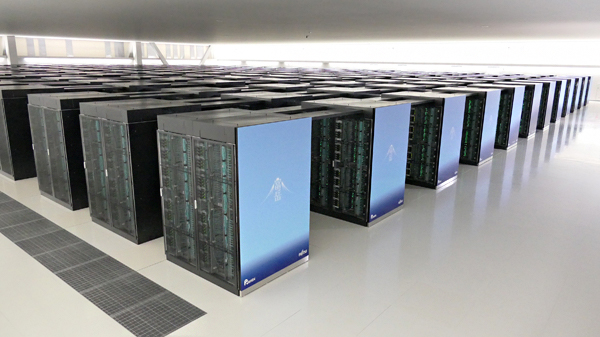
Decades later, that engineering lineage produced Fugaku, developed with RIKEN. In June 2020 it took first place on TOP500, becoming the first Arm-powered system to lead the ranking. Its Fujitsu A64FX processors offered tangible evidence of the company’s computing expertise. A consulting presentation cannot substitute for that kind of hardware accomplishment.
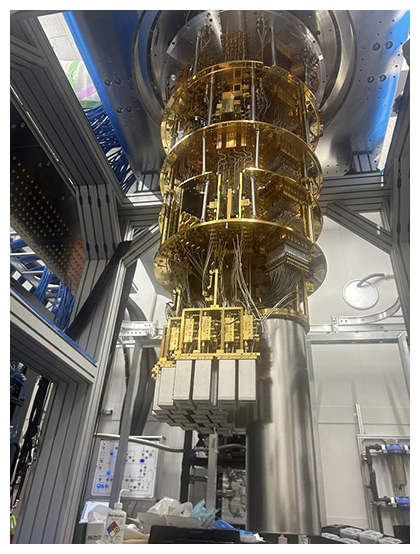
The research portfolio also reaches into superconducting quantum computing. RIKEN and Fujitsu announced a 256-qubit system in April 2025, building on their earlier 64-qubit machine. The engineering challenge included packing more components into the system while maintaining appropriate cooling. Potential applications include research into molecules and error correction.
A qubit count, however, is not a customer return on investment. The 256-qubit announcement described a research platform and plans for access by companies and institutions. It did not establish that ordinary business workloads should move to quantum computing. For a buyer, the sensible distinction is between experimental capability and a production service with demonstrated economics.
Getting research into customers’ hands has itself required redesign. In a March 2025 interview, Fujitsu’s Kozuchi team described a previous bottleneck: laboratory technologies without a clear commercialization path were difficult to offer quickly. The team created a platform for customers to experiment before the research had become a conventional product.
Security, speed and cost pulled against one another. The researchers described separating customer data, requiring VPN connections and standardizing release documents and procedures. Their account is refreshingly practical. The obstacle was partly the delivery process, and the response was to make that process reusable. That is a lesson other research organizations can borrow.
The bill includes the organization
Fujitsu’s spending shows the commitment required to sustain that laboratory-to-customer pipeline. It reported ¥101.2 billion in research and development expenditure for the year ended March 2025. This is group spending across research activities, not the development bill for one AI platform or quantum computer. It helps explain why the company wants technologies that can serve multiple engagements.
There is an internal version of the same transformation. Fujitsu’s 2025 integrated report describes OneERP+, a common enterprise-management system that began operating for approximately 70,000 domestic employees in October 2024. The report also acknowledges uneven understanding of digital transformation across departments and countries, affecting commitment to data quality and changed working habits.
Its people policies are changing too, including job-based employment, reskilling and internal mobility. The report admits that hiring in some roles, including consulting, fell behind plan and employee engagement remained below target. This is useful evidence against the idea that a technology purchase completes a transformation. The organization has to learn to use it.
For customers, the implication is straightforward: budget for the people who reconcile data, redesign work and own exceptions. Large-scale integration is a poor fit when the problem is small, the workflow already works or nobody has authority to change it. More technology can increase the number of things an organization must maintain.
Trust has a history, too
Fujitsu says its purpose is “to make the world more sustainable by building trust in society through innovation.” In Britain, that statement sits beside the Post Office Horizon scandal. The system introduced in 1999 produced unexplained accounting discrepancies. The Post Office treated branch managers as responsible; hundreds were wrongly convicted in the ensuing scandal.
“I think there is a moral obligation for the company to contribute.”
Paul Patterson · Fujitsu Europe director · Parliamentary testimony, January 2024
In that testimony, Patterson acknowledged bugs and errors and apologized for Fujitsu’s part. The human damage makes this more than a discussion about software quality. An accounting system acquires power through the decisions made around it. When institutions assume its output must be right, people can be left trying to disprove a machine.
Payment remained contested in the dated public record. On June 19, 2026, Parliament’s Business and Trade Committee criticized Fujitsu for failing to specify the scale or timetable of its redress contribution and called for an immediate interim payment. In March, the government had said the contribution would be set after the inquiry’s final volume. Those positions should not be mistaken for completed compensation.
The procurement lesson is demanding but usable. Require a route for users to challenge results, preserve evidence and assign responsibility for investigating discrepancies. This is an editorial conclusion from Horizon’s history: technical capability and institutional accountability must be assessed together. A celebrated research achievement cannot answer a question about how complaints are handled.
The next assignment is already taking shape
Fujitsu’s newer announcements put its strategy into recognizable workplaces. In February 2026 it reorganized Uvance for Finance into seven offerings spanning core systems, platforms and customer experience, with a ¥200 billion fiscal 2030 sales target. That number is an ambition. The concrete proposition is to connect dependable financial processing with more adaptable data and AI services.
Physical AI extends the approach toward factories and robots. In July 2026, Fujitsu announced exploratory work with FANUC, Yaskawa Electric and Kawasaki Heavy Industries, incorporating NVIDIA technology. The announcement concerns development and business exploration. It does not mean a finished autonomous factory has arrived.
For an organization considering Fujitsu, the best opening conversation is correspondingly specific: name the process, establish its present cost, identify the systems it touches and decide how success will be checked. Fujitsu has the range to take on substantial assignments. The convincing demonstration will be a working institution whose people can inspect, question and improve the technology they depend on.